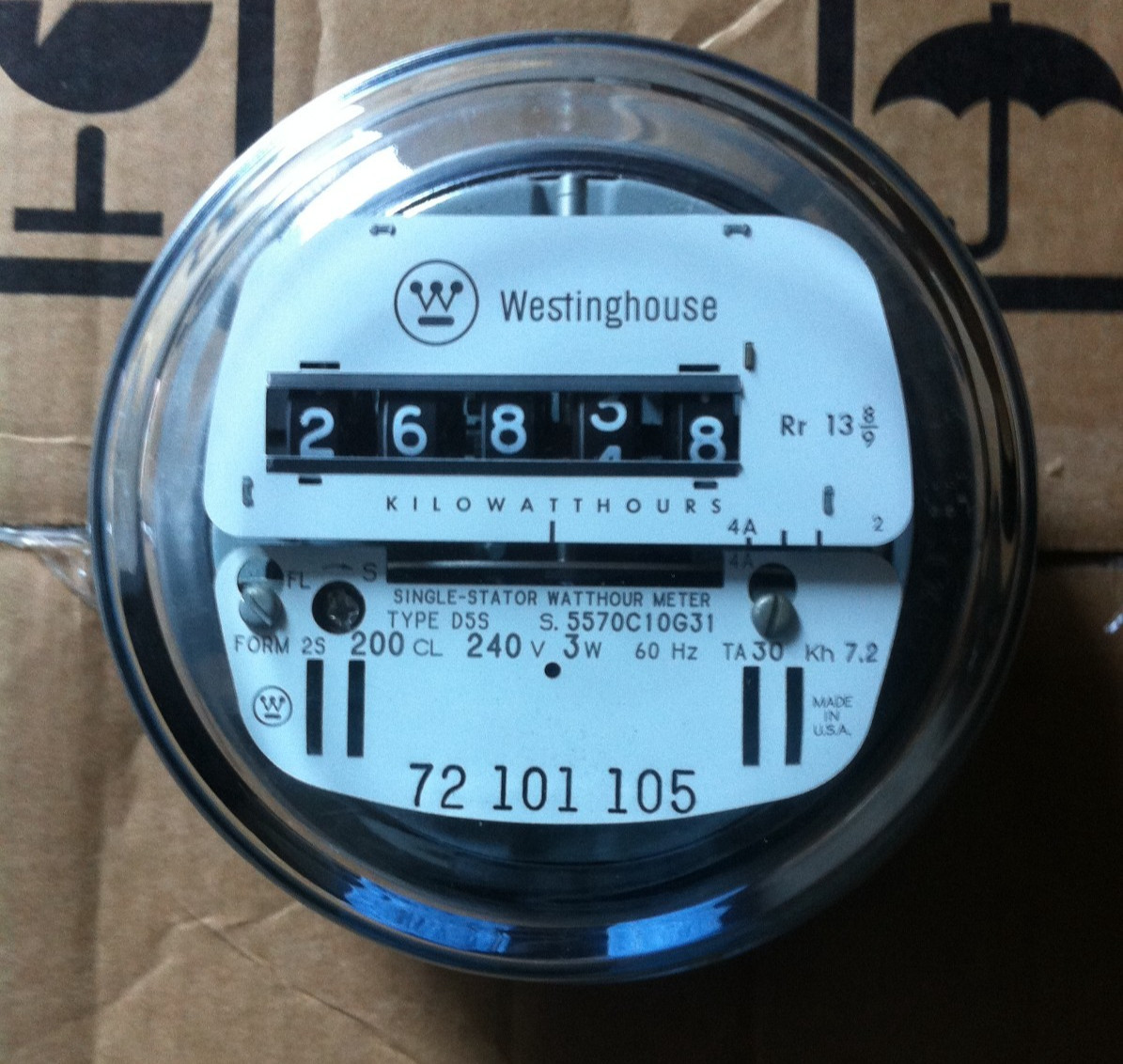

Photos from current listings. Actual item, color, and included accessories may vary.
Westinghouse WATTHOUR METER Buying Guide
A Westinghouse watthour meter is an electromechanical induction kWh meter used to measure AC energy consumption, most commonly the Type D4/D5 single-phase 240V residential form. The primary trade-off is calibrated accuracy and service life versus obsolete analog architecture, since these meters are no longer the utility-standard for new revenue metering. Buy a tested, calibrated D4/D5 with known register ratio for legacy replacement or submetering; skip untested pulls if you need revenue-grade accuracy.
Key takeaways
- Westinghouse D4/D5 watthour meters are 2-wire single-phase 240V induction meters with a 200A class rating and 3-wire (3W) or 2-wire configurations.
- Induction disk meters use a voltage coil and current coil driving an aluminum disk; accuracy class is typically ±1-2% at calibrated load, degrading with age and bearing wear.
- Analog dial or odometer registers read directly in kWh; the multiplier is set by the register ratio and CT/PT ratios when used with instrument transformers.
At a glance
- Category
- Industrial Gauges & Meters
- Status
- Listings available
- Last updated
- Nov 27, 2026
Current offers
Highlights
- Westinghouse D4/D5 watthour meters are 2-wire single-phase 240V induction meters with a 200A class rating and 3-wire (3W) or 2-wire configurations.
- Induction disk meters use a voltage coil and current coil driving an aluminum disk; accuracy class is typically ±1-2% at calibrated load, degrading with age and bearing wear.
- Analog dial or odometer registers read directly in kWh; the multiplier is set by the register ratio and CT/PT ratios when used with instrument transformers.
- Type D4 and D5 differ mainly in housing and register design generations; both are 60 Hz AC devices and are not rated for DC or 50 Hz service without recalibration.
Best use cases
- Best fit: replacing a failed 240V single-phase watthour meter in an existing residential service panel where the utility has already approved a customer-owned meter.
- Best fit: submetering a single 240V branch (tenant, shop, or outbuilding) at 200A or less where ±1-2% accuracy is acceptable and a mechanical kWh register is preferred.
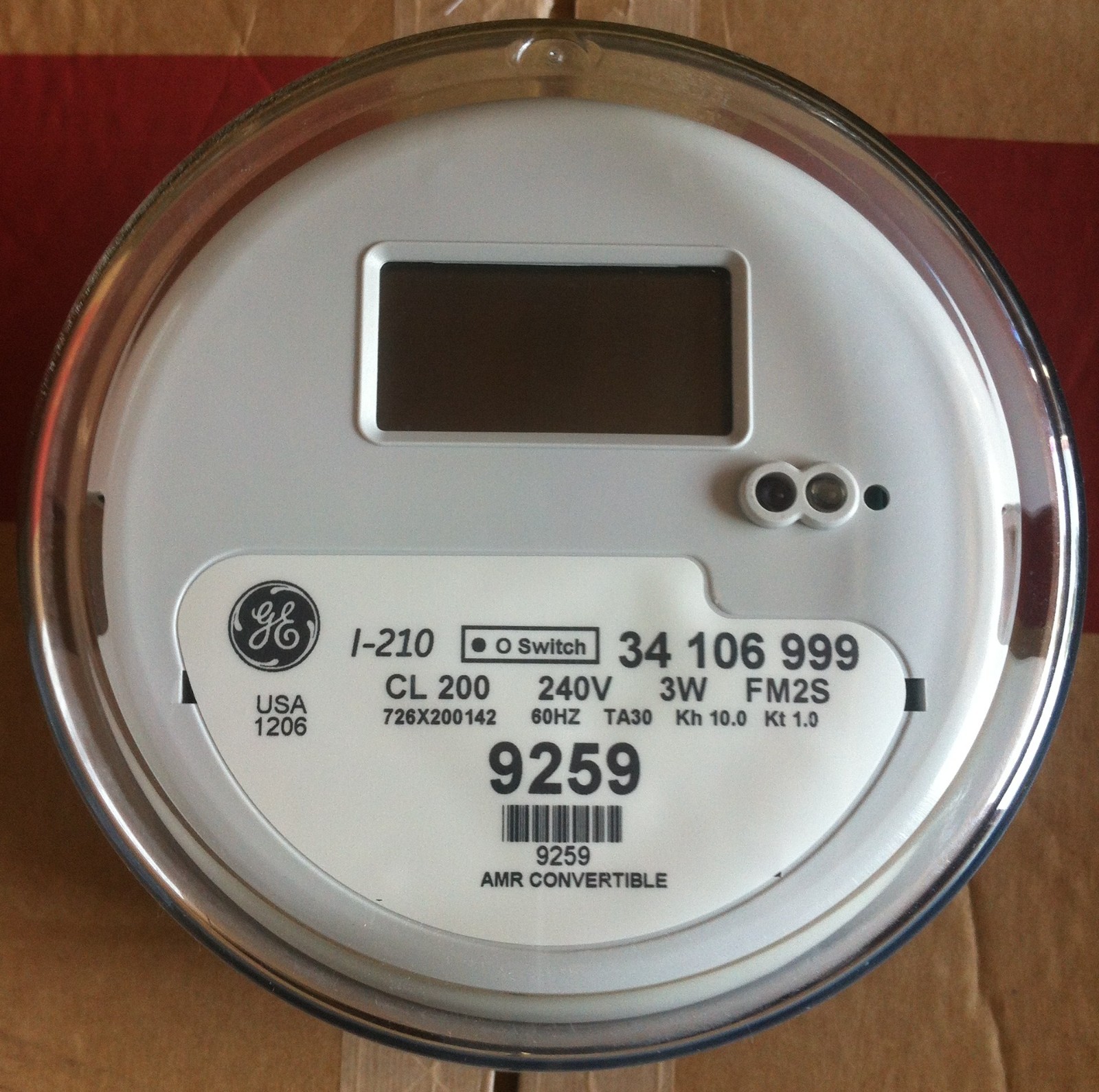
- Wrong fit: revenue billing requiring utility-grade accuracy or smart-meter features (time-of-use, demand, remote read) — use a solid-state ANSI C12.20 meter instead.
- Wrong fit: 3-phase or 480V industrial services — D4/D5 single-phase units will not meter polyphase loads and must be replaced with a 3-phase form.
Buying tips
- Match the meter form to the service: 2-wire 240V single-phase for typical residential; confirm 3W only if your panel provides a neutral for line-to-neutral metering.
- Confirm the current class (e.g., 200A) exceeds your service disconnect rating — undersizing the meter class risks overheating and inaccurate registration at high load.
- Verify the register ratio and multiplier before installing; a meter with the wrong register will read kWh incorrectly even if the disk spins properly.
- Prefer tested, calibrated units with intact seals and no disk drag or bearing noise; an untested pull may spin slow or fast and cannot be trusted for billing.
Specs
| Meter Type | Electromechanical induction, single-phase |
|---|---|
| Voltage / Frequency | 240V AC, 60 Hz |
| Current Class | Up to 200A continuous |
| Register Type | Analog dial or odometer, kWh |
Alternatives to compare
Related searches
What to check before buying
- Measure your panel voltage and phase configuration: confirm 120/240V single-phase, 60 Hz, and whether a neutral is present for 3W metering.
- Check the meter socket type and blade configuration (e.g., 4-jaw or 5-jaw) matches the D4/D5 base before purchase.
- Confirm the service amperage (100A, 150A, 200A) does not exceed the meter's class rating and that the socket wiring is rated for the same.
- Inspect the meter's register dial/odometer and multiplier, and confirm the utility or AHJ accepts customer-owned electromechanical meters for your application.
FAQ
Data sources: eBay / Amazon listings and product attribute feeds. Updated Nov 27, 2026.
Some links on this page are affiliate links. If you buy after clicking one, we may earn a commission at no extra cost to you. This does not change which products appear here or their order. Affiliate disclosure.