
Photos from current listings. Actual item, color, and included accessories may vary.
Lab Balance Buying Guide
A lab balance is a precision weighing instrument defined by its readability (resolution) and capacity; the core trade-off is that higher resolution (lower readability) forces lower capacity and demands a more stable environment. Durable, accurate balances use electromagnetic force restoration or strain-gauge sensors with stainless-steel pans and internal calibration, while compromises rely on unshielded load cells, ABS housings, and external calibration only. The decision rule: match readability to your tolerance (0.1 g for bulk/coarse, 0.01 g for general lab prep, 0.001 g for semi-micro, 0.1 mg for analytical) and never buy a balance whose capacity is less than 120% of your heaviest container plus sample.
Median $51.72
Key takeaways
- Readability tiers define class: 0.1 g (precision top-loading), 0.01 g (precision), 0.001 g (semi-micro), 0.1 mg/0.0001 g (analytical); each step down in readability roughly halves practical capacity.
- Sensor architecture: electromagnetic force restoration (EMFR) or monolithic weighing cells deliver linearity and drift resistance for 0.1 mg–0.001 g work; strain-gauge load cells suffice for 0.1–0.01 g tiers.
- Calibration: internal motorized calibration (e.g., Ohaus AutoCal, Mettler Toledo proFACT) vs external weight-only calibration — internal calibration is the single biggest durability/accuracy differentiator in daily use.
At a glance
- Category
- Lab Balances & Scales
- Last updated
- Nov 28, 2026
Current offers
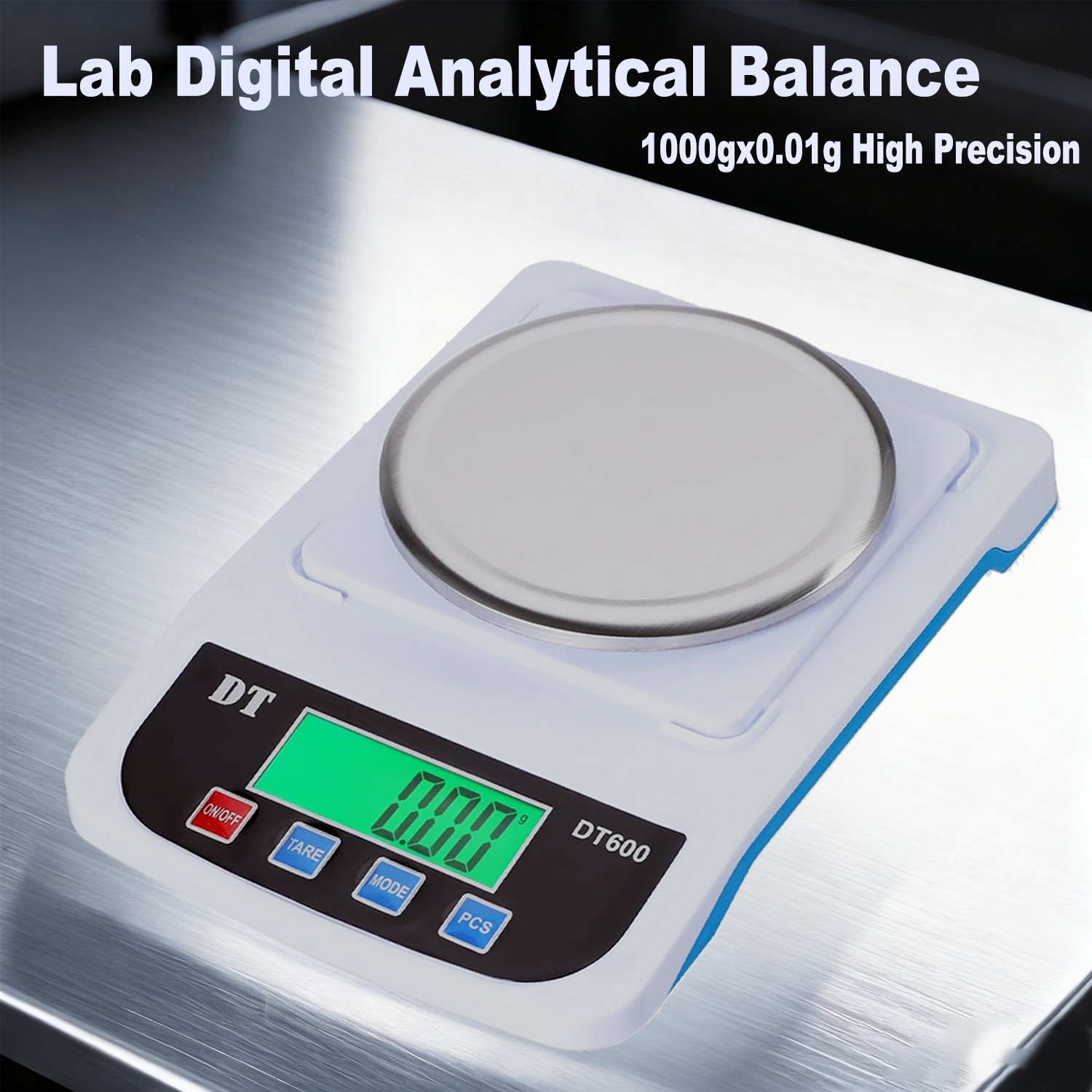 1000gx0.01g Analytical Balance Digital Lab Scale High Precision Electronic Scale$20.99View on eBay
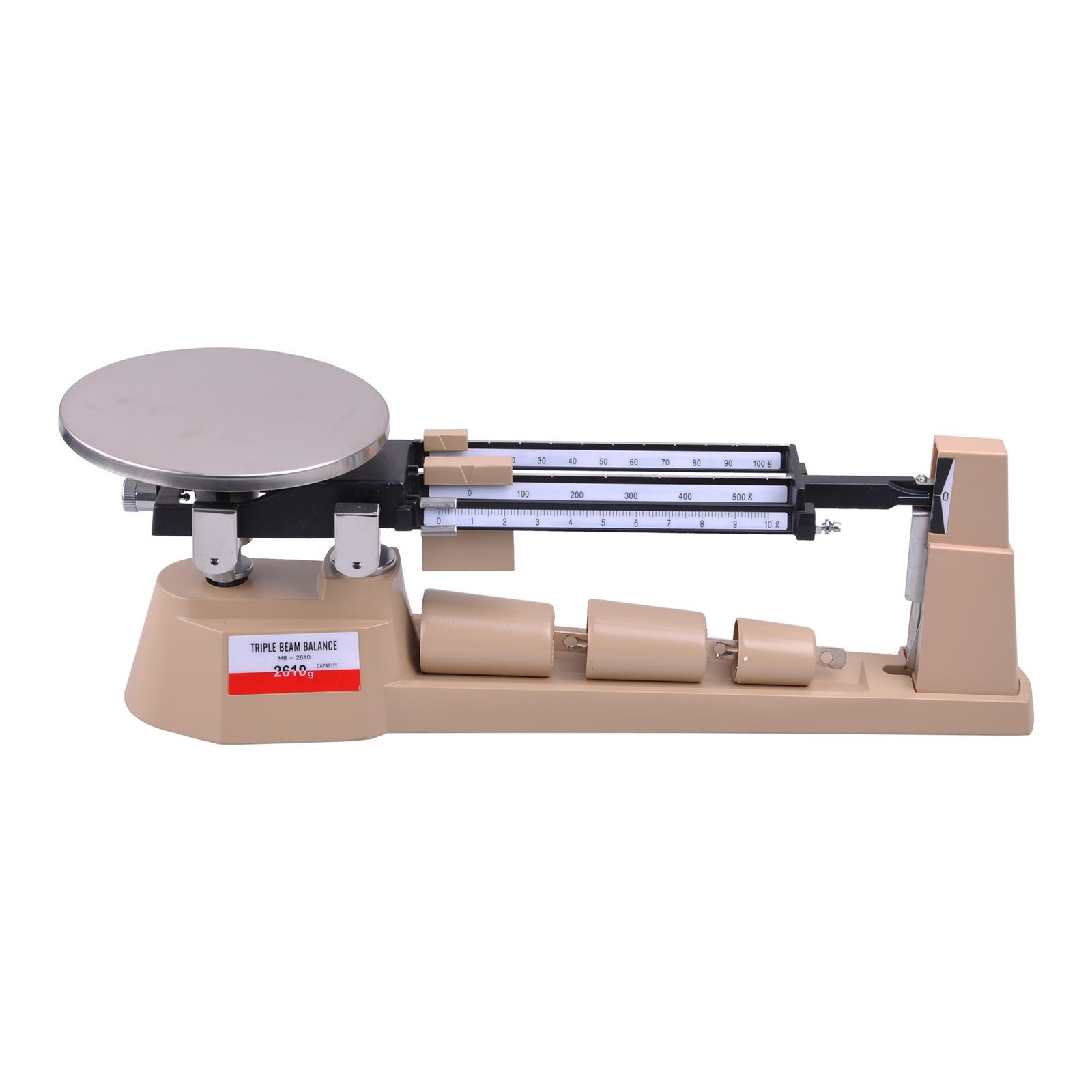 Triple Beam Mechanical Balance Scale Weight Set 2610g 0.1g Lab Analytical Weight$35.99View on eBay
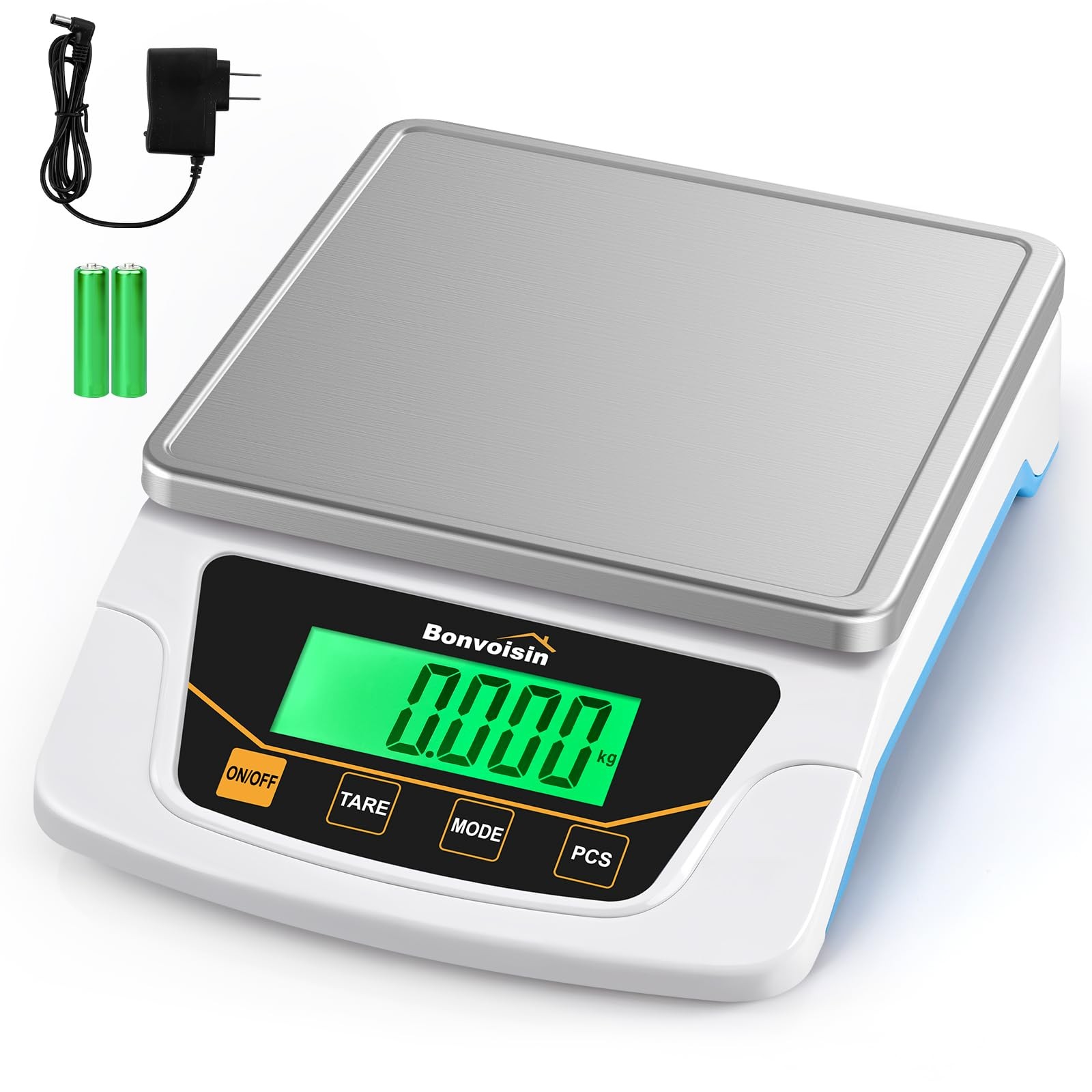 Digital Scale 0.1 Gram Accuracy Precision Lab Scale 6000g Scientific Digital ...$40.45View on eBay
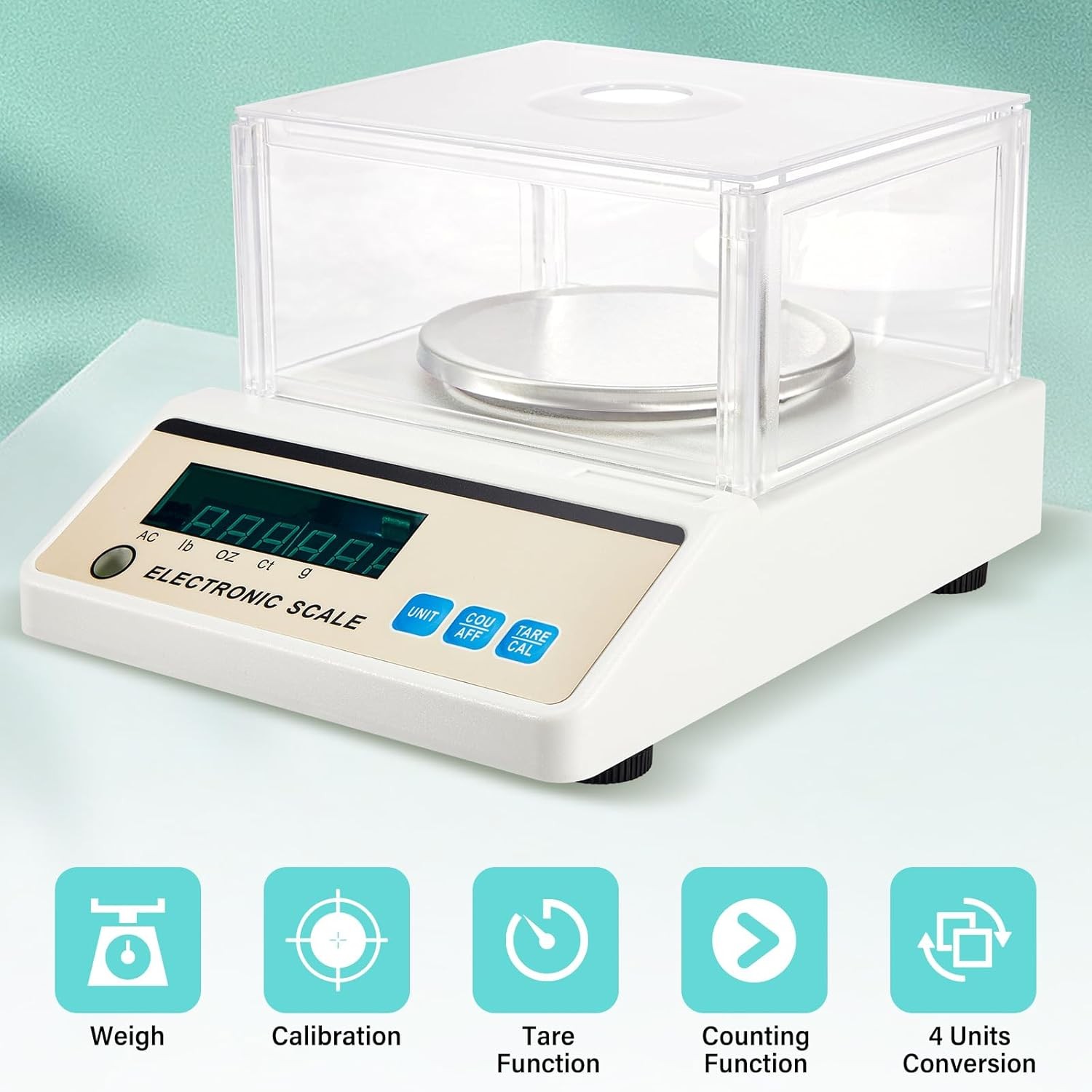 600g/1000g/3000gx0.01g Lab Scale Digital Analytical Balance Electronic Scale New$62.99Last checked Nov 27, 2026View on eBay
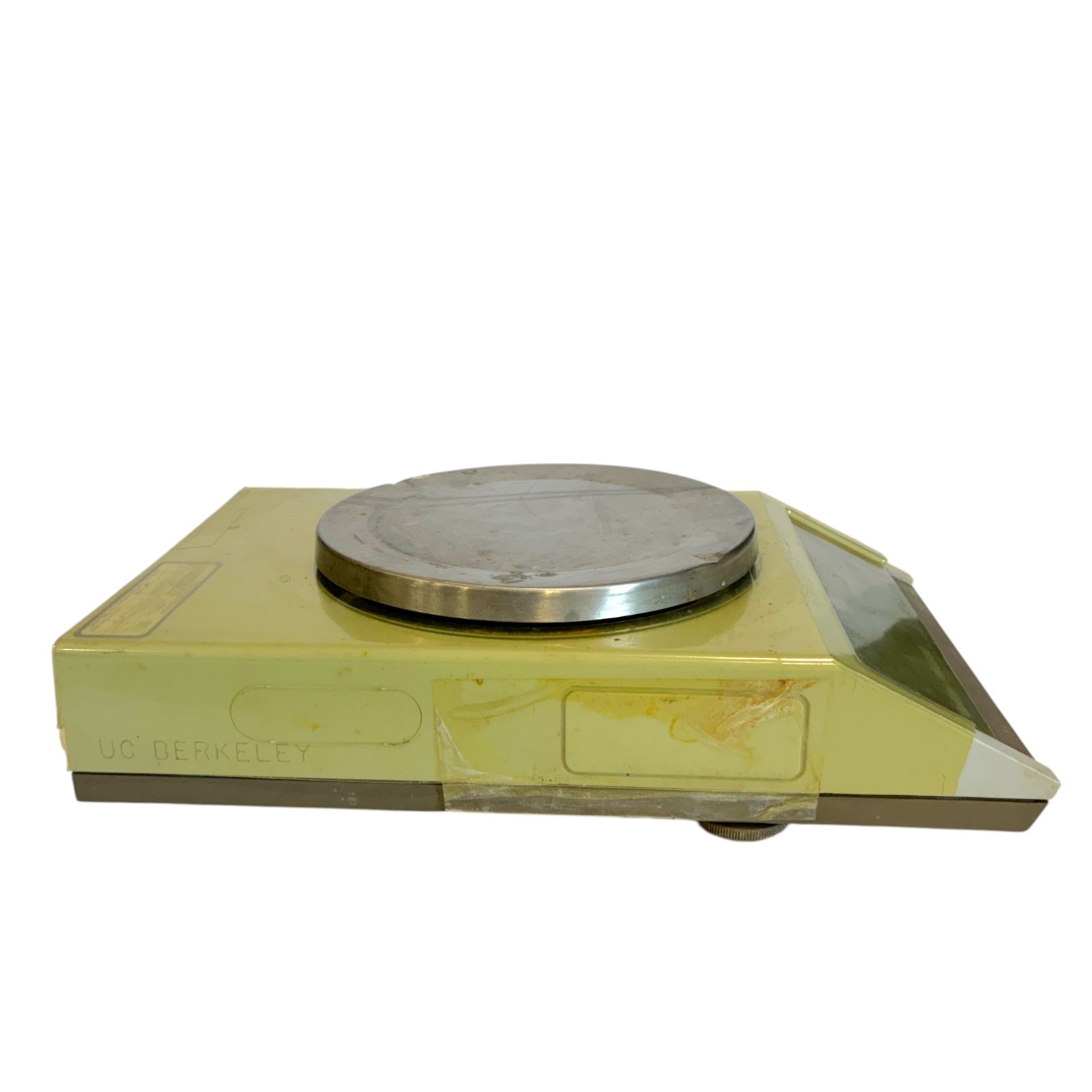 Mettler Toledo PM4600 DeltaRange Lab Precision Balance Scale 4100g 0.01g$185.00Last checked Nov 27, 2026View on eBay
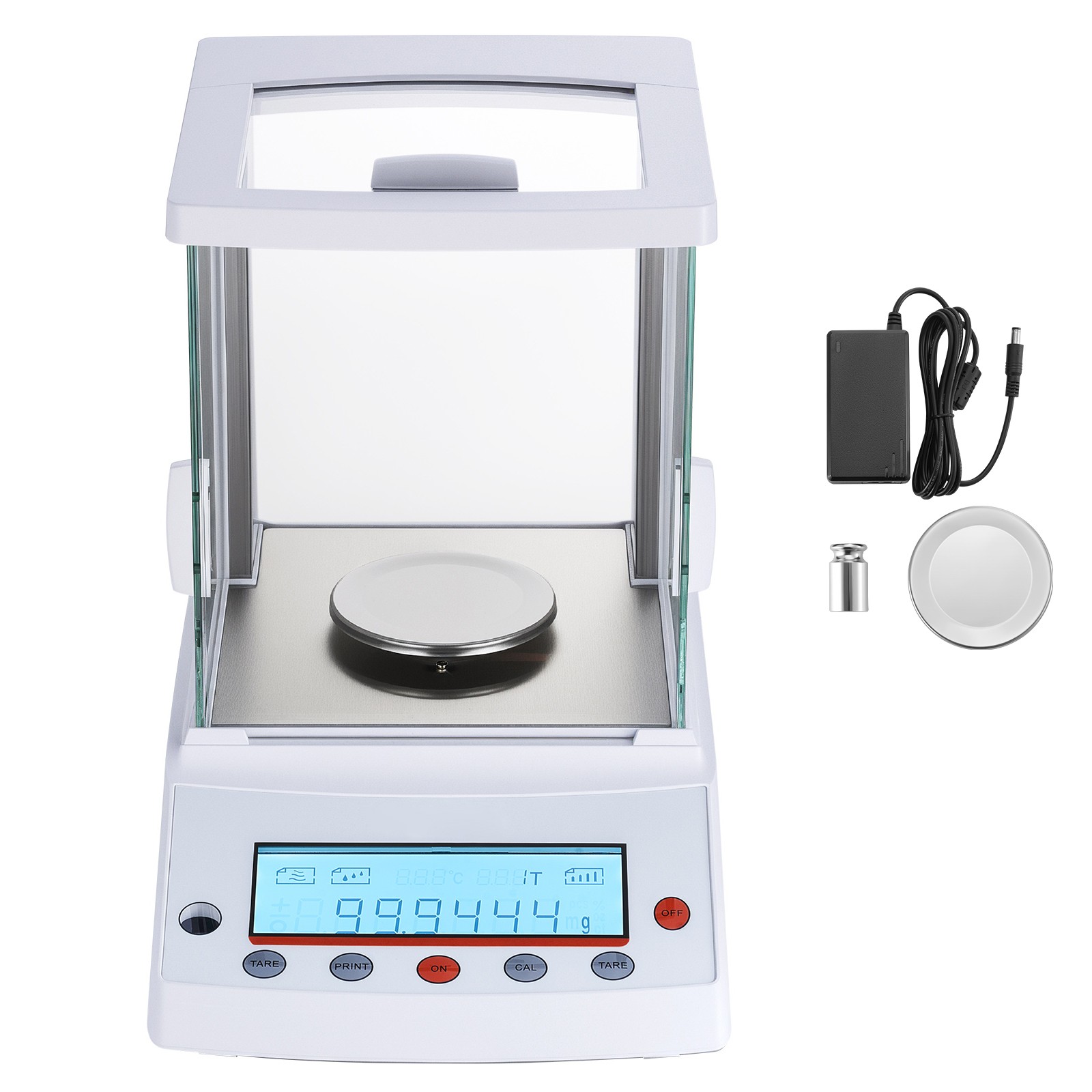 Uimoso Analytical Lab Scale 220g Capacity 0.0001g Precision, 4 Measurement Units$229.99Last checked Nov 15, 2026View on eBay
Highlights
- Readability tiers define class: 0.1 g (precision top-loading), 0.01 g (precision), 0.001 g (semi-micro), 0.1 mg/0.0001 g (analytical); each step down in readability roughly halves practical capacity.
- Sensor architecture: electromagnetic force restoration (EMFR) or monolithic weighing cells deliver linearity and drift resistance for 0.1 mg–0.001 g work; strain-gauge load cells suffice for 0.1–0.01 g tiers.
- Calibration: internal motorized calibration (e.g., Ohaus AutoCal, Mettler Toledo proFACT) vs external weight-only calibration — internal calibration is the single biggest durability/accuracy differentiator in daily use.
- Construction: stainless-steel weighing pan and draft shield (analytical) vs ABS housing and removable stainless pan (precision); draft shields are mandatory below 0.001 g to block air currents.
Best use cases
- Best fit 0.1 mg analytical (e.g., 120 g × 0.0001 g, 220 g × 0.0001 g): quantitative chemistry, reference-standard prep, and pipette calibration — requires a draft shield, anti-vibration bench, and stable HVAC; skip if you only weigh powders to 0.01 g.
- Best fit 0.01 g precision (e.g., 600 g, 1000 g, 2200 g, 4100 g × 0.01 g): general lab compounding, sample prep, and QC — choose capacity 2–4× your typical load; skip 0.1 mg models here because low capacity and draft-shield fragility slow workflow.
- Best fit 0.1 g top-loading and triple-beam mechanical (e.g., 2610 g × 0.1 g, 6000 g × 0.1 g): education, field/bench rough weighing, and environments without reliable power — mechanical triple-beam needs no calibration electronics and survives power loss; skip digital 0.001 g models in dusty or high-vibration sites.
- Wrong fit: buying 30 kg × 0.5 g counting scales for analytical work (resolution too coarse) or buying 0.1 mg balances for bulk material (capacity and pan too small, sensor overload risk).
Buying tips
- Sizing rule: required capacity ≥ heaviest container + sample + 20% headroom; never exceed 80% of rated capacity repeatedly or you shorten load-cell life.
- Match readability to tolerance: readability should be ≤ 1/10 of your acceptable weighing error — for ±0.05 g tolerance buy 0.001 g, not 0.01 g.
- Prefer internal calibration (motorized, temperature-triggered) over external-weight-only models if the balance is used daily; external calibration requires certified ASTM Class 1/2 or OIML E2/F1 weights.
- For 0.1 mg work, confirm the model includes a draft shield and level bubble; for 0.01 g work, a removable stainless pan and RS-232/USB output add durability and data integrity.
Specs
| Readability Class | 0.1 g / 0.01 g / 0.001 g / 0.1 mg |
|---|---|
| Capacity Range | 120 g to 30 kg by class |
| Sensor Type | EMFR vs strain-gauge load cell |
| Calibration | Internal motorized vs external weights |
Related searches
What to check before buying
- Bench check: place on a rigid, level surface away from HVAC vents, doors, and centrifuges; analytical balances need a marble/anti-vibration table and a dedicated circuit.
- Environment: stable temperature (20–25 °C) and low drafts; humidity 45–60% RH prevents static drift on 0.1 mg models — add an ionizer if static is an issue.
- Power/plug: confirm 100–240 V AC adapter with the correct regional plug, or battery operation for field 0.1 g models; mechanical triple-beam needs no power.
- Companion parts: certified calibration weights matching the capacity class, a draft shield (analytical), and a data cable (RS-232/USB) if you log weights to a PC.
FAQ
Data sources: eBay / Amazon listings and product attribute feeds. Updated Nov 28, 2026.
Some links on this page are affiliate links. If you buy after clicking one, we may earn a commission at no extra cost to you. This does not change which products appear here or their order. Affiliate disclosure.