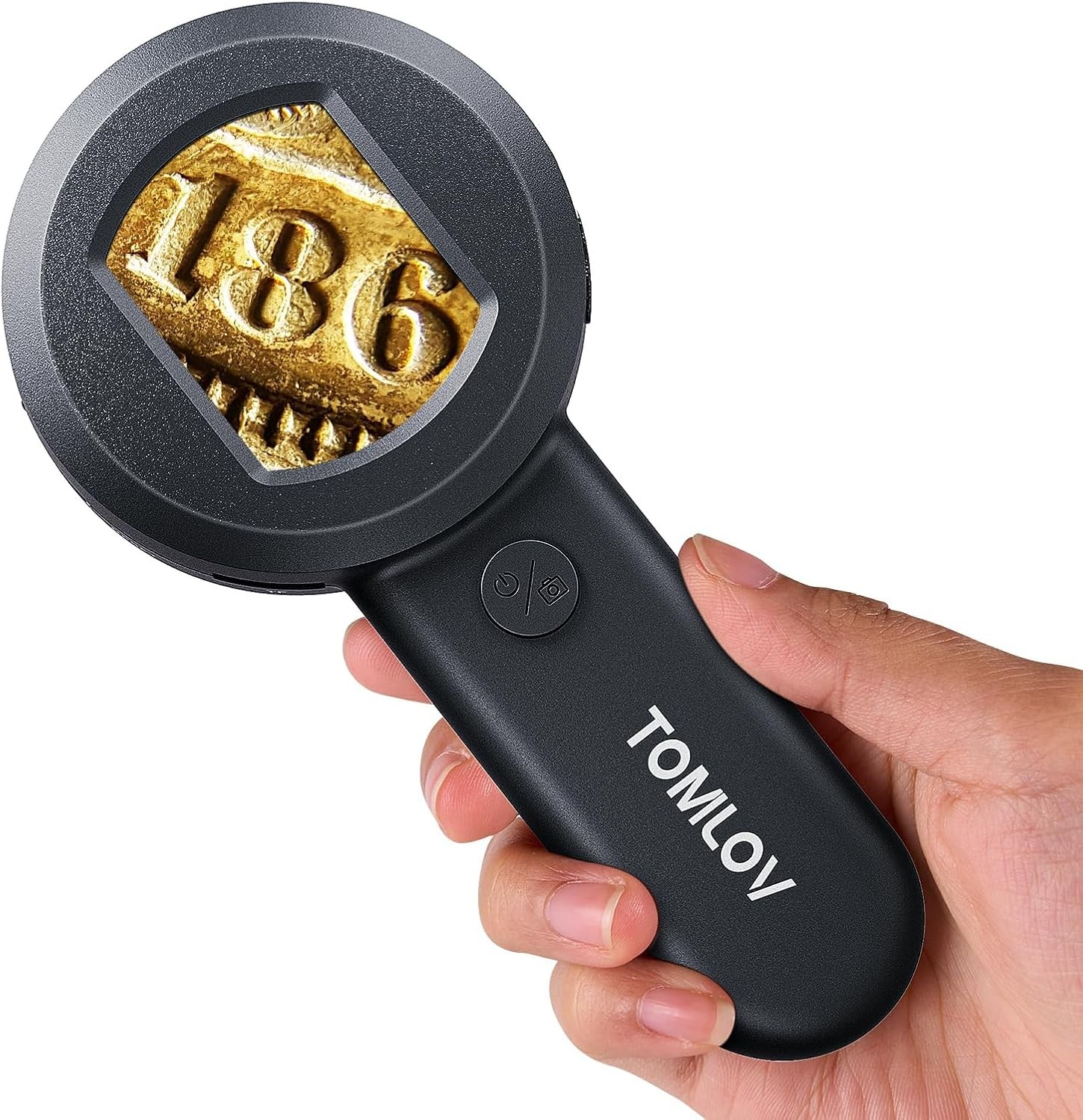

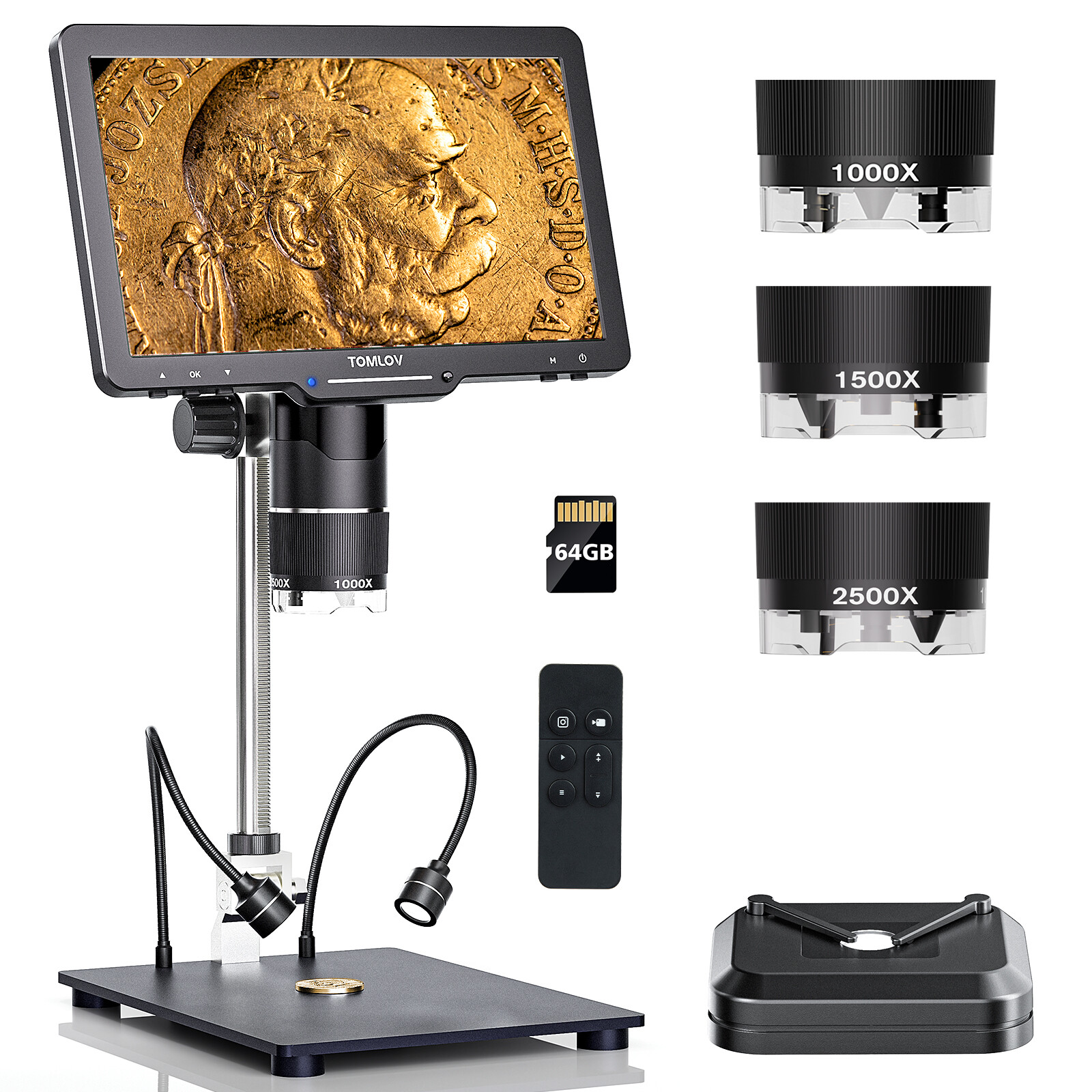
Photos from current listings. Actual item, color, and included accessories may vary.
TOMLOV Digital Coin Microscope Buying Guide
The TOMLOV Digital Coin Microscope is a handheld, screen-integrated digital magnifier built around a 100x optical zoom lens and a 500mAh lithium-ion battery, designed for coin grading, trichome inspection, and jeweler loupe work. The core trade-off is between the convenience of a self-contained screen-and-battery unit and the resolution ceiling of a single fixed-focus lens; buyers should prioritize sensor resolution and true optical magnification over interpolated digital zoom. The clear decision rule: choose a screen-integrated model only if you need untethered field use, and step up to a larger sensor or adjustable-focus stand if your work demands fine detail beyond 100x.
Key takeaways
- 100x optical magnification is the segment benchmark; anything advertised above that is digital interpolation and adds no real resolving power.
- Built-in 500mAh lithium-ion battery enables roughly 1-2 hours of untethered use, so screen size and sensor drain directly cap field session length.
- Integrated LED ring illumination is mandatory for coin and trichome work because reflected light reveals surface relief and resin gland heads that ambient light washes out.
At a glance
- Category
- Microscopes & Lab Imaging
- Status
- Listings available
- Last updated
- Nov 28, 2026
Current offers
Highlights
- 100x optical magnification is the segment benchmark; anything advertised above that is digital interpolation and adds no real resolving power.
- Built-in 500mAh lithium-ion battery enables roughly 1-2 hours of untethered use, so screen size and sensor drain directly cap field session length.
- Integrated LED ring illumination is mandatory for coin and trichome work because reflected light reveals surface relief and resin gland heads that ambient light washes out.
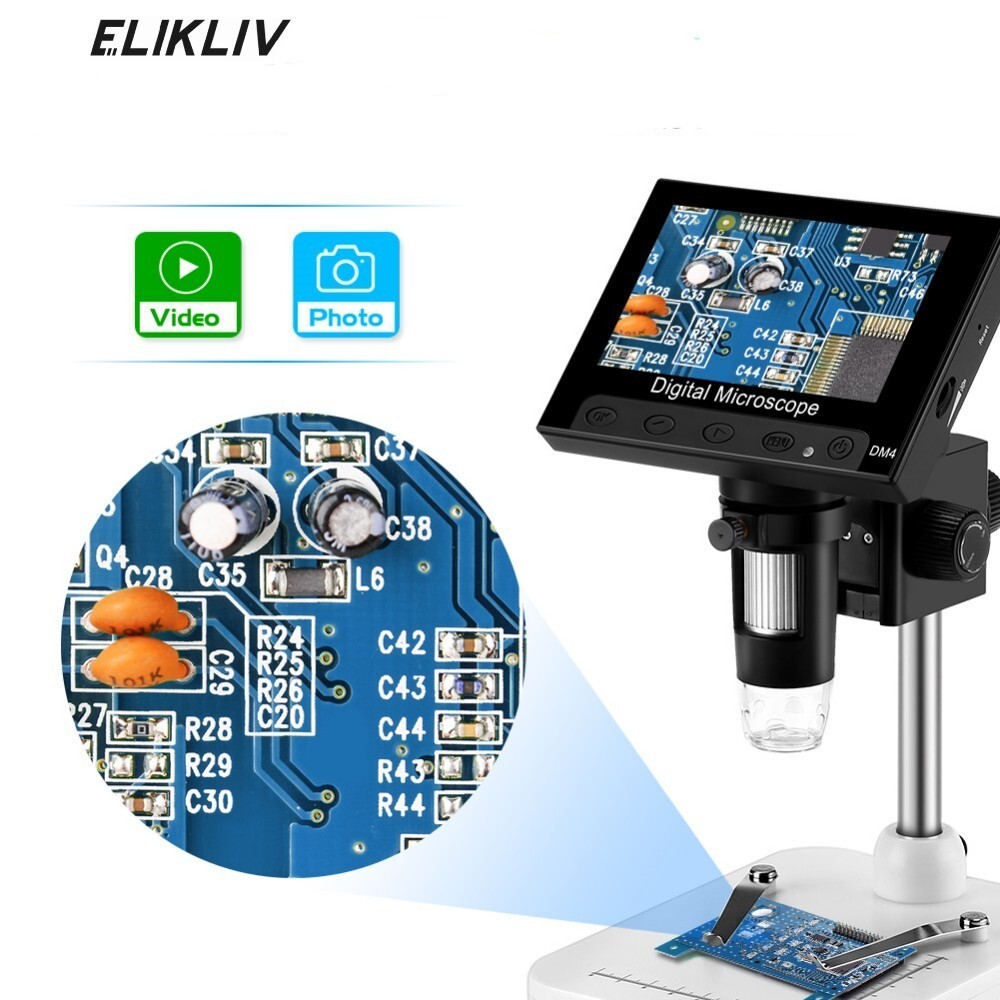
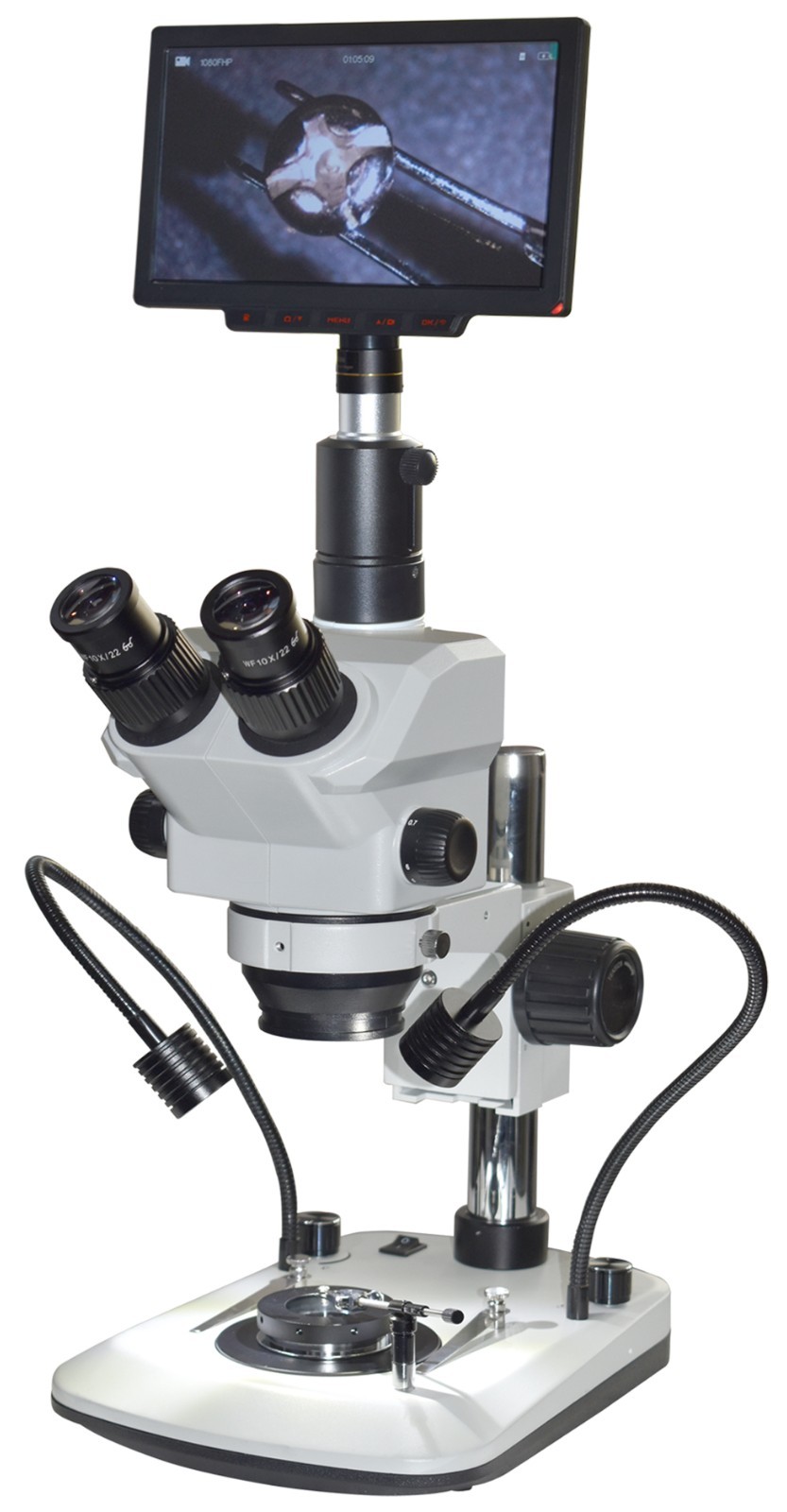
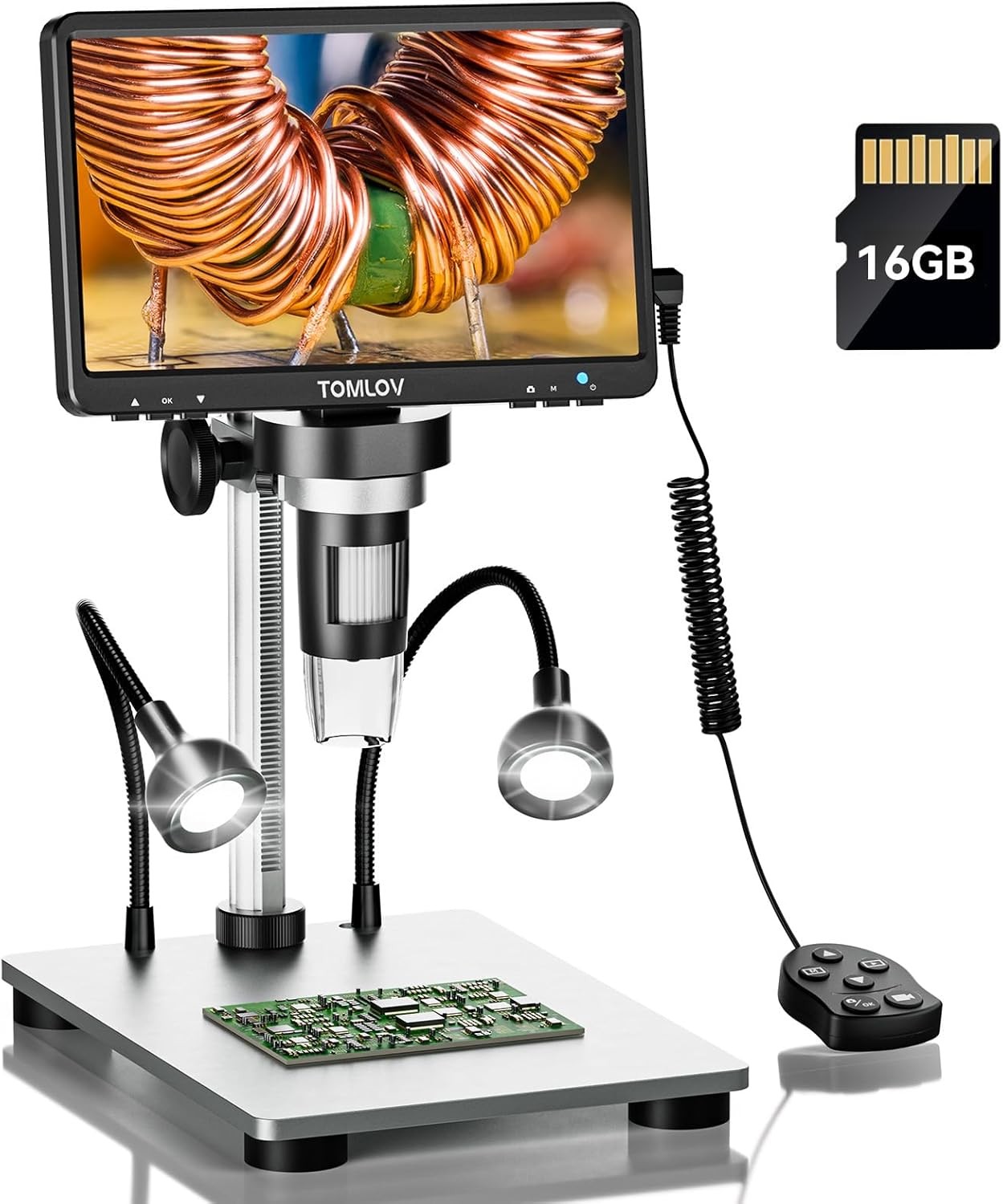
- Handheld vs stand-mounted is the key architecture split: handheld units trade stability for portability, while stand or clamp versions hold focus at fixed working distance.
Best use cases
- Best fit: coin roll hunters and error-coin checkers who need quick 100x loupe-style inspection of dates, mint marks, and rim anomalies on a built-in screen.
- Best fit: trichome and plant-resin inspectors who need portable, battery-powered magnification in the field without tethering to a phone or laptop.
- Wrong fit: gemologists or PCB rework techs needing sub-micron resolution or measurement software—skip handheld 100x units and choose a stand-mounted stereo or metallurgical microscope.
- Wrong fit: buyers wanting photographed documentation at high resolution—skip low-megapixel handheld screens and use a USB microscope with a separate high-MP sensor.
Buying tips
- Confirm the magnification is stated as optical (100x) rather than 'digital zoom 1000x'; digital zoom only crops pixels and does not resolve finer detail.
- Check the working distance: handheld 100x units typically focus at a few centimeters, so a stand or clamp is required for repeatable, hands-free coin inspection.
- Match battery capacity to session length: a 500mAh cell supports short field sessions, so buyers needing all-day use should pick a unit with a larger cell or USB-C pass-through power.
- Verify the screen size and resolution before buying; a larger, higher-resolution display makes 100x inspection far easier than a tiny low-res panel.
Specs
| Magnification | 100x optical (digital above is interpolation) |
|---|---|
| Battery | 500mAh Li-ion, ~1-2 hr untethered |
| Form Factor | Handheld screen-integrated vs stand-mounted |
| Illumination | LED ring, adjustable brightness |
Alternatives to compare
Related searches
What to check before buying
- Measure your intended subjects (coin diameter, trichome cluster size) to confirm 100x optical magnification frames them fully without excessive edge cropping.
- Confirm you have a stable, flat surface or clamp point for hands-free focus, since handheld use at 100x demands steady hands.
- Check the charging standard (micro-USB vs USB-C) and confirm a compatible cable or power bank is on hand for field sessions.
- Verify the LED illumination is adjustable, as fixed brightness can blow out reflective coin surfaces and obscure fine detail.
FAQ
Data sources: eBay / Amazon listings and product attribute feeds. Updated Nov 28, 2026.
Some links on this page are affiliate links. If you buy after clicking one, we may earn a commission at no extra cost to you. This does not change which products appear here or their order. Affiliate disclosure.