
Photos from current listings. Actual item, color, and included accessories may vary.
Cable Locator Tool Buying Guide
Cable locator tools trace energized or tone-injected wires through walls, soil, and conduit using either direct-connection tone generators or inductive clamp/antenna receivers. The core trade-off is detection depth and length versus signal discrimination: deeper, longer-range units amplify noise and require careful gain control, while shallow units are simpler but blind to buried infrastructure. Buy a dedicated transmitter-plus-receiver kit matched to your deepest expected run; open-ended 'break detector' wands with fixed gain are only for shallow pet-fence or sprinkler tracing.
Median $49.49
Key takeaways
- Tone-and-probe kits use a transmitter that injects an audio-frequency signal and a receiver with adjustable gain; direct-connect leads handle unenergized cables, while inductive clamps work on live or inaccessible lines.
- Underground depth ratings scale with antenna design: shallow wands typically reach about 3 ft, while long-range locators with larger coils reach 6.5 ft or more; maximum traceable length runs from roughly 1,000 ft to over 3,000 ft.
- Receiver discrimination depends on selectable frequency and gain; single-frequency fixed-gain units bleed signal onto adjacent pipes and wires, causing mislocates in congested trenches.
At a glance
- Category
- RF, Network, Cable & Telecom Test
- Last updated
- Nov 28, 2026
Current offers
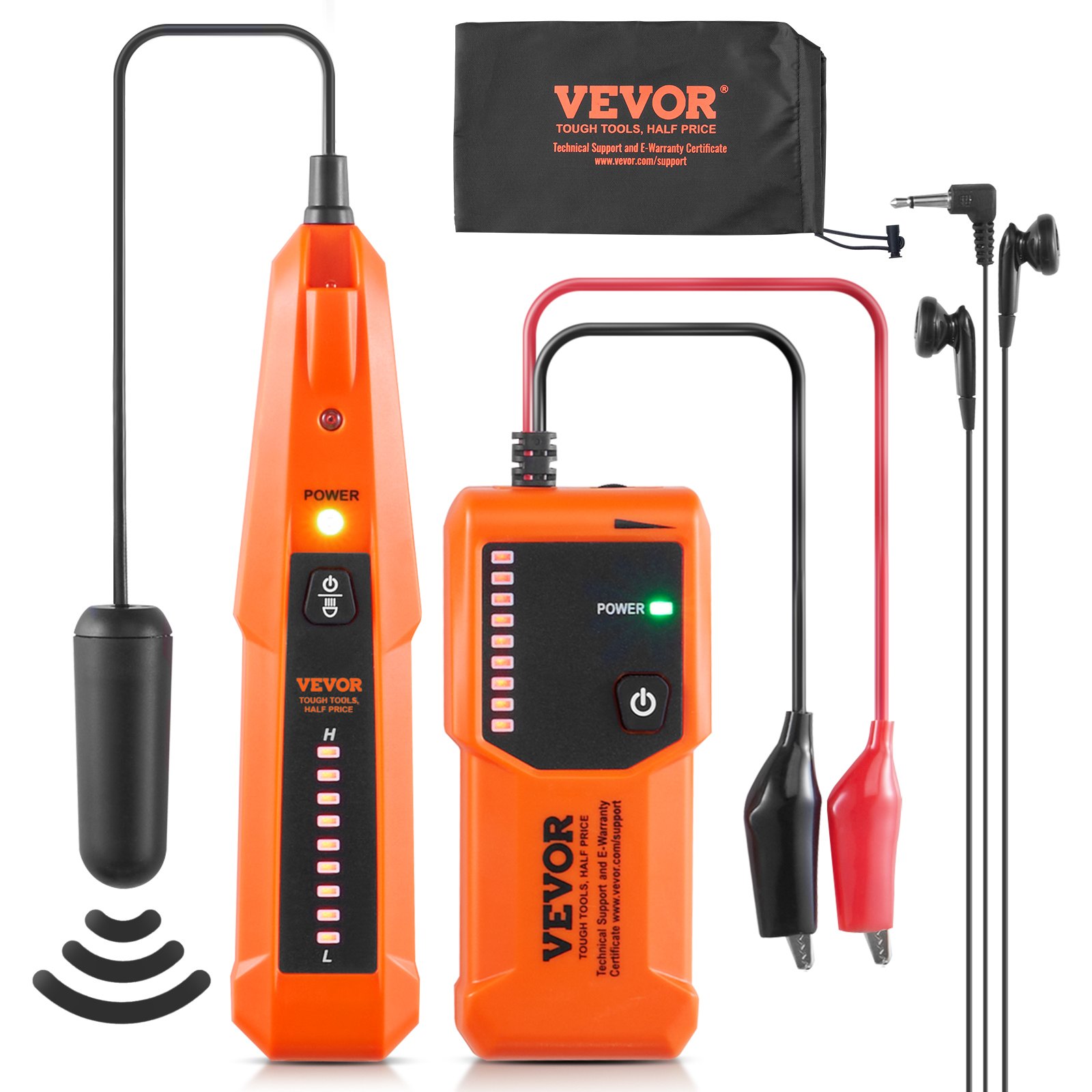 Underground Cable Locator, 3 FT Max. Detection Depth, Wire Tracer Break Detector Finder With Earphone, One Thousand FT Max.Detection Length Tester For Pet Fence Buried Sprinkler Valve Irrigation$38.99View on Mallflare
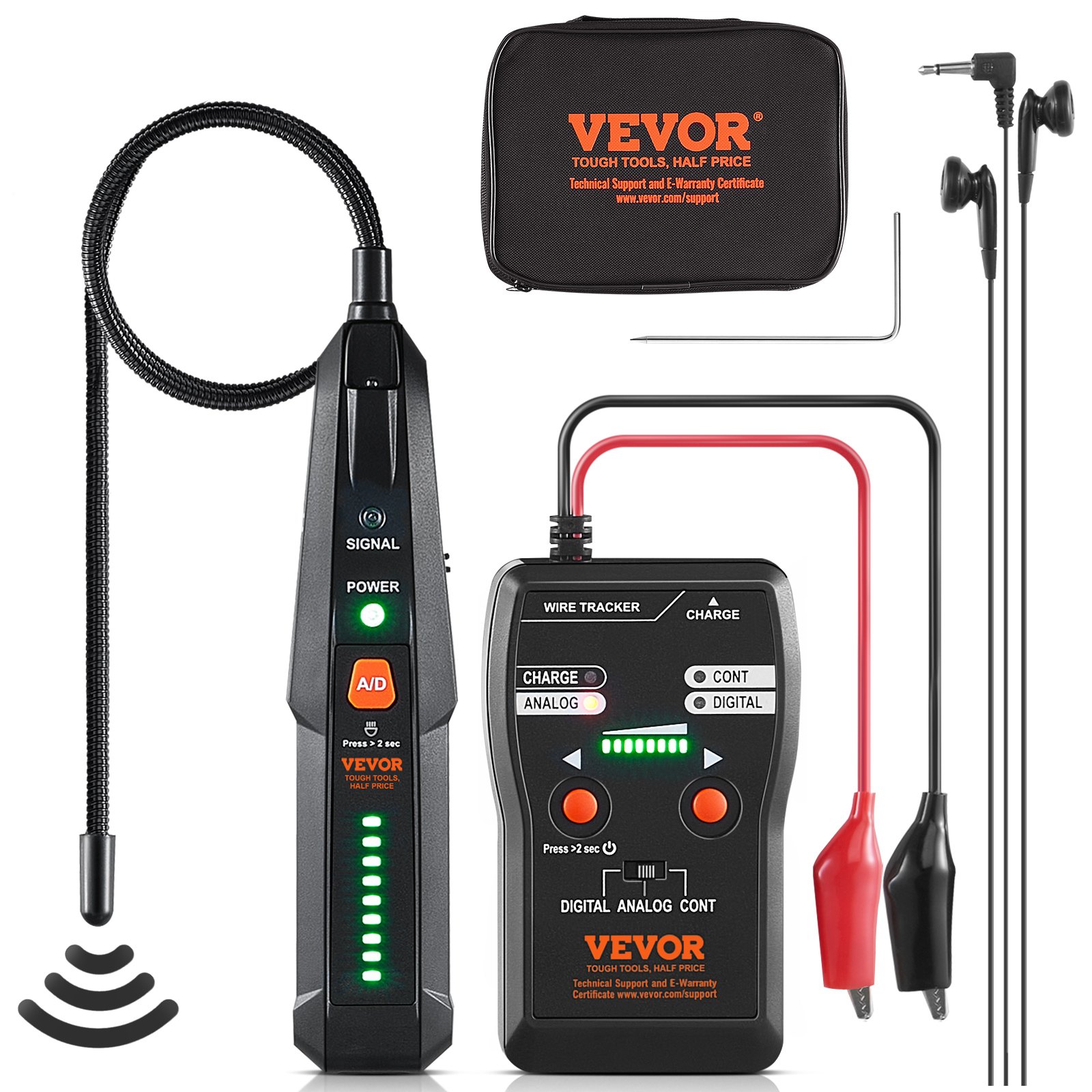 Underground Cable Locator, 6.5 FT Max. Detection Depth, Wire Tracer Break Detector Finder With Earphone, 3280 FT Max.Detection Length Tester For Pet Fence Buried Sprinkler Valve Irrigation$59.99View on Mallflare
Highlights
- Tone-and-probe kits use a transmitter that injects an audio-frequency signal and a receiver with adjustable gain; direct-connect leads handle unenergized cables, while inductive clamps work on live or inaccessible lines.
- Underground depth ratings scale with antenna design: shallow wands typically reach about 3 ft, while long-range locators with larger coils reach 6.5 ft or more; maximum traceable length runs from roughly 1,000 ft to over 3,000 ft.
- Receiver discrimination depends on selectable frequency and gain; single-frequency fixed-gain units bleed signal onto adjacent pipes and wires, causing mislocates in congested trenches.
- Break-locator wands detect opens and shorts by sensing signal drop-off, but they cannot measure depth or distinguish multiple buried services without a separate receiver and clamp accessory.
Best use cases
- Pet-fence and sprinkler-valve tracing at 3 ft or less: pick a compact fixed-depth wand with earphone output; skip long-range kits whose higher gain amplifies false hits in shallow, crowded yards.
- Buried irrigation mains and low-voltage landscape runs to 6.5 ft: choose a transmitter-plus-receiver kit with adjustable gain and a direct-connect lead; skip single-piece wands that cannot inject tone onto unenergized wire.
- In-wall and conduit tracing in finished buildings: use a tone generator with modular leads and a receiver with a narrow antenna; skip underground-only locators whose large coils are too bulky for interior work.
- Live AC circuit tracing: select a kit rated for inductive clamp coupling on energized lines; skip direct-connect-only models that require de-energizing the circuit first.
Buying tips
- Match depth rating to your deepest buried run plus a margin: a 3 ft unit covers lawn sprinkler laterals, but main lines and pet-fence perimeters at 4–6 in. depth need the 6.5 ft class.
- Check maximum trace length against the longest continuous run; 1,000 ft suits residential lots, while 3,000 ft-plus units are for acreage, farms, and commercial campuses.
- Insist on adjustable receiver gain and at least two frequencies; fixed-gain wands cannot null out adjacent services in shared trenches.
- Confirm the transmitter supports both direct-connect leads and an inductive clamp so the same kit handles unenergized wire and live circuits without a second purchase.
Specs
| Max Detection Depth | 3 ft (shallow) / 6.5 ft (deep) |
|---|---|
| Max Trace Length | 1,000–3,280 ft |
| Signal Injection | Direct-connect leads + inductive clamp |
| Receiver Gain | Fixed vs adjustable multi-frequency |
Related searches
What to check before buying
- Measure your longest buried run and deepest service depth; choose a unit rated above both, not at the limit.
- Verify the transmitter's lead length reaches your access point (valve box, panel, or fence terminal) without an extension.
- Check earphone output and receiver battery type for noisy outdoor sites where the speaker is hard to hear.
- Confirm the kit includes a ground stake or earth-return path; direct-connect tracing needs a completed circuit to inject tone.
FAQ
Data sources: eBay / Amazon listings and product attribute feeds. Updated Nov 28, 2026.
Some links on this page are affiliate links. If you buy after clicking one, we may earn a commission at no extra cost to you. This does not change which products appear here or their order. Affiliate disclosure.