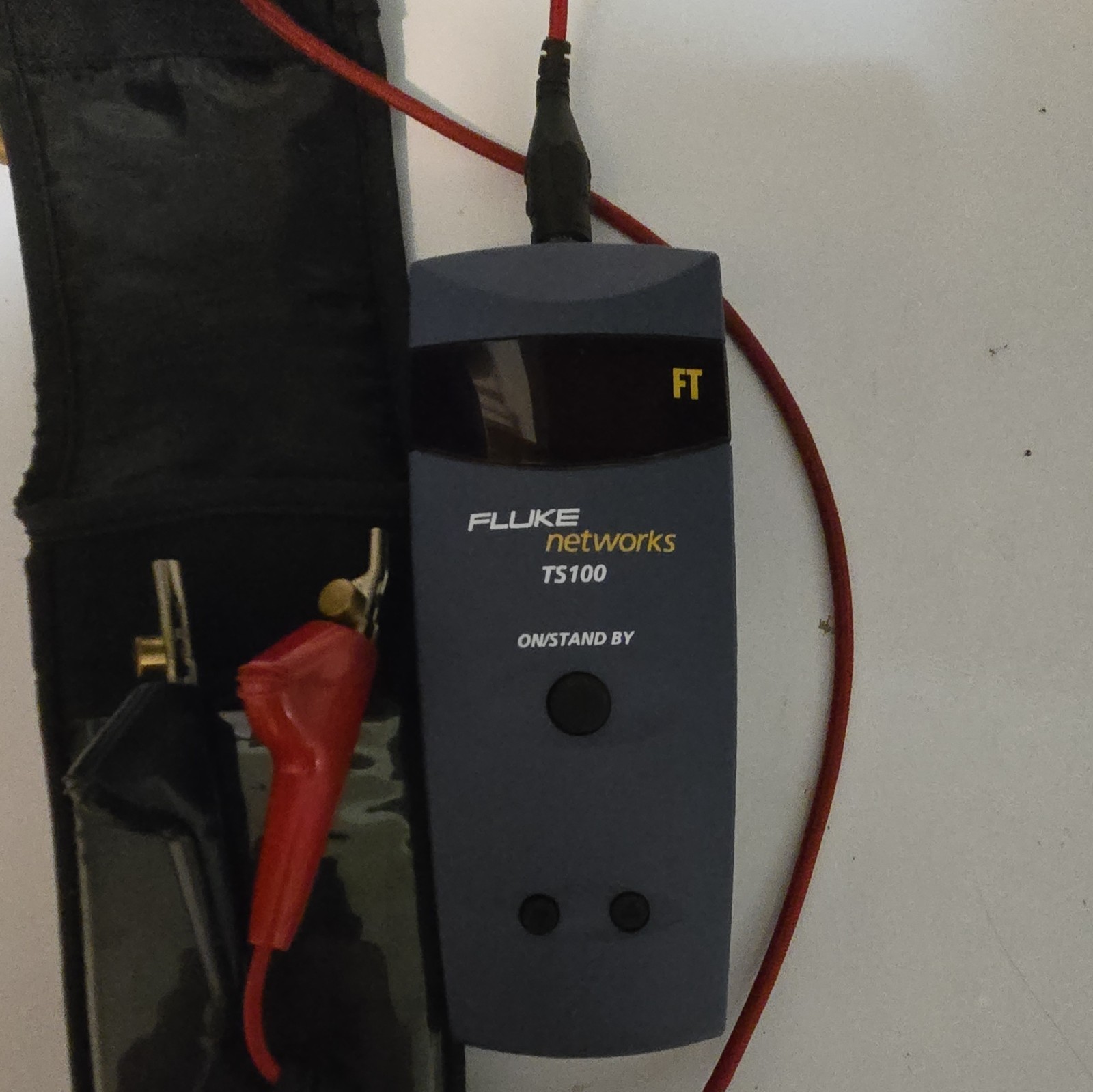

Photos from current listings. Actual item, color, and included accessories may vary.
Network Cable Buying Guide
Network cable testers split into basic continuity/wire-map units and advanced tools with length (TDR), PoE, tone generation, and optical options. The trade-off is pin-mapping simplicity versus diagnostic depth: basic testers reliably catch opens/shorts, while length/PoE-capable models resolve intermittent faults and power issues. Buy basic if you only terminate and verify patch leads; step up to a length/PoE tester if you troubleshoot installed cabling or PoE devices.
Key takeaways
- Wire-map testers verify pin-to-pin continuity and detect opens, shorts, miswires, and split pairs across RJ45 and RJ11 terminations.
- Length-measurement (TDR) models compute cable run distance and locate faults, typically accurate to a few percent on Cat5e/Cat6 twisted pairs.
- PoE testers report voltage and current on powered pairs, confirming 802.3af/at power delivery before connecting cameras or access points.
At a glance
- Category
- RF, Network, Cable & Telecom Test
- Last updated
- Nov 28, 2026
Current offers
Highlights
- Wire-map testers verify pin-to-pin continuity and detect opens, shorts, miswires, and split pairs across RJ45 and RJ11 terminations.
- Length-measurement (TDR) models compute cable run distance and locate faults, typically accurate to a few percent on Cat5e/Cat6 twisted pairs.
- PoE testers report voltage and current on powered pairs, confirming 802.3af/at power delivery before connecting cameras or access points.
- Tone-and-probe (toner) kits trace unlabeled cables through bundles using an inductive amplifier; optical models add 6-wavelength power meter functions.
Best use cases
- Best fit: home/LAN installer terminating patch cables and keystones—buy a basic RJ45/RJ11 wire-map tester, skip length and PoE features.
- Best fit: IT technician troubleshooting installed Cat5e/Cat6 runs—choose a TDR length tester with tone generation to locate breaks behind walls.
- Best fit: PoE camera/AP deployment—pick a tester that reads 802.3af/at voltage and current; skip simple continuity-only units.
- Wrong fit: fiber-only work or high-frequency certification—basic copper testers cannot certify Cat6A performance; skip them for certification testers.
Buying tips
- Match tester category rating to your cable: Cat5e/Cat6 wire-map and length models cover common LAN runs; Cat6A testing needs higher-spec units.
- Choose remote-terminator design for one-person testing of installed runs; built-in loopback suits patch-cable bench checks only.
- For PoE work, require explicit 802.3af (15.4W) and 802.3at (30W) voltage/current readout; continuity-only testers miss power faults.
- Prefer rechargeable or standard battery models with auto power-off; tone generators need a compatible inductive probe included or matched.
Specs
| Tester Type: Wire-map vs TDR | Continuity vs length/fault location |
|---|---|
| Connector Support | RJ45 / RJ11 (some add coax/BNC) |
| Cable Category | Cat5e / Cat6 / Cat6A (per model) |
| PoE Testing | 802.3af (15.4W) / 802.3at (30W) |
Related searches
What to check before buying
- Confirm connector types needed: RJ45 for Ethernet, RJ11 for phone/DSL; some units add BNC or coax adapters.
- Verify tester supports your cable category (Cat5e, Cat6, Cat6A) for valid wire-map and length results.
- Check termination compatibility: shielded (STP) vs unshielded (UTP) connectors and whether grounding/shield continuity is tested.
- Ensure tone probe is included or matched to the generator frequency; unmatched probes reduce tracing range.
FAQ
Data sources: eBay / Amazon listings and product attribute feeds. Updated Nov 28, 2026.
Some links on this page are affiliate links. If you buy after clicking one, we may earn a commission at no extra cost to you. This does not change which products appear here or their order. Affiliate disclosure.