
Photos from current listings. Actual item, color, and included accessories may vary.
Underground Cable Finder Buying Guide
An underground cable finder is a tone-and-probe or signal-generator locator set used to trace buried wire paths, find breaks, and identify valves or sprinkler lines without digging. The core trade-off is detection depth and injected-signal power versus receiver sensitivity and noise rejection: shallow pet-fence and irrigation work runs on low-power direct-connect tone sets, while deep or long-run utility tracing demands higher output voltage and a grounded return path. The decision rule is simple: buy a locator rated for at least 1.5x your deepest bury depth and for at least 1.2x your longest run, and skip any set whose transmitter lacks both direct-connect clips and an inductive clamp.
Median $49.49
Key takeaways
- Detection depth scales with transmitter output and soil conductivity, not receiver display size: 3 ft class sets suit sprinkler and pet fence, 6.5 ft class sets suit deeper direct-buried low-voltage runs.
- Maximum detection length is a circuit-continuity spec: long-run sets trade tone strength for distance, so a 1000 ft rated unit loses signal on 3000 ft runs regardless of depth rating.
- Earphone output on the receiver is the practical noise-rejection control on busy properties, letting the operator hear tone nulls that a bar-graph display smears.
At a glance
- Category
- RF, Network, Cable & Telecom Test
- Last updated
- Nov 28, 2026
Current offers
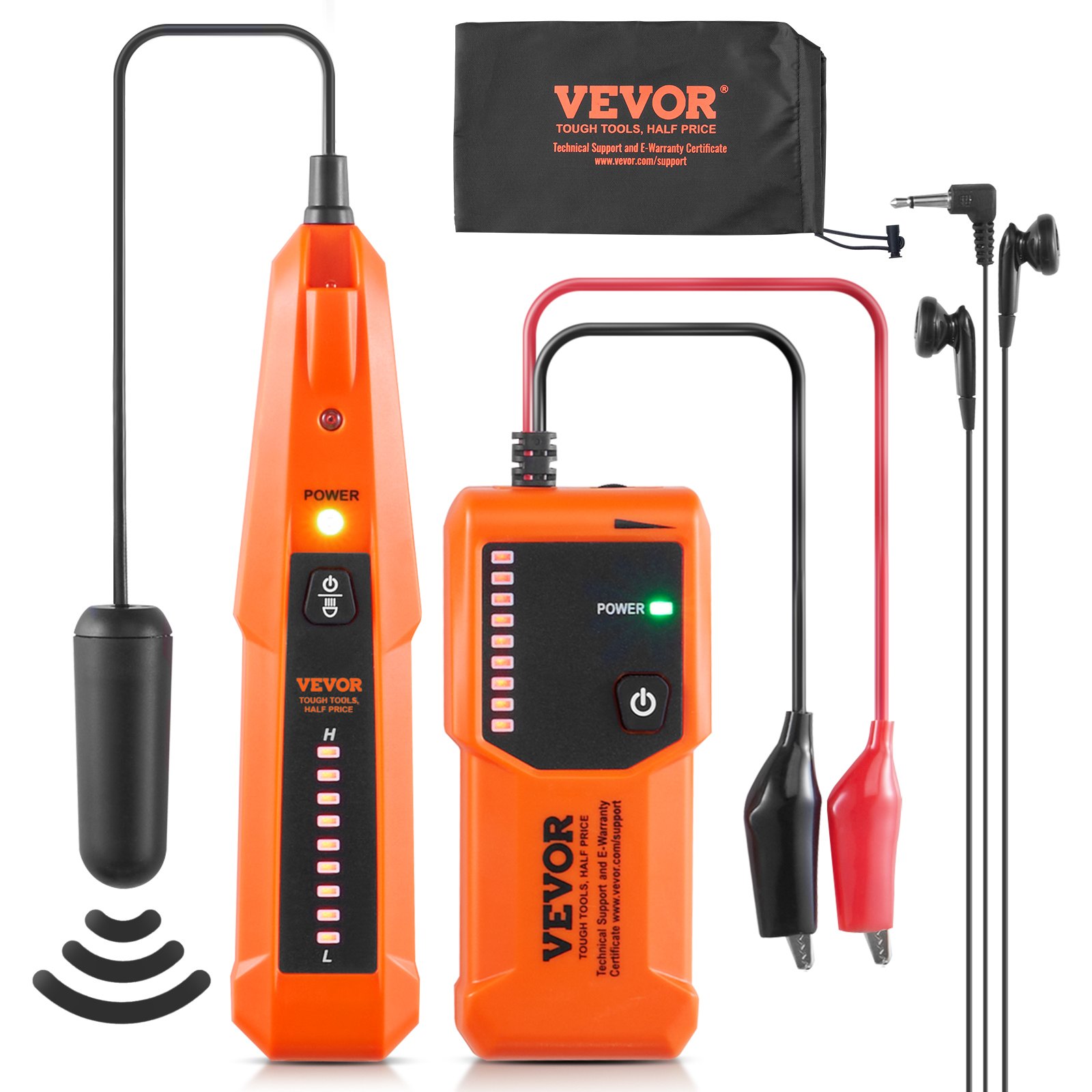 Underground Cable Locator, 3 FT Max. Detection Depth, Wire Tracer Break Detector Finder With Earphone, One Thousand FT Max.Detection Length Tester For Pet Fence Buried Sprinkler Valve Irrigation$38.99View on Mallflare
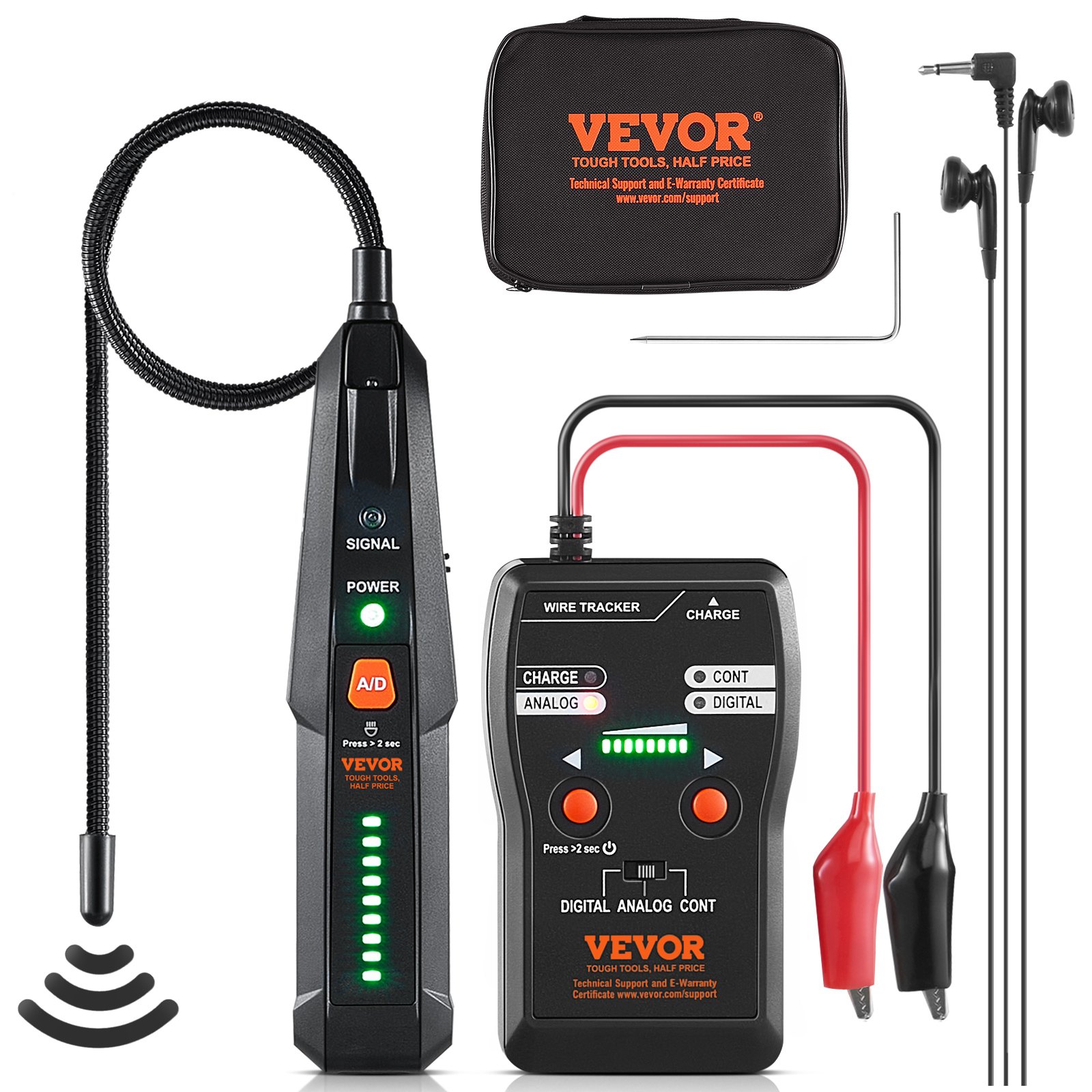 Underground Cable Locator, 6.5 FT Max. Detection Depth, Wire Tracer Break Detector Finder With Earphone, 3280 FT Max.Detection Length Tester For Pet Fence Buried Sprinkler Valve Irrigation$59.99View on Mallflare
Highlights
- Detection depth scales with transmitter output and soil conductivity, not receiver display size: 3 ft class sets suit sprinkler and pet fence, 6.5 ft class sets suit deeper direct-buried low-voltage runs.
- Maximum detection length is a circuit-continuity spec: long-run sets trade tone strength for distance, so a 1000 ft rated unit loses signal on 3000 ft runs regardless of depth rating.
- Earphone output on the receiver is the practical noise-rejection control on busy properties, letting the operator hear tone nulls that a bar-graph display smears.
- Direct-connect clips plus a ground stake are mandatory for accurate break location; inductive-only (clamp or antenna) coupling smears the null and is for path tracing only.
Best use cases
- Best fit for pet fence and irrigation valve finding: a 3 ft depth / 1000 ft length direct-connect set with earphone, because shallow short runs need tone clarity, not raw power.
- Best fit for deeper direct-buried low-voltage landscape and sprinkler mains: a 6.5 ft depth / 3280 ft length set, which holds tone across long loops and locates faults under thicker cover.
- Wrong fit for energized line locating or metallic pipe tracing: these are low-voltage tone sets, not electromagnetic utility locators, and must be skipped for live mains or long metallic runs.
- Wrong fit for whole-property mapping of many circuits: a two-piece tone set locates one conductor at a time, so multi-circuit mapping needs a multi-frequency locator with a clamp.
Buying tips
- Match depth rating to bury depth with 1.5x headroom: a 3 ft set covers 2 ft sprinkler lines, while 4-6 ft direct-buried runs require the 6.5 ft class.
- Match length rating to loop length with 1.2x headroom: measure the longest continuous run and pick a set rated above it, since tone falls off with distance.
- Insist on direct-connect alligator clips, a ground stake, and a receiver earphone jack; these three items separate a locatable fault from a vague path trace.
- Prefer sets with adjustable sensitivity and a tone-null mode over fixed-gain units, because null detection pinpoints breaks while peak detection only shows the path.
Specs
| Detection Depth Class | 3 ft shallow vs 6.5 ft deep |
|---|---|
| Max Trace Length | 1000 ft vs 3280 ft spans |
| Coupling Method | Direct clips + ground vs inductive |
| Receiver Feedback | Earphone jack + adjustable gain |
Related searches
What to check before buying
- Measure the deepest bury depth and the longest continuous conductor run on your property before choosing 3 ft or 6.5 ft class.
- Confirm the target conductor is low-voltage, de-energized, and accessible at both ends for direct-connect clipping.
- Check soil and site conditions: wet clay conducts tone well, dry sand and rocky fill attenuate it and may need the higher-power set.
- Verify the kit includes a ground stake, test leads, and a receiver earphone, and that batteries are standard AA or 9V cells available locally.
FAQ
Data sources: eBay / Amazon listings and product attribute feeds. Updated Nov 28, 2026.
Some links on this page are affiliate links. If you buy after clicking one, we may earn a commission at no extra cost to you. This does not change which products appear here or their order. Affiliate disclosure.