
Photos from current listings. Actual item, color, and included accessories may vary.
Underground Cable Locator Buying Guide
An underground cable locator pairs a transmitter that injects a signal onto a buried conductor with a receiver that picks it up through soil, letting you trace runs and find breaks without digging. The core trade-off is detection depth and length versus interference rejection: cheap single-frequency units work on shallow, isolated lines, while multi-frequency or dual-coil designs hold a trace in wet soil, near metal, or over long runs.
Median $49.49
Key takeaways
- Detection depth scales directly with transmitter power and receiver sensitivity; entry units top out around 3 FT, mid-tier units reach 6-7 FT on energized or well-grounded conductors.
- Traceable length is set by signal frequency and conductor continuity: low frequencies travel farther on long runs, high frequencies couple better on short or poorly grounded lines.
- Receiver coil architecture matters: a single horizontal coil gives depth-only tracing, while dual-coil gradient designs add direction indication and reject ambient noise.
At a glance
- Category
- RF, Network, Cable & Telecom Test
- Last updated
- Nov 28, 2026
Current offers
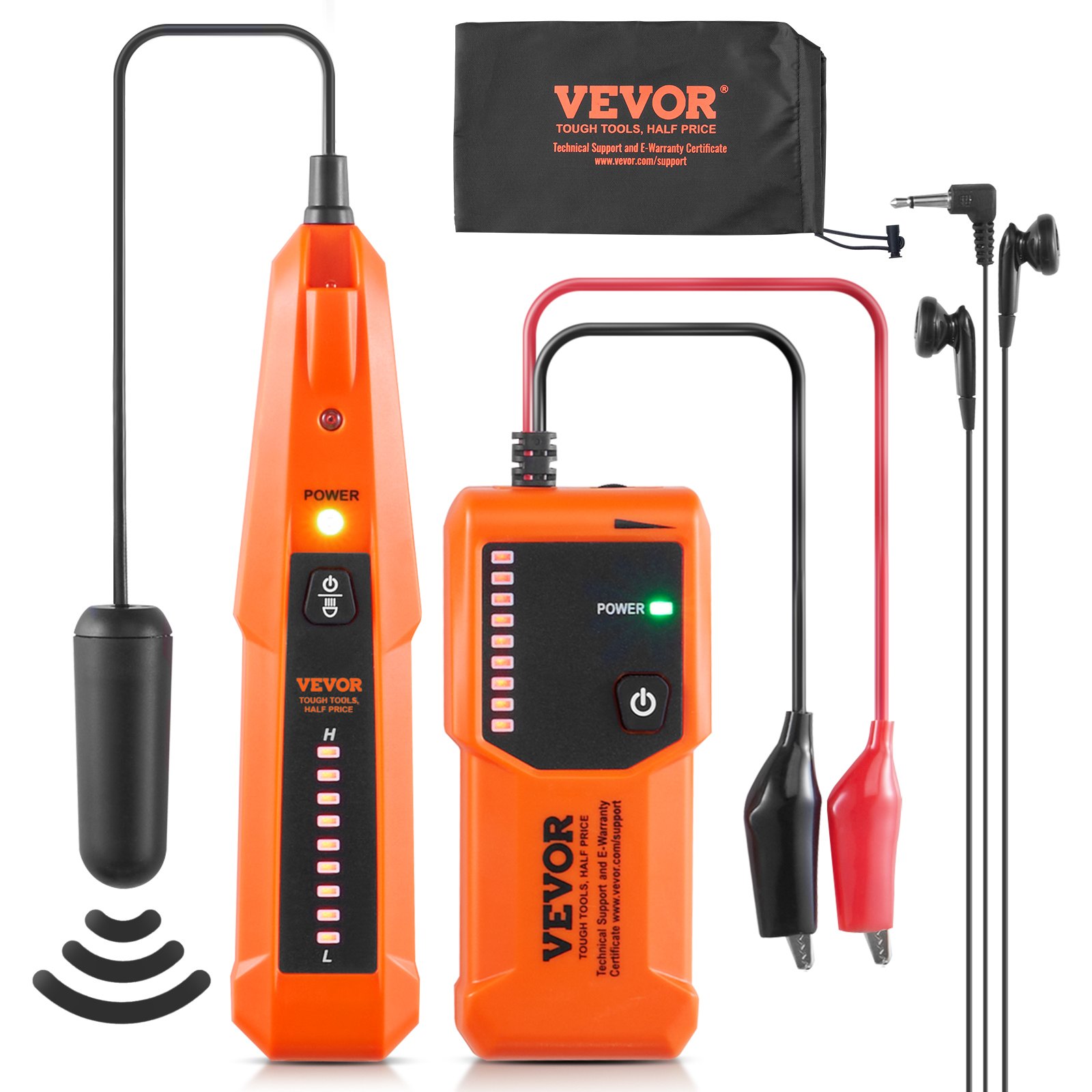 Underground Cable Locator, 3 FT Max. Detection Depth, Wire Tracer Break Detector Finder With Earphone, One Thousand FT Max.Detection Length Tester For Pet Fence Buried Sprinkler Valve Irrigation$38.99View on Mallflare
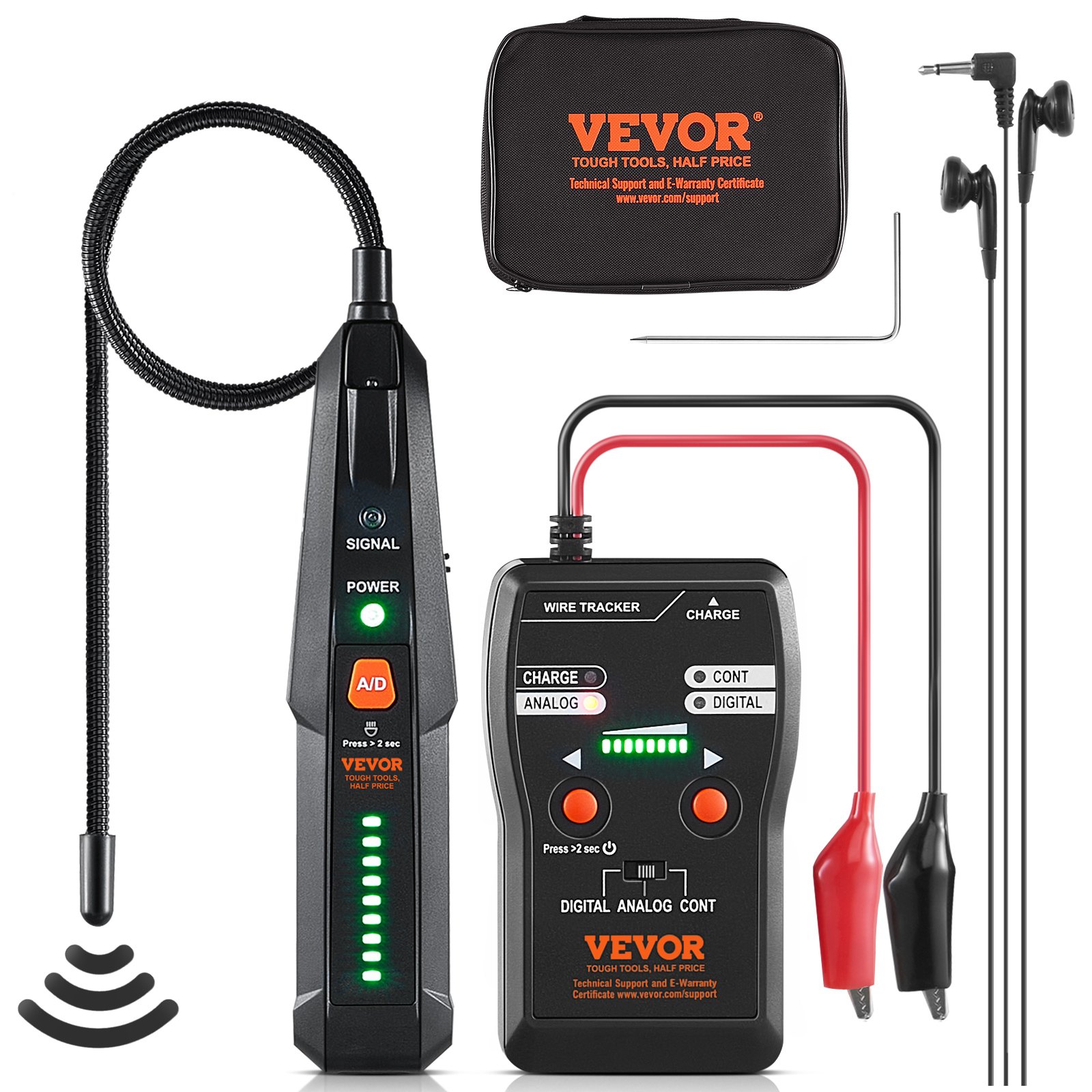 Underground Cable Locator, 6.5 FT Max. Detection Depth, Wire Tracer Break Detector Finder With Earphone, 3280 FT Max.Detection Length Tester For Pet Fence Buried Sprinkler Valve Irrigation$59.99View on Mallflare
Highlights
- Detection depth scales directly with transmitter power and receiver sensitivity; entry units top out around 3 FT, mid-tier units reach 6-7 FT on energized or well-grounded conductors.
- Traceable length is set by signal frequency and conductor continuity: low frequencies travel farther on long runs, high frequencies couple better on short or poorly grounded lines.
- Receiver coil architecture matters: a single horizontal coil gives depth-only tracing, while dual-coil gradient designs add direction indication and reject ambient noise.
- Inductive (clamp or antenna) coupling is required for lines that cannot be disconnected; direct-connect leads give the strongest signal and deepest reliable detection.
Best use cases
- Best fit: pet fence and irrigation valve tracing on shallow runs under 3 FT — a single-frequency 3 FT-class locator is sufficient and the least expensive way to find a broken wire.
- Best fit: long property runs, driveway crossings, and deeper utility drops in the 3-7 FT band — step up to a 6.5 FT-class unit with adjustable frequency and earphone output for noisy sites.
- Wrong fit: locating unenergized metal pipe or non-conductive conduit — a cable locator needs a conductive tracer or sonde; use a pipe-and-cable locator with a sonde instead.
- Wrong fit: dense urban runs with adjacent power and telecom — a single-frequency hobby unit will ghost-trace; you need a multi-frequency receiver with peak/null modes and current measurement.
Buying tips
- Match rated depth to your deepest target plus 1 FT of headroom: a 3 FT locator is marginal for anything buried below 24 in, so choose 6.5 FT class for service drops.
- Prioritize adjustable transmit frequency over extra accessories; low frequency (under 10 kHz) for long isolated runs, higher frequency (30-80 kHz) for short or poorly grounded lines.
- Confirm the receiver offers both peak and null (minimum) modes — peak alone cannot distinguish a target line from a parallel return path.
- For lines that stay connected to equipment, ensure the kit includes an inductive clamp or coupler; direct-connect leads alone cannot isolate a live circuit.
Specs
| Detection Depth | 3 FT entry / 6.5 FT mid-tier |
|---|---|
| Trace Length | 1,000-3,280 FT rated |
| Transmit Signal | Single vs adjustable frequency |
| Coupling Method | Direct-connect, clamp, inductive |
Related searches
What to check before buying
- Walk the route first and map all metallic objects — rebar, fence posts, and conduit joints create false peaks that require a null-mode receiver to resolve.
- Confirm soil conditions: dry sand and rocky fill attenuate signal, so size up one depth class if the soil is not moist loam.
- Check whether the target line can be de-energized and disconnected for direct-connect; if not, budget for an inductive clamp.
- Verify the receiver has a ground stake or grounding point in the kit — a poor ground return is the most common cause of weak tracing.
FAQ
Data sources: eBay / Amazon listings and product attribute feeds. Updated Nov 28, 2026.
Some links on this page are affiliate links. If you buy after clicking one, we may earn a commission at no extra cost to you. This does not change which products appear here or their order. Affiliate disclosure.