
Photos from current listings. Actual item, color, and included accessories may vary.
Wire Finder Tool Buying Guide
A wire finder tool (cable locator/tracer) injects a signal onto a conductor and detects it above ground or through walls to trace runs, find breaks, and identify breakers. The core trade-off is detection depth and length versus signal clarity and noise rejection: cheap units use low-frequency single-tone transmitters with weak receivers, while durable units add selectable frequencies, adjustable gain, and shielded earphones. Choose a locator rated at least 2x your deepest burial depth with a detection length that exceeds your longest run; skip anything below 3 FT depth for irrigation or pet fence work.
Median $49.49
Key takeaways
- Detection depth ratings are maximums in ideal soil; real depth is roughly half the rated figure in moist or mineralized ground, so a 6.5 FT unit reliably covers 3-4 FT burials.
- Selectable transmit frequencies (typically low kHz for buried cable, higher kHz for tracing through walls) separate capable locators from fixed-frequency toys that bleed signal onto adjacent lines.
- Adjustable receiver gain and a shielded earphone jack are the difference between hearing your line and hearing 60 Hz hum; fixed-gain units fail near transformers and irrigation valves.
At a glance
- Category
- RF, Network, Cable & Telecom Test
- Last updated
- Nov 28, 2026
Current offers
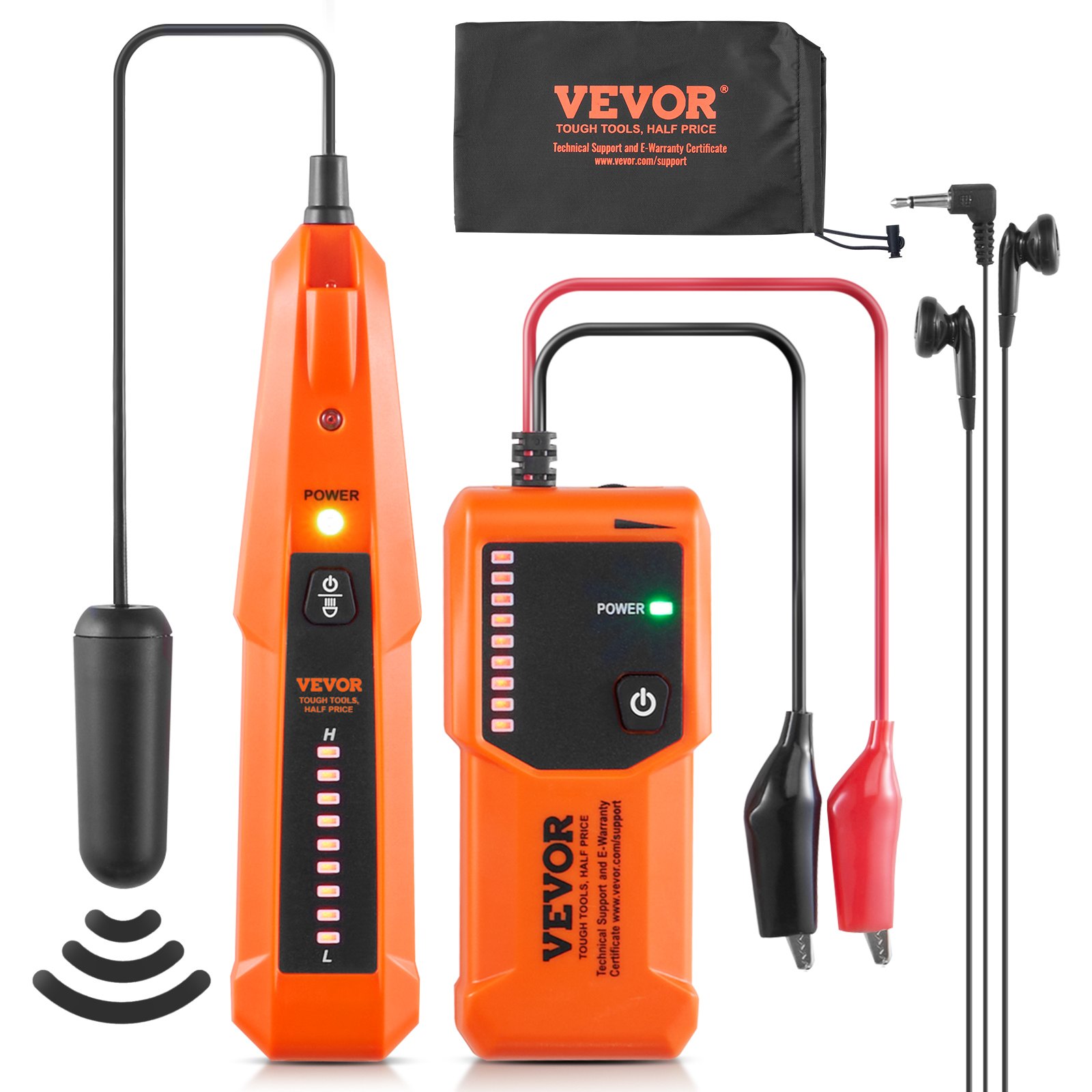 Underground Cable Locator, 3 FT Max. Detection Depth, Wire Tracer Break Detector Finder With Earphone, One Thousand FT Max.Detection Length Tester For Pet Fence Buried Sprinkler Valve Irrigation$38.99View on Mallflare
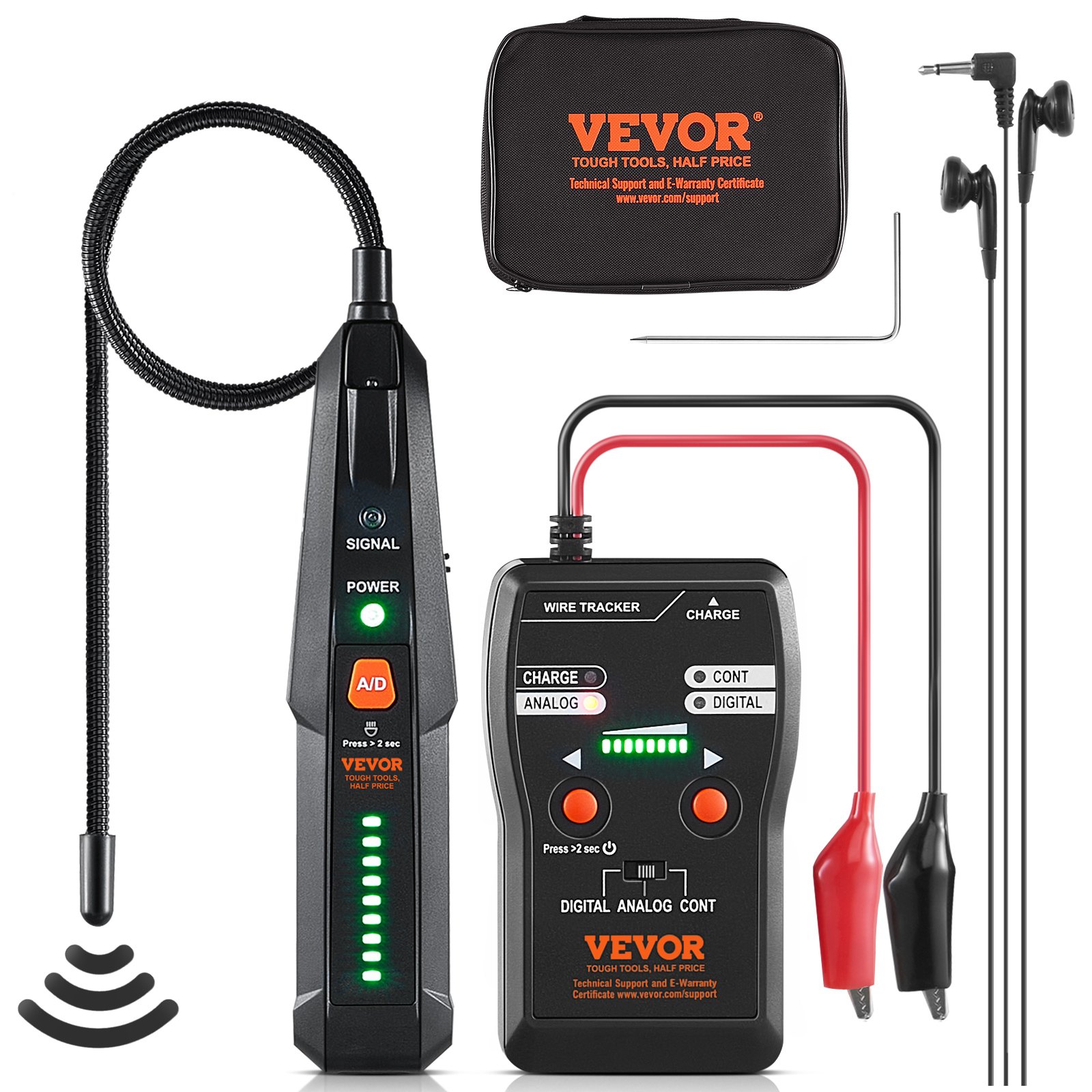 Underground Cable Locator, 6.5 FT Max. Detection Depth, Wire Tracer Break Detector Finder With Earphone, 3280 FT Max.Detection Length Tester For Pet Fence Buried Sprinkler Valve Irrigation$59.99View on Mallflare
Highlights
- Detection depth ratings are maximums in ideal soil; real depth is roughly half the rated figure in moist or mineralized ground, so a 6.5 FT unit reliably covers 3-4 FT burials.
- Selectable transmit frequencies (typically low kHz for buried cable, higher kHz for tracing through walls) separate capable locators from fixed-frequency toys that bleed signal onto adjacent lines.
- Adjustable receiver gain and a shielded earphone jack are the difference between hearing your line and hearing 60 Hz hum; fixed-gain units fail near transformers and irrigation valves.
- Detection length ratings (1,000 FT vs 3,280 FT) reflect transmitter output and receiver sensitivity; long-run tracing requires a higher-output transmitter, not just a deeper receiver.
Best use cases
- Buried pet fence or sprinkler valve tracing: pick the 6.5 FT depth / 3,280 FT length tier; the 3 FT depth tier will not reliably locate wires at typical 4-6 inch depths in wet soil.
- Locating a break in a direct-burial low-voltage landscape run: use a locator with a break-detection mode and earphone; skip basic tone-only tracers that cannot isolate fault distance.
- Tracing energized or de-energized household branch circuits through drywall: choose a unit with a higher-kHz wall-trace mode and adjustable gain; a buried-cable-only locator will couple onto adjacent studs and pipes.
- Whole-property multi-zone irrigation with runs over 1,000 FT: the 1,000 FT length tier is inadequate; specify the 3,280 FT tier or a unit with a higher-output transmitter.
Buying tips
- Size depth conservatively: rated detection depth should be at least 2x your deepest expected burial, because moist clay and mineralized soil cut effective depth by 40-60%.
- Match detection length to your longest continuous run plus 20% headroom; a 1,000 FT-rated tracer struggles past ~700 FT on thin 18-gauge wire.
- Prefer locators with at least two selectable frequencies (low kHz for buried, high kHz for walls) and a gain/volume control; fixed-frequency, fixed-gain units cannot reject adjacent-line coupling.
- Confirm the transmitter can operate on de-energized lines (direct-connect clips and ground stake) and has a break-detection mode if you need fault distance, not just routing.
Specs
| Max Detection Depth | 3 FT vs 6.5 FT tier |
|---|---|
| Max Detection Length | 1,000 FT vs 3,280 FT |
| Transmit Frequencies | Fixed single-tone vs selectable multi-kHz |
| Receiver Controls | Fixed gain vs adjustable gain + earphone |
Related searches
What to check before buying
- Measure your deepest burial depth and longest run length before choosing a tier; write both numbers down and compare against the locator's rated maximums.
- Confirm the soil type and moisture: high-clay or wet soils reduce effective depth, so step up one depth tier if your ground is mineralized.
- Check that the locator includes direct-connect clips, a ground stake, and a shielded earphone; these are required for de-energized line tracing and noisy environments.
- Verify the transmitter's power source (battery type and count) and that the receiver uses standard cells you can source locally.
FAQ
Data sources: eBay / Amazon listings and product attribute feeds. Updated Nov 28, 2026.
Some links on this page are affiliate links. If you buy after clicking one, we may earn a commission at no extra cost to you. This does not change which products appear here or their order. Affiliate disclosure.