
Photos from current listings. Actual item, color, and included accessories may vary.
Oscilloscope Probe Buying Guide
Oscilloscope probes are the critical interface between a circuit and your scope, and the primary trade-off is bandwidth and compensation quality versus cost. A probe must have at least the bandwidth of your scope and proper 10X attenuation with compensation, or you lose signal fidelity. Buy a passive 10X probe rated above your scope's bandwidth from a known brand; skip no-name 1X/10X switchable kits if you need accurate high-frequency measurements.
Median $25.71
Key takeaways
- Passive probes come in fixed 1X, fixed 10X, and switchable 1X/10X; 10X attenuates signal 10x and raises input impedance to ~10 MΩ, critical for minimal circuit loading.
- Bandwidth rating must meet or exceed your oscilloscope's analog bandwidth; a 100 MHz probe on a 200 MHz scope rolls off high frequencies and understates rise times.
- Compensation range matters: probes must be adjustable to match your scope's input capacitance (typically 10–35 pF); fixed-compensation probes only suit specific scopes.
At a glance
- Category
- Test Leads, Probes, Fixtures & Accessories
- Last updated
- Nov 28, 2026
Current offers
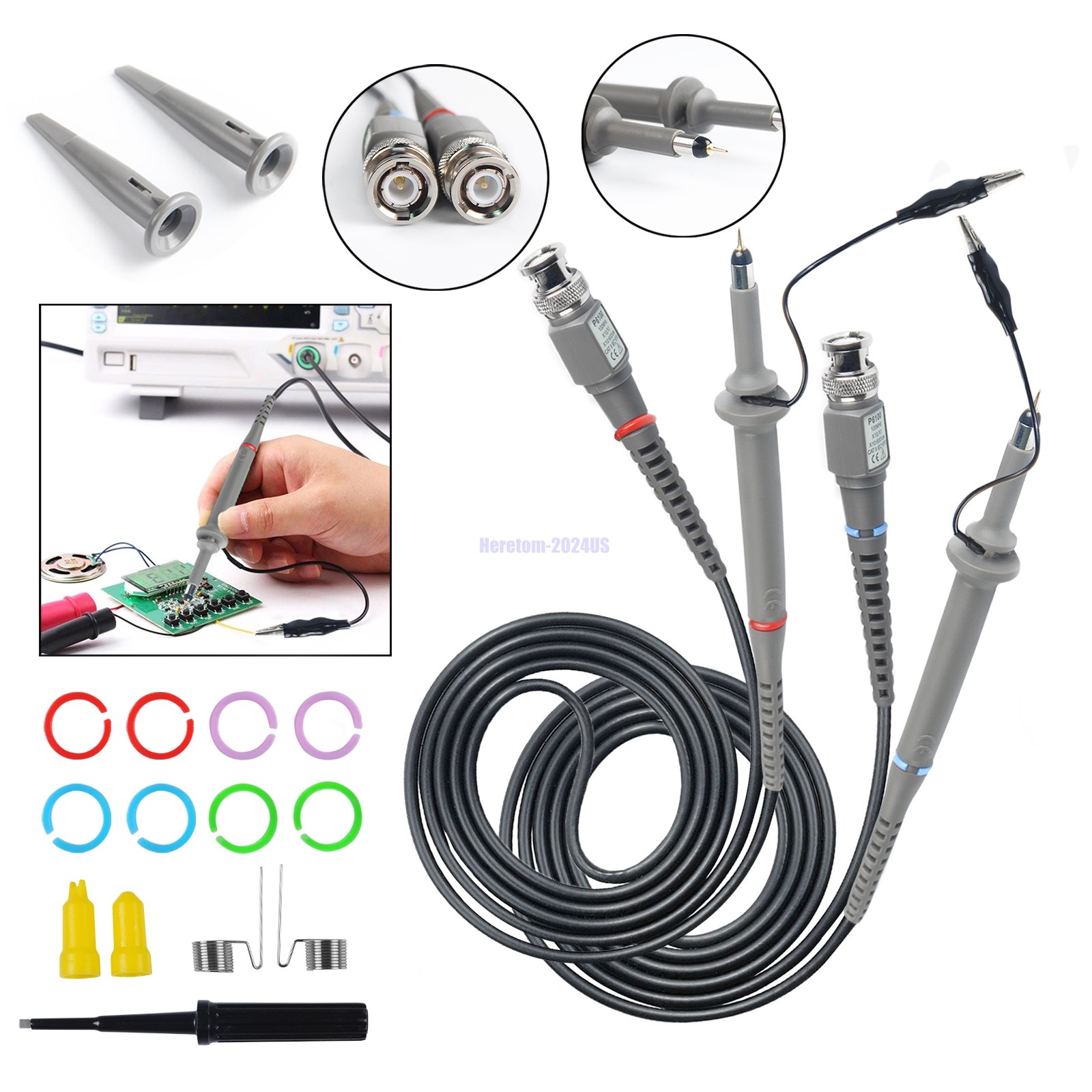 2xFor BNC Oscilloscope Probe Kit P6100 100MHz 1X 10X Precision Scope Clip Probes$12.99View on eBay
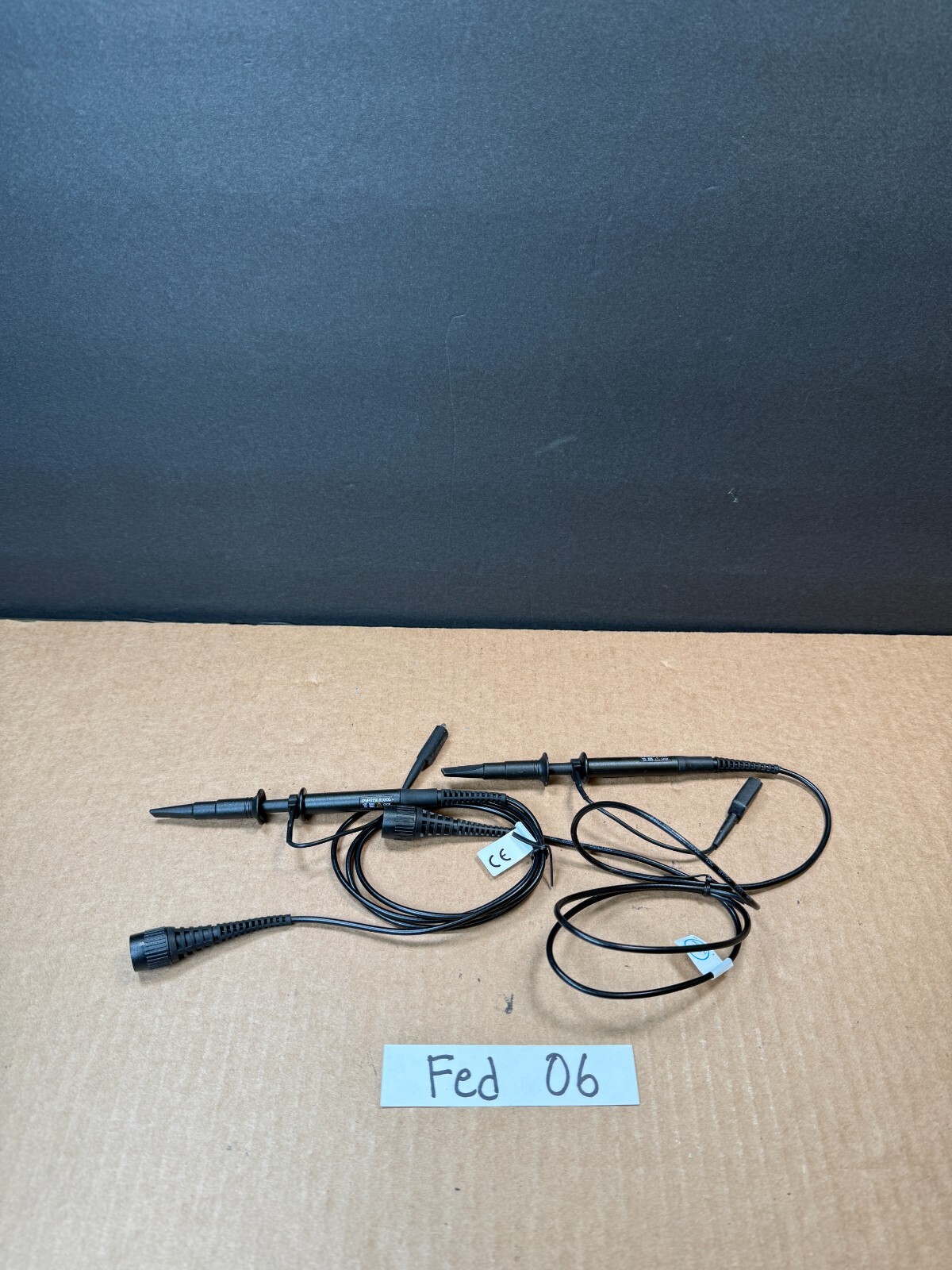 RIGOL PVP3150 Passive Oscilloscope Probe Kit (Qty 2) , Brand New!$25.43View on eBay
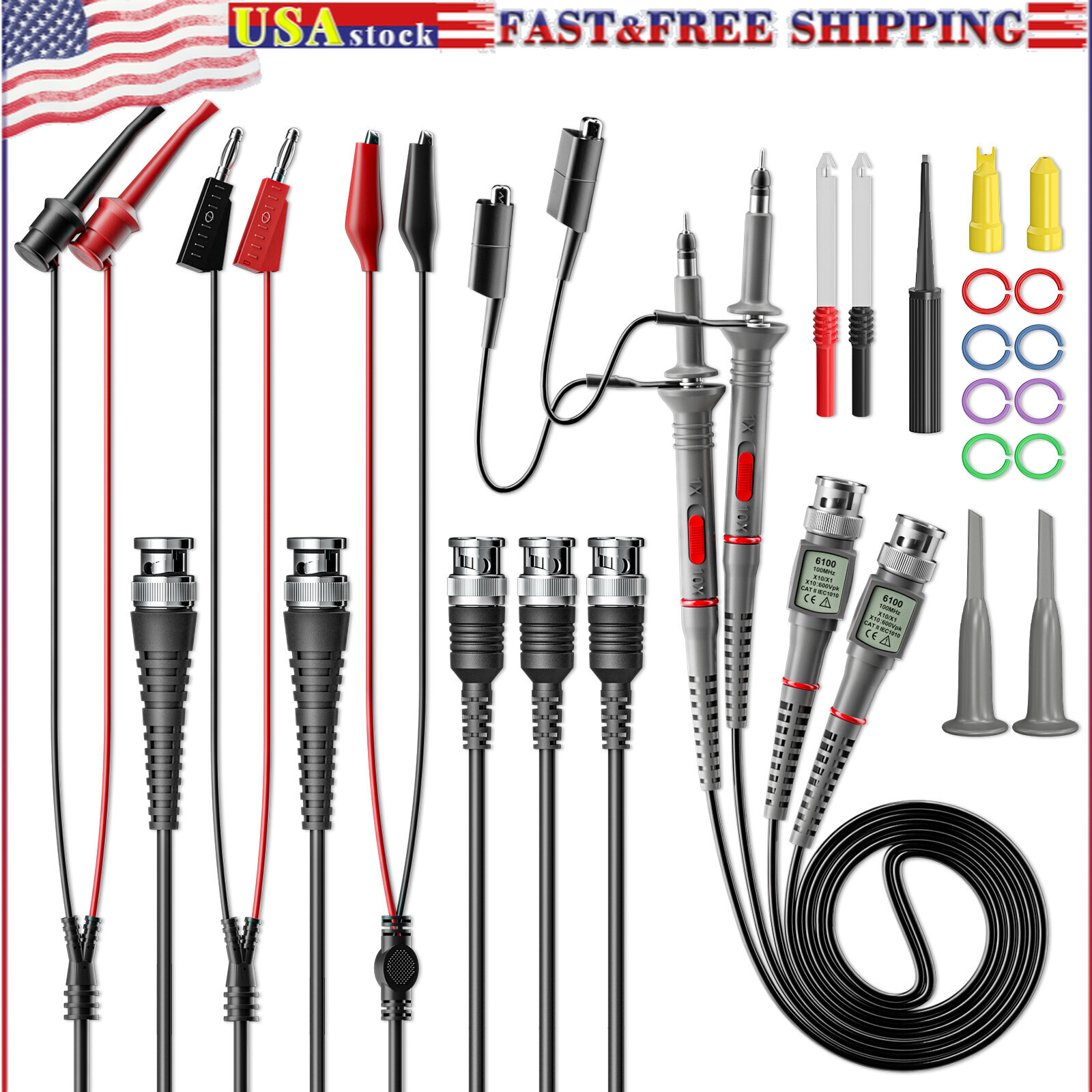 Universal Oscilloscope Probes with Accessories Test Lead Kit 100MHz 1X 10X 2Pack$25.99View on eBay
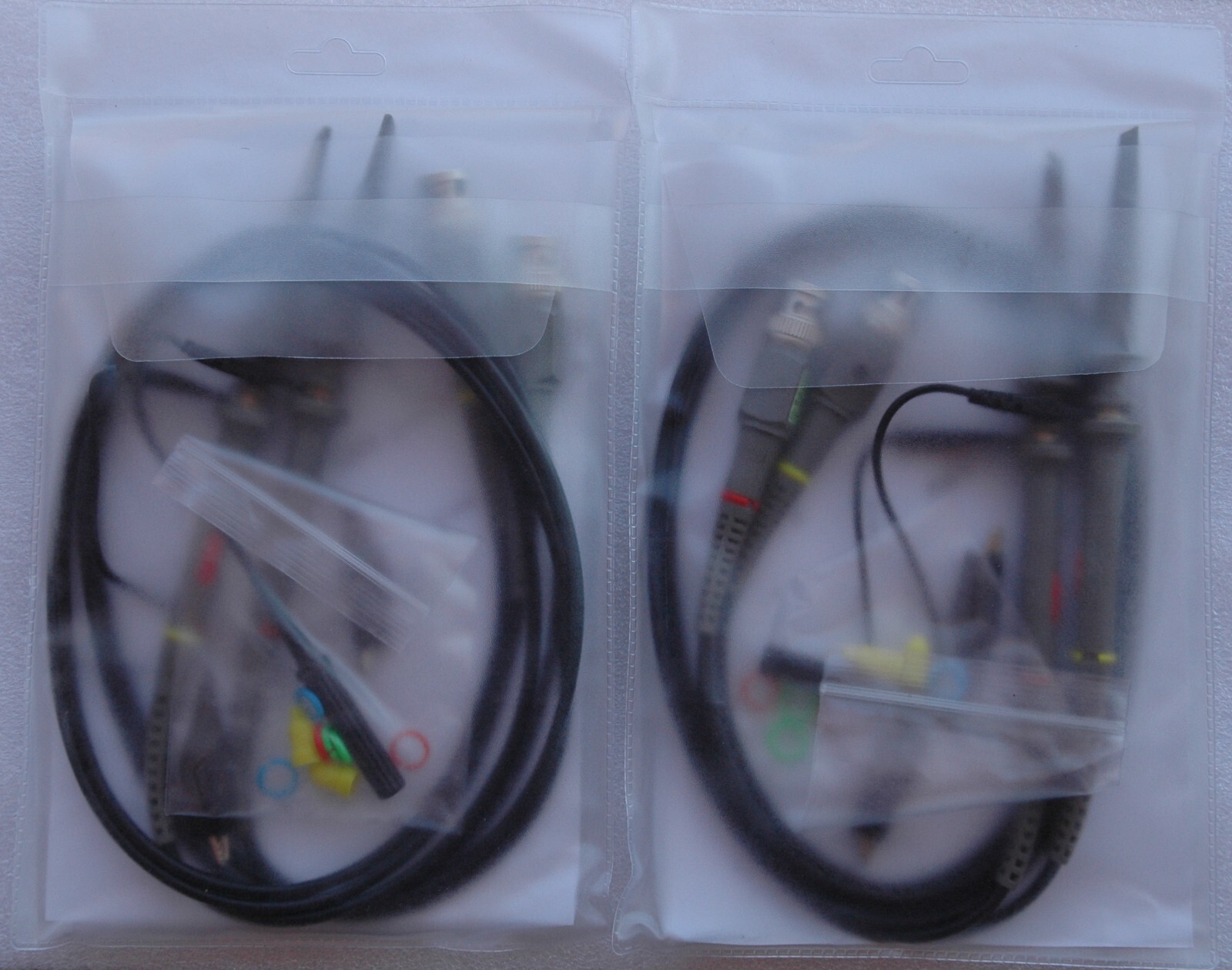 4 Four New 100MHZ Oscilloscope clip probes for HP Tektronix Hitachi, US seller$29.99Last checked Nov 27, 2026View on eBay
Highlights
- Passive probes come in fixed 1X, fixed 10X, and switchable 1X/10X; 10X attenuates signal 10x and raises input impedance to ~10 MΩ, critical for minimal circuit loading.
- Bandwidth rating must meet or exceed your oscilloscope's analog bandwidth; a 100 MHz probe on a 200 MHz scope rolls off high frequencies and understates rise times.
- Compensation range matters: probes must be adjustable to match your scope's input capacitance (typically 10–35 pF); fixed-compensation probes only suit specific scopes.
- Readout pin and brand compatibility: Tektronix, Keysight, RIGOL, and Hantek have different readout schemes; generic BNC probes work universally but lack automatic attenuation sensing.
Best use cases
- Best fit: hobbyists and students with 50–100 MHz scopes—buy a 2-pack of fixed 10X passive probes at 100 MHz from a reputable brand with compensation adjustment and accessory kit.
- Best fit: professional bench work on 200 MHz+ scopes—choose 200 MHz or higher 10X probes with low input capacitance (<15 pF) and proper compensation range, not generic 100 MHz kits.
- Wrong fit: probing high-voltage or differential signals—passive probes are single-ended and ground-referenced; use a differential probe or isolated channel instead.
- Skip: 1X-only probes for general use—they load circuits heavily (high capacitance) and are only suitable for low-frequency, high-impedance nodes.
Buying tips
- Match probe bandwidth to scope bandwidth: probe BW ≥ scope BW; for a 100 MHz scope, buy 100 MHz or 150 MHz probes, not 60 MHz or 200 MHz if budget is tight.
- Prefer fixed 10X probes over switchable 1X/10X for signal integrity; switchable types add stray capacitance and contacts that degrade performance at high frequencies.
- Check compensation range against your scope's input capacitance (e.g., 10–35 pF adjustable); fixed-compensation probes only work with specific scope models.
- Buy probes with standard BNC and a full accessory kit (spring hook, ground clip, adjustment tool, BNC adapter) to avoid missing parts; quantity 2 covers most 2-channel scopes.
Specs
| Attenuation | 1X / 10X / switchable |
|---|---|
| Bandwidth | 60–500 MHz (match scope) |
| Input Impedance | 1 MΩ (1X) / 10 MΩ (10X) |
| Compensation Range | 10–35 pF adjustable |
Related searches
What to check before buying
- Confirm your oscilloscope's input impedance (1 MΩ typical) and input capacitance (e.g., 15 pF) — probe compensation range must include this value.
- Measure your scope's bandwidth (e.g., 100 MHz) and buy probes rated at or above it; check derating for 1X mode if switchable.
- Verify probe tip and ground lead compatibility with your probing needs (fine-pitch ICs vs through-hole) and that accessories match.
- Check that the probe's BNC connector and readout pin (if any) physically fit your scope; generic BNC works with all standard 1 MΩ inputs.
FAQ
Data sources: eBay / Amazon listings and product attribute feeds. Updated Nov 28, 2026.
Some links on this page are affiliate links. If you buy after clicking one, we may earn a commission at no extra cost to you. This does not change which products appear here or their order. Affiliate disclosure.