The moment you start measuring live circuits, the test leads probes fixtures category forces a simple choice: do you need to see waveforms on an oscilloscope, or do you need to check voltage and current with a multimeter? Pick the wrong lead type and you will end up fighting bad connections or an unusable signal. Here's how an oscilloscope clip probe kit and a multimeter lead set stack up for the work they are made for. This isn't a matter of one being better overall; it's about matching the connector to the instrument you actually use.
Quick Verdict
For oscilloscope work, the oscilloscope clip probe kit is the one to buy. For multimeter checks, the multimeter test leads are the practical pick. The two serve different test points, so the right answer depends on the tool you already own.
Comparison at a Glance
| Product | Price | Price Bar | Key Details | Best For |
|---|---|---|---|---|
| 100MHz Oscilloscope Clip Probe Kit | $17.99 | Two 100MHz probes, 1X/10X attenuation, 120cm cable | Oscilloscope waveform viewing | |
| Multimeter Alligator Clip Test Leads | $9.95 | 1000V/20A rating, alligator clip ends, sharp tips | Multimeter voltage and continuity checks |
Where Each Product Wins
The oscilloscope clip probe kit is the choice for anyone who needs to view signals on an oscilloscope. The multimeter lead set is the choice for anyone taking measurements with a handheld multimeter. Pick based on your primary instrument; the two lead types are designed for different inputs. If you are setting up a new test station, start with the probe type that matches the main instrument. The oscilloscope kit is built for signal observation, while the multimeter lead set is built for point-to-point measurements.
Product Notes
100MHz Oscilloscope Clip Probe Kit
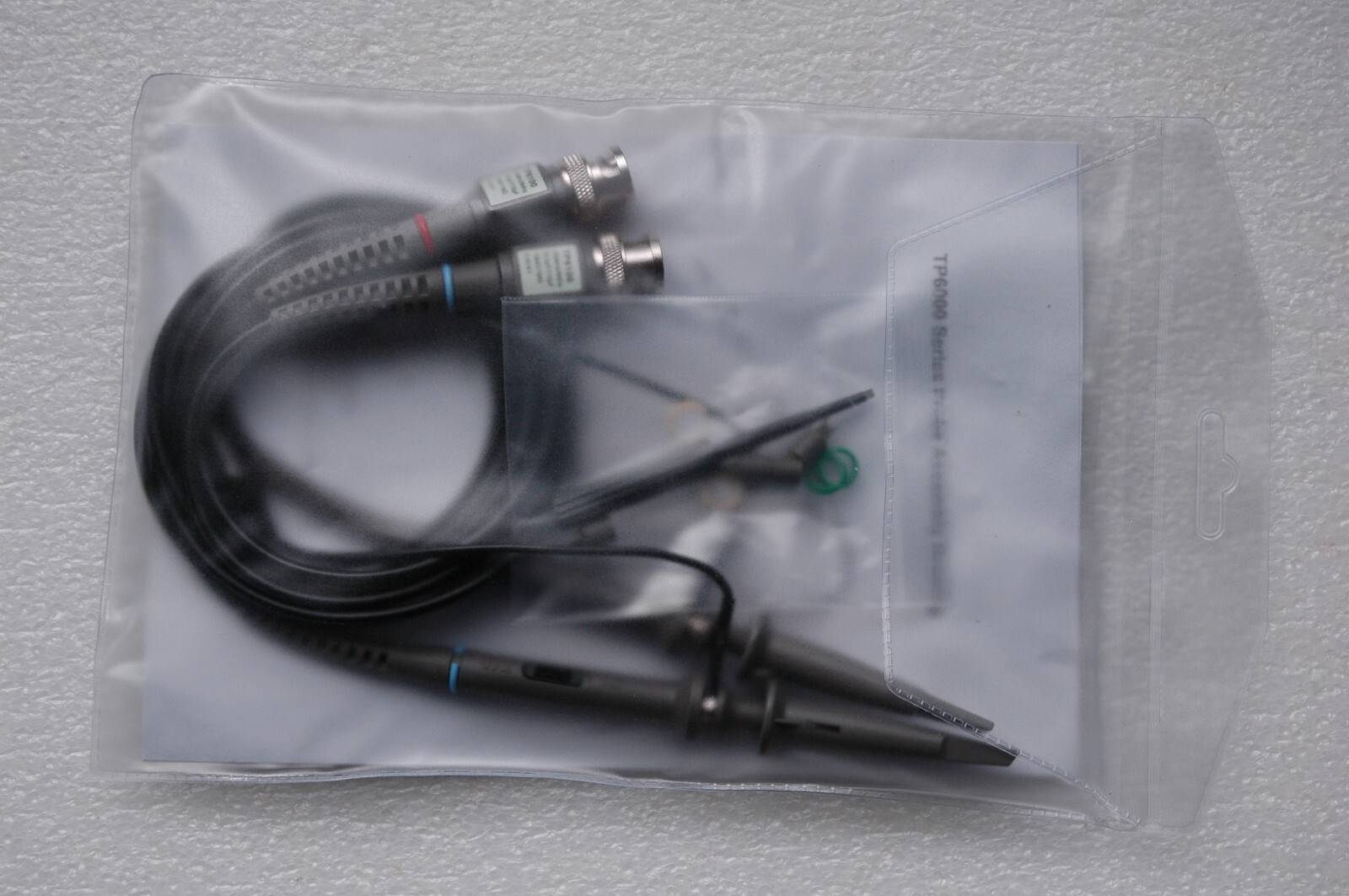
This kit includes two 100MHz probes with mini alligator clips and ground leads. The 1X/10X switchable attenuation gives you a choice between DC to 6MHz at 1X with 1Mohm input resistance, and DC to 100MHz at 10X with 10Mohm input resistance. That makes it a solid fit for waveform inspection on oscilloscopes from HP and Tektronix. The 120cm cable is long enough to reach across a typical workbench, and the 55g weight keeps the setup light. The limitation is the input voltage ceiling: 600 VDC plus peak AC at 10X and 300 VDC plus peak AC at 1X. If you need to probe higher-energy circuits, these probes are not the right tool.
Multimeter Alligator Clip Test Leads
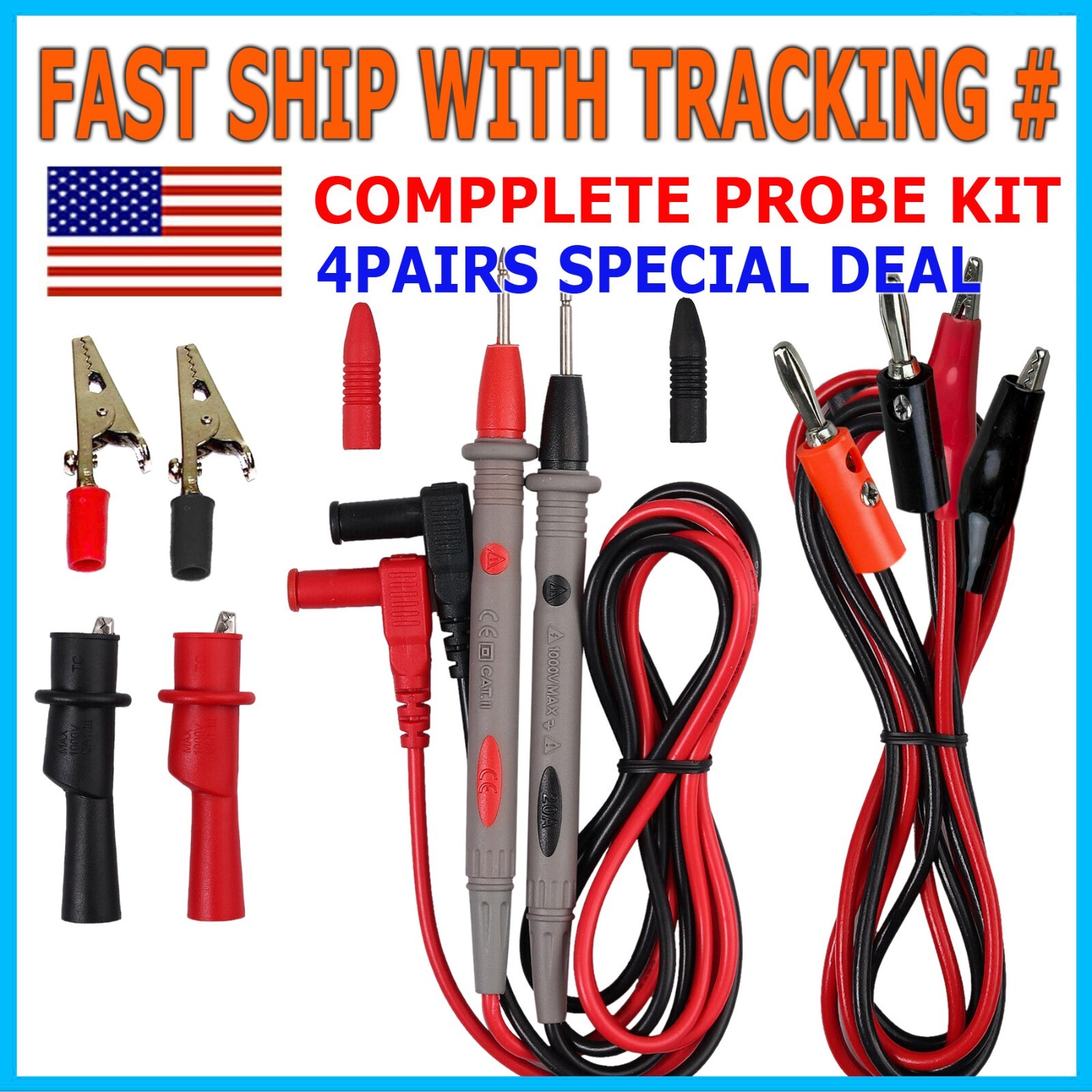
These alligator clip test leads are built for multimeter-style measurements, with a 1000V/20A rating that covers voltage and current checks. The clip ends let you attach the meter to a test point and keep both hands free, and the sharp tips suit IC pins, LEDs, and small components. The set is positioned for Fluke meters and for universal use with digital multimeters. The tradeoff is that this is not an oscilloscope probe: it is a multimeter accessory, so it pairs with a meter rather than a scope's channel input. For everyday multimeter tasks, it is the simpler, more direct option.
Final Choice by Use Case
If your bench centers on an oscilloscope, the oscilloscope clip probe kit at $17.99 is the matching purchase. It is the lead type designed for a scope's channel input. If your bench centers on a multimeter, the multimeter test leads at $9.95 are the practical buy for voltage checks, continuity tests, and small-component work. The $8.04 difference comes down to whether your toolbox needs oscilloscope probes; for meter work, the lower-priced set covers the essentials. If you expect to do both kinds of work, you may eventually want both sets, but for a single purchase, let your primary tool decide.