Choosing new test leads for your bench can feel confusing because 'test leads' covers two very different jobs. Oscilloscope probes are built to carry tiny signals into a scope without distorting them, while multimeter leads are built for hands-on probing of voltage, current, and continuity. The two kits here-the 2x 100MHz oscilloscope clip probe kit for HP and Tektronix scopes and the multimeter test leads with alligator clips-sit on opposite sides of the test leads probes fixtures world. While they look similar in a drawer, the measurement demands they serve are completely different. Your job is to match the tool to the instrument you reach for most.
Quick Verdict
For oscilloscope work, the JINHAO P6100 kit at $17.99 is the one that belongs on your bench. It gives you switchable probes and the input resistance to match a typical scope. For multimeter users, the $6.01 test lead set is the straightforward choice: it offers clip-on convenience for everyday measurements.
Comparison
| Feature | Oscilloscope Probe Kit | Multimeter Test Leads |
|---|---|---|
| Price | USD 17.99 | USD 6.01 |
| Best for | Oscilloscope signal viewing | Multimeter circuit checks |
| Bandwidth/rating | 100MHz; switchable attenuation | 1000V, 20A |
| Tip | Clip probe | Alligator clip |
| Cable length | 120 cm | 110 cm |
| Included | 2 probes | 1 pair (red + black) |
Where Each Product Wins
The oscilloscope probe kit wins when your goal is to view the shape of a signal on a bench scope. The probe is built to preserve the signal as it enters the scope, and the clip tip lets you attach to component leads or test points while you adjust the instrument.
The multimeter leads win when you're making pin-to-pin or wire-to-wire electrical checks. The clips let you connect without holding the probes in place, and the color coding keeps your polarity clear at a glance.
Product Notes
JINHAO P6100 100MHz Oscilloscope Probe Kit
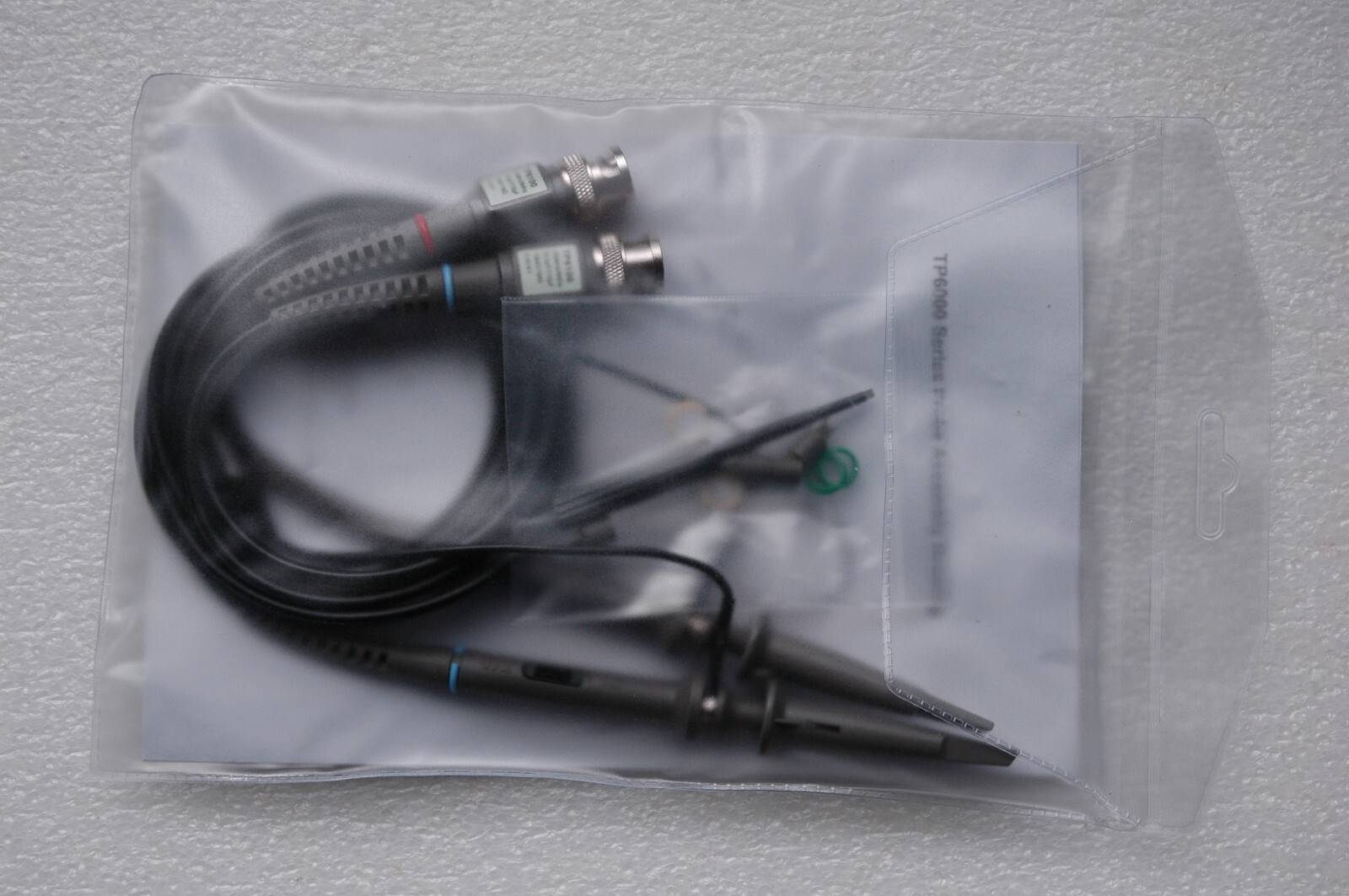
Inside the box you get two TP6100-series clip probes, each with a 120cm cable and switchable 1X/10X attenuation. On the 10X range, the input resistance is 10MΩ and the bandwidth reaches 100MHz; on the 1X range, the bandwidth drops to 6MHz and the input resistance to 1MΩ. The compensation range of 15-45pF lets you tune the probe to match your scope's input capacitance. This is the kit to reach for when you're capturing waveforms and need the probe to load the circuit as little as possible. The main limitation is its singular focus: this is an oscilloscope probe, not a set of multimeter leads. If you need to poke into high-current circuits, you'll want the other set instead.
Universal Multimeter Alligator Clip Test Lead Set
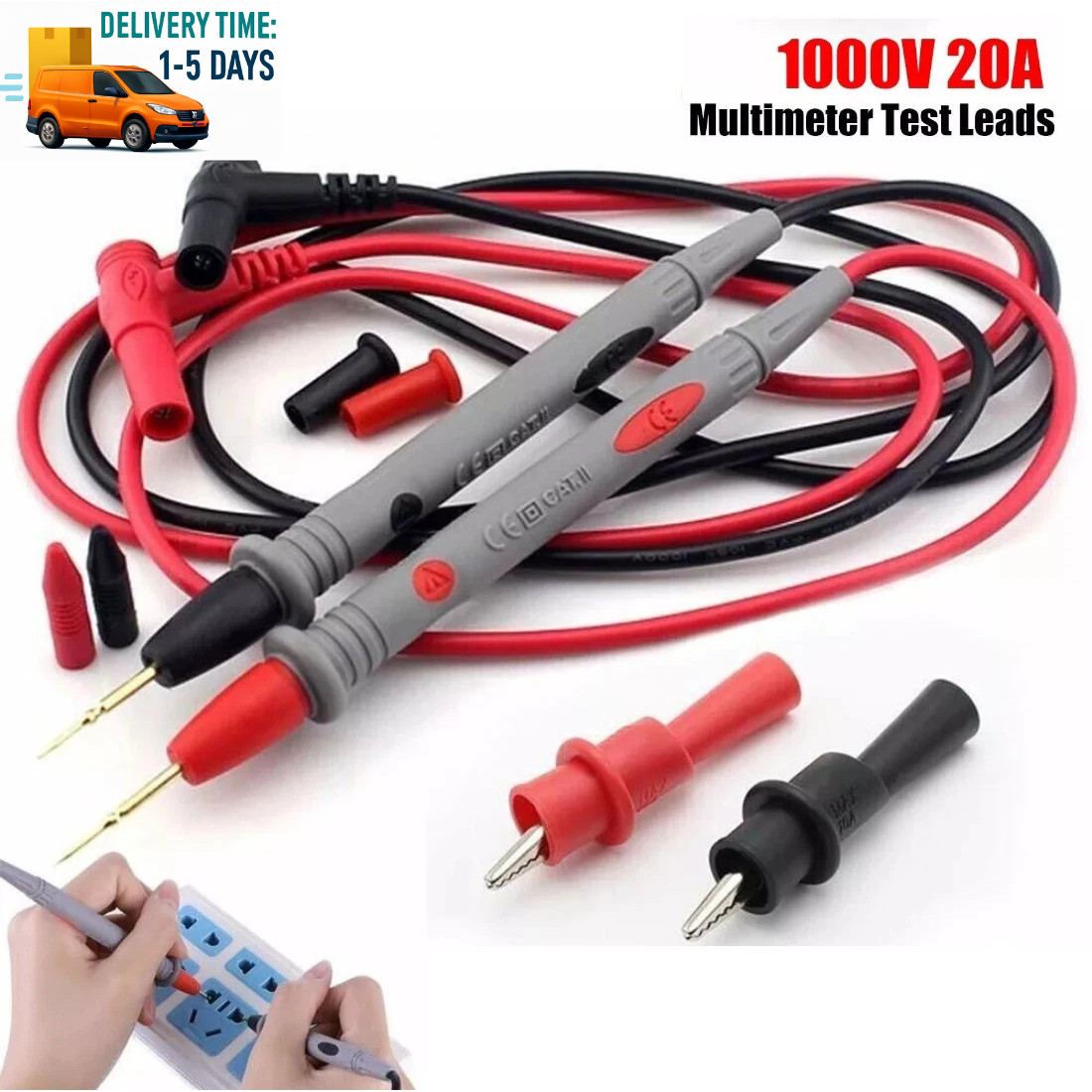
This pair of test leads brings a 1000V/20A rating, a 110cm cable, and red/black alligator clips to your multimeter. The clips hook onto wire ends, terminals, or component legs, which is handy when you need both hands free to read the display. Universal compatibility with all digital multimeters makes them an easy match for a Fluke meter or any other meter you already own. The flip side is that these are multimeter leads, not oscilloscope probes. If you need to visualize high-frequency signals, you'll need a probe kit with a bandwidth rating like the one above.
Final Choice by Use Case
Choose the oscilloscope probe kit if you have a compatible HP or Tektronix scope and want to inspect signal shape and timing. Choose the multimeter leads if your daily work revolves around a multimeter and you want clip-on connections for electrical checks. Think about the instrument that sits on your bench all day, and that will point you to the right set. There's no single winner - the right set is the one that fits the measurements you actually take.