When you're hunting for electrical hotspots, missing insulation, or HVAC leaks, a thermal camera turns invisible heat differences into a visible picture. The two imagers here take very different routes to that picture: a compact model that lists at a lower price, and a VEVOR unit with TISR enhancement that lists at a higher price. The real question isn't just what you spend up front-it's how much thermal detail you need to see when you point the lens. For some jobs, a coarse heat map is enough to tell you where to drill or what to replace. For others, you need to resolve a tiny overheated component before it fails.
Quick Verdict
If your work mostly needs a quick temperature overlay and you want to keep the upfront cost low, the 2.4" Digital Infrared Thermal Imager is the straightforward pick. If you need to inspect smaller components or want a more refined thermal image plus a more drop-resistant build, the VEVOR TISR 240x180 earns its higher listed price with its enhanced thermal image and longer-lasting battery.
Side-by-Side Comparison
| Product | Listed Price | Price Bar | Key Specs |
|---|---|---|---|
| 2.4" Digital Infrared Thermal Imager | USD 49.99 | IR sensor 32 x 24; display 2.4" 320 x 240; temp range -40°C to 300°C; 1000 mAh | |
| VEVOR Infrared Thermal Imager TISR 240x180 | USD 102.90 | Native 96 x 96, enhanced 240 x 180; fixed focus; emissivity 0.01-1.0; 3200 mAh; 1.5m drop resistance |
Where Each Product Wins
- The 2.4" Digital Infrared Thermal Imager wins if you want a lower listed price and a temperature range that extends into cold temperatures. Its compact 160 x 56 x 20 mm body with Type-C charging makes it practical for carrying around, and the color display is clear enough for seeing broad heat patterns. If you're still learning to read thermal images, the coarse IR sensor will still show you where the warm spots are, but you'll want to keep expectations modest about fine detail.
- The VEVOR TISR 240x180 wins if you need more thermal detail. Its native infrared sensor is enhanced via TISR, which means you can separate heat signatures on cramped circuit boards or tight plumbing runs. The long-lasting battery supports longer inspections, and the drop-resistant build suggests a camera you can rely on in tougher fieldwork. With a wide emissivity adjustment range, you can align readings more closely to the surface you're measuring, whether it's shiny metal or matte plastic.
Product Notes
2.4" Digital Infrared Thermal Imager
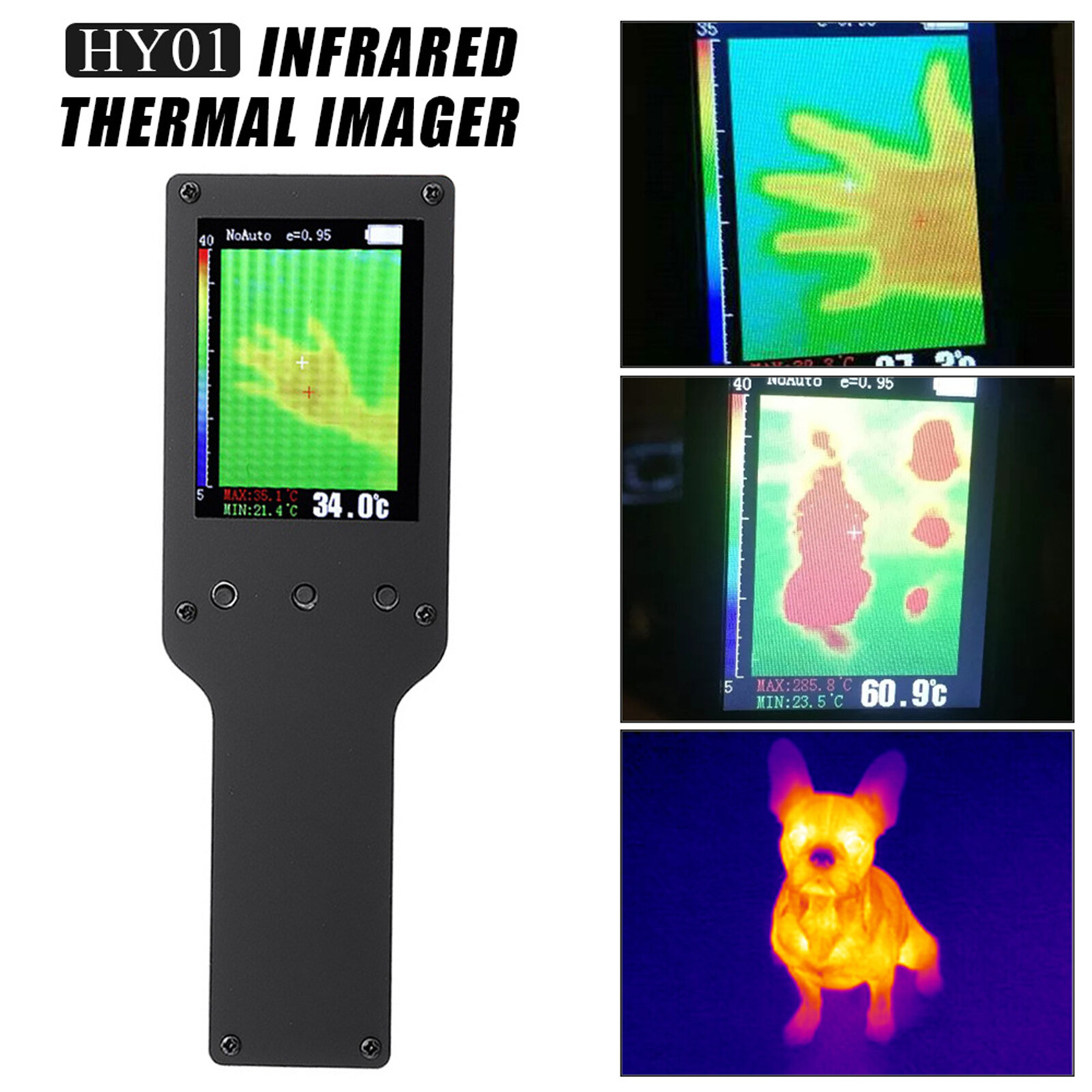
This imager is the lower-priced way to see heat patterns, thanks to its listed price and a 32x24 IR sensor paired with a 2.4-inch 320x240 color display. The -40°C to 300°C range covers cold and warm targets, and the 160 x 56 x 20 mm body with Type-C charging makes it easy to pack. For routine checks where you only need to know which area is hot and which is cold, it gets the job done. The main limitation is the coarse sensor: fine hotspots on small circuit boards may blur together. The 1000 mAh battery also means shorter field sessions before you need to recharge.
VEVOR Infrared Thermal Imager TISR 240x180
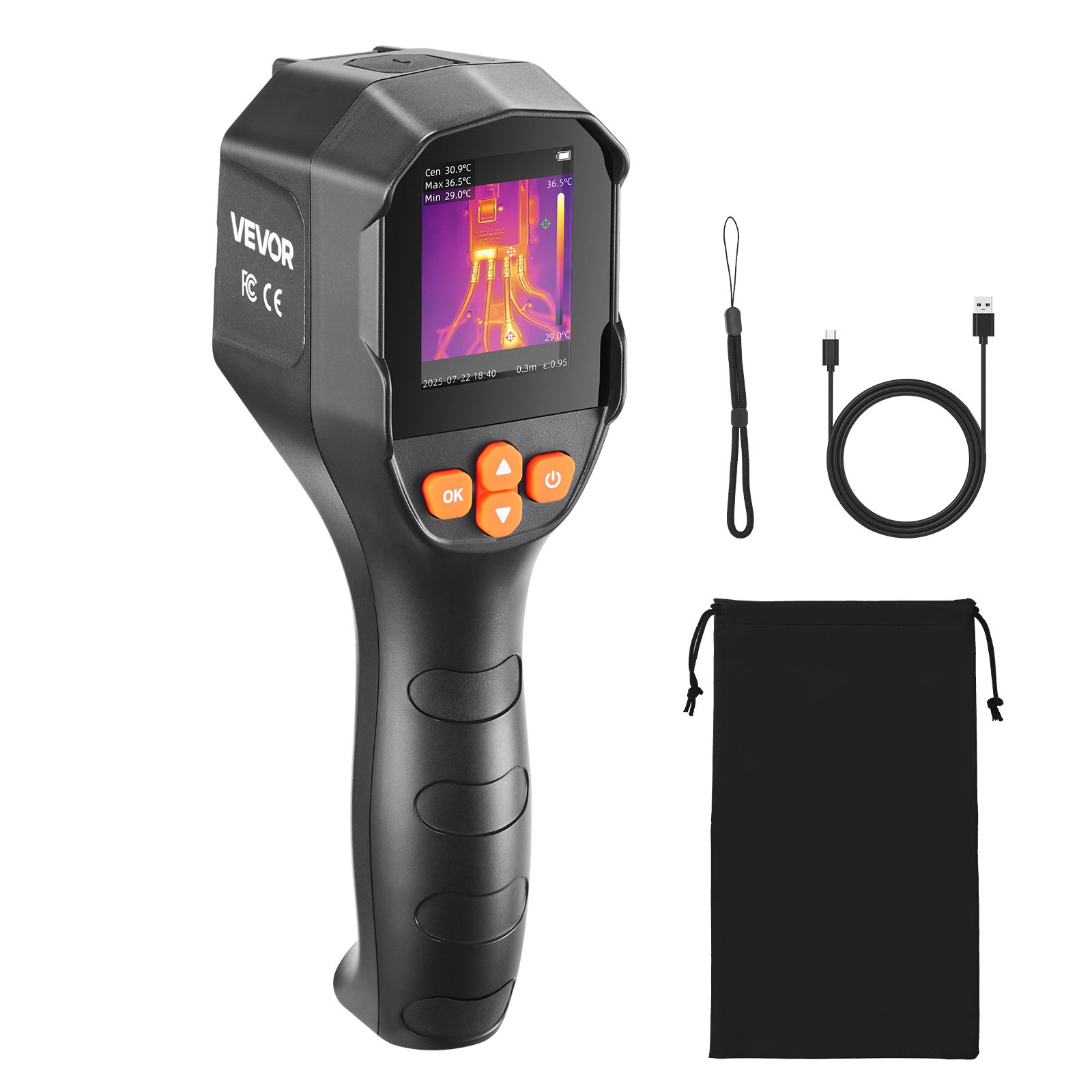
If you're willing to spend more, the VEVOR offers higher effective resolution. Its native 96x96 infrared sensor is enhanced through TISR to 240x180, so you can make out smaller temperature differences in tight spaces. The 3200 mAh battery supports longer inspections, and the 1.5m drop resistance suggests a camera you can rely on in tough environments. The emissivity adjustment from 0.01 to 1.0 gives you more flexibility when measuring surfaces like metal or plastic. The trade-off is the higher listed price, and the fixed-focus design means you'll need to keep the right distance to get sharp images.
Final Choice by Use Case
Choose the 2.4" Digital Infrared Thermal Imager if you want a lower-priced way to see large heat patterns and you can work with a coarse sensor. It's a serviceable companion for quick visual checks. Pick the VEVOR TISR 240x180 if you need sharper thermal detail, a longer-lasting battery, and a camera built to take a drop. That higher listed price buys more confidence when you're inspecting equipment that isn't easy to access or when you need to document small temperature outliers.