When you're deciding between a rotary evaporator and a vacuum pump, the first question isn't brand loyalty-it's what you actually need to accomplish at the bench. The Taishi 2L Rotary Evaporator and the AUTOBABA 180W Oilless Vacuum Pump fill different roles, and knowing which role matters most will make the choice straightforward.
The short version
If solvent evaporation or concentration is the goal, the Taishi rotary evaporator is the process hardware you'll center the setup on. If you need a standalone vacuum source for filtration, degassing, or reduced-pressure work, the AUTOBABA pump is the direct fit. These two are more complementary than directly competitive, so the decision is about missing equipment rather than a winner-take-all comparison.
Quick comparison
| Product | Listed price | Price bar | Best for |
|---|---|---|---|
| Taishi 2L Rotary Evaporator | USD 516.99 | Rotary evaporation station | |
| AUTOBABA 180W Oilless Vacuum Pump | USD 95.99 | Standalone vacuum source |
Where each product wins
Taishi 2L Rotary Evaporator - This is the evaporation side of a lab setup. The stainless steel bracket, manual lifting, 1L evaporation flask, 1L collecting bottle, and high-temperature-resistant glass line up with a rotary evaporation workflow. The listed gross weight of 64.37 lbs is worth knowing when you plan bench space.
AUTOBABA 180W Oilless Vacuum Pump - This is the vacuum supply. It brings a pressure gauge, a silencer, and a noise rating of ≤50dB. For filtration, degassing, or any step that needs reduced pressure, this pump handles the vacuum portion of the job.
Taishi 2L Rotary Evaporator
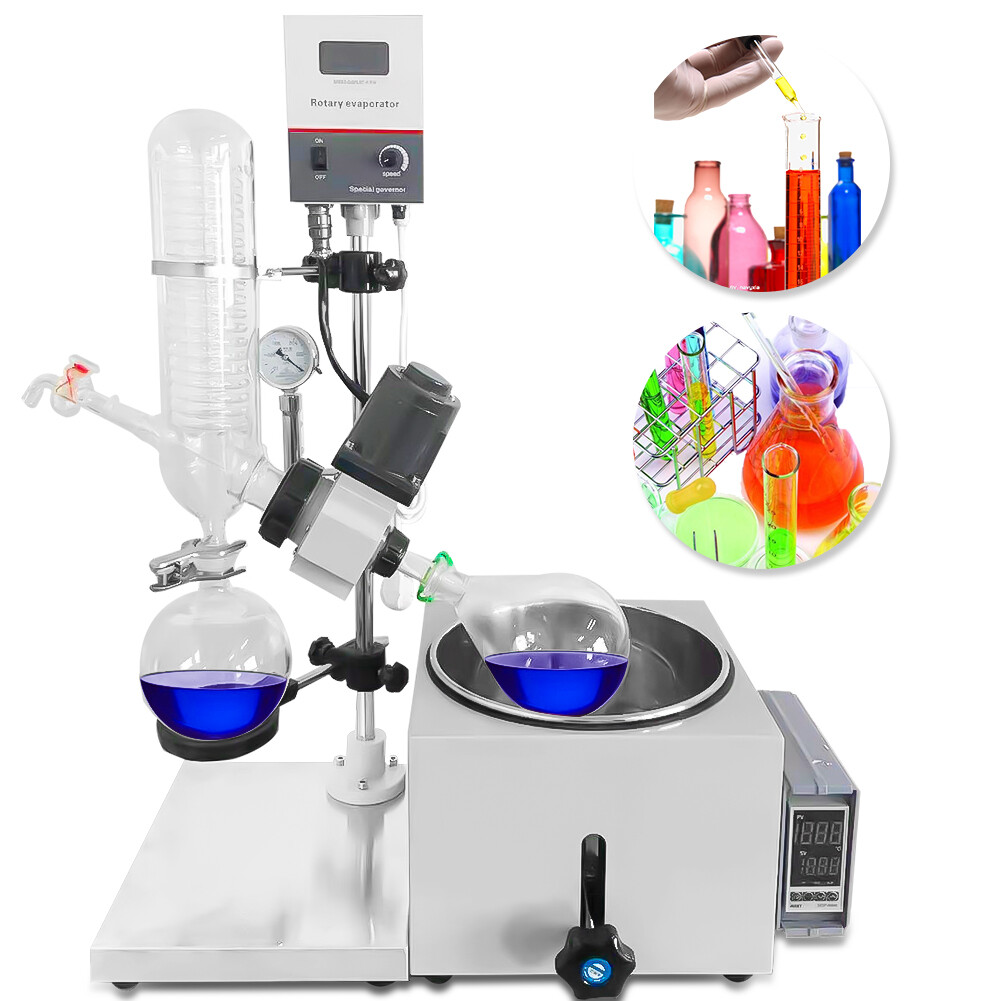
The Taishi unit is built around rotary evaporation: a 1L evaporation flask, a 1L collecting bottle, high-temperature-resistant glass, a stainless steel bracket, and manual lifting. If your work involves concentrating or recovering solvent, these details point in the right direction. The limitation is that the product name also says it connects to a vacuum pump and chiller, so it works with external components rather than standing alone. Given its larger role in a rotovap setup, it makes sense when you already have or plan to add the vacuum side of the system. The 64.37 lbs gross weight is a practical detail for arranging your workspace.
AUTOBABA 180W Oilless Vacuum Pump
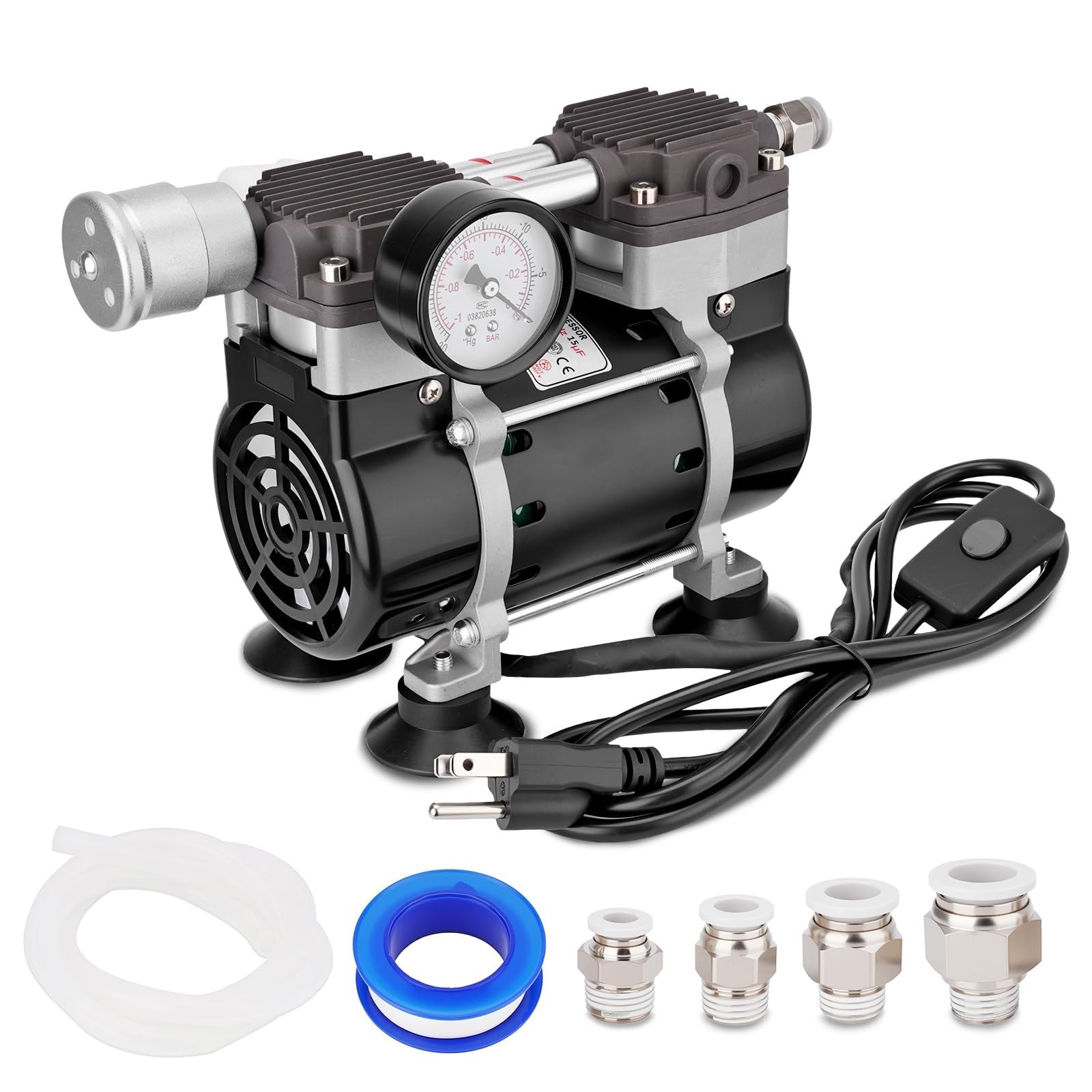
The AUTOBABA pump is a standalone vacuum source with a pressure gauge and silencer included. Rated at 180W and 50L/min, with noise listed at ≤50dB and a current draw of 1.6A, it covers common reduced-pressure tasks without adding evaporation glassware. It also includes low-noise operation and high vacuum degree, and the package includes a vacuum pressure gauge and silencer. The flip side is scope: this pump provides vacuum, but it does not include the evaporation flask, collecting bottle, or lifting mechanism that the Taishi unit offers. If your process is pure rotary evaporation, you'd be pairing this pump with separate glassware or a rotovap station. For filtration, degassing, or vacuum-assisted methods, it's a direct fit.
Final choice by use case
Choose the Taishi rotary evaporator when solvent removal is the center of your workflow and you are building the evaporator side of the bench. Choose the AUTOBABA pump when you need a vacuum source with a pressure readout and noise damping. If both jobs are in your future, the pump is a practical first addition, while the rotovap covers the evaporation workload that the pump alone cannot.