When you're setting up a lab, the heating, cooling, and vacuum corner can get confusing quickly. Two common purchases are a rotary evaporator and a vacuum pump for creating negative pressure. While both play a role in handling volumes and pressure, they are not the same kind of investment. Their price points sit far apart. So how do you know which one your bench needs? This head-to-head compares a 2L rotary evaporator and a vacuum pump by looking at their listed prices and the intended purpose you can see from the product names themselves.
Quick Verdict
If your workflow centers on rotary evaporation, the Taishi 2L Rotary Evaporator at $516.99 is the route to take. If a standalone vacuum pump is enough for your tasks, the 4E's Scientific Lab Vacuum Pump at $89.99 is the lower-priced listing. The choice comes down to whether your primary task is evaporation or vacuum generation.
At a Glance
| Product | Listed Price | Price Bar | Key Attributes |
|---|---|---|---|
| 2L Rotary Evaporator (Taishi) | USD 516.99 | Manual lifting; stainless steel bracket; high-temperature resistant glass | |
| Lab Vacuum Pump (4E's Scientific) | USD 89.99 | Oilless; maintenance-free; compact; aluminum alloy silencer |
Think of the difference as a complete workstation versus a utility tool. That's a substantial price gap, which reflects the difference in scope between a standalone pump and an entire rotovap assembly. The rotary evaporator is designed for the evaporation step itself; the vacuum pump is for generating reduced pressure when you need it. If your process already includes glassware and you just need suction, the pump may be sufficient. If you're starting from zero and want a rotovap setup, the evaporator is the more direct path.
Where Each Product Wins
The rotary evaporator wins when you need a dedicated evaporation instrument. The vacuum pump wins when you need a standalone source of vacuum for your lab. If you already have the glass components, the pump can act as the vacuum source for that rig. If you're starting with just a rotovap, the rotary evaporator is the necessary component.
Product Notes
2L Rotary Evaporator Lab Connect to Vacuum Pump Chiller Manual Lifting Rotovap
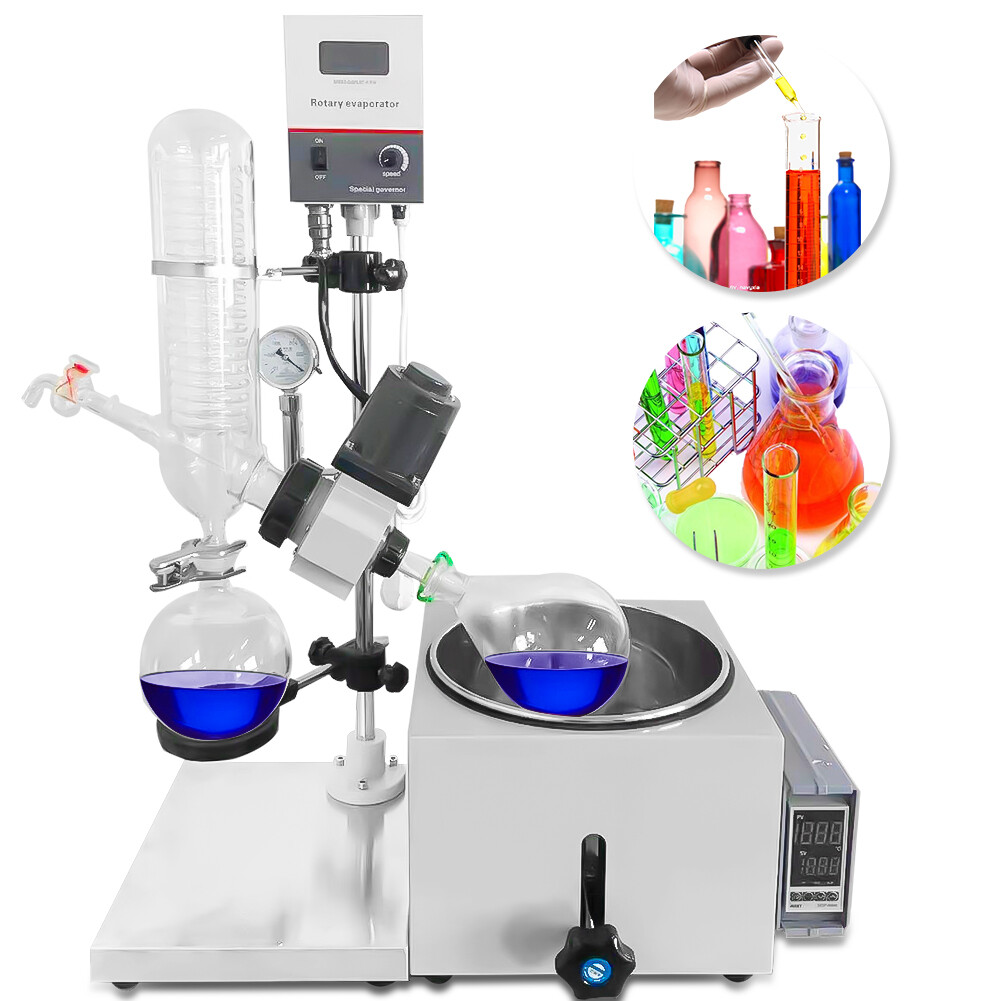
This Taishi listing is a rotary evaporator with manual lifting, a stainless steel bracket, and high-temperature resistant glass for the flask and condenser. It's a dedicated evaporation instrument rather than a standalone pump. At 64.37 lbs gross weight, it's a substantial piece of lab equipment, so a sturdy bench or cart is worth planning for. The manual lifting mechanism gives you direct control when raising or lowering the glassware. The trade-off is the higher listed price in this comparison, which reflects a complete rotovap package. If your work is rotary evaporation, this unit gives you the core instrument without needing to assemble a separate evaporator.
Lab Vacuum Pump 85L/Min with Switch 380W Oilless Vacuum Pump (or 180W 50 L/min
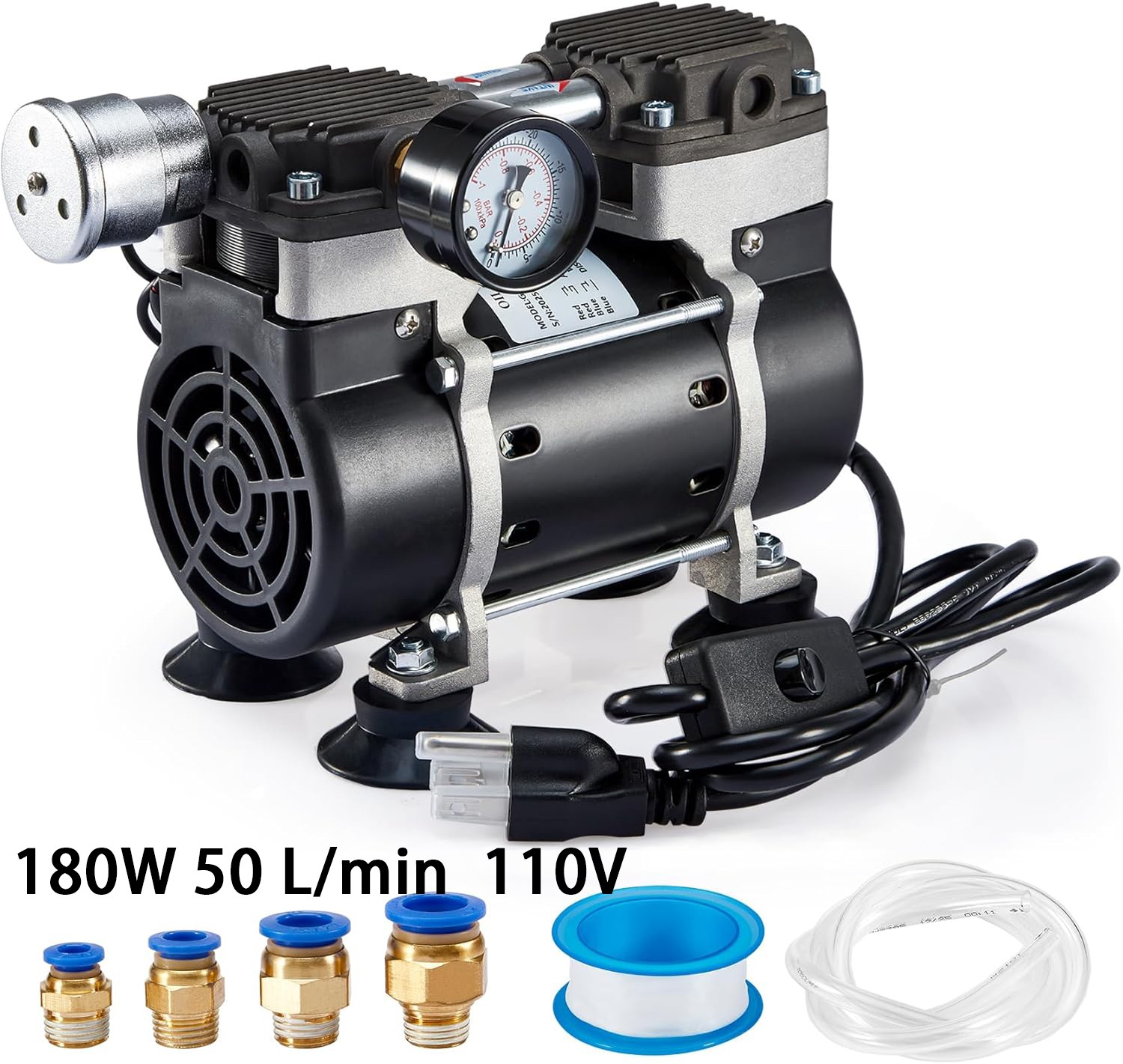
This 4E's Scientific pump is described as oil-free and maintenance-free, with an aluminum alloy silencer and a compact form factor. Those attributes point to a pump that needs less routine attention than an oil-based unit. The silencer is included to reduce operating noise. It's positioned as a multi-purpose vacuum pump for lab tasks. The limitation is that it's a pump only-it doesn't include the flask, condenser, or lifting mechanism you'd get with a rotary evaporator. If you already have glassware and just need a vacuum source, this is a lower-cost route; if you need a full rotovap system, this won't replace one.
Final Choice by Use Case
- Choose the 2L Rotary Evaporator if you're setting up a rotovap workstation and want the evaporation instrument itself.
- Choose the Lab Vacuum Pump if you need a versatile vacuum source for general lab tasks and want to keep the upfront cost lower.