When you are choosing an environmental indoor air measurement device, the first decision is what you want the monitor to actually catch. One option is built around fine dust and particles. The other is built for broader gas and particle coverage. That difference changes which one belongs in your room.
Quick verdict
If your priority is fine-dust tracking, pick the Air Quality Monitor at USD 159.99. If gas coverage and WiFi access matter more, pick the Airthings 2960 at USD 200.00.
Side-by-side comparison
| Feature | Air Quality Monitor Dust Particle Counter | Airthings 2960 |
|---|---|---|
| Listed price | USD 159.99 | USD 200.00 |
| Measurements | PM0.3, PM2.5, PM10, temperature, humidity | Radon, CO2, VOC, PM2.5 |
| Data and power | 999 timestamped readings, trend chart, adjustable alarm | WiFi connectivity, battery-powered design |
| Best fit | Particle-level indoor air checks | Broader pollutant coverage |
Where each product wins
The Air Quality Monitor is the better fit for the shopper who wants a close look at dust. It reports multiple particle sizes in real time, which is exactly what a particle counter should do.
The Airthings 2960 is the better fit for the shopper who wants one device to cover more than dust. It is built around a wider set of airborne concerns and works in residential and commercial spaces.
Air Quality Monitor Dust Particle Counter
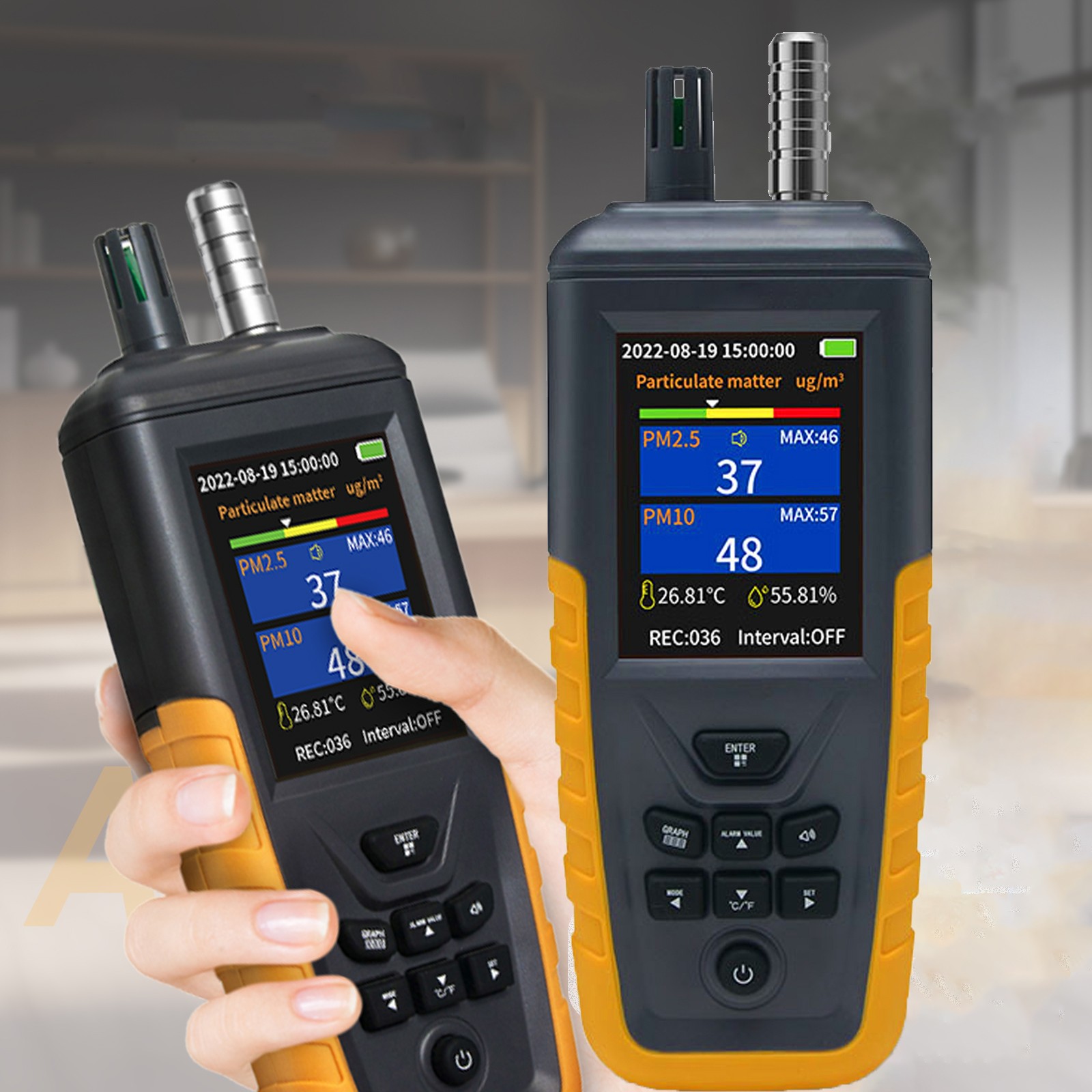
This monitor is the more focused particle tool. It uses laser-scattering technology and reports PM0.3, PM2.5, and PM10 along with temperature and humidity. That combination gives you a fuller picture of the immediate indoor environment. It also stores 999 timestamped readings and displays them as a trend chart, so you can look back at how the room changed. The adjustable audible alarm is a concrete reason to choose it if you want to be alerted when your set threshold is crossed. For radon, CO2, or VOC concerns, the Airthings 2960 in this comparison is the monitor that covers those pollutants.
Airthings 2960
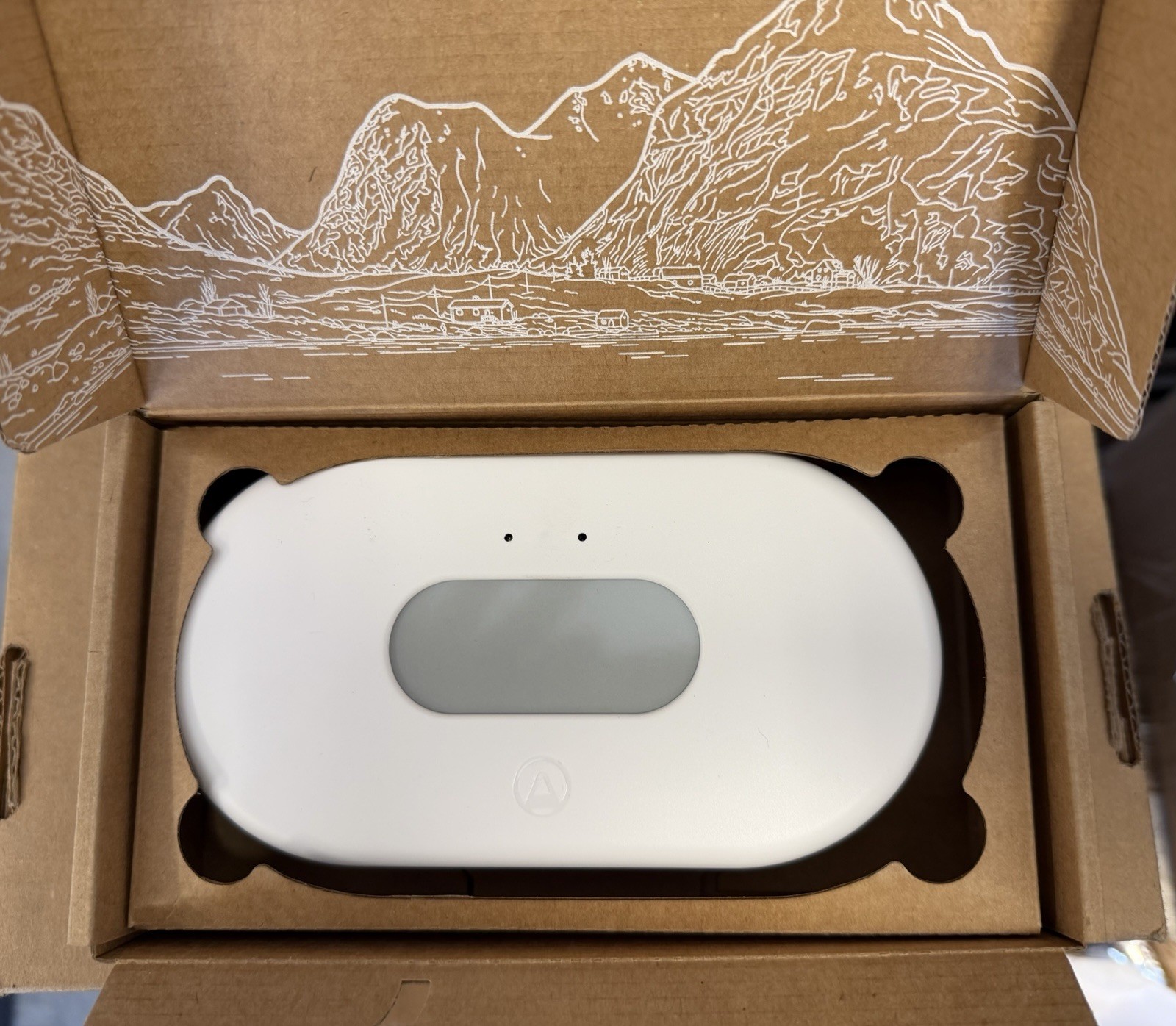
The defining reason to choose the Airthings 2960 is radon detection. It pairs that with CO2, VOC, and PM2.5 monitoring, so the unit is not limited to particles. The WiFi connection and battery-powered design make it convenient for residential or commercial settings, and real-time readings are available without a cable. If radon is on your list, this is the monitor that addresses it directly. The tradeoff is at the fine-dust end: the Air Quality Monitor in this comparison goes beyond PM2.5 by covering PM0.3 and PM10, which may matter if very small particles are your main concern.
Final choice by use case
For a purely particle-focused indoor air check, go with the Air Quality Monitor. For broader indoor air concerns, go with the Airthings 2960.