When a wall outlet stops working or a car fuse keeps blowing, you have two very different ways to find out why. A digital multimeter gives you actual readings. A non-contact voltage pen gives you a fast yes/no answer about whether a wire is live, without touching it. Both are sold side by side in the multimeters electrical testers aisle, but they solve different problems. Here's how to pick the one that fits your toolbox.
Quick verdict
If you want one tool that can measure and troubleshoot circuits, the AstroAI Multimeter Tester 2000 Counts is the more complete choice at $13.99. If your main job is checking whether wires are live before you work, the Non-Contact Voltage Detector 12-1000V AC Tester Pen costs $7.35 and does exactly that with little learning curve.
Comparison table
| Product | Price | Best for |
|---|---|---|
| AstroAI Multimeter Tester 2000 Counts | $13.99 | Electrical troubleshooting and measurement |
| Non-Contact Voltage Detector 12-1000V AC Pen | $7.35 | Touch-free voltage detection |
Where each product wins
Choose the AstroAI multimeter when the job demands numbers. Choose the non-contact voltage pen when the job demands a quick, touch-free check before you start working.
Product notes
AstroAI Multimeter Tester 2000 Counts
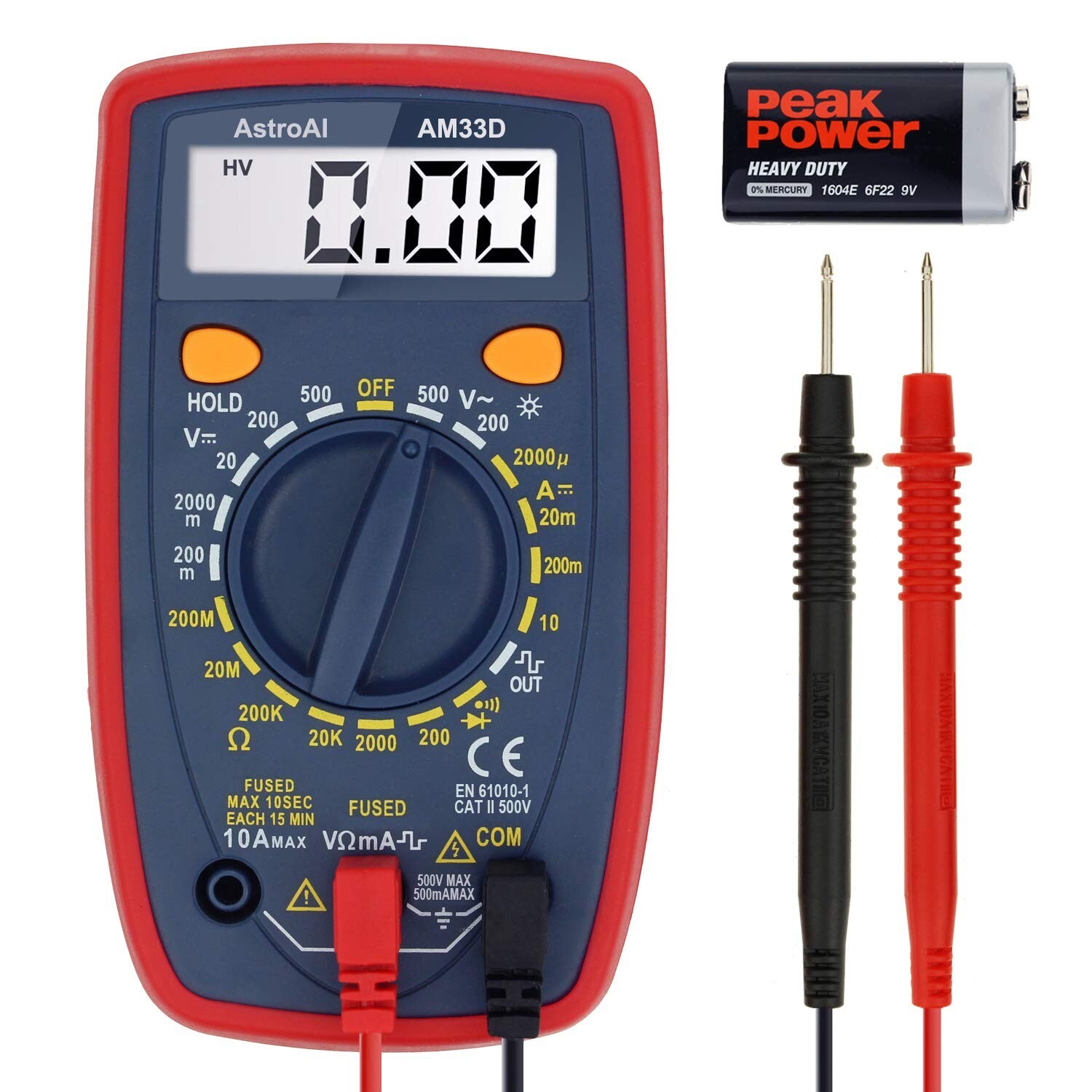
The AstroAI gives you a real measurement tool. It handles DC and AC voltage, current, resistance, and continuity tests, making it a practical companion for checking household outlets, fuses, batteries, vehicle charging systems, and automotive electronics. The backlit 3½-digit LCD shows negative and positive readings, and the silicone cover helps protect the meter if it gets bumped. Its strongest case is troubleshooting: instead of just telling you that a circuit is live, it tells you how much voltage or resistance is present, so you can trace a problem step by step. The main trade-off is range. With a 2000-count display that maxes out at 1999, it's sized for everyday electrical work rather than heavy industrial measurements. If your projects stay in the home and garage, that range is plenty.
Non-Contact Voltage Detector 12-1000V AC Pen
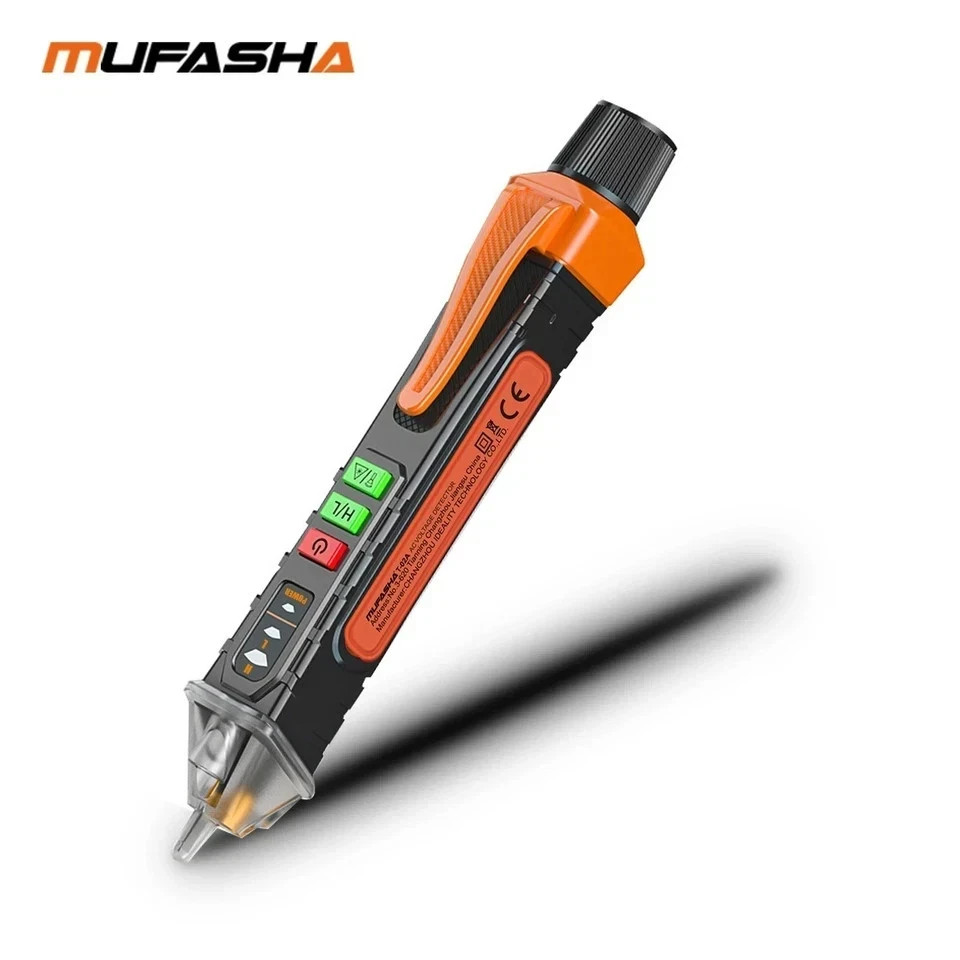
For quick live/dead checks, the Non-Contact Voltage Detector is the easier tool to carry. It senses AC voltage from 12V to 1000V through insulation, so you don't need to touch bare wire or make metal contact. A bright LED and audible beep alert you to live circuits, and the built-in flashlight helps in dark breaker panels. The smart breakpoint finder is useful when a cable, outlet, switch, or circuit breaker has an interruption: you can trace along the line until the alarm stops. The trade-off is that it's a detector, not a meter. Its job is to alert you to live AC, not to provide a numeric measurement, so when you need actual voltage numbers, a multimeter is the better fit. It's a practical add-on for the times when you just need to confirm a wire is off.
Final choice by use case
Match the tool to the task:
- For automotive circuit troubleshooting, charging-system checks, fuse testing, battery voltage, and continuity testing, the AstroAI Multimeter Tester 2000 Counts is the one to pick.
- For safely checking whether a wire, outlet, switch, or breaker is live, and for tracing cable breakpoints, the Non-Contact Voltage Detector 12-1000V AC Pen is the better match.
- If your electrical work includes both, the two tools complement each other: the pen for the quick pre-work check and the multimeter for the deeper diagnosis.