Shopping for a data acquisition recorder means deciding how many signals you need to capture, what type of connection your computer supports, and how you plan to review the data. Environmental logging is a different job from capturing multiple fast analog waveforms, so the right recorder depends on the signals you're chasing. Two used units on the market take very different approaches: the Axon Instruments DigiData 1322A and the Dickson TWP DicksonOne. This head-to-head compares their channel counts, interfaces, and intended uses so you can match the recorder to the work you actually do.
Data acquisition recorders range from benchtop digitizers to compact environmental loggers. The one you choose determines how you connect sensors, how you retrieve data, and how much wiring you need. Keep this bigger picture in mind as you compare these two units.
Quick verdict
Choose the Axon DigiData 1322A when you need a 16-bit digitizer for electrophysiology or lab research. Choose the Dickson TWP DicksonOne when you want the more affordable option and a simpler monitoring workflow.
At a glance
| Feature | Axon DigiData 1322A | Dickson TWP DicksonOne |
|---|---|---|
| Price | $249.99 | $199.73 |
| Analog input channels | 16 | 2 |
| Interface | SCSI | WiFi/Ethernet options |
| Intended use | Electrophysiology and biological signal acquisition | Touchscreen temperature/humidity logging |
Where each product wins
The Axon and Dickson solve different problems. The Axon is a lab instrument for capturing multiple waveforms; the Dickson is a standalone logger for keeping an eye on conditions. Here's how their strengths line up.
- Axon DigiData 1322A: More channels and connections. This gives you far more wiring flexibility for complex experiments.
- Dickson TWP DicksonOne: Easier everyday use. The 8-inch touchscreen and cloud dashboard make it more convenient for monitoring, and its listed price is lower.
Product notes
Axon Instruments DigiData 1322A
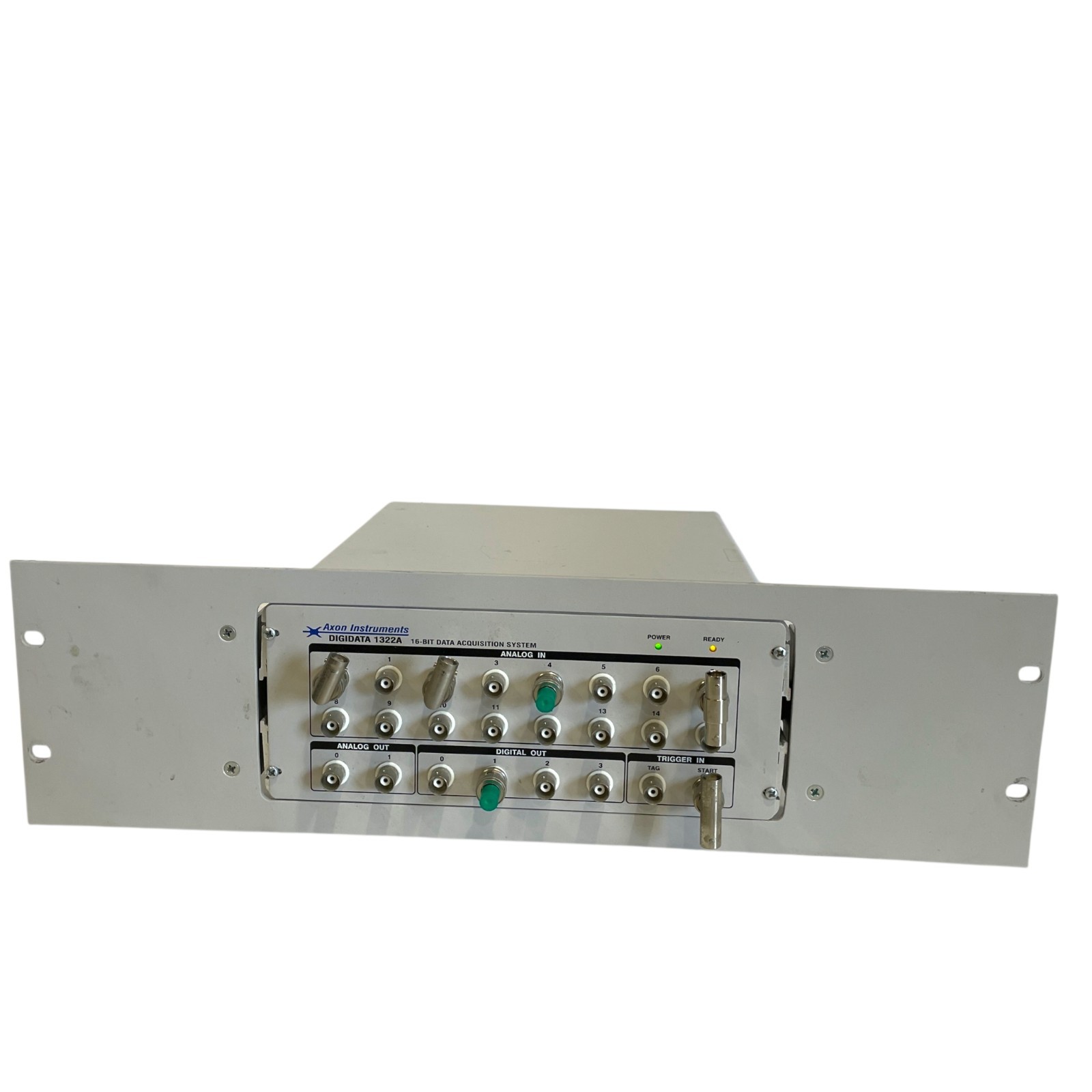
If your setup needs many inputs at once, the Axon DigiData 1322A stands out because it provides 16 analog input channels, 2 analog output channels, and 16 digital lines in each direction. This 16-bit data acquisition system / digitizer is built for electrophysiology and biological signal research. It powers on with POWER and READY indicators lit, and the listing includes its serial and part numbers. The rack-mount form fits best on a lab bench, and the SCSI computer interface will need a compatible connection on your computer. If you're working with multiple electrode signals or fast biological waveforms, the channel count and digital lines give the Axon a real edge.
Dickson TWP DicksonOne
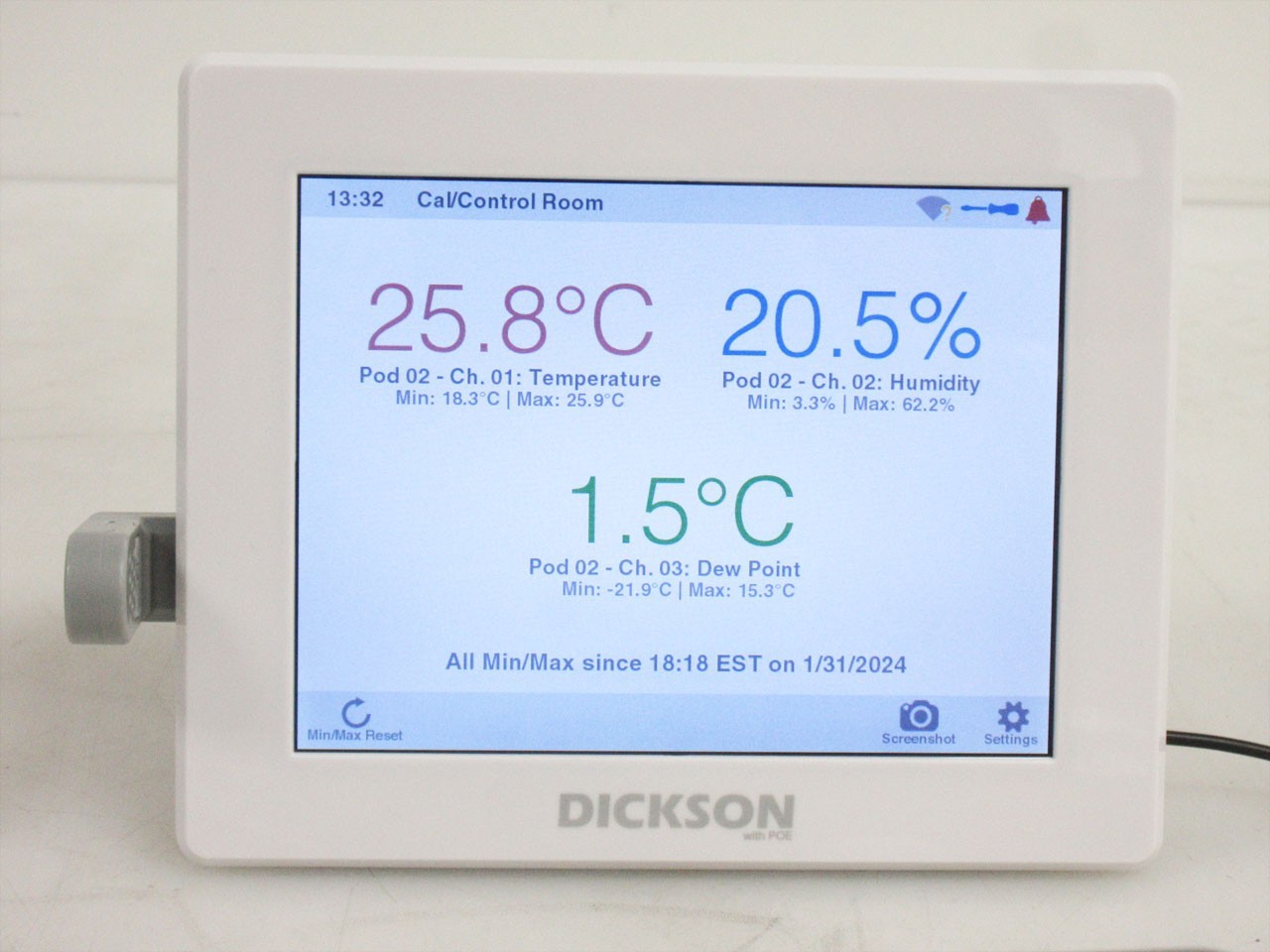
The Dickson TWP DicksonOne takes a different path as a touchscreen temperature/humidity data logger with an RTRH probe. Its 8-inch capacitive touchscreen supports customizable views and alarms, while WiFi/Ethernet options and AC power connect it to a monitoring network. Cloud-based DicksonOne lets you reach data from anywhere. The unit comes with the RTRH probe, and AC power keeps it running during continuous logging sessions. The trade-off: full functionality requires a Dickson agreement that is not included with this unit, and 2 channels limit it to simpler monitoring jobs rather than dense multi-channel acquisition.
Final choice by use case
Choose the Axon DigiData 1322A for multichannel electrophysiology, biological signal acquisition, or experiments that need lots of digital lines. Choose the Dickson TWP DicksonOne when remote monitoring and a simpler setup matter more than channel count. If your application is research-heavy and input-rich, the Axon is the obvious pick; if you're watching environmental conditions over time, the Dickson gets the job done.