Choosing between the Citizen CX 220 analytical balance and the Pocket 1000g digital scale is really a question of what kind of weighing you do. Do you need laboratory-grade precision for biological samples, or do you need a compact, inexpensive scale for coins, gold, and small parts? These two products sit at opposite ends of the lab balances scales spectrum, and the right pick comes down to your workload and budget.
Quick Verdict
If your work requires analytical precision, the Citizen CX 220 is the one that delivers it. This used analytical balance has a glass draft shield and sub-milligram readability. If you don't need that level of accuracy and want a portable, new scale, the Pocket 1000g gives you the essentials for a fraction of the price.
Comparison at a Glance
| Feature | Citizen CX 220 | Pocket 1000g |
|---|---|---|
| Price | USD 699.99 | USD 20.99 |
| Capacity | 220 g | 1000 g |
| Readability | 0.1 mg (0.0001 g) | 0.01 g |
| Condition | Used | New |
| Power | Power adapter included | 2 AAA batteries (not included) |
| Key feature | Glass draft shield | LCD backlit screen, counting/skinning functions, switchable units, calibration weight |
Where Each Product Wins
The Citizen CX 220 wins on precision and lab readiness. Its analytical readability and glass draft enclosure make it suitable for serious weighing tasks. It also includes a power adapter, so it's ready to sit on a bench. The Pocket 1000g wins on price, portability, and capacity. It costs far less than the Citizen and still handles a larger maximum load, runs on batteries, offers a backlit display, and includes extras like counting and tare functions.
Product Notes
Citizen CX 220 Analytical Balance
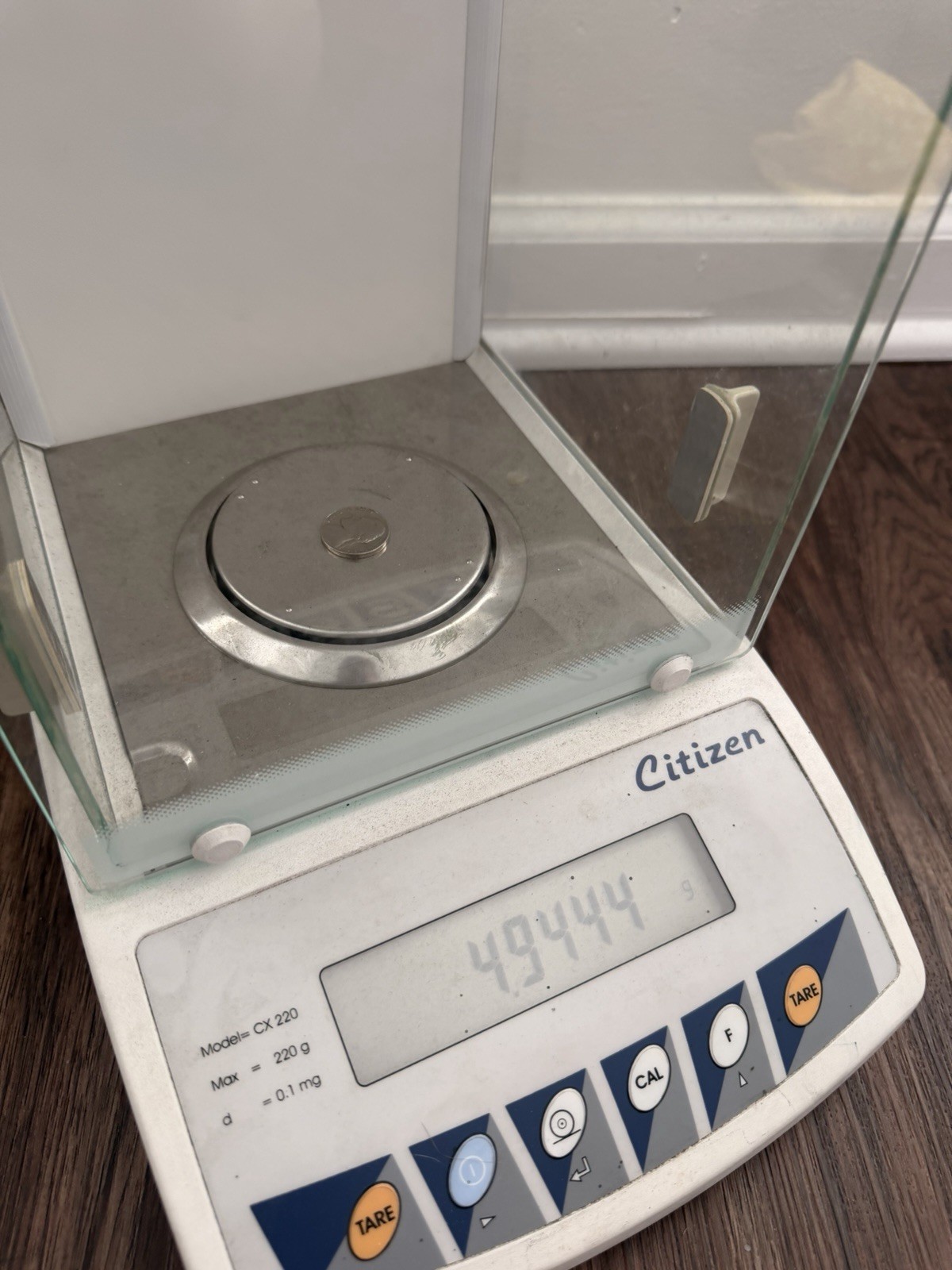
The Citizen CX 220 is a full analytical balance with a maximum capacity of 220 g and readability of 0.1 mg (0.0001 g). It's listed as used and intended for biological laboratory use, with a glass draft enclosure to reduce air currents when weighing small samples. The unit powers on, zeros to 0.0000 g, and responds to weight changes, and the controls and weighing pan are present. It includes a power adapter. The catch is the price: it costs far more than a pocket scale. Also, because it's used, you should expect normal cosmetic wear, including light marks and discoloration. If your work demands analytical-grade repeatability, this is the scale that can do it.
Pocket 1000g Digital Scale
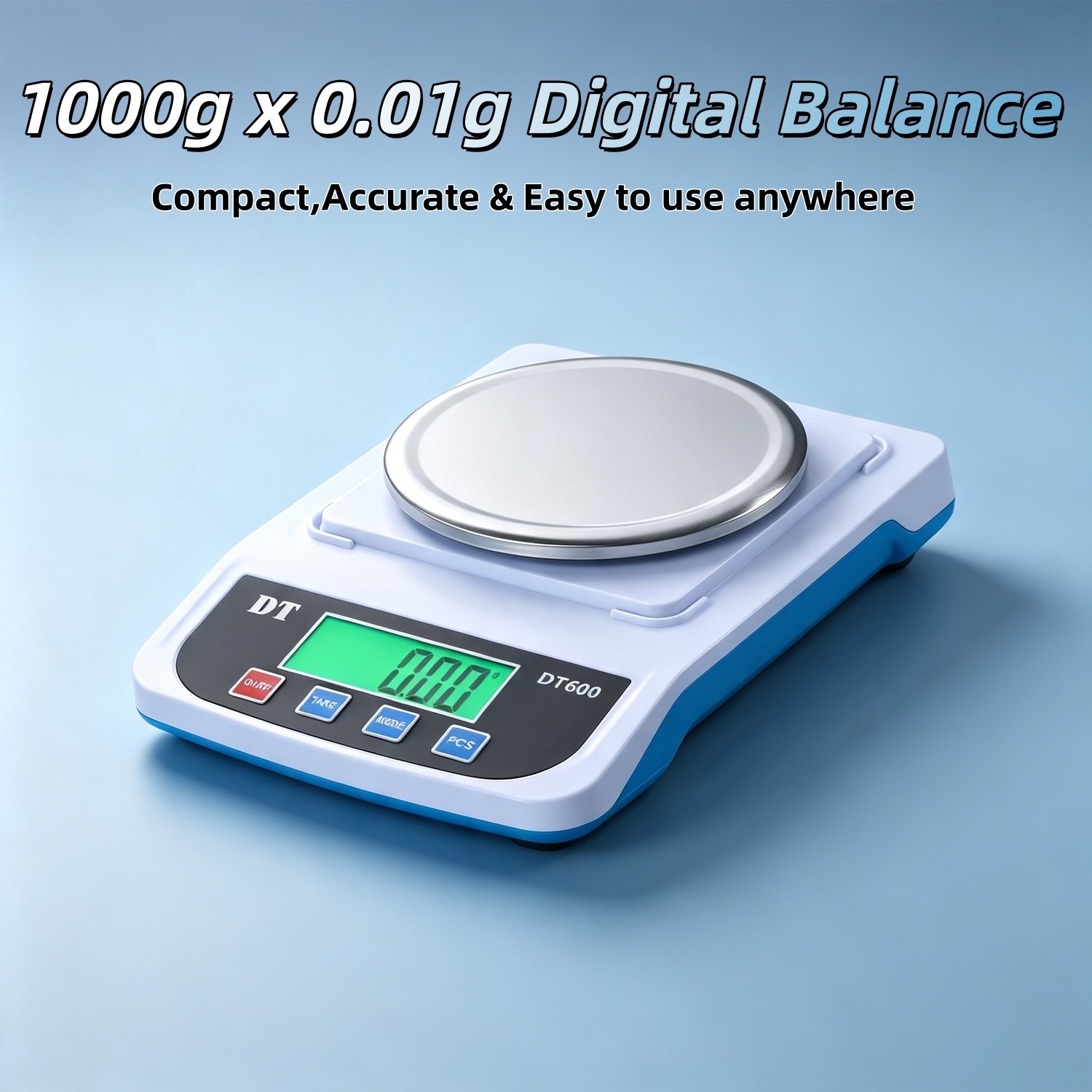
The Pocket 1000g is a new digital scale with a 1000 g capacity and 0.01 g readability. It runs on two AAA batteries (not included) and has an LCD backlit screen for low-light reading. It offers a counting function, a skinning function, switchable units, and comes with a 1000 g calibration weight. The error range is ±0.03 g, so it doesn't offer the Citizen's 0.1 mg readability. Instead, it's for weighing coins, gold, jewelry, or small parts where portability and affordability matter. At USD 20.99, it costs far less than the Citizen, making it the sensible choice if you don't need sub-milligram precision and want a scale you can carry along.
Final Choice by Use Case
Choose the Citizen CX 220 if you're setting up or restocking a biological lab and need analytical precision. You'll pay more and accept a used instrument with normal wear, but you get analytical balance performance. Choose the Pocket 1000g if you need a low-cost, portable scale with a higher capacity for coins, gold, jewelry, or small parts. Just remember it runs on AAA batteries and doesn't provide sub-milligram readability.