If you're shopping in the centrifuges, mixers, and shakers category, the biggest fork in the road is whether you need to separate a sample or mix a large batch. A desktop centrifuge and an electric overhead stirrer both earn their place on a lab bench, but they solve completely different problems. This head-to-head compares a compact centrifuge with a 40L-capacity digital stirrer to help you match the tool to the job you actually do every day.
Quick verdict
If your daily work involves spinning down cells, particles, or urine samples, the Calu Luky desktop centrifuge is the clear pick-and it costs about $29 less than the stirrer. If your priority is mixing large volumes in one vessel, the Electric Overhead Stirrer with its 100-2,000 rpm range and adjustable timer is the better investment despite the higher price.
Comparison table
| Consideration | Desktop Centrifuge | Electric Overhead Stirrer |
|---|---|---|
| Listed price | $60.00 | $89.02 |
| Best for | Spinning small sample tubes | Mixing large-volume liquids |
| Speed | Up to 4,000 rpm | 100-2,000 rpm |
| Capacity | 6 × 20 ml tubes | Up to 40 L / 10.57 gal |
| Extra features | Timer (0-60 min or unlimited), 1,790×g max RCF | Digital tube screen, adjustable time & speed, 120W motor, 40N·cm torque, 30,000 mPa·s viscosity range |
Where each product wins
Where the centrifuge wins: It handles the classic lab jobs a stirrer can't-separating cells, serum, or particles in individual tubes. The timer and speed control allow repeatable spins, and the included tubes let you get started right away.
Where the stirrer wins: It takes over bulk mixing. With a 120W motor and high torque, it can homogenize thick solutions and suspensions that would stall a small mixer. The digital display makes run parameters easy to see and adjust, which is a real advantage when you're dialing in a repeatable process.
Desktop Electric Lab Laboratory Centrifuge Machine Lab Medical Practice w/Timer
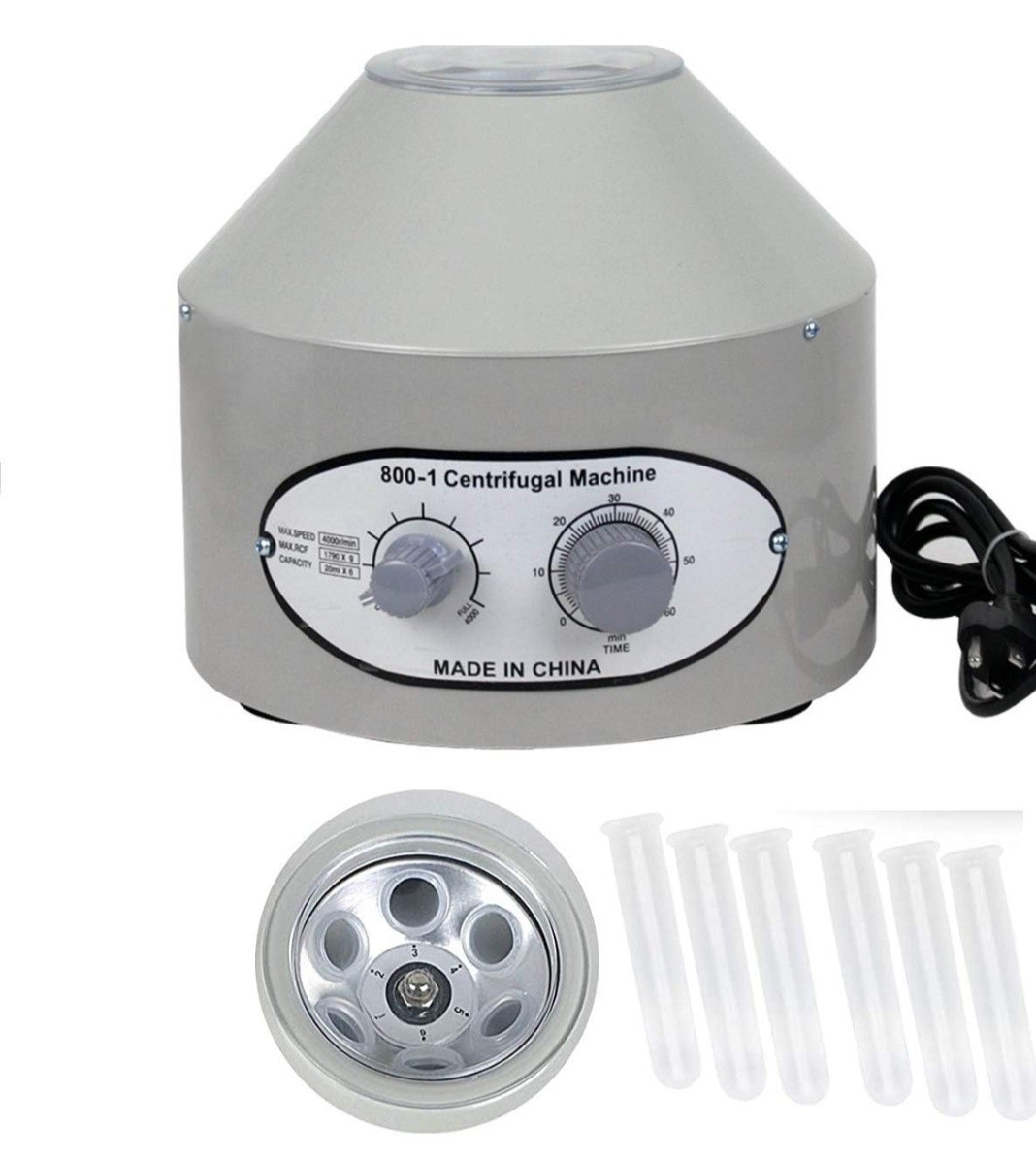
The Calu Luky desktop centrifuge is a low-speed unit designed for everyday medical and chemistry lab work. It reaches 4,000 rpm, generating up to 1,790×g, and accepts six 20ml tubes at a time. The timer can be set from 0 to 60 minutes or disabled for continuous spinning, which helps when you need consistent run lengths. It runs on 110V AC, and the compact tabletop shape fits easily on a crowded bench. The included six tubes mean you can start processing samples immediately. Its limitation is the fixed 6 × 20ml format and moderate top speed-fine for basic separation, but not for high-throughput or high-g applications.
Electric Overhead Stirrer Max.40L Digital Lab Mixer Time & Speed Adjustable 120W
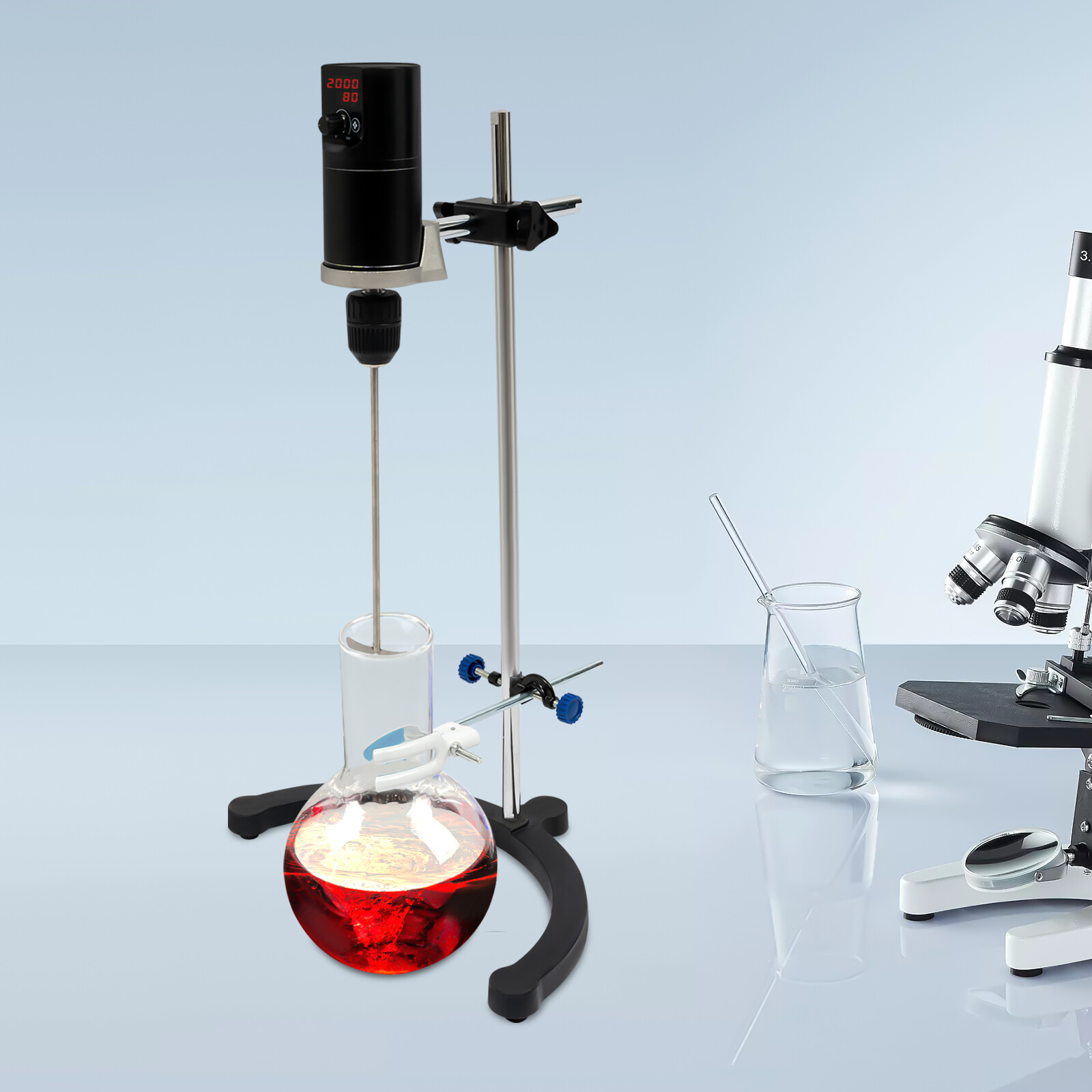
This electric overhead stirrer is for jobs that need real mixing muscle. It can handle up to 40 liters (10.57 gallons) of liquid, with a viscosity ceiling of 30,000 mPa·s, so it won't bog down on thick media or emulsions. The speed range of 100-2,000 rpm is adjustable, and the digital tube screen lets you set run time and speed without guesswork. A 120W DC permanent magnet motor delivers up to 40N·cm of torque, and the 0.8-10mm drill clamping range fits a variety of stirring shafts. The main limitation is its overhead design: you need a vessel that fits comfortably beneath, and its 120W motor is aimed at continuous stirring rather than rapid bursts.
Final choice by use case
Reach for the desktop centrifuge when your sample is small and your goal is separation-think clinical spins, urine analysis, or pelleting cells in 20ml tubes. Go with the electric overhead stirrer when you're preparing larger batches of media, buffer, or viscous solutions. If your lab routinely does both, you'll likely end up with one of each; the two tools complement rather than replace each other.