When you need a lab mixer, start with the work itself: are you running controlled tests on multiple samples, or do you need gentle mixing for everyday bench work? These two digital units take different paths, and the listed prices make the choice starker. The Digital Orbital Shaker is listed at $259.99, while the Digital Jar Test Apparatus is listed at $749.99. For many labs, the decision is not about which unit is more advanced; it is about which protocol you actually run.
Quick verdict
If water treatment and flocculation testing are your main tasks, the Digital Jar Test Apparatus is the more complete solution. If you want an adjustable shaker for everyday mixing in flasks and tubes, the Digital Orbital Shaker is the practical pick. The jar tester is built for bench-steady testing; the orbital shaker is the type of tool you can move between tasks throughout the day.
At a glance
| Product | Listed Price | Best Use |
| Digital Jar Test Apparatus | USD 749.99 | Water treatment, flocculation, and coagulation testing |
| Digital Orbital Shaker | USD 259.99 | Gentle shaking and general lab mixing |
Where each product wins
The Digital Jar Test Apparatus earns its place when you need four independent stirring paddles for simultaneous sample testing. The digital speed control and display help you set and hold a consistent stir rate, and the heavy-duty metal body gives it a stable presence on the bench. This setup matters when your protocol compares multiple treatment conditions in a single run.
The Digital Orbital Shaker wins when your tasks vary. Its adjustable 40-200 RPM range covers gentle agitation, the digital panel offers speed and time control, and the compact design lets you place it inside an incubator or oven. The DC brushless motor adds quiet, stable, low-maintenance operation. That range of settings is valuable in labs where tasks change from flask to flask.
Product notes
Digital Jar Test Apparatus 110V
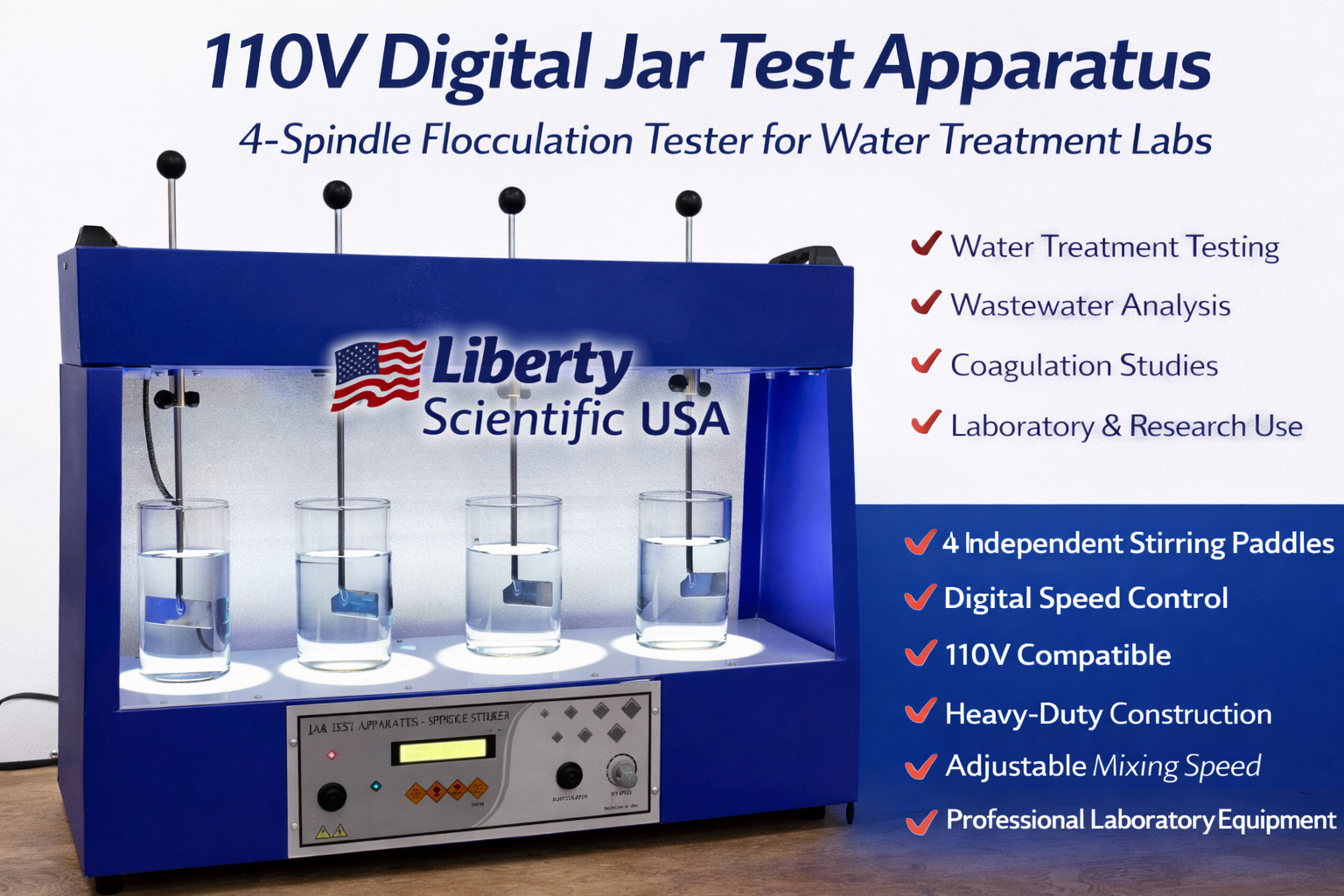
The heavy-duty metal body is the first thing to appreciate here: it is built to sit on a dedicated testing bench and hold up through repeated use. The easy-to-use control panel rounds out a practical setup for labs that value straightforward digital control. The limitation is scope. This apparatus is designed for controlled test work rather than general-purpose mixing, so if your lab does routine shaking across cultures, samples, or reagents, the more specialized setup is harder to justify. It makes the most sense when repeatable stirring conditions are the priority and a dedicated station for that work is part of your workflow. If your daily routine is built around controlled sample comparison, this unit earns its keep.
Digital Orbital Shaker
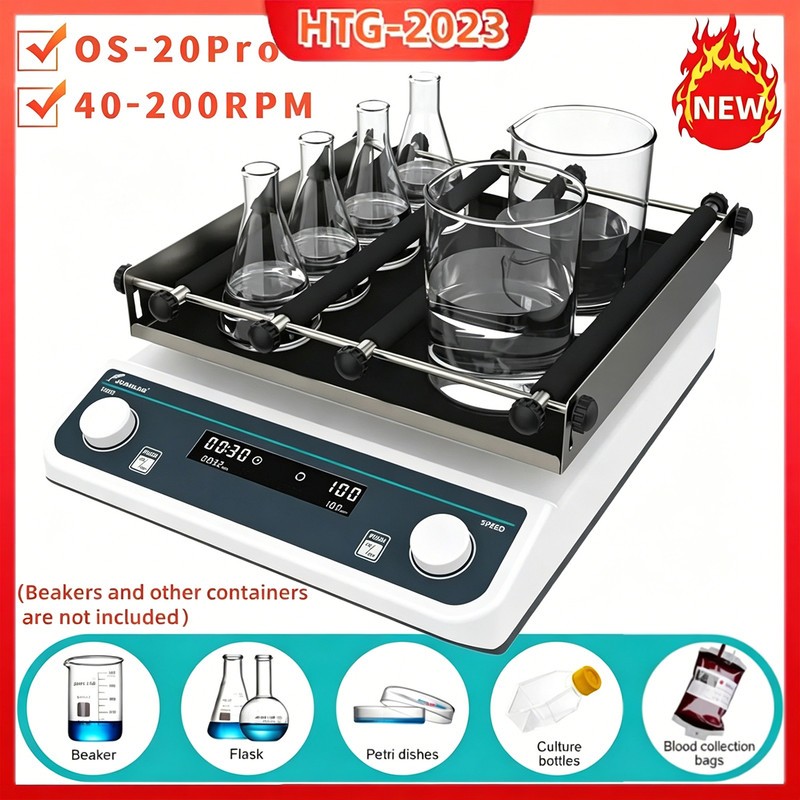
The DC brushless motor is the strongest reason to choose this shaker: it is designed for quiet, stable, low-maintenance operation with a long service life. The digital panel gives you speed and time control, so repeatable gentle mixing is easy to set. The compact design is another practical asset. The adjustable speed range makes it easy to match the mixing action to the sample. The tradeoff is that gentle shaking is exactly what it does: this is not the tool for high-energy mixing, paddle-style stirring, or tests that require aggressive agitation. If your work stays within low-speed orbit, this is a capable lab companion.
Final choice by use case
Choose the Digital Jar Test Apparatus for labs that need to compare four samples under the same stirring conditions. Choose the Digital Orbital Shaker for low-speed mixing and incubator work. If your week is dominated by controlled sample comparison, the jar tester keeps that workflow contained; if your week is a mix of general stirring jobs, the orbital shaker stays ready.