Quick verdict
Pick the Digital Jar Test Apparatus 4 Paddle if your lab runs flocculation and coagulation tests, especially for water-treatment analysis. Pick the JRJ300-SH high-shear homogenizer if your work includes emulsifying, dispersing, and homogenizing larger liquid batches. Both are new 110V digital lab mixers, but they are built around very different workloads, so the right choice depends on the experiment rather than on one unit being better all around.
Comparison at a glance
Here is how the two mixers stack up on the basics that matter:
| Digital Jar Test Apparatus 4 Paddle | JRJ300-SH Homogenizer | |
|---|---|---|
| Listed price | USD 749.99 | USD 935.61 |
| Mixing design | Digital 4-paddle flocculation tester | Digital high-speed shear emulsification mixer |
| Intended lab uses | Biological, medical, and water treatment | Biological and medical |
| Sample setup | 4 independent paddles | 40L stirring capacity |
Where the Digital Jar Test Apparatus wins
Choose the flocculation tester when your success metric is clear supernatant in a jar test. Its digital speed control is designed for repeatable coagulation and flocculation runs, and its intended-use range covers biological, medical, and water-treatment labs. That makes it the natural fit for coagulation studies and floc formation work.
Where the JRJ300-SH wins
Choose the high-shear homogenizer when your work demands strong mechanical shearing to break down and disperse components. Its 70mm 304 stainless steel working head and stepless speed regulation suit emulsification, slurry preparation, and other liquid-solid dispersion tasks commonly found in biological and medical labs.
Product notes
Digital Jar Test Apparatus 4 Paddle
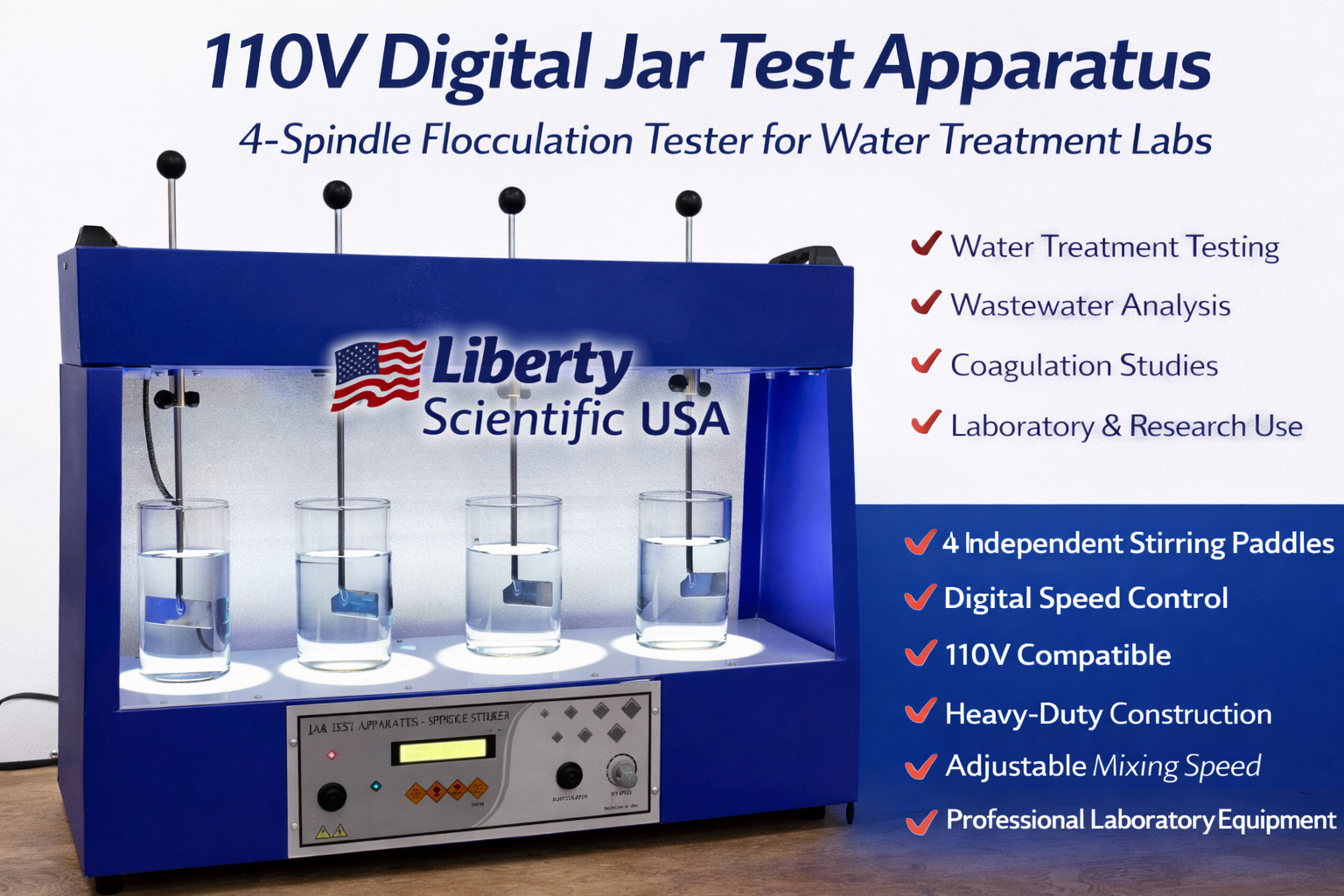
The Digital Jar Test Apparatus 4 Paddle is the flocculation specialist in this pairing. It runs four independent stirring paddles through a digital speed control and display, so you can set repeatable conditions across four samples in one pass. The 110V input matches US-style power, and the heavy-duty metal body supports steady use in labs that regularly compare coagulant doses or check floc formation. For water-treatment work, this unit also lists water treatment as an intended-use area, which makes it the more appropriate match when your tests revolve around clarity and settling. At $749.99, it is the lower priced unit in this head-to-head, but that price buys a purpose-built jar tester rather than a general-purpose shear mixer. If high-shear emulsification or large-volume dispersing is on your bench, look to the JRJ300-SH instead.
JRJ300-SH Homogenizer Mixer
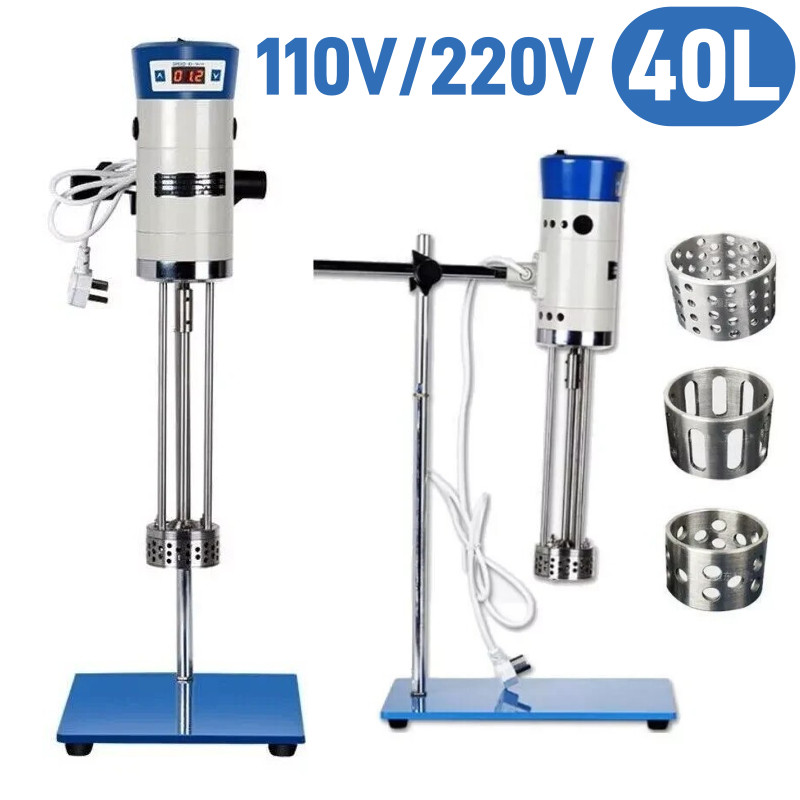
The JRJ300-SH brings a different kind of mixing energy. Its digital high-speed shear emulsification design is aimed at biology, physics, chemistry, cosmetics, health care, and food applications where liquids and powders need to be sheared, dispersed, and made uniform. Its specifications include a 40L stirring capacity, a 70mm 304 stainless steel working head, stepless speed regulation, and an 8000mPas maximum viscosity rating, which make it a candidate for heavier mixing workloads. The practical trade-off is the higher price of $935.61, so it asks for a workload that uses that extra capability; the Digital Jar Test Apparatus covers flocculation tests for less. Its 70mm working head design is a different approach from the four-paddle jar tester, so the two machines cover different parts of the mixing workflow.
Final choice by use case
If your goal is water-treatment analysis, coagulant comparison, or floc development, the Digital Jar Test Apparatus is the direct match. If your goal is shearing, emulsifying, and dispersing liquids and powders in larger batches, the JRJ300-SH is the machine for that work. Let the sample type and endpoint decide, not just the price tag.