When you start shopping for environmental indoor air measurement, the first question isn't whether you need a monitor - it's whether your concern is dust or gas. These two monitors split neatly along that line. The dust particle counter is listed at $159.99; the Airthings 2960 is listed at $225.00. One is a specialized particle tool; the other is a broader home monitor. The cleaner way to choose is to decide which set of readings would actually change how you use the space.
Quick Verdict
Pick the dust particle counter if you want more granular particle insight and a focused view. Pick the Airthings 2960 if you would rather cover a wider range of indoor air concerns with one device.
Side-by-Side Comparison
| Product | Listed Price | Price Bar | Best For |
|---|---|---|---|
| Air Quality Monitor, PM0.3/2.5/10 Dust Particle Counter | $159.99 | Particle-size channels, temp/humidity, 999 trend logs, alarm | |
| Airthings 2960 Radon Air Quality Monitor CO2 VOC PM2.5 WiFi Battery | $225.00 | Radon, CO2, VOC, PM2.5, WiFi, battery |
Where Each Wins
Where the Dust Particle Counter Wins: It's the more specialized tool. If you're trying to connect a spike in particles to an activity like cooking or vacuuming, the level of detail it gives you is what you want. The granular view is the reason to choose it. For a person who already knows the problem is dust, this monitor gives clearer answers and fewer irrelevant readings.
Where the Airthings 2960 Wins: It's the more complete environmental companion. If you have concerns that go beyond dust, it covers more ground in a single device, especially when you want ongoing awareness rather than one-off measurements. That makes it the better pick for a household that wants one monitor to keep an eye on the whole room.
Product Notes
Air Quality Monitor, PM0.3/2.5/10 Dust Particle Counter
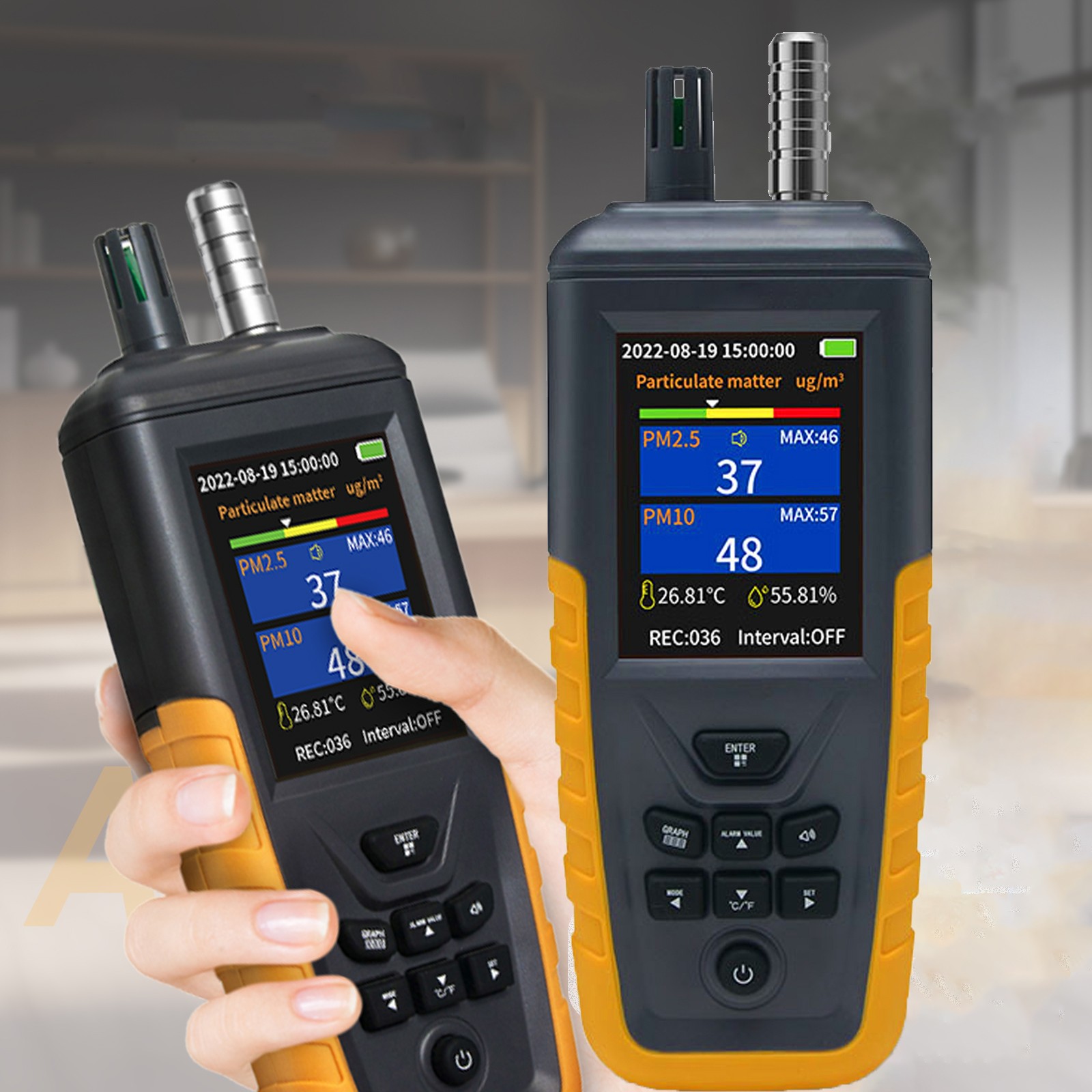
If your priority is particle insight, this is the more specialized pick. It tracks temperature and humidity alongside the particle counts, so you get extra context without a second device. The 999 timestamped data sets and trend chart help you see patterns, and the adjustable audible alarm means you don't have to watch it constantly. The limitation is that the coverage stops at particles. If dust is the problem you're solving, the narrower scope is a fair trade for its focused role.
Airthings 2960 Radon Air Quality Monitor CO2 VOC PM2.5 WiFi Battery
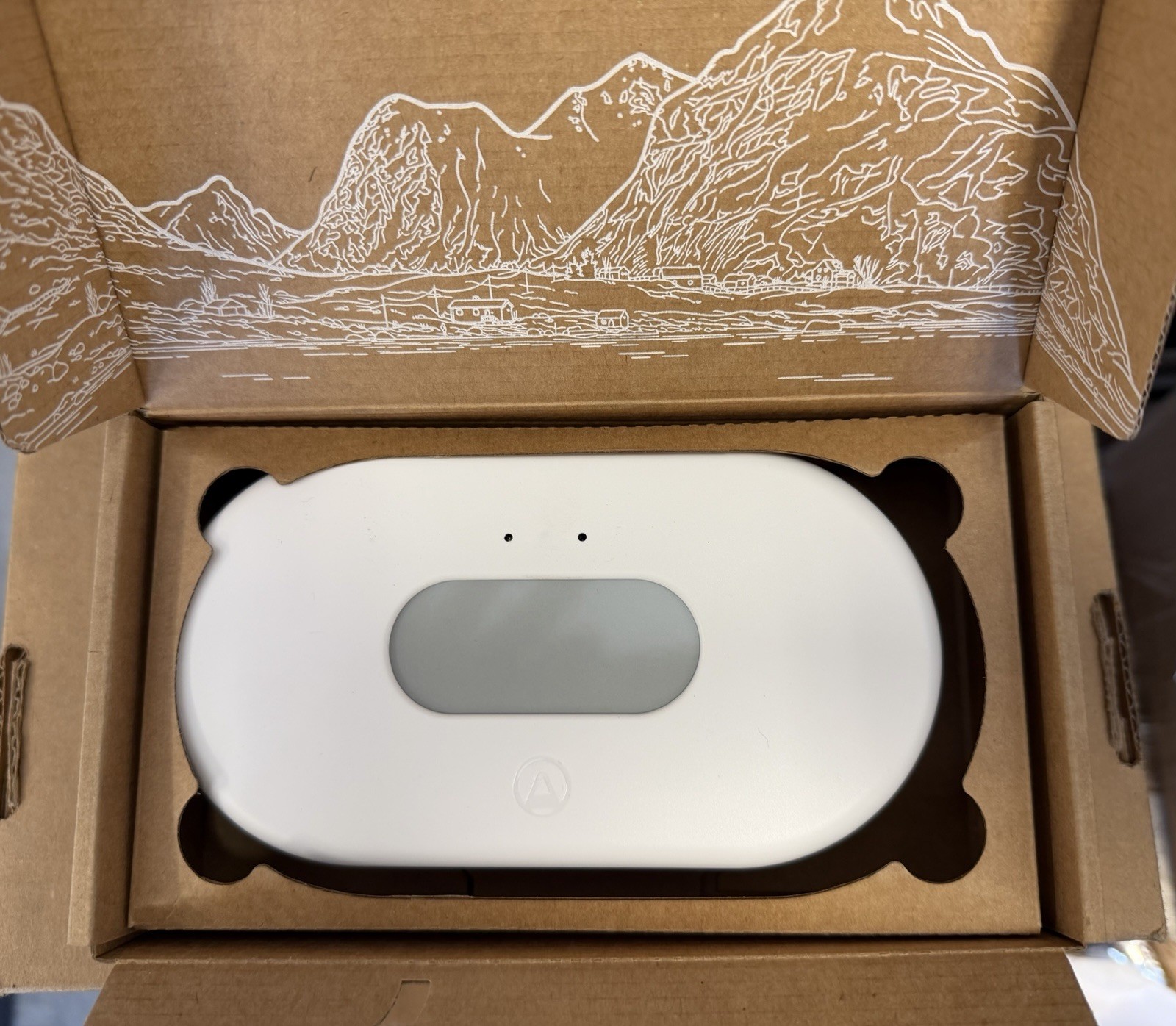
The Airthings 2960 is the broader of the two. It monitors radon, carbon dioxide, volatile organic compounds, and PM2.5 from a battery-powered unit, so you get a wider view of what's in the air. The WiFi connection lets you check the readings without being right next to the display, which suits a monitor meant to run continuously. The tradeoff is that it doesn't give you the same split of particle sizes as the dust counter, so you lose some fine-particle detail. If radon and gas-phase pollutants are your main worries, the wider coverage is exactly what you need.
Final Choice by Use Case
For dust and allergens, choose the dust particle counter. For gas-phase pollutants and broader air-quality worries, choose the Airthings 2960. Let the pollutant you want to catch first be the tiebreaker.