Before you buy any lab equipment in the centrifuges, mixers, and shakers range, the first question is not price-it's the job. The Electric Overhead Stirrer is built for large-volume mixing, while the Desktop Electric Lab Centrifuge is built for tube-scale separation. These are very different tasks, so the real decision is about what your lab does most.
Quick verdict
If your typical day is about mixing large volumes, the Electric Overhead Stirrer is the more useful buy. If your typical day is about separating small samples, the Desktop Electric Lab Centrifuge is the better fit. The two tools don't overlap; choose by your most frequent task.
At a glance
| Consideration | Electric Overhead Stirrer | Desktop Electric Lab Centrifuge |
|---|---|---|
| Listed price | USD 109.02 | USD 60.00 |
| Price bar | ||
| Primary job | Stirring and mixing liquids | Spinning sample tubes |
| Capacity | Max 40L / 10.57gal | 20ml x 6 tubes |
| Speed | 100-2000rpm | Up to 4000rpm |
| Time control | Adjustable | 0-60 min or continuous |
Where each product wins
Where the Electric Overhead Stirrer wins: any job that calls for continuous mixing of a large liquid volume. Where the Desktop Electric Lab Centrifuge wins: any job that calls for separating small samples in tubes. Choose the tool that matches the task that shows up most often in your day.
Product notes
Electric Overhead Stirrer Max.40L Digital Lab Mixer Time & Speed Adjustable 120W
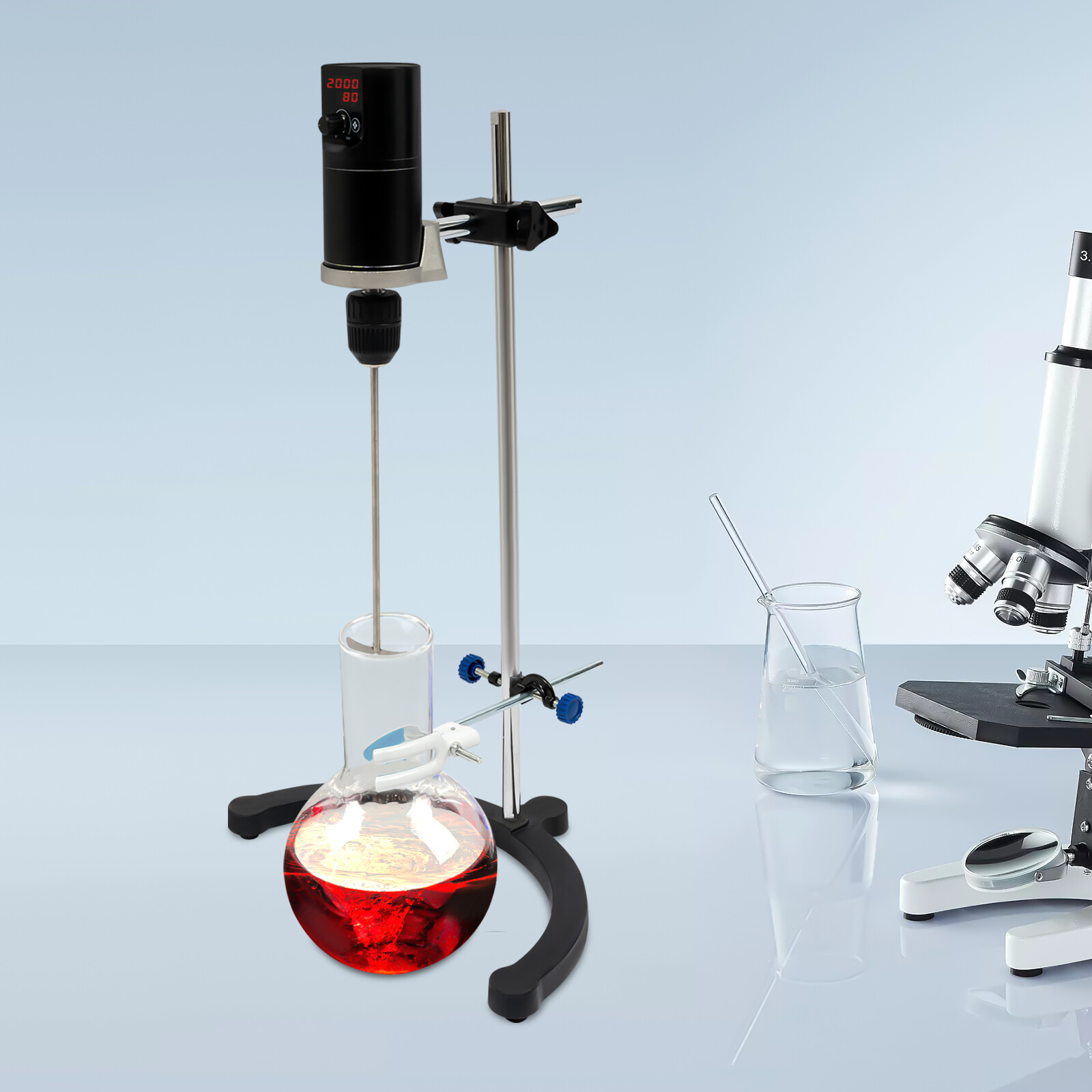
The stirrer answers a very specific need: keeping large volumes of liquid moving. It can mix up to 40L/10.57gal and runs from 100 to 2000rpm, so it suits high-intensity laboratory work where consistency matters. The 120W motor appears in the product name, and the feature set points to high performance and good stability. A digital tube screen gives you a clear readout, and the drill clamping diameter range of 0.8-10mm shows the size attachment it can grip. Time and speed are both adjustable, which helps when you need repeatable mixing conditions. The main limitation is price: at USD 109.02 it is the more expensive of the two, and it does nothing for sample separation. If your days involve 40L batches, this is the tool to buy. If you mainly spin tubes, the cost is hard to justify.
Desktop Electric Lab Laboratory Centrifuge Machine Lab Medical Practice w/Timer
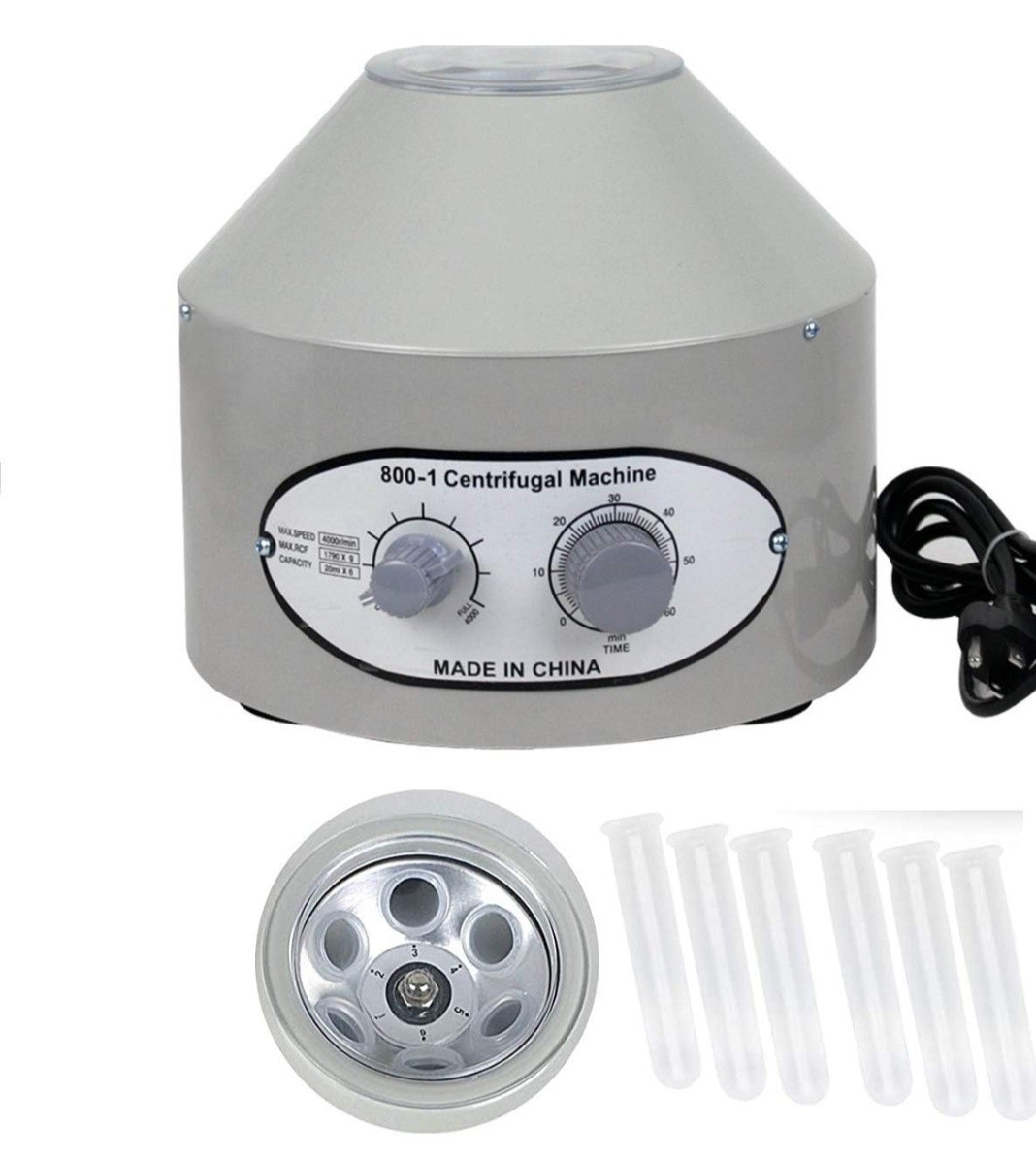
The centrifuge is the tube-scale counterpart. It holds six 20ml tubes and spins up to 4000rpm, generating a maximum relative centrifugal force of 1790×g. That makes it useful for separating cells or particles in medical and chemistry workflows. The timer can run from 0 to 60 minutes or be set without a limit, so a long run does not require you to watch the clock. It runs on AC110V 60HZ power. A clear reason to choose it is the combination of focused function and USD 60.00 price-you get a dedicated separation tool without spending as much as the stirrer. The limitation is batch size: with 20ml tubes and six positions, you are working in small batches. If your work is bulk mixing, this centrifuge cannot fill that role.
Final choice by use case
Choose the Electric Overhead Stirrer when your work centers on mixing big batches or handling more viscous liquids; it is built for that job. Choose the Desktop Electric Lab Centrifuge when your work centers on tube separation; it is a practical first centrifuge for a medical or chemistry lab. If you need both, buy whichever matches your most frequent bottleneck first.