Should you buy a stirrer or a shaker for your lab? It's a common dilemma because both tools move liquids, but they were designed for completely different jobs. An overhead stirrer uses a motor-driven shaft to plow through thick fluids. An orbital shaker rocks flasks and tubes in a circular motion that protects delicate samples. Pick the wrong one and you'll be either fighting a stall or shearing your cells. This head-to-head comparison of the Electric Overhead Stirrer Max.40L Digital Lab Mixer and the JOANLAB Digital Orbital Shaker breaks down the tradeoffs so you can choose the right machine for your bench.
Quick Verdict
If your priority is mixing thick, high-viscosity liquids in large batches, the Electric Overhead Stirrer is the clear winner. If you need low-speed, controllable shaking for cell cultures or staining procedures, the JOANLAB Digital Orbital Shaker is the better fit.
Comparison Table
| Product | Price | Speed Range | Best For |
|---|---|---|---|
| Electric Overhead Stirrer Max.40L Digital Lab Mixer Time & Speed Adjustable 120W | USD 109.02 | 100-2000 RPM | Viscous mixing |
| JOANLAB Digital Orbital Shaker Oscillator Adjustable 40-200 RPM Lab Oscillating Shaker | USD 259.99 | 40-200 RPM | Gentle orbital shaking |
Where Each Product Wins
The Electric Overhead Stirrer wins when you need serious torque. Its motor is built to push through heavy mixtures, and a maximum torque rating of 40N·cm keeps the impeller moving under heavy loads. This is the tool for heavy-duty mixing that a shaker can't handle.
The JOANLAB Orbital Shaker wins when your samples are fragile. The DC brushless motor is quiet and maintenance-free, and the compact design fits inside incubators and ovens. Digital speed and time control let you dial in exactly the motion you need.
Product Notes
Electric Overhead Stirrer Max.40L Digital Lab Mixer Time & Speed Adjustable 120W
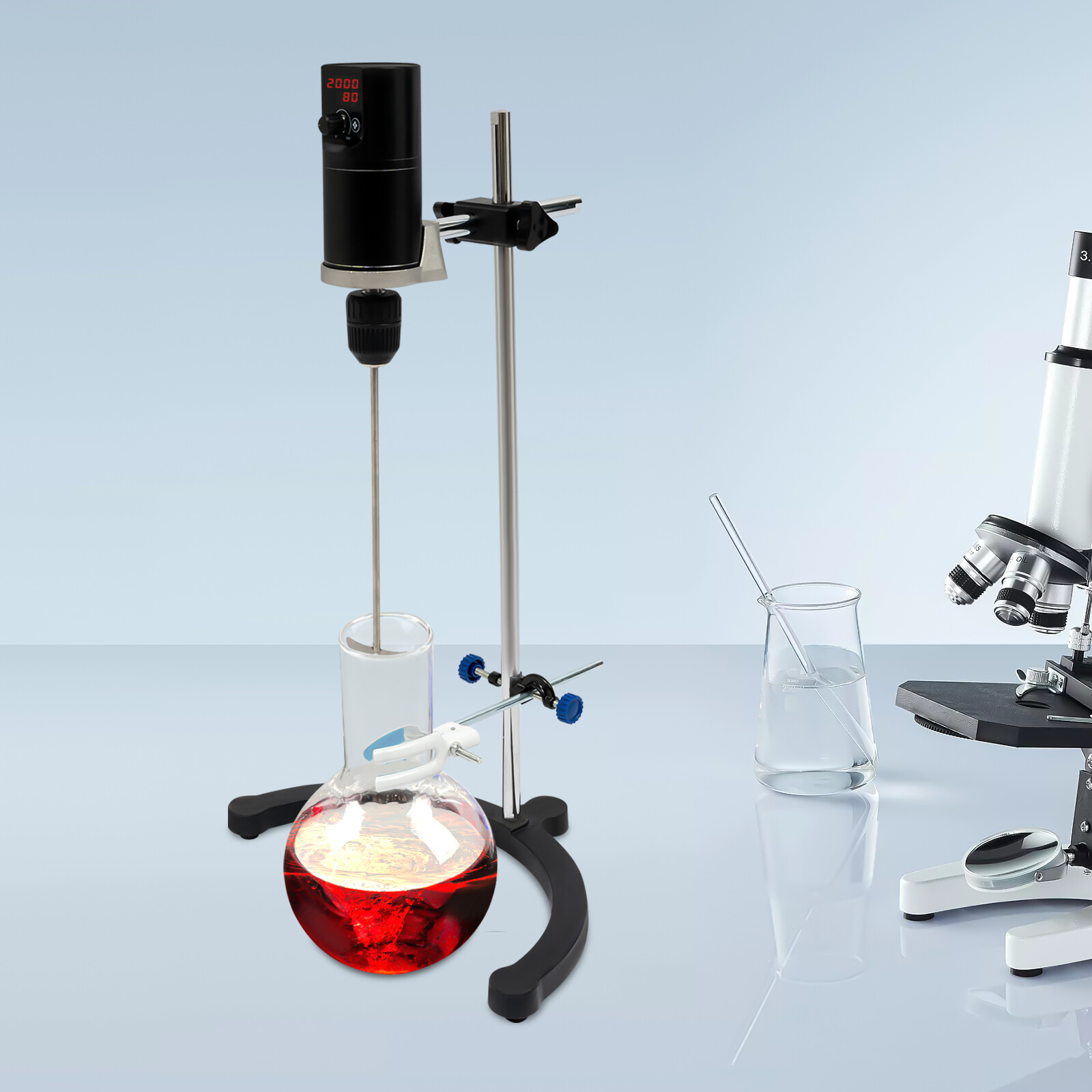
The Electric Overhead Stirrer is built for jobs that an orbital shaker can't handle. Its powerful DC permanent magnet motor provides the power you need for viscous materials, and the drill clamping diameter range of 0.8-10mm gives you flexibility when choosing mixing blades. The digital tube screen displays your current settings, so you can lock in a repeatable process. This makes it a solid choice for mixing paints, inks, resins, and other viscous materials. The catch: this is a stirrer, not a shaker. If you need uniform agitation for cell cultures, you'll want the orbital shaker instead.
Digital Orbital Shaker Oscillator Adjustable 40-200 RPM Lab Oscillating Shaker
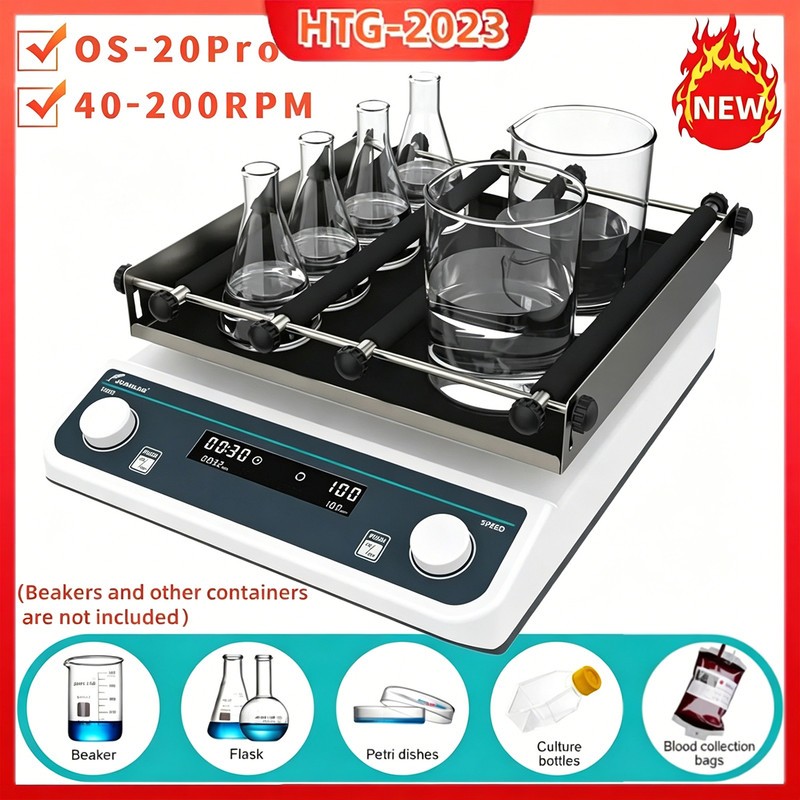
The JOANLAB Digital Orbital Shaker is the sample-friendly counterpart to the overhead stirrer. Its orbital motion moves flasks and tubes in a circular pattern, providing effective mixing without the shear stress you get from a rotating impeller. The DC brushless motor keeps operation quiet and maintenance-free, while the digital panel lets you set both time and speed. The compact design is a practical advantage-you can place it in an incubator or oven to combine temperature control with shaking. The main drawback is that it can't handle pastes: if you need to stir a high-viscosity mixture, you'll need the overhead stirrer's torque instead.
Final Choice by Use Case
Pick the Electric Overhead Stirrer if you work with thick fluids or need large mixing volumes (up to 40L). At USD 109.02, it's also the more affordable option.
Pick the JOANLAB Digital Orbital Shaker if your samples are fragile or you need gentle mixing in biological workflows. At USD 259.99, you'll get precision and sample safety.