Choosing the right lab mixing equipment often comes down to one question: should the mixing happen inside a single vessel or across a flat platform? The Electric Overhead Stirrer Max.40L Digital Lab Mixer Time & Speed Adjustable 120W and the Orbital Shaker Adjustable Lab Mixing Oscillator Horizontal Rotator Shaker 10W take opposite approaches. Both are new equipment, but each is designed for a different workflow.
Quick Verdict
If your work calls for large volumes in a container, the Electric Overhead Stirrer is the stronger pick. It lists at $89.02 and pairs a 120W motor with a 40L maximum mixing volume. If your job is gentler and involves small samples on a workbench, the Orbital Shaker lists at $148.92 and offers adjustable horizontal rotation up to 210r/min. The deciding factor is motion style: vertical stirring power versus horizontal oscillating movement.
Listed Specs at a Glance
| Product | Listed Price | Key Specs | Best For |
|---|---|---|---|
| Electric Overhead Stirrer Max.40L Digital Lab Mixer | $89.02 | 120W motor, 100-2000rpm speed range, 40L/10.57gal max mixing volume, 30000mPa·s max viscosity, digital tube screen | High-volume mixing inside a single vessel |
| Orbital Shaker Adjustable Lab Mixing Oscillator | $148.92 | 10W motor, 0-210r/min speed range, 1kg/2.2 lbs max sample processing capacity, plastic and silicone construction | Gentle horizontal oscillation of small samples on a platform |
Where Each Product Wins
- Choose the Electric Overhead Stirrer when you need to stir up to 40L of liquid, want a speed range from 100 to 2000rpm, and benefit from a digital time-and-speed display.
- Choose the Orbital Shaker when you need horizontal rotation from 0 to 210r/min, want to mix samples gently on a workbench, and are working with loads up to 1kg/2.2 lbs.
Product Notes
Electric Overhead Stirrer (Digital Lab Mixer)
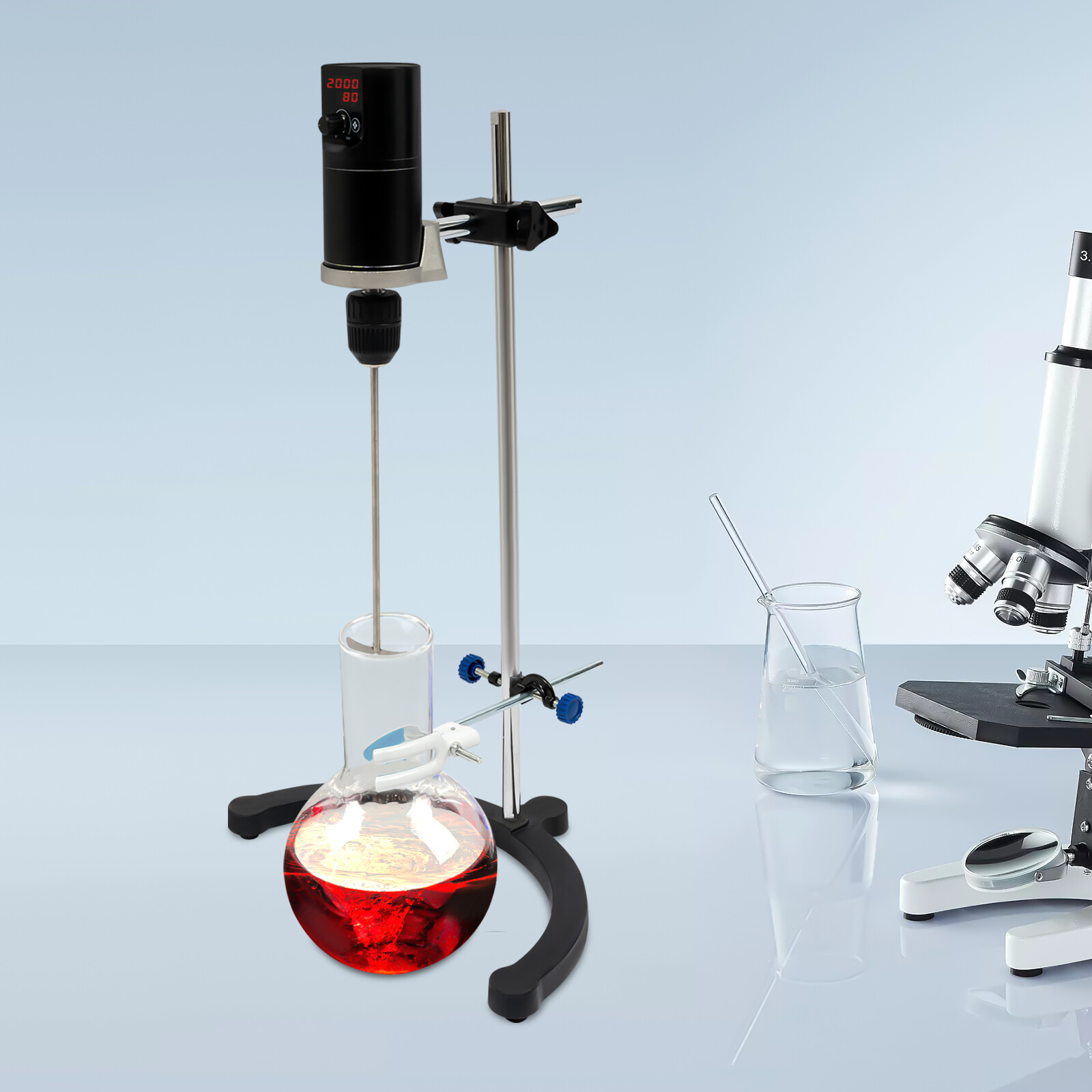
The overhead stirrer is built like a workhorse: a 120W motor, a maximum mixing volume of 40L/10.57gal, and a speed range of 100-2000rpm make it a natural fit for larger beakers, buckets, and liquid media. The digital tube screen shows speed and time settings, so you can track a run without guesswork. It also handles fairly thick fluids, with maximum torque of 40N·cm and maximum viscosity of 30000mPa·s. Its limitation is that it stirs inside a vessel rather than on a platform; if your workflow depends on multiple small samples being shaken horizontally at once, this unit won't provide that motion. It is the tool to pick when you need one powerful, adjustable stirring point.
Orbital Shaker (Horizontal Rotator)
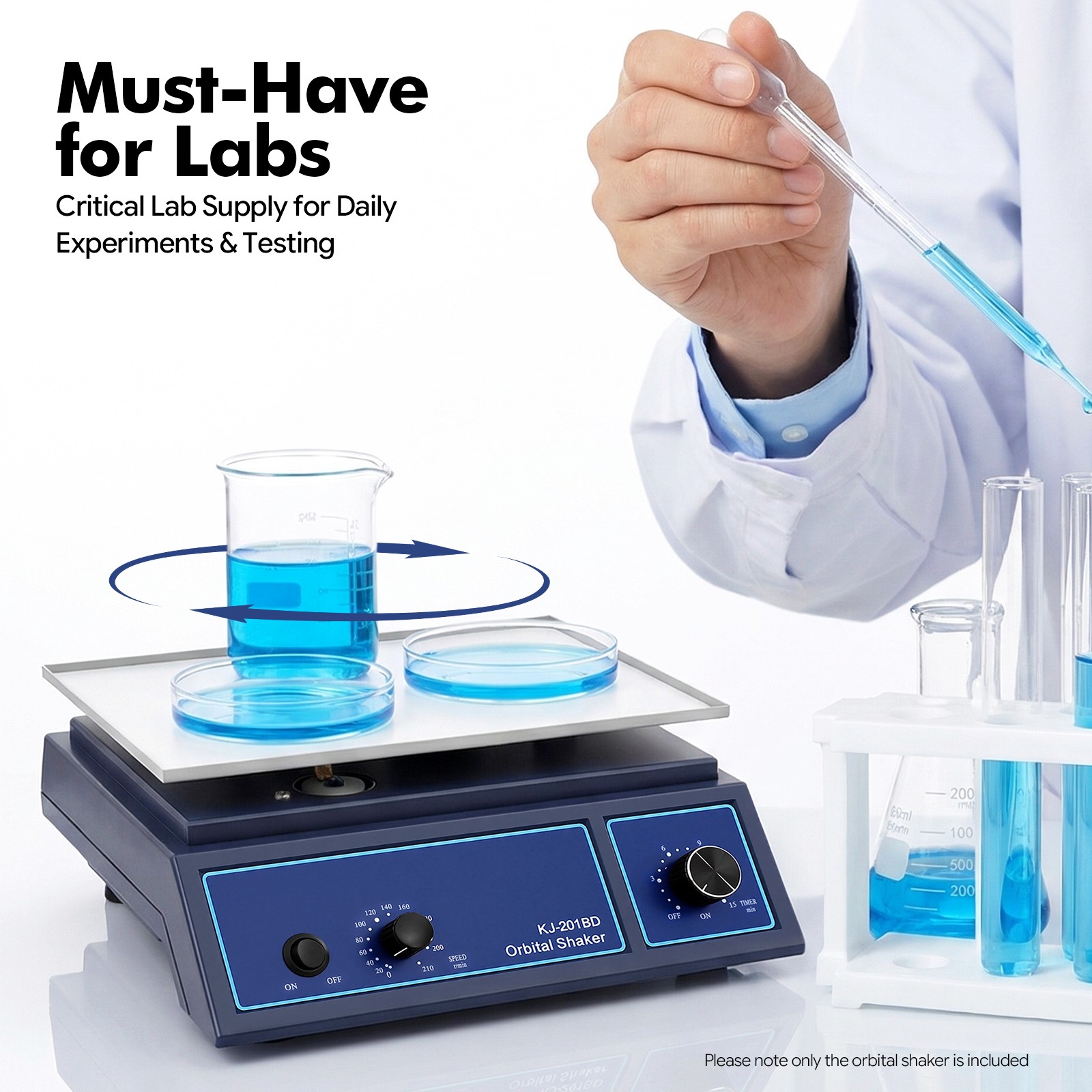
The Orbital Shaker solves a different problem. Its platform rotates horizontally from 0 to 210r/min, allowing you to set a slow sway for delicate samples or a faster mix when you need it. The DC gear motor and eccentric ball bearings keep the motion stable and even, and the plastic and silicone body is rust-resistant. The main limitation is capacity: maximum sample processing capacity is just 1kg/2.2 lbs, so it suits tubes, small flasks, and light containers rather than large or heavy batches. If your lab work is about gentle, repeatable oscillation instead of high-torque stirring, this shaker is the direction to go.
Final Choice by Use Case
- Go with the Electric Overhead Stirrer for large-volume, higher-intensity mixing: 40L capacity, 120W power, and speed control up to 2000rpm.
- Go with the Orbital Shaker for gentle, small-batch oscillation: 1kg/2.2 lbs maximum load, 0-210r/min, and a stable horizontal platform.
If you're mixing liters in a single container, the overhead stirrer is the better match. If you're moving small samples around on a flat surface, the orbital shaker fits that job.