Choosing between a forced-air drying oven and a 2L rotary evaporator comes down to the kind of lab work you do. In a lab heating, cooling, and vacuum setup, do you need to dry a messy pile of glassware and samples with steady heat, or do you need to concentrate a liquid by pulling solvent off under vacuum? The oven is built for heat-only drying; the rotary evaporator is built for solvent removal under reduced pressure. They are not competing versions of the same tool, so the smart first step is to name your workflow before you compare prices.
Quick Verdict
Quick verdict: If your bench needs a dedicated drying station for glassware, precipitates, and samples, go with the Lab Industrial Digital Forced Air Convection Drying Oven. If your bench needs to concentrate solutions or recover solvents under vacuum, go with the 2L Rotary Evaporator. The table below shows the price spread, with the oven listing at USD 395.80 and the rotary evaporator at USD 516.99.
Side-by-Side Comparison
| Detail | Forced-Air Drying Oven | 2L Rotary Evaporator |
|---|---|---|
| Listed price | USD 395.80 | USD 516.99 |
| Core task | Uniform heat drying | Solvent evaporation under vacuum |
| Capacity | 35 × 35 × 35 cm internal chamber | 1L evaporation flask + 1L collecting bottle |
| Heat/power | 1000W, 110V | External vacuum pump and chiller hookup |
| Key spec | ±1°C temperature fluctuation | Manual lifting, stainless steel bracket |
Where the Drying Oven Wins
The drying oven is the practical pick when your lab's bottleneck is getting things dry. It supplies a heated chamber with circulating air, which suits routine drying and baking. The forced-air convection design means you can load a batch of items and rely on the chamber to distribute heat across the load. If you don't already have a vacuum source on hand, the oven avoids that extra setup.
Where the Rotary Evaporator Wins
The rotary evaporator is the right tool when your lab's bottleneck is getting solvent out of a sample. It is designed for reduced-pressure evaporation, so it earns its place when you need to concentrate or recover rather than simply dry. The rotation of the flask is what makes it a rotary evaporator; that motion, combined with vacuum, gives you a dedicated solvent-removal workstation. If every task on your bench is heat-only drying, this is more tool than the job requires.
Product Notes
Lab Industrial Digital Forced Air Convection Drying Oven
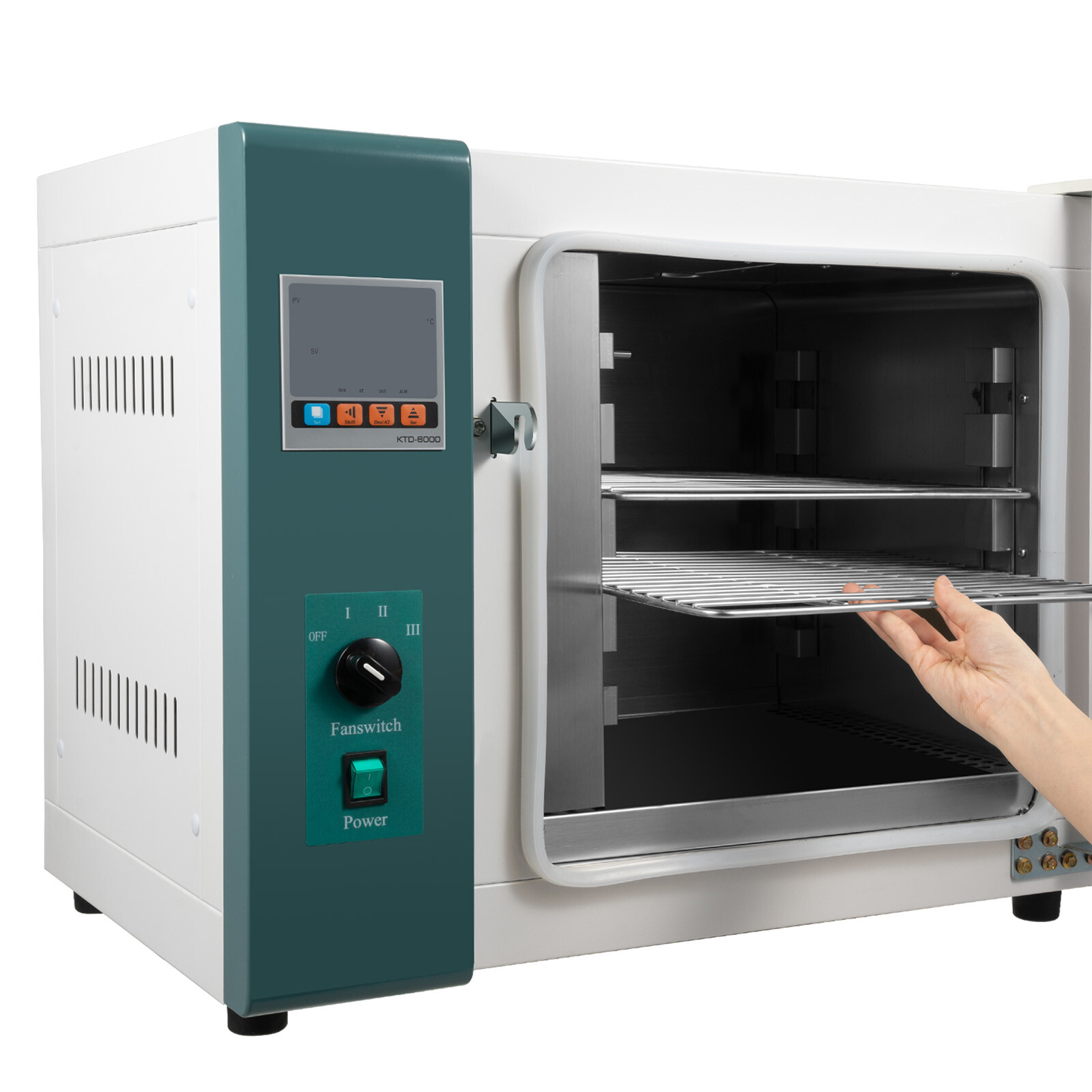
Start with the workflow: if you regularly dry wet glassware or bulk materials, this forced-air convection oven gives you a contained heated space that you can set at a target temperature. The 35 cm cubed chamber is large enough for multiple flasks, and it runs on a 110V supply. The limitation is that it is a heat-based drying oven rather than a rotary evaporator, so the solvent-concentration tasks that need a rotating flask and vacuum are outside its role. If your work is heat-only, this is the more direct and less expensive path.
2L Rotary Evaporator
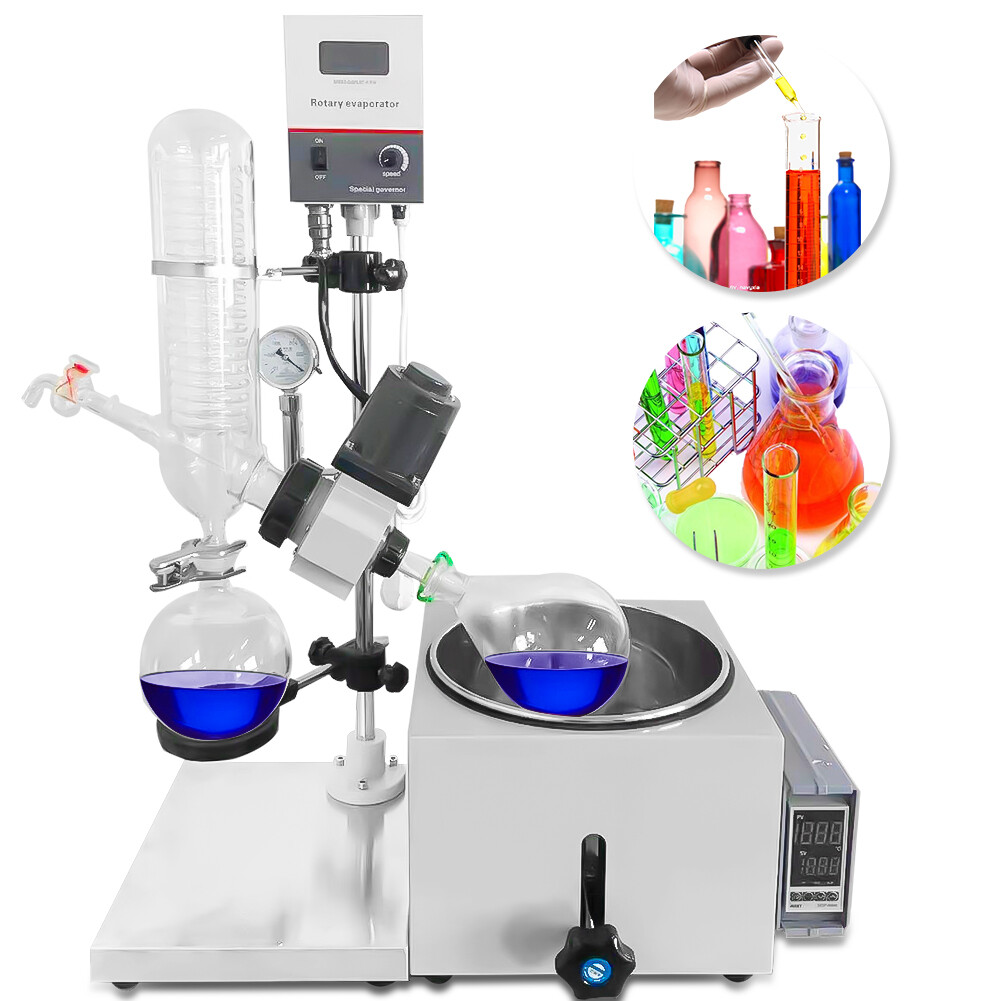
Think about batch size and external utility: the 2L rotary evaporator pairs a 1L evaporation flask with a 1L collecting bottle, so each run is a manageable bench-scale batch. The manual lifting mechanism lets you raise the flask away from the heating bath, and the stainless steel bracket supports the glass assembly. The trade-off is the external setup: the title describes a unit that connects to a vacuum pump and chiller, so you need those components nearby. At a gross weight of 64.37 lbs, it also asks for a stable cart or bench. This is not a standalone evaporation appliance; it becomes part of a small system.
Final Choice by Use Case
Choose the forced-air drying oven for drying-focused days: wet glassware, washed materials, and samples that need steady heat. Choose the 2L rotary evaporator for solvent-focused days: concentration, recovery, and vacuum evaporation. If both workflows appear in your week, these two tools work as partners rather than rivals. The oven handles the heat-only tasks, while the rotary evaporator handles the reduced-pressure jobs.