Choosing between a compact industrial HDMI microscope and a self-contained digital microscope with a built-in screen can be a stumbling block for lab imaging work. The first option is a camera-and-lens combo that depends on your monitor; the second is a complete station with its own display. Your workflow, desk space, and budget will decide which one actually earns its place.
Quick Verdict
If you already have a monitor and want to keep the setup simple, the HDMI Video Microscope VGA Camera HD Industrial Digital USB Lens is the lower-cost route into digital inspection. If you would rather have a complete unit with a built-in screen and higher-resolution capture, the TriL110 2K HDMI Digital Microscope justifies its higher price.
At a Glance
| Product | Price | Price Bar | Key Specs | Best For |
|---|---|---|---|---|
| HDMI Video Microscope | USD 59.64 | 1080p, 60fps, HDMI/VGA | Bench work with existing display | |
| TriL110 2K HDMI Digital Microscope | USD 99.98 | 2K, 24MP, 2500x | Portable inspection, coin work |
Where Each Product Wins
- HDMI Video Microscope is the better fit for a fixed workbench where a separate monitor is already in place. Its HDMI and VGA outputs connect to common displays, and the 60fps frame rate keeps movement smooth while you adjust parts.
- TriL110 2K HDMI Digital Microscope wins when you need a self-contained station. The built-in 10-inch screen eliminates the need for a monitor, and the 2K output plus 24MP stills capture more detail in a single frame.
Product Notes
HDMI Video Microscope VGA Camera HD Industrial Digital USB Lens 1080p 14mp 60FPS
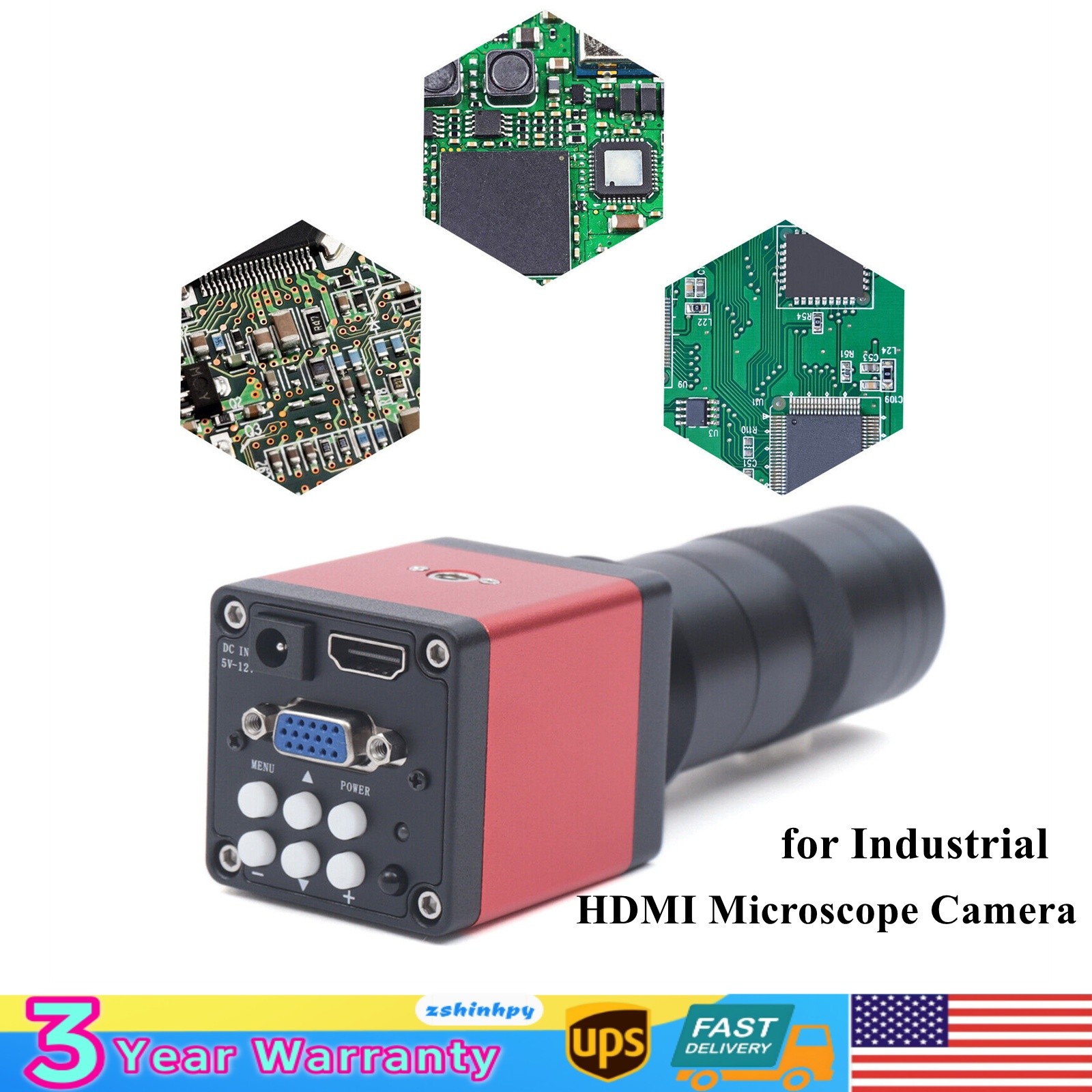
This camera-and-lens combo is the straightforward option for getting started with digital inspection without paying for a screen you may not need. It outputs 1080p video at up to 60fps, which feels smooth when you are repositioning a circuit board or adjusting a component under the lens. The HDMI and VGA interfaces give you flexibility for connecting to larger displays, and the auto/manual brightness control helps when lighting changes. Keep in mind that this model relies on an external monitor for the entire session, so it is not a self-contained setup. The listed magnification of about 8x to 130x assumes a 70cm/27.6-inch monitor; on other screens, the effective magnification will shift accordingly. At this price, it is a practical entry into digital inspection, but you will need to supply your own display.
TriL110 2K HDMI Digital Microscope 10" 2500x 24MP USB Coin Microscope
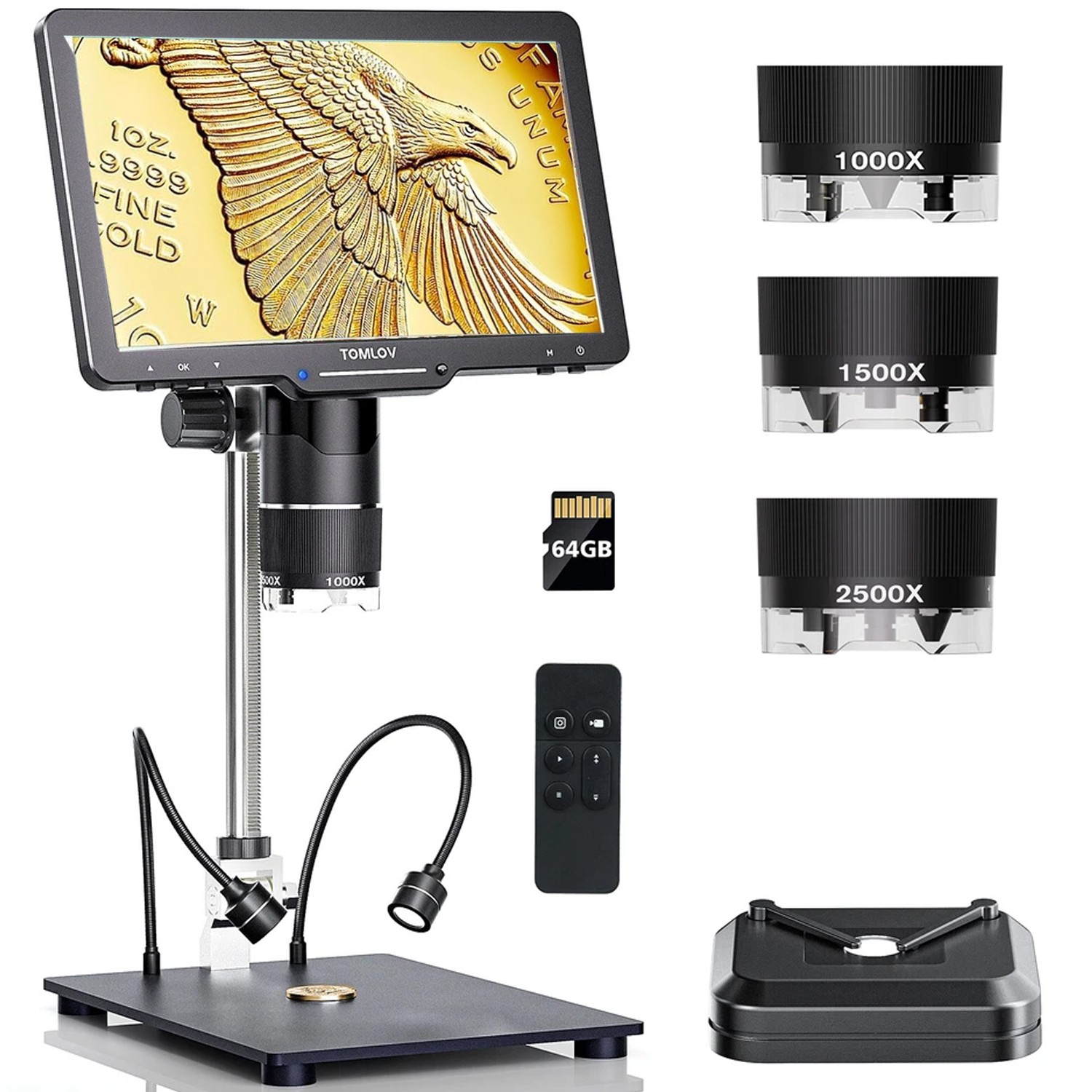
This used TriL110 brings a 10-inch built-in screen, 2K HDMI output, and 24MP still capture together in one box. The triple-lens barrel is a key convenience: rotating the lens lets you switch from a general view to the dedicated coin lens, which is handy when you are comparing error coins or moving between soldering tasks without manually changing optics. The integrated screen makes it easy to work on a desk without a separate monitor. The trade-off is condition: this listing is marked as used, so you are accepting prior handling. It also sits at a higher price than the HDMI-only model, so you are paying more for the built-in screen and lens flexibility.
Final Choice by Use Case
- Fixed bench with an existing monitor: Choose the HDMI Video Microscope to keep the cost down.
- Portable or space-constrained workspace: Choose the TriL110 so you do not need to connect to a separate screen.
- Coin inspection or quick lens changes: The TriL110's integrated coin lens and triple-lens switching give it a clear edge.
- Basic electronics and soldering on a budget: The HDMI Video Microscope gets the job done at a lower price.