Walk into a lab with stalled experiments, and the first question is whether the bottleneck is vacuum or heat. If you need to pull filtrate through a manifold, degas solvents, or run a rotary evaporator, you need a vacuum pump. If you need to dry glassware, cure coatings, or bake heat-stable materials, you need a drying oven. This head-to-head lines up the HFS VP 2200 2-Stage Laboratory Vacuum Pump against the Sendercrop USLE 1000W Drying Oven and matches each one to the work it actually does.
Quick verdict: pick based on your next critical step. A vacuum-dependent workflow-filtration, degassing, aspiration, manifold work-belongs with the HFS VP 2200. A heat-dependent workflow-drying glassware, curing coatings, conditioning samples-belongs with the USLE oven. The pump is built for flow; the oven is built for even heat.
| Tool | Listed Price | Best for |
|---|---|---|
| HFS VP 2200 2-Stage Vacuum Pump | $199.00 | Labs that need portable vacuum for filtration, degassing, aspiration, or manifold work |
| Sendercrop USLE 1000W Drying Oven | $346.34 | Labs that need forced-air convection heat for drying and curing heat-stable materials |
Where the HFS VP 2200 wins
The HFS wins when your bottleneck is vacuum. The 2-stage design and 12 CFM free air displacement give you enough flow for typical lab tasks like pulling liquids through filters, degassing, or running a vacuum manifold. Its listed price is the lower entry point in this comparison.
Where the USLE oven wins
The USLE oven wins when your bottleneck is drying throughput. Moving air keeps heat circulating through the chamber instead of relying on still air, helping batches dry more evenly. Its internal chamber measures about 35 x 35 x 35 cm and the shelves carry up to 15 kg, so you can process more than one rack at a time in a digital unit.
Product notes
HFS VP 2200 2-Stage Vacuum Pump
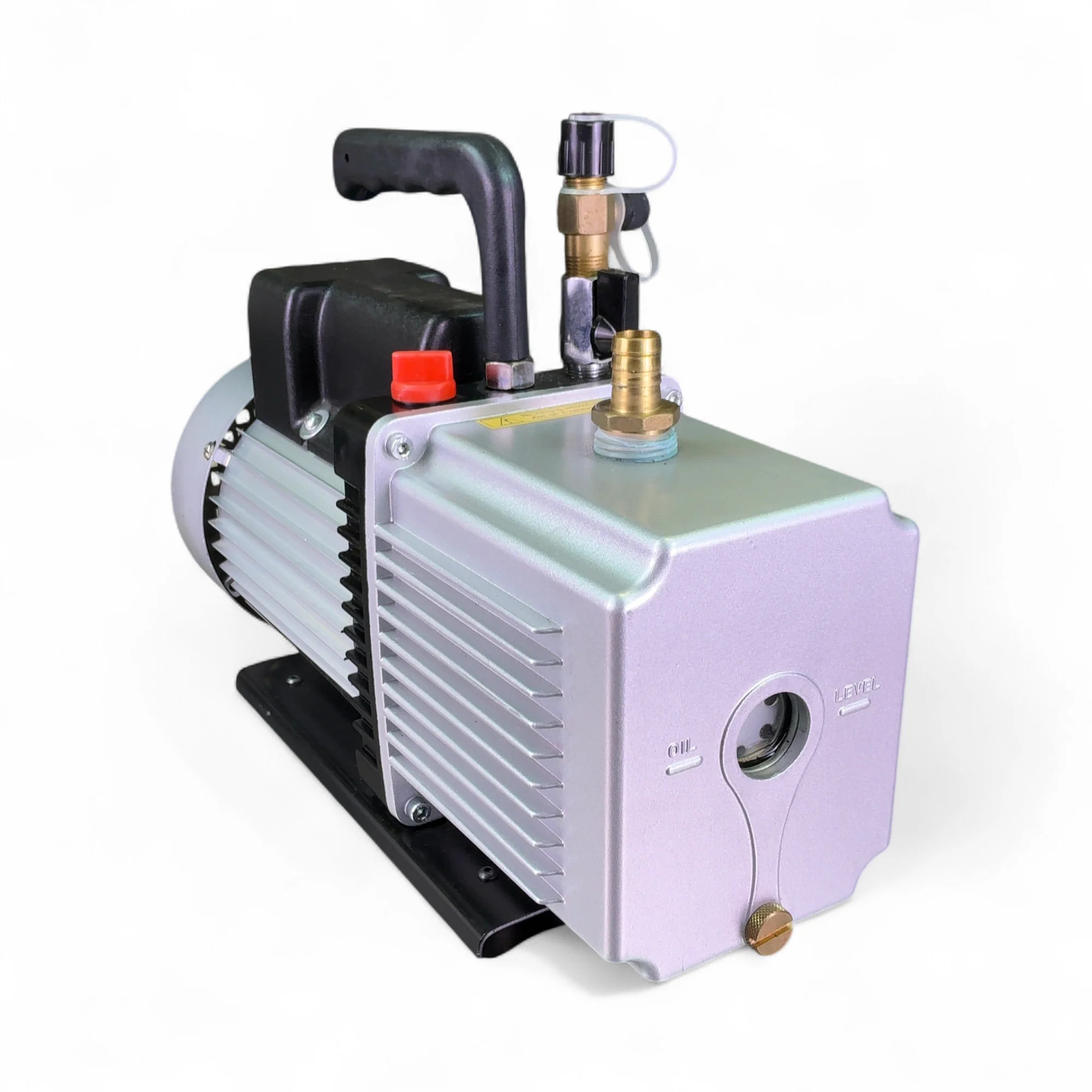
The HFS VP 2200 pairs a 2-stage pump head with 12 CFM free air displacement and a 1 HP motor, so it is built for labs that need steady vacuum for biological, dental, medical, microbiological, or physical work. It reaches an ultimate vacuum of 3 x 10^-1 Pa, is marked portable, and comes with one pump and one power cord. The trade-off is condition: this is a used unit, and the functional test covered power and basic operation rather than hands-on use in your specific application. If you need a vacuum source for filtration, degassing, aspiration, or manifold setups, this is the more direct fit-just pair it with your own traps, tubing, and collection vessels.
Sendercrop USLE 1000W Drying Oven
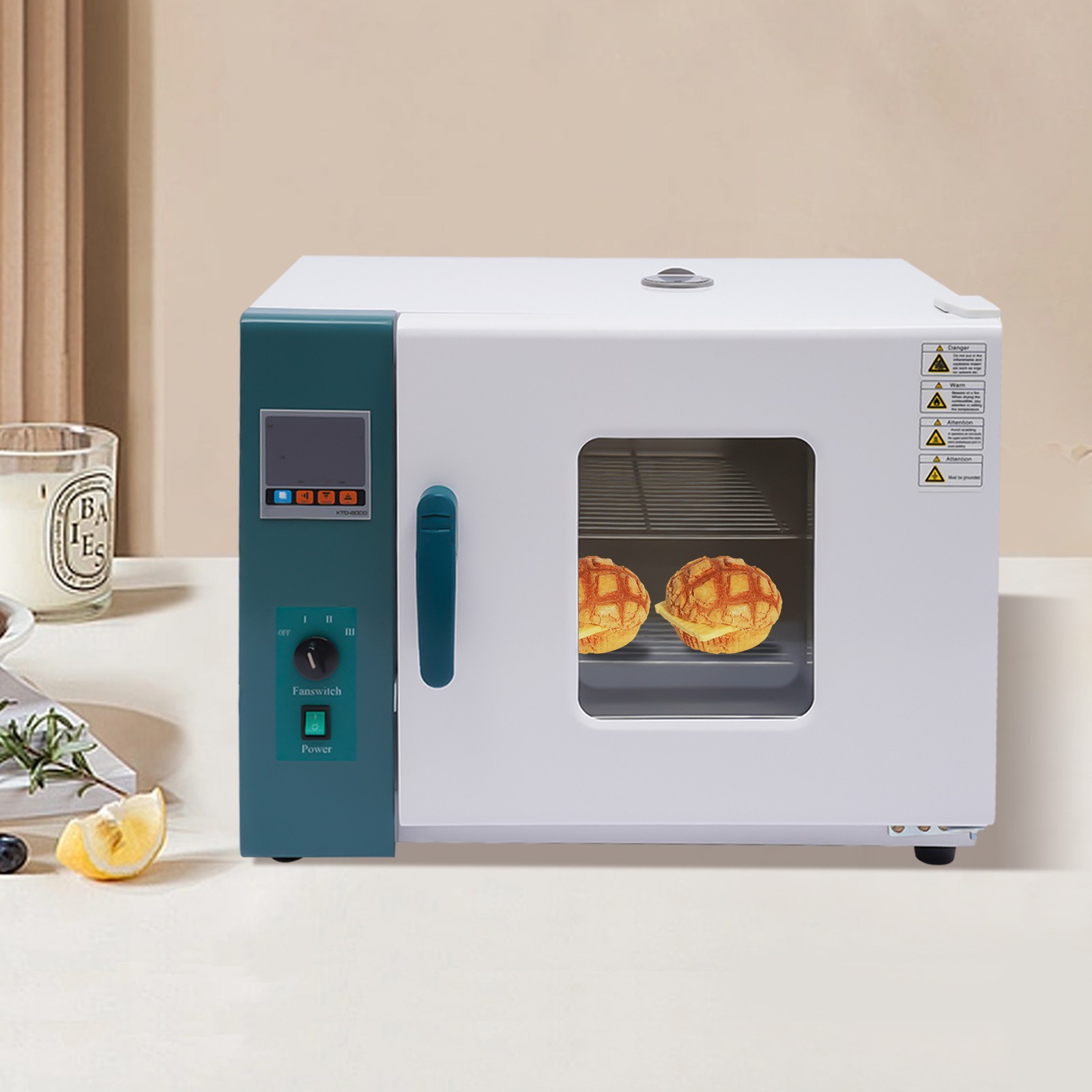
Drying large batches calls for even heat, and the Sendercrop USLE 1000W forced-air convection oven is designed for that. It is new, uses a digital control system for uniform temperature, and offers an internal chamber of roughly 35 x 35 x 35 cm with a 15 kg shelf load. That gives you room to dry several racks of glassware or heat-stable materials at once. Its external dimensions of 47 x 66 x 53 cm mean it will claim a dedicated spot on your bench or cart. For processes that need both drying and vacuum, you will need the pump as a separate tool. Choose the oven when your bottleneck is throughput: predictable, gentle drying of a cluttered workload.
Final choice by use case
Choose the HFS VP 2200 if your day involves pulling vacuum-filtering, degassing, aspirating, or running a manifold-and you want the lower listed price of the pair. At $199.00, the pump is the direct answer to vacuum bottlenecks.
Choose the Sendercrop USLE oven if your day involves drying large amounts of glassware or heat-stable materials. At $346.34, you are paying for new condition and enough chamber space to run more than one rack.
If your workflow regularly needs both vacuum and heat, stage the two tools in sequence: handle the vacuum step first, then move the material to the drying oven.