Quick Take
Choosing a compound microscope for lab imaging comes down to three practical decisions: how much magnification your samples require, how comfortable you want the viewing session to be, and whether you'll ever need to capture digital images. The four models here span a wide price range, from a basic student scope to a used medical-lab instrument, so your priorities will determine which one fits. The two mid-priced options take different approaches: one is a kit-style scope, the other is oriented toward image capture. Your first step is to define what your lab tasks actually demand. Once you've matched a model to your magnification and viewing needs, the price difference becomes a question of whether the extras are worth the outlay. If you can answer these three questions, the rest of the comparison becomes much easier.
Listed-Price Comparison
The table below orders the four microscopes by price and shows the relative price bar for each.
| Product | Price | Magnification | Viewer | Price Bar |
|---|---|---|---|---|
| Omano Student Compound Monocular Microscope | $79.99 | 40x, 100x, 400x | Monocular | |
| VEVOR XSP-36 Binocular Compound Laboratory Microscope | $120.99 | 40x-2500x | Binocular | |
| OMAX 40X-2500X LED Lab Trinocular Compound Microscope | $159.99 | 40x-2500x | Trinocular | |
| Olympus BH2 BHTU Binocular Upright Compound Microscope | $349.95 | 40x-1000x | Binocular |
Decision Matrix
Here's how the four models line up for different shopping scenarios.
- Omano Student Compound Monocular - Best for a limited budget and basic biological observation.
- VEVOR XSP-36 - Best for a setup that includes 48 prepared slides and an extra eyepiece.
- OMAX 40X-2500X - Best for documentation work and visual capture.
- Olympus BH2 BHTU - Best for a medical lab that wants a used Olympus instrument.
Product Notes
Each microscope has its own strengths and compromises.
Omano Student Compound Monocular Microscope
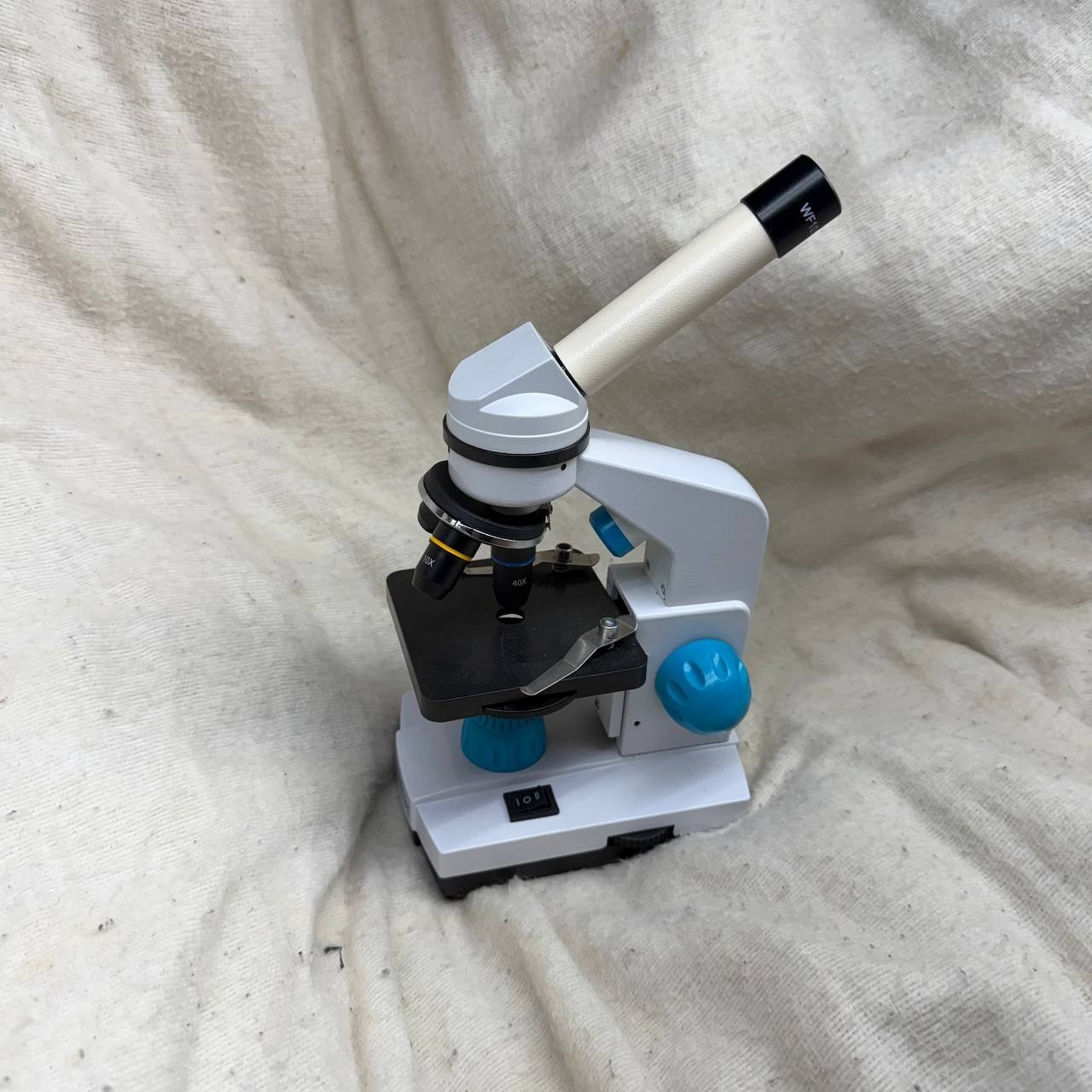
The Omano is the entry-level pick and a new open-box unit. For a tight budget, this covers the essentials with 40x, 100x, and 400x magnification. The monocular head keeps the setup simple, but it means you'll be using one eye for the whole session, which can become tiring. If you only need basic biological observation and don't expect to move beyond a few standard magnifications, the low price and simple operation are the reasons to choose it. The trade-off is the 400x ceiling and the lack of a second eyepiece, so it's not suited for high-magnification work or long viewing stretches.
VEVOR XSP-36 Binocular Compound Laboratory Microscope
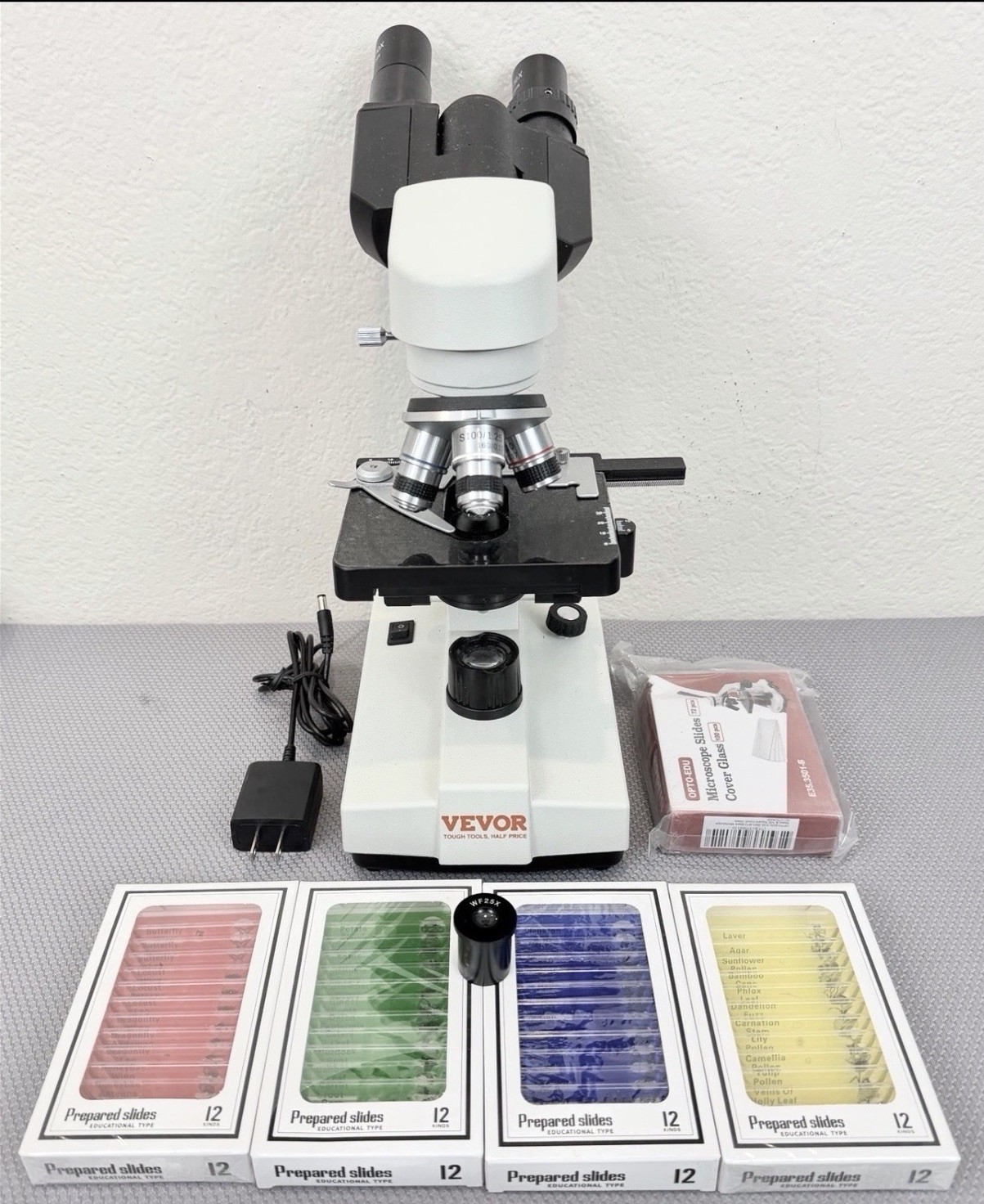
This used VEVOR is the kit option: it comes with 48 prepared slides and an extra eyepiece, so you can begin observing immediately. The binocular head is more comfortable than a monocular for extended use, and the 40x to 2500x range gives you far more headroom than basic tasks require. The mechanical stage is a plus for precise positioning. The main drawback is the used condition; with a second-hand instrument, you're accepting some unknown wear. For a modest price, you're getting a large collection of accessories and a capable binocular microscope.
OMAX 40X-2500X LED Lab Trinocular Compound Microscope
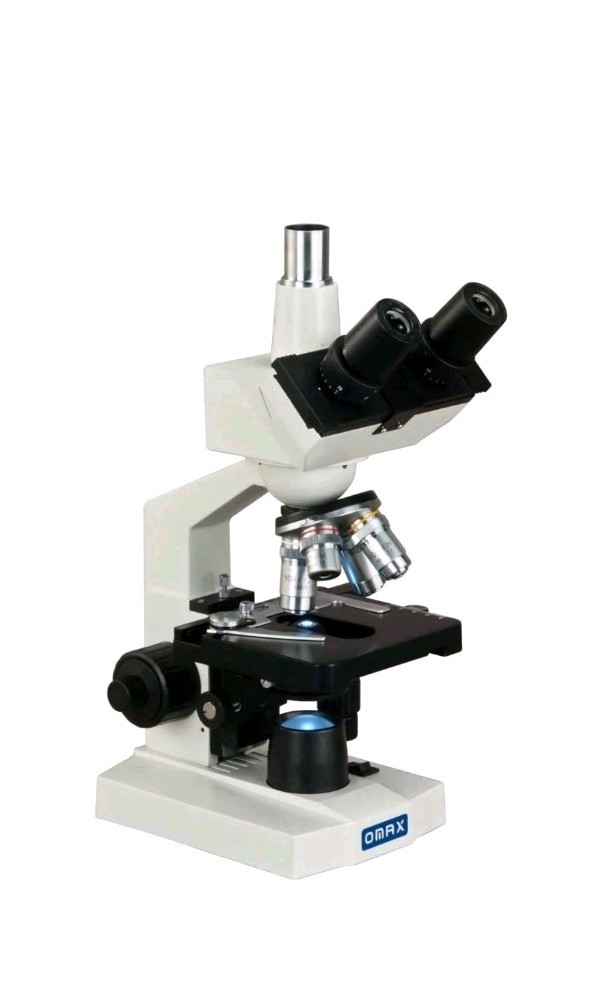
The OMAX is the one to consider if you want to attach a camera later. It's a new open-box unit with a trinocular head, meaning there's a dedicated port for imaging. The 40x to 2500x magnification matches the VEVOR, and the intended-use list covers everything from dental to veterinary labs. The LED light source is convenient for daily bench work. The downside is that you pay extra for that third port even if you never use it, and the open-box condition means the packaging may not be original. If documentation is part of your workflow, the camera port is a genuine advantage.
Olympus BH2 BHTU Binocular Upright Compound Microscope
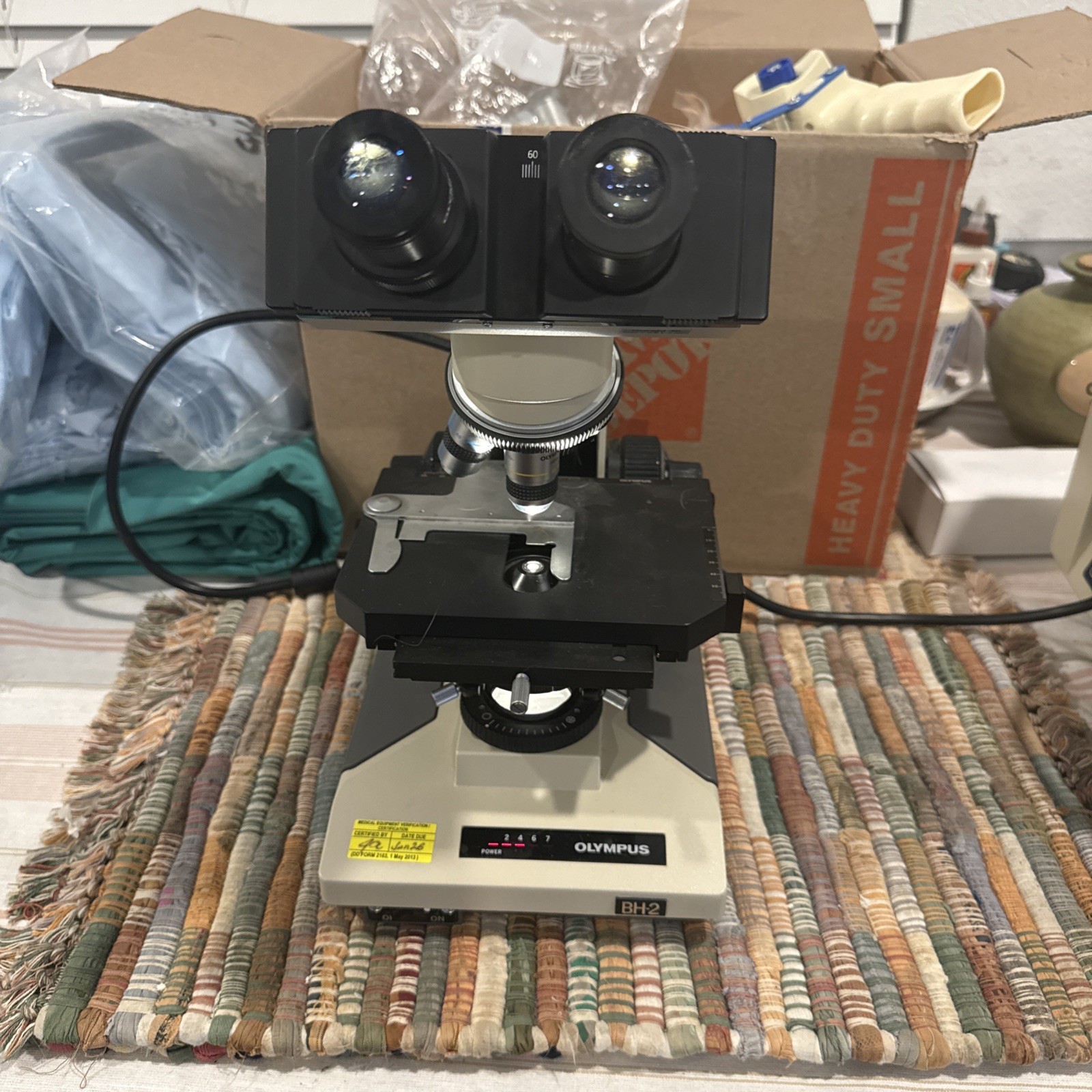
If you want a used medical-lab scope from Olympus, the BH2 BHTU is a direct, no-frills choice. It uses a binocular head and covers 40x to 1000x, which is lower than the VEVOR and OMAX but plenty for routine clinical slides. The catch is the price: this is the most expensive model here, and you're buying it used. You don't get the slide collection or the camera port that come with the other units, but you do get a straightforward Olympus instrument built for lab work.
Final Recommendation by Use Case
- For the lowest possible entry price: the Omano at $79.99 is the clear pick.
- For a complete kit at a modest price: the VEVOR at $120.99 is the one to choose.
- For documentation work: the OMAX at $159.99 is the only model here with a dedicated camera port.
- For a used medical-lab Olympus: the Olympus at $349.95 is the straightforward choice.
Focus on your actual workload first; the price tag should follow from that.