Choosing between an orbital shaker and a rocking platform shaker is really a question of motion. Do you want samples swirled in a circular path to mix, dissolve, or suspend, or do you want a gentle tilting action for gels, blots, and staining? Two used lab mixers make that decision concrete: the Labnique Orbital Shaker at $120 and the VWR Rocking Platform Shaker at $170. Both sit on a lab bench, but they move samples very differently and run on different power. Here's how to pick the one that matches your protocol.
Quick verdict If you need variable-speed circular agitation plus a mechanical timer, the Labnique Orbital Shaker is the straightforward pick. If your work calls for a rocking platform motion-like gel blot processing-the VWR Rocking Platform Shaker offers that tilting action, but at a higher price.
Comparison
| Product | Motion | Speed | Power | Price |
|---|---|---|---|---|
| Labnique Orbital Shaker | Orbital | Variable dial, 0 to over 210 r/min | 110V, 50/60Hz | $120 |
| VWR Rocking Platform Shaker | Rocking | Maximum 120 tilts per minute | 230V nameplate, 50/60Hz | $170 |
Where each product wins The Labnique wins for labs that need a single platform for both timed and continuous orbital mixing. The speed control reaches higher than the rocker's tilting ceiling, so it can handle faster circular agitation. Its power setup is the simpler one for a US bench.
The VWR wins for anyone doing gel blot, staining, or other gentle tilting procedures. Its rocking motion is a different tool from orbital shaking, and it is the higher-priced option here, but the motion type is the deciding factor if your application depends on an end-to-end tilt. Make sure your lab power matches its voltage requirements.
Product notes
Labnique Orbital Shaker 110V Lab Mixer Variable Speed w/ Timer Tested
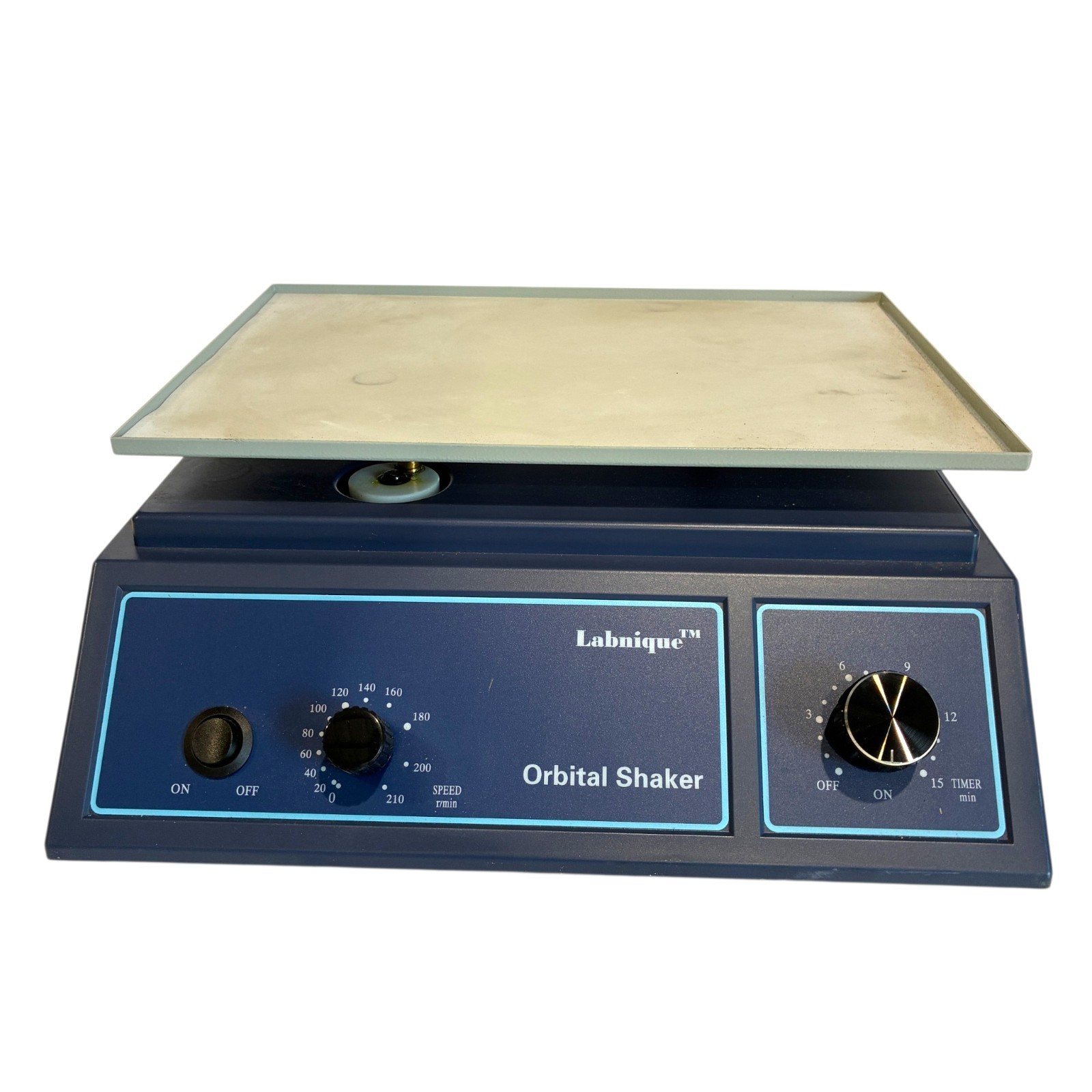
This orbital shaker brings circular motion to a flat rectangular platform with raised edges, so containers stay on the deck during agitation. The variable speed dial ranges from 0 to over 210 r/min, and the mechanical timer lets you run up to 15 minutes or switch to continuous operation. Four adjustable leveling feet help keep it stable on uneven bench surfaces. The unit is 110V, 50/60Hz and 10W, making it a straightforward fit for US power. Choose it when you want faster circular mixing with a timer in one package. The limitation is that this is an orbital shaker, not a rocker, so it won't provide the tilting motion that protocols like gel blot processing require.
VWR Rocking Platform Shaker 10860-662 Gel Blot Lab Rocker 230V TESTED WORKING
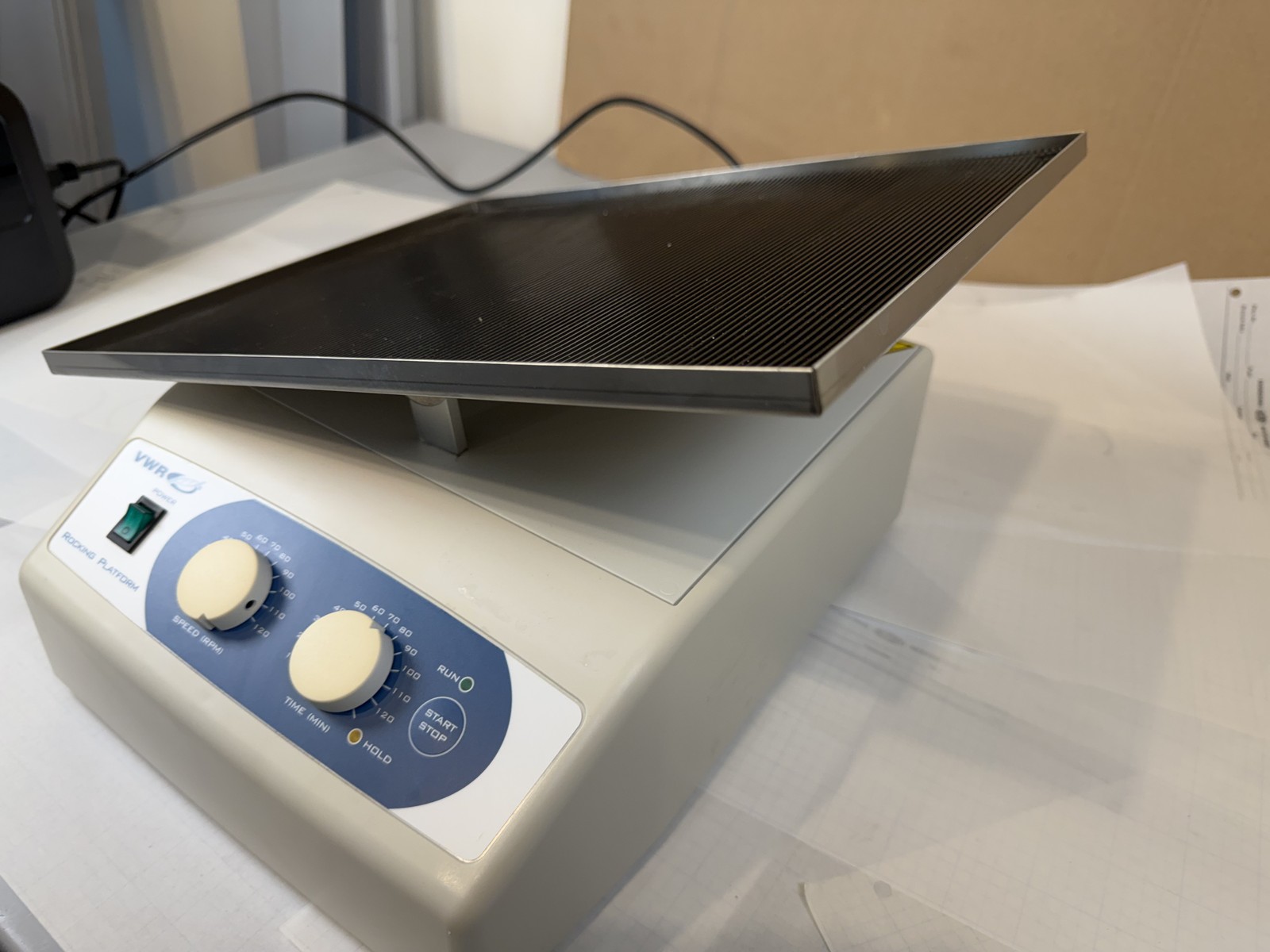
The VWR rocking platform shaker is the more specialized of the two. Its motion is a gentle tilt rather than a circle, which is why it suits gel blot and similar lab rocker work. The maximum speed is 120 tilts per minute, and the unit is described as tested working-it powers on and rocks across multiple speed settings. One platform is included, and power comes from AC. The important catch is the voltage: the nameplate reads 230V, 50/60Hz, so this is built for European-market power. Confirm your lab's voltage before relying on it. Choose it when the rocking action is specifically what your protocol needs.
Final choice by use case Pick the Labnique Orbital Shaker if your workflow is circular mixing: resuspending, dissolving, or general lab mixing with a speed dial and timer. You get the lower-priced option in this pairing.
Pick the VWR Rocking Platform Shaker if your protocol needs a rocking, tilting motion for gels, blots, or gentle staining. You get a tested working rocker built for gentle tilting procedures, but you must plan for voltage compatibility.