Need to choose between a centrifuge and an overhead stirrer in the centrifuges, mixers, and shakers category? The first question isn't which brand to pick-it's which job you're trying to do. The Medline 642M Single-Speed Clinical Lab Centrifuge, listed at $109.99, is designed to separate fluids and particles in a clinical lab. The Electric Overhead Stirrer Max.40L Digital Lab Mixer, listed at $89.02, is built to stir larger volumes. They share bench space, but they solve different problems.
Quick verdict
If your workflow involves clinical samples that need to be spun down, the Medline 642M is the direct fit despite its higher listed price and simpler speed control. If you need to mix or dissolve larger batches, the Electric Overhead Stirrer is the more flexible tool at a lower listed price. Neither is objectively better; the right choice depends on the task you perform most often.
Comparison
| Feature | Medline 642M Centrifuge | Electric Overhead Stirrer |
|---|---|---|
| Listed price | USD 109.99 | USD 89.02 |
| Core function | Clinical centrifuge for separating fluids and particles | Overhead stirrer for mixing liquids |
| Speed control | Single-speed | Adjustable 100-2000rpm with digital tube screen |
| Capacity | Designed for sample separation | 40L / 10.57gal max mixing volume |
| Condition | New - Open box | New |
Where each product wins
- The Medline 642M wins for clinical separation work. It is a purpose-built clinical centrifuge with a clear intended use. If your protocol is a straightforward spin, the simplicity is an advantage.
- The Electric Overhead Stirrer wins for large-batch mixing. Its 120W motor makes it the more capable option when your task is stirring or dissolving liquids.
Product notes
Medline 642M Single-Speed Clinical Lab Centrifuge
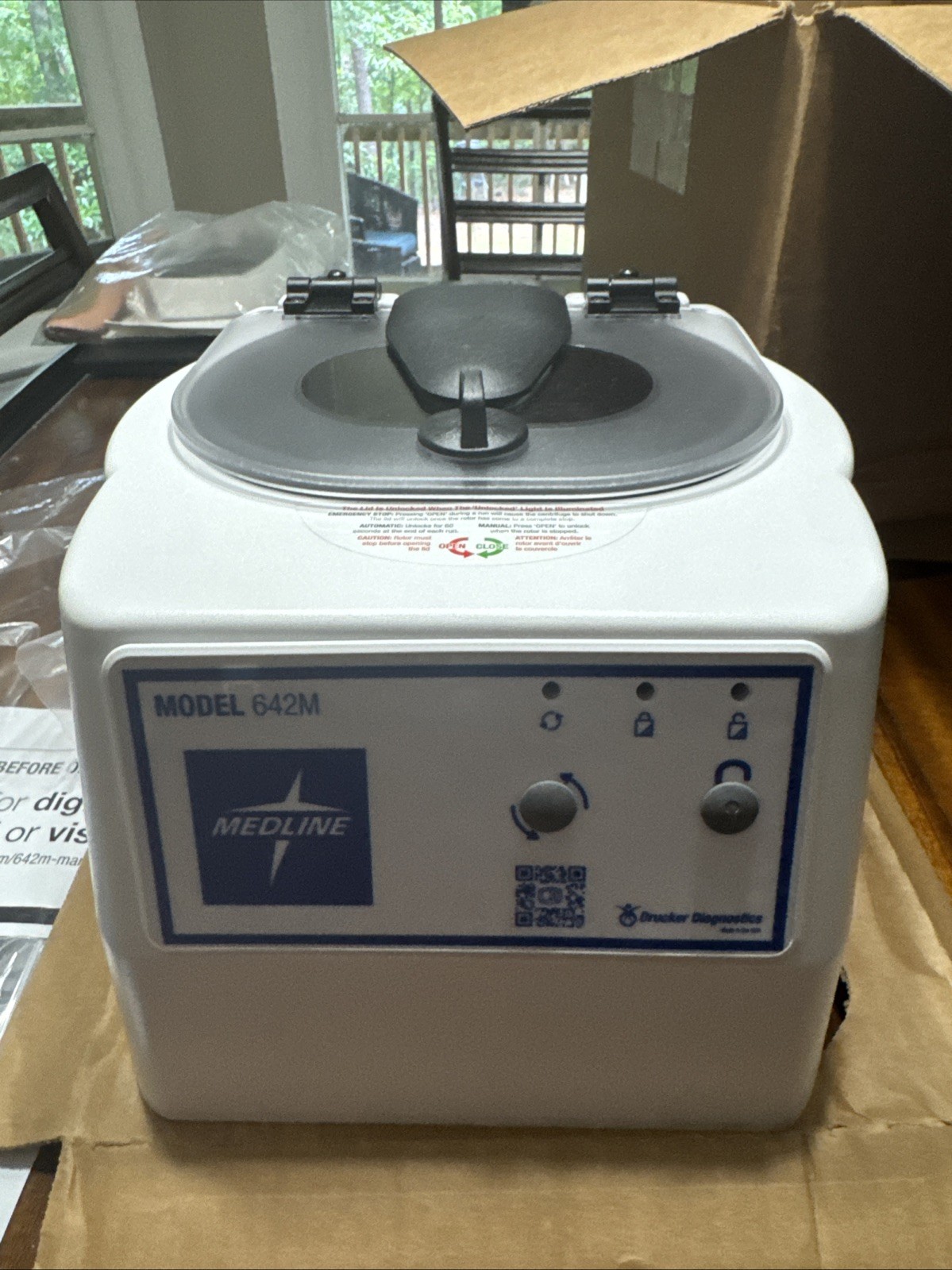
The Medline 642M gives you a no-frills route to clinical lab centrifugation. It is listed as new open-box, and the single-speed design means you don't have to program run parameters or choose between spin settings. For labs that process routine clinical samples, that predictability can be exactly what you need. The intended use is clearly clinical lab centrifugation, so if that is your workflow, this is the more targeted of the two tools. The main limitation is the trade-off for that simplicity: single-speed operation leaves no room to adjust spin speeds, so protocols that call for a range of speeds would need another device. The open-box condition is the other trade-off to factor into your decision.
Electric Overhead Stirrer Max.40L Digital Lab Mixer
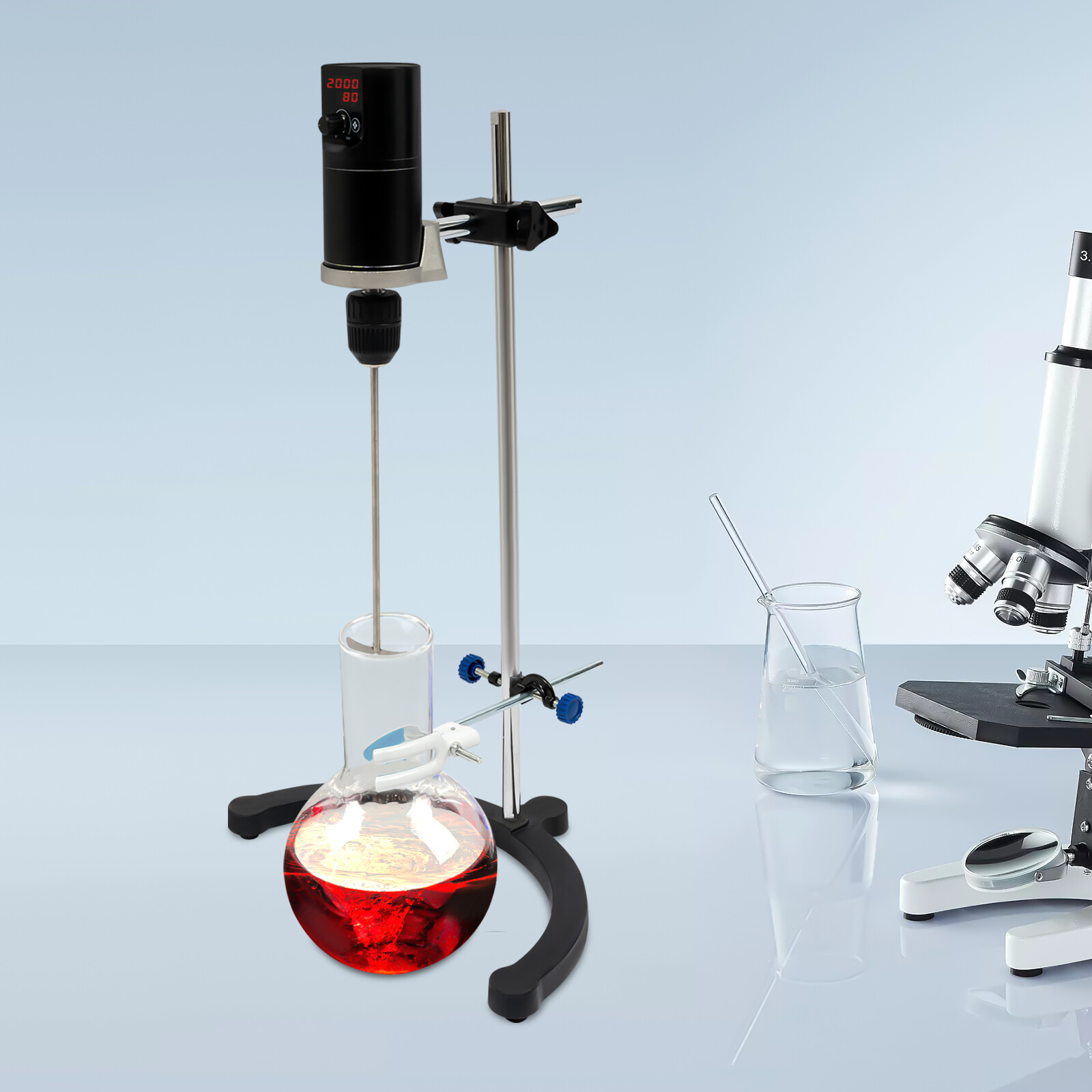
The Electric Overhead Stirrer takes the opposite approach: it is built to mix rather than to spin. It is a new unit with a 120W motor, a digital tube screen, and adjustable time and speed, so you can tailor each run to the liquid you are working with. The 40L/10.57gal maximum mixing volume makes it a strong match for larger batches, and the listed 100-2000rpm speed range gives you a wide operating window. With 40N·cm maximum torque and a 30,000 mPa·s maximum viscosity, it is specified for fluids that need more driving force. The limitation to keep in mind is that it cannot perform centrifugal separation. If your samples need to be spun down rather than stirred, this mixer won't fill that role.
Final choice by use case
- For clinical sample separation, choose the Medline 642M Clinical Lab Centrifuge. It is the only one of the two designed to spin down samples.
- For large-batch stirring and dissolving, choose the Electric Overhead Stirrer. It is built for mixing rather than separation.
- If your lab does both, keep both in mind: the centrifuge handles separation, the stirrer handles mixing.