Two very different lab tools often end up competing for the same bench space: a centrifuge that spins samples apart and a high-shear homogenizer that blends them together. If you are equipping a clinical or biological lab, the Medline 642M Single-Speed Clinical Lab Centrifuge and the Lab Digital High Speed Shear Emulsification Homogenizer Mixer JRJ300-SH represent two practical endpoints. The Medline is a focused separator; the JRJ300-SH is a flexible process mixer. The right choice depends on which of those jobs you do more.
Quick verdict
The Medline 642M is the straightforward pick for clinical labs that need consistent centrifugal separation at $109.99. The JRJ300-SH is the tool for high-shear mixing, emulsifying, and dispersing up to 40L at $935.61.
At a glance
| Feature | Medline 642M Centrifuge | JRJ300-SH Homogenizer Mixer |
|---|---|---|
| Price | $109.99 | $935.61 |
| Instrument type | Single-speed clinical lab centrifuge | Digital high speed shear emulsification homogenizer mixer |
| Intended use | Clinical lab centrifuge | Biological and medical lab mixing, emulsifying, dispersing |
| Speed control | Single-speed | Stepless speed regulation |
| Origin | United States | China |
| Condition | New - Open box | New |
Where each product wins
- Medline 642M wins on focused simplicity. Its single-speed operation makes routine clinical spins predictable, and it comes as a tested working unit for lab use.
- JRJ300-SH wins on versatility and scale. A 40L capacity, 300W output, and 70mm 304 stainless steel working head make it a serious tool for pilot batches and emulsions.
Product notes
Medline 642M Single-Speed Clinical Lab Centrifuge
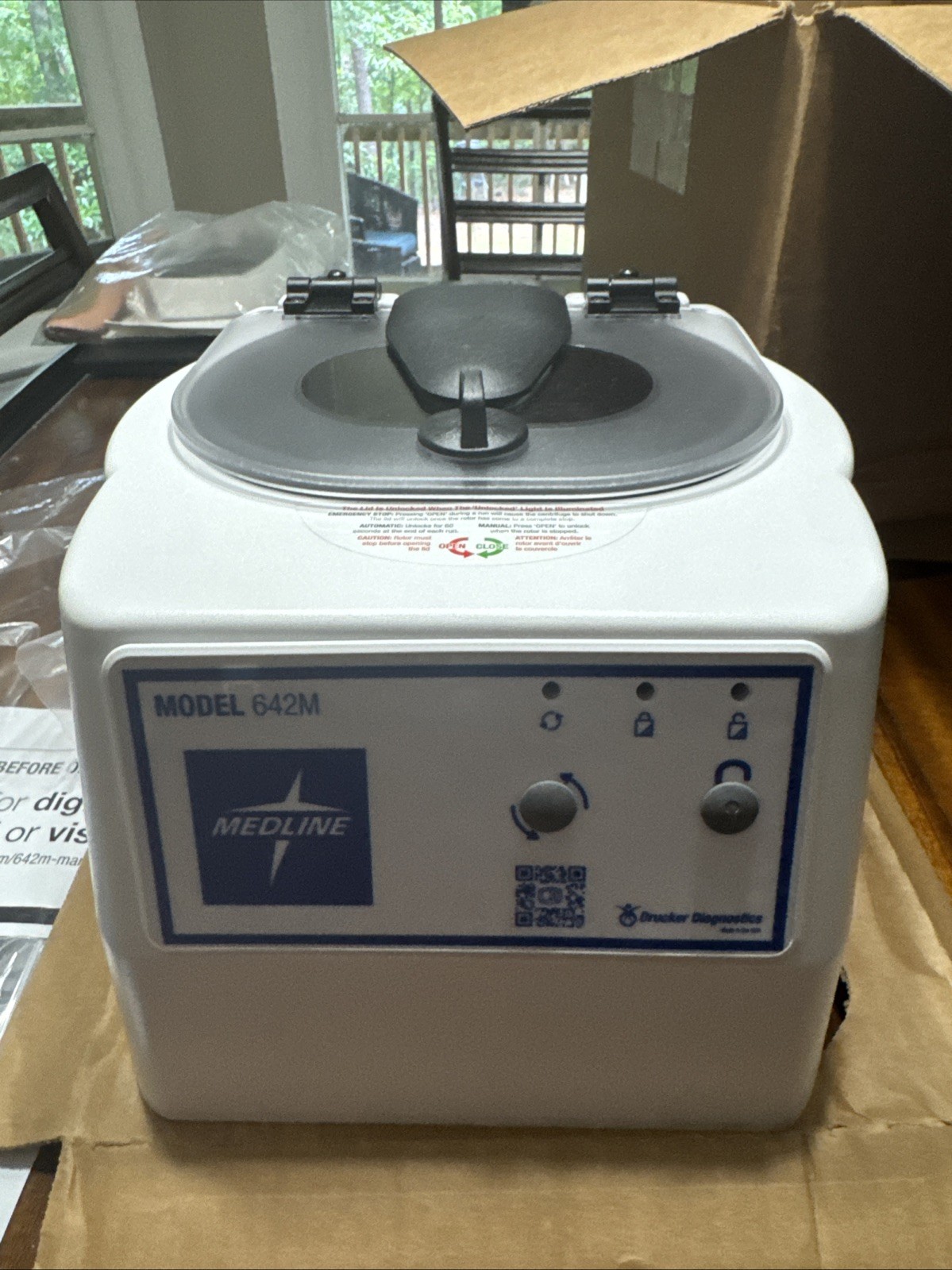
This centrifuge is built around a straightforward idea: provide dependable spinning for clinical samples. The single-speed operation means you don't have to program or calibrate multiple settings; you load balanced tubes, run the cycle, and get consistent separation. It is intended for clinical lab use, and the description notes it was manufactured by Medline in the United States. The open-box condition, paired with the title's 'tested working' claim, signals that it has been checked for functionality. The trade-off is that its single-speed design cannot adapt to protocols that require variable centrifugal forces or higher g-forces. It also will not mix, emulsify, or homogenize anything. If your lab's routine is plasma separation, hematocrit spins, or sediment preparation, this is a focused instrument. If your protocols demand speed control or mixing capability, you'll need to look beyond this model.
Lab Digital High Speed Shear Emulsification Homogenizer Mixer JRJ300-SH
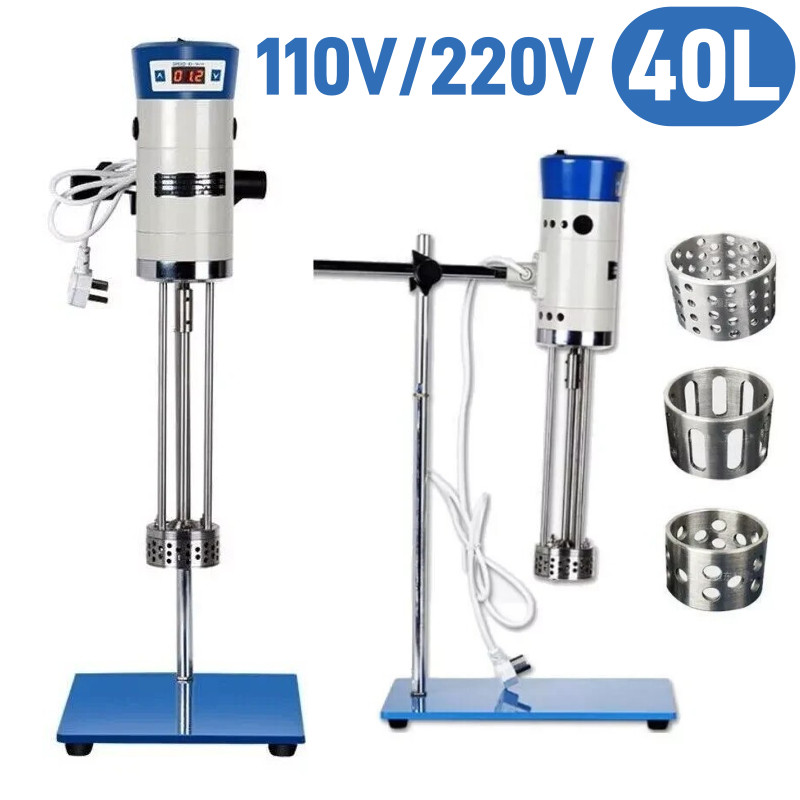
Where the centrifuge separates, the JRJ300-SH combines. This digital high-speed shear homogenizer is designed for mixing, emulsifying, and dispersing liquids, solids, and powders, with a stated 40L capacity. The drive delivers 300W of output, and the working head is made of 304 stainless steel with a 70mm diameter. Stepless speed regulation gives you continuous control from gentle blending to aggressive shearing, which is useful for biological specimens, cosmetics, or food preparations. It is listed as new, with the model JRJ300-SH, and is intended for biological and medical laboratory work. The obvious limitation is that it cannot separate fluids; a homogenizer will not spin down blood or concentrate cells. The dedicated mixing role means you should only choose it if your primary workload is formulation, dispersion, or emulsification rather than centrifugation.
Final choice by use case
Choose the Medline 642M if your daily work involves clinical samples that need centrifugal separation-spinning serum, urine, or other fluids-and you want a low-cost, ready-to-run single-speed instrument. It is the practical choice for a dedicated clinical centrifuge role. Choose the JRJ300-SH if your projects involve preparing emulsions, dispersing powders into liquids, or homogenizing biological materials in volumes up to 40L. It is the right mix when you need high-shear processing and adjustable speed rather than spinning. For many labs, the two tools are complementary, but your primary workflow should decide which one earns the bench space.