Quick Verdict
Two binocular compound microscopes. One is an Olympus BH2 BHTU built around medical-laboratory work; the other is a VEVOR XSP-36 with a broader all-around kit. When you're shopping for lab imaging, the decision comes down to whether you need a clinical specialist or a ready-to-view option for varied projects.
If your priority is a focused clinical instrument, the Olympus BH2 BHTU is the stronger match. If you want a more complete package for mixed-use work, the VEVOR XSP-36 is the easier choice. Both offer a binocular upright compound layout, so the basic viewing posture is similar.
Comparison Table
| Consideration | Olympus BH2 BHTU | VEVOR XSP-36 |
|---|---|---|
| Listed price | USD 349.95 | USD 120.99 |
| Condition | Used | Used |
| Magnification range | 40x-1000x | 40X-2500X |
| Microscope structure | Upright | Upright |
| Microscope type | Compound | Compound |
| Viewer | Binocular | Binocular |
Where Each Product Wins
Where the Olympus BH2 BHTU wins: This microscope is aimed at clinical specimen analysis. The medical-laboratory intended use and the BH2-series design give it a more specialized character than a general-purpose educational kit. If you are spending most of your time on serious lab observation, the Olympus is the more purpose-built tool.
Where the VEVOR XSP-36 wins: The VEVOR is the more convenient starting point. It includes 48 prepared slides, an extra WF25X eyepiece, and LED illumination, covering biological, educational, laboratory, and hobbyist projects without requiring you to source accessories separately. It is the broader, more flexible kit.
Product Notes
Olympus BH2 BHTU Binocular Upright Compound Microscope 40x-1000x Med Lab
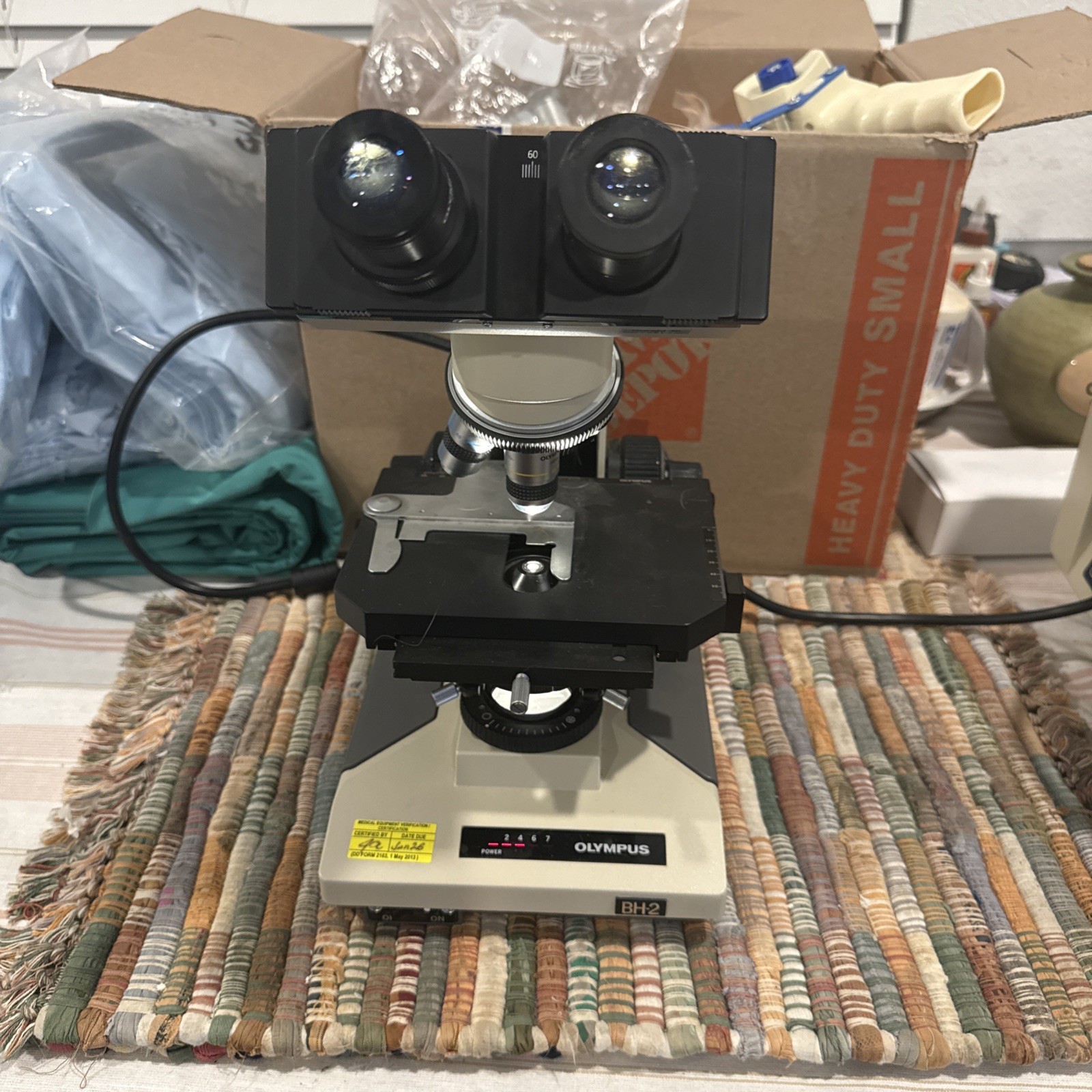
At $349.95, this is the higher-priced option in the pairing. It carries a medical-laboratory intended-use designation, making it the more clinically focused choice for someone who needs a lab-oriented microscope for regular specimen analysis. The listed 40x-1000x range sits exactly where routine medical-lab work tends to happen, and the BH2-series model has a distinct professional identity. The limitation is the price: you are paying more for the clinical orientation, so the budget impact is worth weighing if your needs are mainly educational. For lab imaging work where specimen detail and a medical workflow are the priority, this is the one to choose.
VEVOR XSP-36 Binocular Compound Laboratory Microscope 40X-2500X LED 48pc Slides
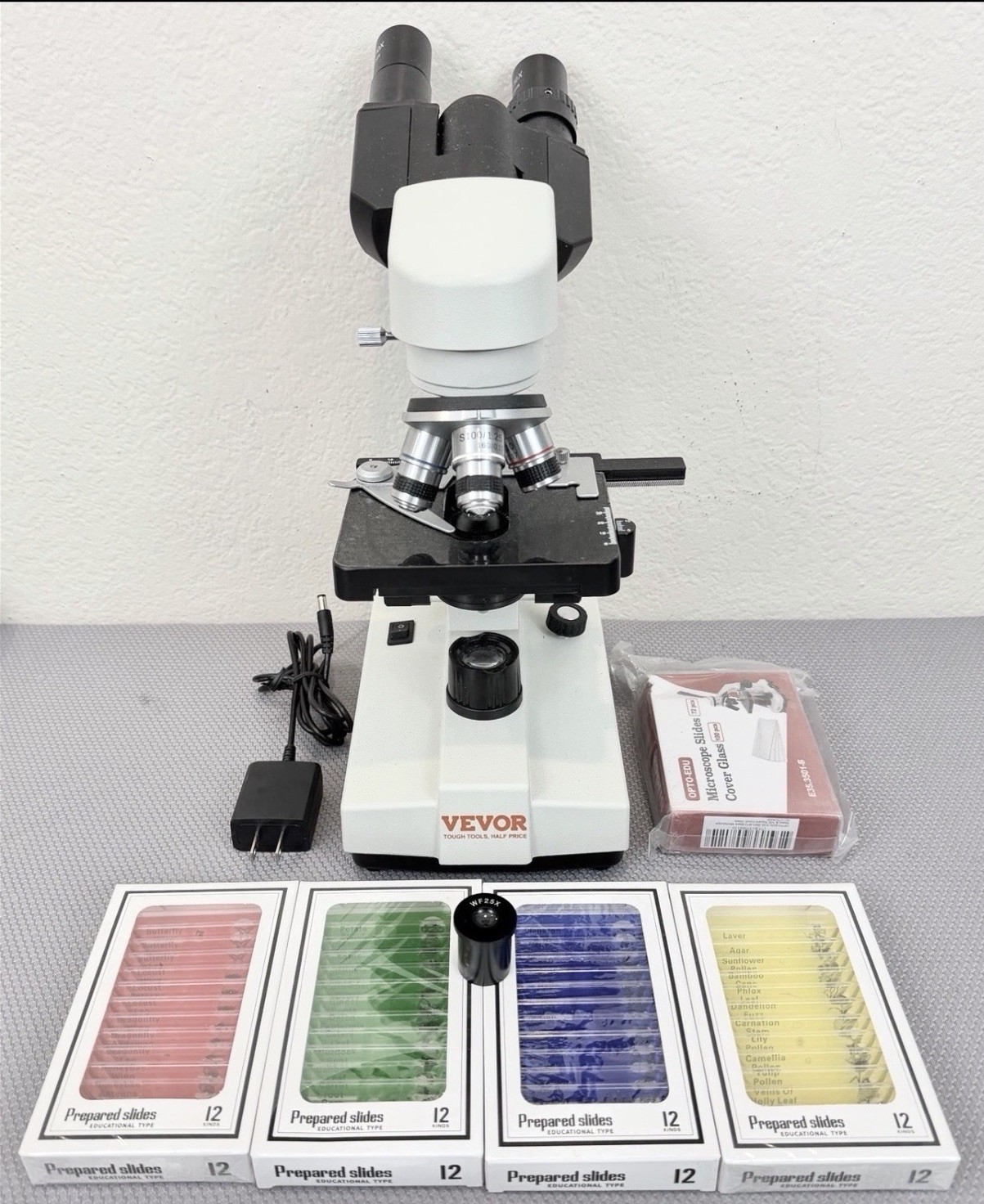
This scope arrives as a complete viewing kit. The included 48 prepared slides, an additional WF25X eyepiece, and LED illumination let you move between biological, educational, laboratory, and hobbyist projects without buying extras. The LED light source is a practical addition for classrooms and lab stations. That versatility is the main reason to pick it: it is ready to use right away. The limitation is that it is less specialized than the Olympus; the included educational specimens lean toward learning and general biology rather than clinical diagnostics. If your work is casual observation, teaching, or hobby microscopy, the VEVOR XSP-36 gives you a strong all-around setup. If you need a clinical specialist, its broad focus may be more than you need.
Final Choice by Use Case
Choose the Olympus BH2 BHTU when your primary environment is a clinical lab and you want a specialized scope for dedicated specimen work.
Choose the VEVOR XSP-36 when you want a flexible all-around scope for varied projects and a kit that is ready to use from the start.
Neither choice is wrong; it depends on the type of viewing you do most.