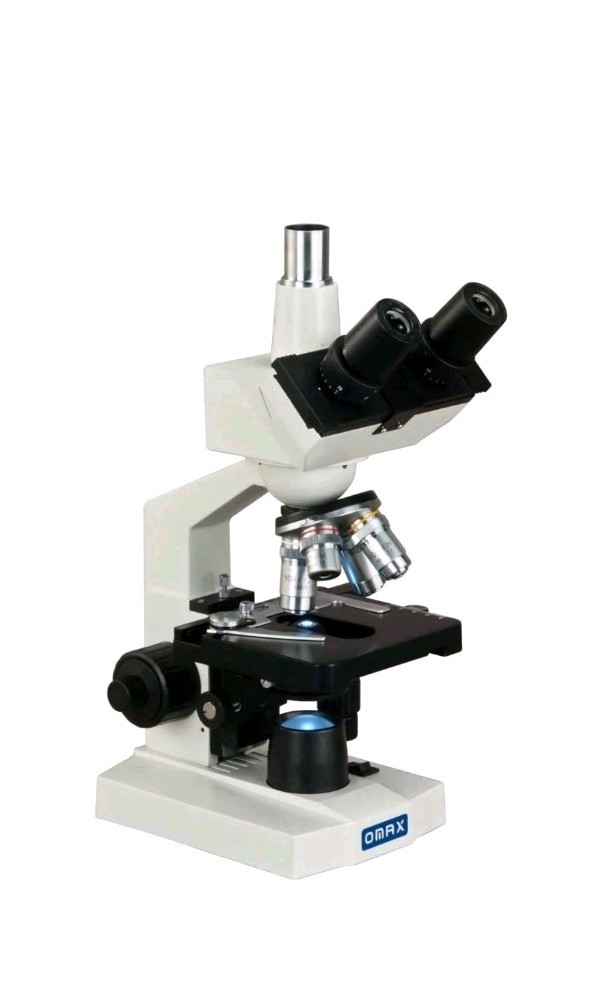
When you need a microscope for serious lab work, the decision can quickly become overwhelming. You have to balance magnification range, viewing comfort, illumination, and the ability to add a camera or documentation tool. For many professionals in chemistry, dental labs, veterinary medicine, microbiology, and clinical settings, a trinocular compound microscope is a practical answer. The OMAX 40X-2500X LED Lab Trinocular Compound Microscope, listed at USD 159.99, positions itself as one such tool. But does it truly fit the daily demands of lab imaging? Let's break down what it offers and who should consider it.
Quick Verdict
The OMAX 40X-2500X LED Lab Trinocular Compound Microscope delivers a broad magnification sweep from 40X to 2500X, which covers everything from scanning slides at low power to oil-immersion viewing at the higher end. The trinocular head is the key advantage here: it lets you attach a camera or viewing port while keeping binocular viewing for your eyes, making it a solid foundation for lab documentation and shared imaging. The LED illumination is a modern, efficient choice compared to older halogen systems, and the double-layer design suggests a more stable, configurable stage platform. At USD 159.99, it is a functional upright compound microscope for those entering professional microscopy or needing a reliable secondary instrument.
Who It Suits
This microscope fits professionals and students in disciplines that require detailed cellular or microbiological inspection. The intended-use list is broad: chemistry, dental laboratory, veterinary medicine, microbiological laboratory, medical laboratory, and biological laboratory. If you need to examine stained smears, tissue sections, or microbial cultures across a wide magnification range, the OMAX provides the flexibility. It is also a strong contender for someone who wants a trinocular port for a camera without upgrading to a much more expensive research-grade system. The black finish and upright structure are conventional and suitable for bench work.
What Stands Out from the Listed Details
- Magnification range: 40X-2500X is genuinely wide. You can start with an overview of a slide and then push to high-detail observation. This range is especially useful for oil immersion at the upper end, a standard technique in bacteriology and histology.
- Trinocular viewer: The third eyepiece tube allows simultaneous observation and camera attachment. In lab imaging, this is an efficient way to capture exactly what you see without interrupting your workflow.
- LED lighting: LED illumination is known for cool, bright, and consistent light, which helps preserve live samples and maintain color fidelity. The list confirms LED, a practical upgrade for long sessions.
- Double-layer mechanism: The double-layer description, likely referring to a double-layer mechanical stage with both coarse and fine focusing, offers smoother and more precise slide positioning. This is a meaningful feature for high-magnification work where tiny movements matter.
- Price point: At USD 159.99, it undercuts many comparable trinocular microscopes while including the core features a lab user needs.
Meaningful Trade-Offs
While the OMAX offers a lot, there are a few trade-offs to consider. First, the product listing condition is noted as *New - Open box*, which may matter to buyers seeking factory-sealed packaging; the microscope itself appears new, but the open-box status could influence the unboxing experience. Second, the intended disciplines span a wide range, from chemistry to veterinary medicine, but a single compound microscope may not have all the specialized stage, illumination, or contrast accessories required for every advanced application (e.g., phase contrast or darkfield). You should pair it with the appropriate prepared slides, stains, and immersion oil for your particular work. Third, the magnification beyond 1000X often requires oil immersion and a high-quality objective; while the range is listed, users should ensure they have the right objectives in their setup. Finally, the trinocular port is a separate feature, but there is no mention of a specific camera mount or adapter, so you may need to plan for that separately if documentation is a primary goal.
Bottom Line
The OMAX 40X-2500X LED Lab Trinocular Compound Microscope is a practical, affordable option for anyone needing a trinocular compound microscope in a lab imaging context. Its broad magnification range, LED illumination, and double-layer design make it a versatile workhorse for clinical, dental, veterinary, and educational labs. The open-box condition is the only notable caveat, but if you are comfortable with that, you get a feature-rich instrument at a straightforward USD 159.99. For a professional who wants to document what they observe, the trinocular head is the decisive advantage. It is not a specialized research powerhouse, but it is a solid, dependable choice for everyday microscopy and lab imaging work.
OMAX 40X-2500X LED Lab Trinocular Compound Microscope with Double Layer