When you're shopping for test leads, probes, and fixtures, the connection between your instrument and the circuit is where readings succeed or fall apart. These two kits take opposite paths: one is a clip probe set for oscilloscope signal tracing; the other is a set of high-voltage alligator clip leads for multimeter-style testing. With a $35 spread between them, the decision is less about which is generally "better" and more about which job you are wiring up.
Quick Verdict
For oscilloscope work, the clip probe set is the more focused buy. For high-current bench and lab testing, the alligator clip jumper kit is the more complete solution. The $35 spread is a capability gap, not a quality gap.
Price and Feature Comparison
| Feature | Oscilloscope Clip Probes | Alligator Clip Test Leads |
|---|---|---|
| Price meter | USD 29.99 | USD 64.99 |
| Form | Four 100MHz clip probes | Black/red alligator clip jumper wires |
| Electrical rating | X1/X10; DC-6MHz to 100MHz | 1500V, 15A; 10mm clamp width |
| Cable | 120cm each | 39.3-inch leads |
| Typical use | Scope tracing and bench diagnostics | Multimeter testing, DIY, classroom work |
Where Each Product Wins
- The clip probe set wins when you need to see a waveform on an oscilloscope. It is built around the scope input stage, so the signal arrives at the channel with the right attenuation and compensation, and the pack lets you keep several probes ready.
- The alligator clip kit wins when you need to grip bigger terminals and carry current from a meter. The wide jaw and high-current design are aimed at power testing rather than signal tracing, which makes it a more natural partner for multimeter checks and lab experiments.
Product Notes
Four 100MHz Oscilloscope Clip Probes
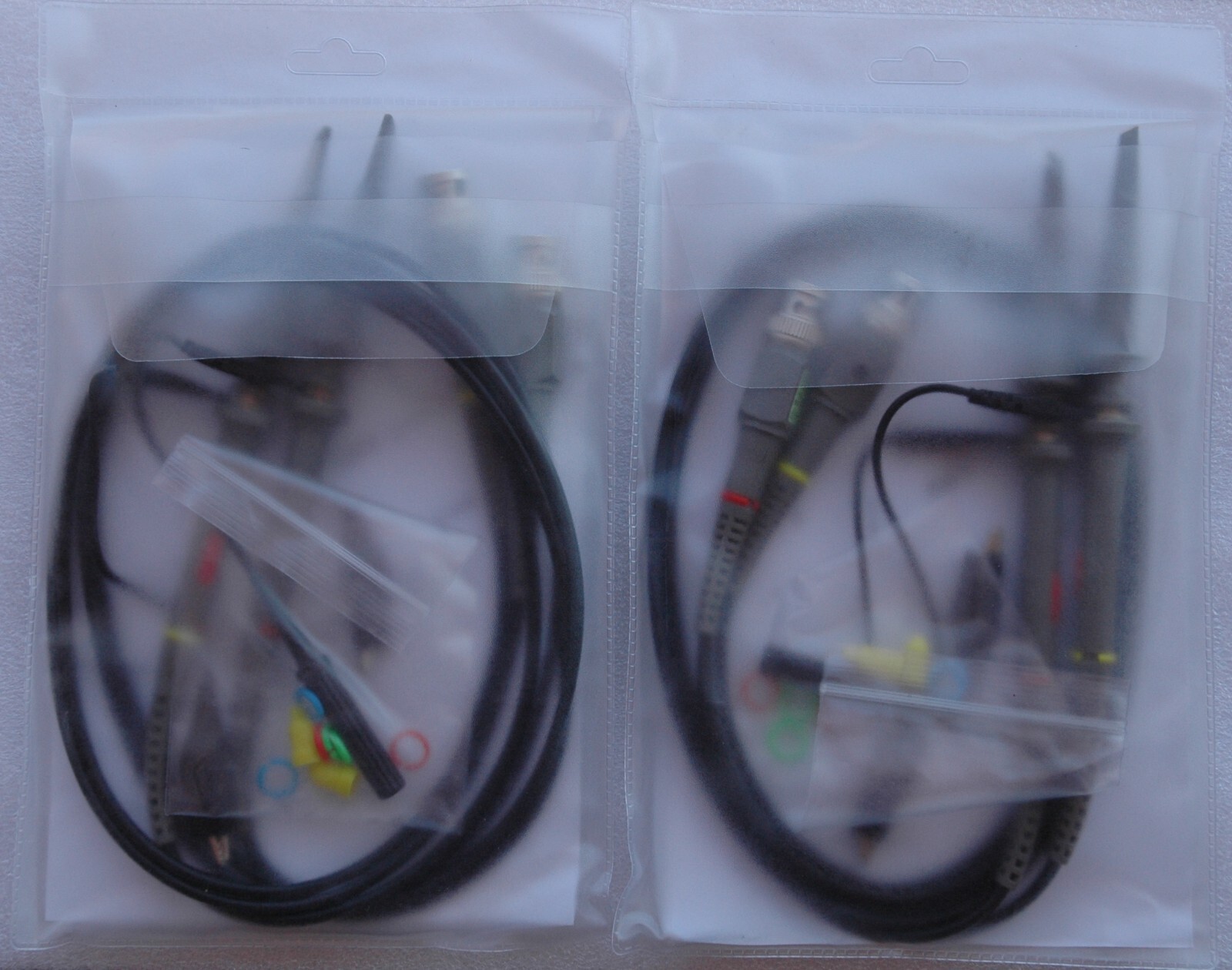
The JINHAO P6100 pack is built around a simple idea: give you four usable scope probes without forcing you to buy them one at a time. The X1/X10 switch covers low-frequency work through 6MHz and scope bandwidth up to 100MHz, with 1MΩ/10MΩ input resistance and 10-35pF compensation to match common scope inputs. The 120cm cable is long enough to move around a bench, and the modular construction lets you swap the probe tip. The limitation is scope-specific: these are not the leads you want for 15A current paths or 1500V terminals. Keep them for signal tracing, not power connections.
Alligator Clips Electrical Multimeter Test Leads
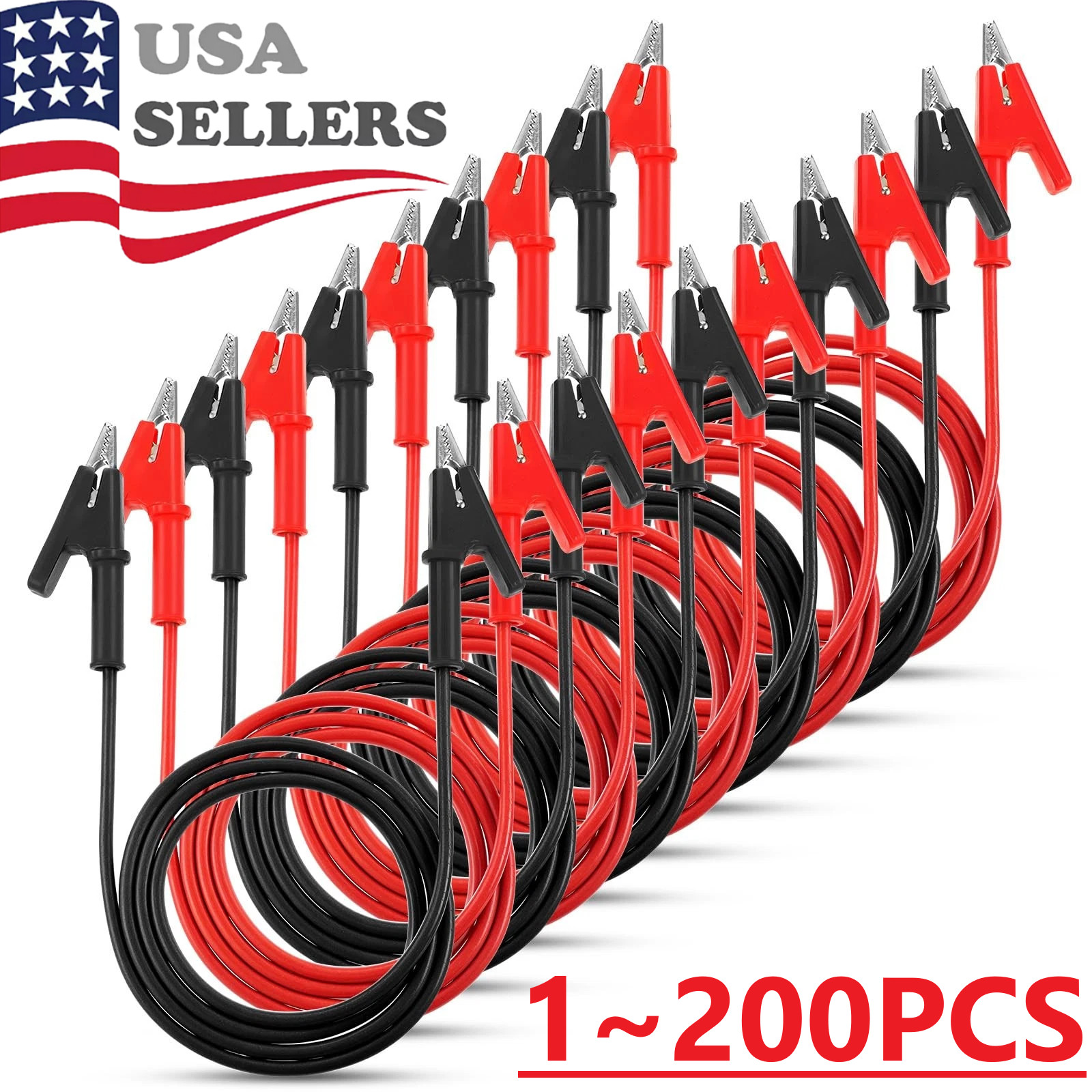
This kit takes the opposite approach, starting with a heavy-duty 1500V/15A rating and a 10mm clip opening that lets you clamp onto larger terminals. The pure copper conductor is meant to keep readings precise, while the black/red color coding makes polarity obvious and stops leads from tangling. The flame-retardant PVC shell gives a comfortable, secure grip for classroom or lab work. The trade-off is that you are paying for current-carrying capacity and clip reach, not high-frequency performance. If your work is oscilloscope traces, the clip probe set is the better match.
Final Choice by Use Case
- Oscilloscope diagnostics: Choose the clip probe set. It is designed for waveform tracing and scope inputs.
- Multimeter, bench, or lab testing: Choose the alligator clip test leads. The kit is built for clipping onto larger conductors and taking meter readings.