Choosing an indoor air monitor used to mean picking one number to watch. Now you have to decide whether that number is fine dust, chemical vapors, or radon gas. These four meters take different routes: one centers on three particle sizes, one keeps to PM2.5/PM10 with a histogram, another adds temperature, humidity, formaldehyde, and TVOC, and the last bundles radon with CO2, VOC, and PM2.5. The price spread is substantial, so the right pick comes down to what you actually want to learn about the air in a room.
Quick take
If you want a simple, low-cost way to track fine dust, the Temtop P600 keeps things readable with a histogram and color-coded levels. If you need particle counts down to PM0.3 plus trend storage, the Air Quality Monitor with PM0.3/2.5/10 Dust Particle Counter adds an audible alarm. The Triplett EPC175 broadens the picture with formaldehyde and TVOC alongside particles, while the Airthings 2960 is the one to consider when radon is on your mind.
Listed price comparison
| Product | Price | Bar | Noted for |
|---|---|---|---|
| Air Quality Monitor, PM0.3/2.5/10 Dust Particle Counter | USD 159.99 | Three particle channels, temperature and humidity, alarm | |
| Temtop P600 Air Quality Monitor | USD 69.99 | PM2.5/PM10 histogram, 12-hour data, battery | |
| Triplett EPC175 Particle Counter and Air Quality Meter | USD 156.71 | PM2.5/PM10, formaldehyde, TVOC, 5000 data sets | |
| Airthings 2960 Radon Air Quality Monitor | USD 200.00 | Radon, CO2, VOC, PM2.5, WiFi |
Decision matrix
| If your priority is... | Consider... | Why |
|---|---|---|
| Low-cost particle tracking | Temtop P600 | It lists PM2.5 and PM10 detection, a histogram view, and an 8-9 hour battery. |
| Ultra-fine particle measurement | Air Quality Monitor with PM0.3/2.5/10 | It covers PM0.3, PM2.5, and PM10, with 999 trend entries and an adjustable alarm. |
| A broader pollutant panel | Triplett EPC175 | It goes beyond particles to show formaldehyde and TVOCs, plus temperature and humidity. |
| Radon monitoring plus WiFi | Airthings 2960 | It combines radon, CO2, VOC, and PM2.5 in a battery-powered, WiFi-connected unit. |
Product notes
Air Quality Monitor with PM0.3/2.5/10 Dust Particle Counter
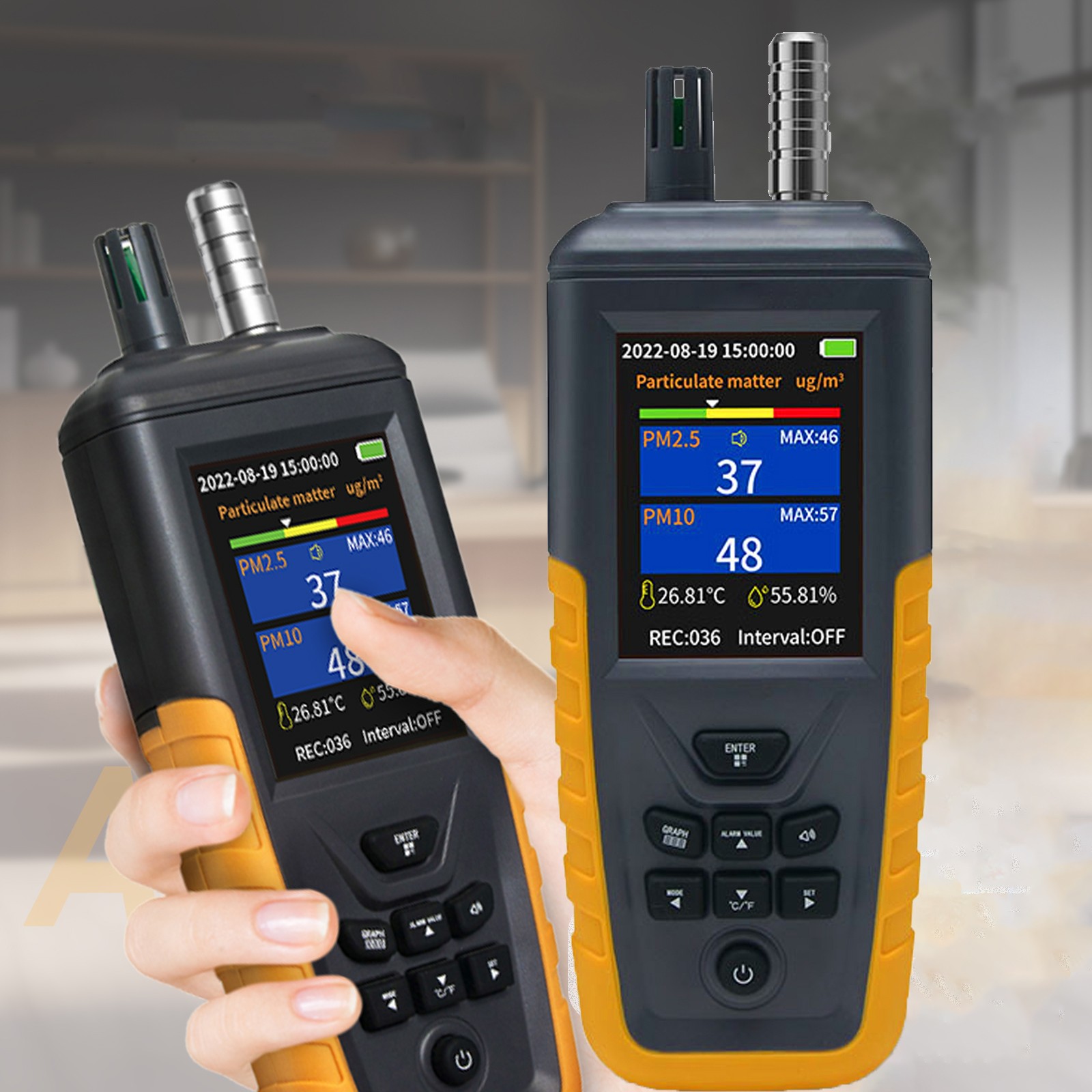
This meter uses laser scattering to report PM0.3, PM2.5, and PM10 in real time, which makes it a useful tool for checking allergens and dust indoors. It also measures temperature and humidity, logs up to 999 timestamped readings, and shows trends as a chart. The adjustable audible alarm is a practical extra for anyone who wants to know immediately when a threshold is exceeded. Its feature set centers on particles, temperature, and humidity, so it is best approached as a particle-focused station with trend history. Its price is the second highest in this group, which may exceed what a casual user needs for basic particle checks.
Temtop P600 Air Quality Monitor
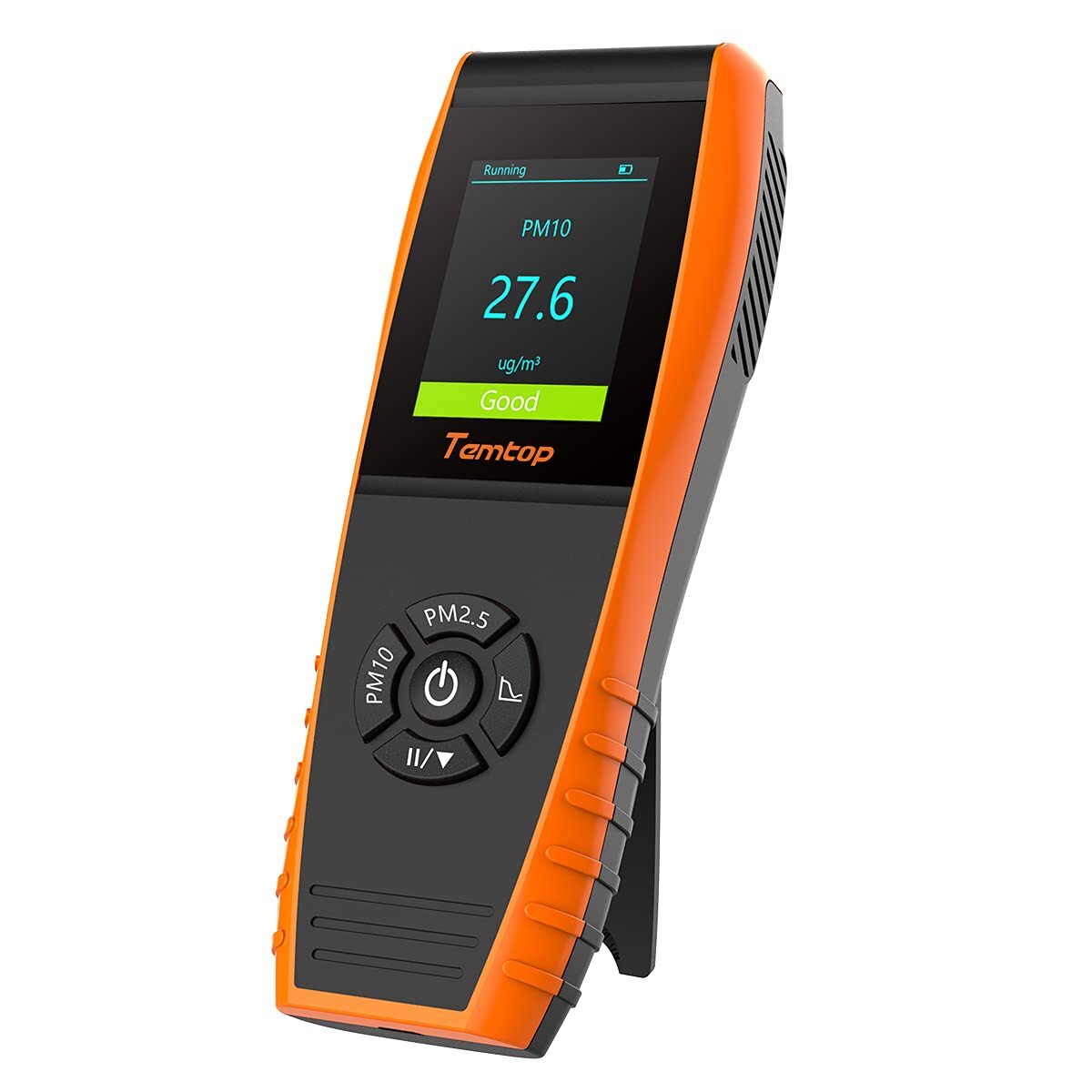
The Temtop P600 is the least expensive option in this group and keeps the workflow simple with PM2.5 and PM10 detection. Its color-coded display follows EPA health guide levels, and the built-in histogram stores the last 12 hours of data so you can spot trends without digging through settings. A 3000mAh battery delivers roughly 8 to 9 hours after a 3 to 4 hour charge, which supports short monitoring sessions around the house. The stated detection range sticks to PM2.5 and PM10, so it does not cover the PM0.3 fraction. That makes it a practical entry point for anyone who wants a dedicated particle recorder rather than a broader environmental station.
Triplett EPC175 Particle Counter and Air Quality Meter
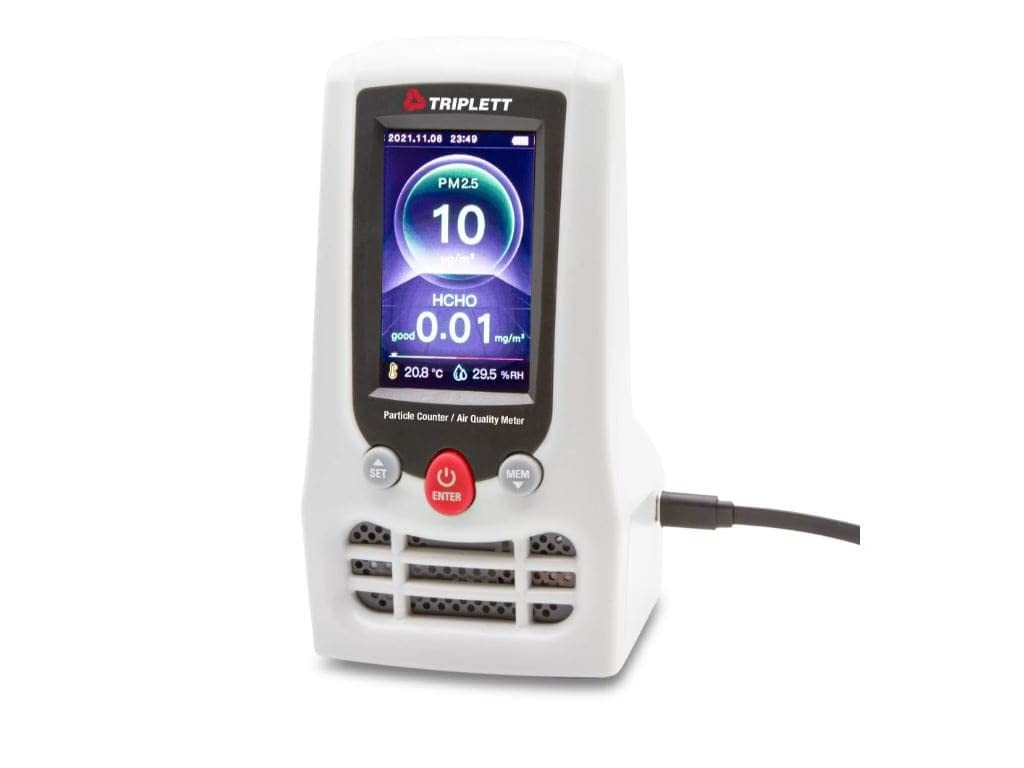
The Triplett EPC175 casts a wider net than a basic particle counter. Along with PM2.5 and PM10, the description lists air temperature, relative humidity, formaldehyde (HCHO), and total volatile organic compounds (TVOCs), which is useful if you are trying to understand indoor chemical sources. The 3-inch color TFT display and 5000 data sets with historical curves give you room to review patterns over time. This unit also ships with the battery, AC adapter, and USB charging cable. This unit is described as New - Open box, so you are buying a box that has been opened rather than a factory-sealed retail unit. Its price sits close to the feature-rich particle counter in this lineup, but the open-box condition is worth factoring into your decision.
Airthings 2960 Radon Air Quality Monitor
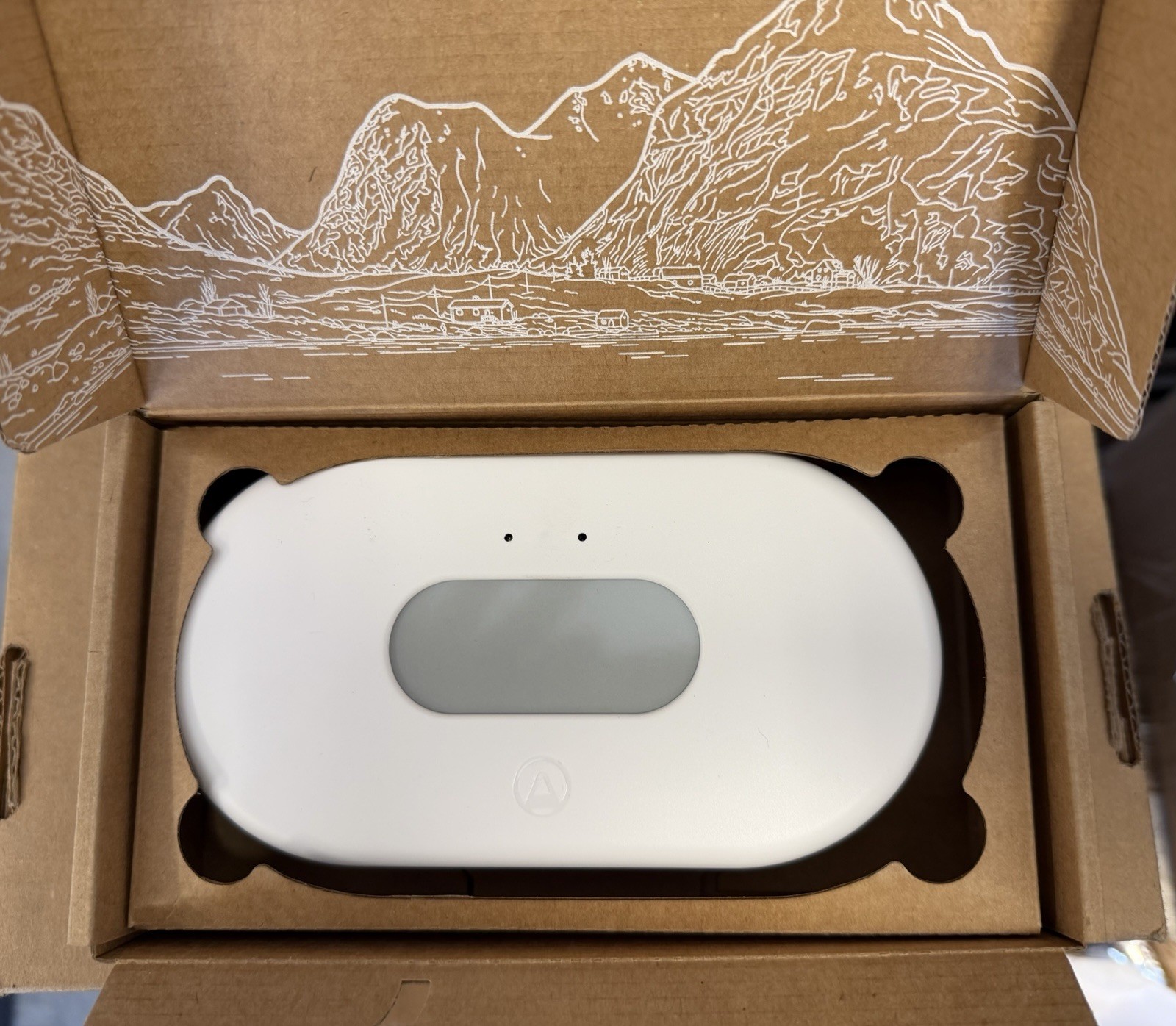
The Airthings 2960 is the most expensive of the four and stands apart because its description centers on radon detection alongside CO2, VOC, and PM2.5. That combination makes it a stronger fit for someone who wants a continuous indoor-air picture in a single battery-powered device. WiFi connectivity is part of the design, so readings can be checked remotely rather than only from the display. The unit is described as new and carries a Radon Detector classification, which separates it from the particle counters in this group. The higher price is the main hurdle; if you need only a particle check, a more focused meter may be enough.
Final recommendation by use case
If you want the least expensive way to start tracking particle trends, the Temtop P600 gives you a histogram view with PM2.5 and PM10 at a lower outlay. If ultrafine dust is your main concern, the Air Quality Monitor with PM0.3/2.5/10 Dust Particle Counter adds the smallest particle channel and stores more trend data. If you need a one-meter look at particles plus formaldehyde and TVOC, the Triplett EPC175 is the more complete choice. If radon is a real worry in your area, the Airthings 2960 puts radon, CO2, VOC, and PM2.5 together in one WiFi-connected monitor.