Need a lab mixer but can't decide between a centrifuge that spins sample tubes and a triturator that blends dental amalgam? That's the core decision in centrifuges mixers shakers. Both units are new, run on 110V, and emphasize easy installation and stable performance, but they are built for different jobs: the PRP blood centrifuge spins tubes, while the dental amalgamator mixes silver amalgam capsules. This head-to-head compares their capacities, speeds, safety extras, and the work each one handles best.
Quick Verdict
If your routine involves blood, vaccine, or similar tube separation, choose the PRP blood centrifuge. If your work involves preparing amalgam capsules in a dental setting, choose the digital amalgamator. These two tools are not interchangeable, so let the sample type decide.
Comparison Table
| Feature | PRP Blood Centrifuge | Dental Amalgamator |
|---|---|---|
| Listed price | USD 178.32 | USD 93.70 |
| Primary task | Blood and vaccine separation | Mixing silver amalgam powder and mercury |
| Capacity | 8 x 15 ml tubes | Amalgam capsule mixing |
| Speed and noise | 0-4,000 r/min; max RCF 1,880 xg | Low noise, no more than 65 dB |
| Drive and controls | Brushless DC motor, microcomputer control, digital display | 35W digital amalgamator |
| Safety | Electronic door lock, overspeed protection | Motor stops when the lid is open |
Where the PRP Blood Centrifuge Wins
- Higher spinning speed for separating samples.
- Rotor layout built around standard lab tubes.
- Protective extras and automatic balance for smoother runs.
Where the Dental Amalgamator Wins
- Quieter operation for close-up work.
- Safety interlock that stops the motor when the lid opens.
- Lower listed price, making it the more economical choice when your work is dental mixing.
8\*15ml PRP Blood Centrifuge
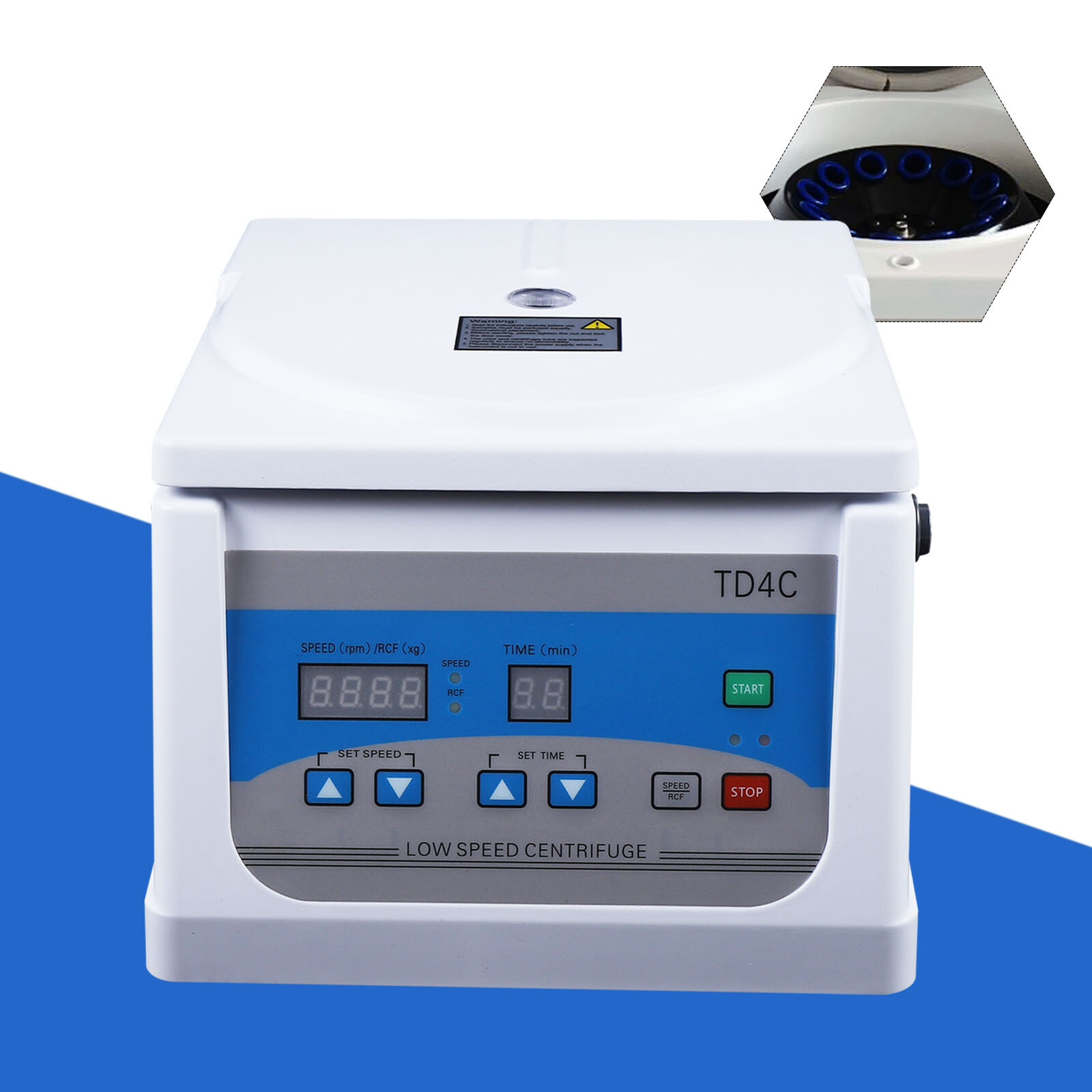
For labs that need to separate blood, vaccine organics, or similar samples, this centrifuge is the one that actually spins tubes. Its brushless DC motor and microcomputer control let you set speed and centrifugal force, and the digital display shows the run parameters. The fixed-angle rotor takes eight 15 ml tubes, while electronic door lock, overspeed protection, and automatic balance reduce the chance of user error. The trade-off is scope: it is a low-speed benchtop unit designed for routine 15 ml tube separation, not high-throughput or high-speed spinning. If your samples fit that pattern, this is the machine to build your lab routine around.
New 110V 35W Dental Lab Digital Amalgamator
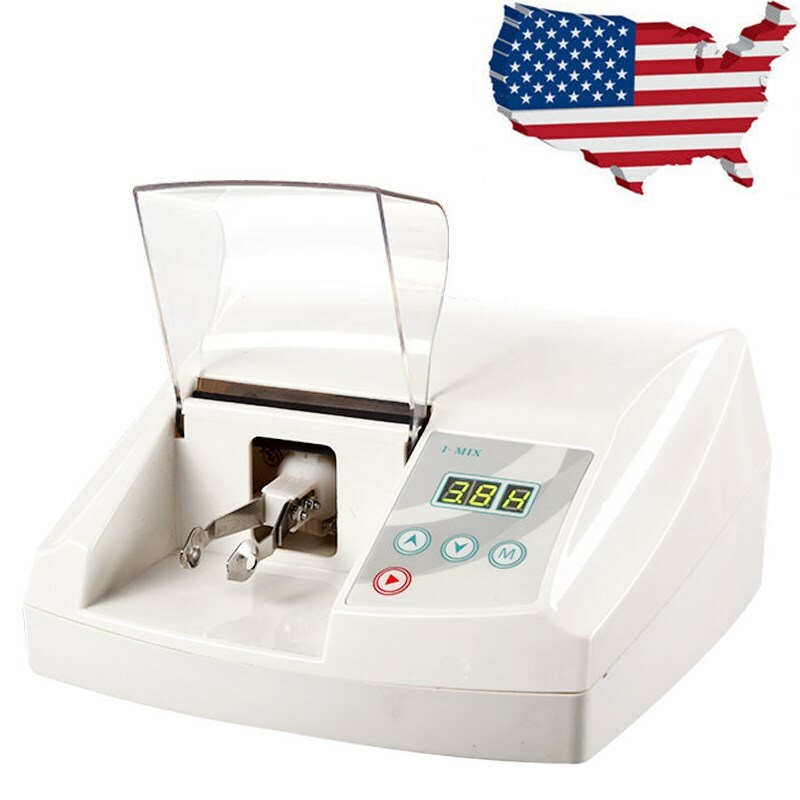
Dental offices and labs preparing silver amalgam capsules get a purpose-built mixer here. This digital amalgamator vibrates silver amalgam powder and mercury together, and its security system stops the motor as soon as the lid is opened. The 35W unit is also rated at no more than 65 dB, which helps when you are working close to a chair or bench. Its compact design suits a dental workspace, making it the easier call when tube spinning is not part of the job. The limitation is its specialized role: it is not a tube spinner, so blood or vaccine separation is outside its intended use.
Final Choice by Use Case
- Choose the PRP blood centrifuge for routine blood, vaccine, or similar tube separation in a lab. It provides the tube spinning and protective extras that a dental mixer does not offer.
- Choose the dental amalgamator for dental amalgam preparation; it is built for capsule mixing and keeps the benchtop footprint small.