Choosing the right radiation detection tool starts with knowing what you actually need. Are you after a trustworthy instrument to measure gamma radiation, track dose, and keep you safe on the job? Or are you drawn to a rare piece of Atomic Age scientific equipment that looks incredible on a shelf? The two units here sit at opposite ends of the detector spectrum, even though both fall under the spectroscopy analysis and detection umbrella. Let's break down what each one really offers.
Quick Verdict
If your goal is reliable, repeatable detection, the Thermo RadEye PRD is the obvious pick. It's a seller-refurbished professional instrument with independent third-party calibration, fully unlocked menus, and a one-year guarantee. The Vintage Bismatron ARC is better approached as a collectible. It's a genuine 1950s Geiger counter from the Atomic Research Corporation, complete with its original ten Victoreen tubes, but its age and used condition make it a display piece rather than a primary safety device.
Head-to-Head Comparison
| Feature | Thermo RadEye PRD | Vintage Bismatron ARC |
|---|---|---|
| Price | USD 995.00 [##########] | USD 528.00 [#####-----] |
| Condition | Seller refurbished | Used |
| Country of Origin | Germany | United States |
| Detector Type | Scintillation Detector | Geiger Counter |
| Calibration | Independent third-party calibration | Original factory-era tubes |
| Best Use | Everyday radiation safety | Atomic Age study or display |
Where the RadEye PRD Wins
The RadEye PRD is a compact gamma/photon detector that not only detects sources but also measures dose rate and accumulated dose. In other words, it gives you actionable numbers when your safety is on the line. The independent third-party calibration adds a layer of trust, and the ability to switch between R and Sv units means it can be adapted to the measurement system you work in. The one-year guarantee on a seller-refurbished unit is a strong practical advantage.
Where the Bismatron ARC Wins
The Bismatron ARC wins for character and rarity. It comes from a short-lived manufacturer, was made in Colorado Springs during the 1950s Atomic Age, and still carries all ten factory-marked Victoreen shielded vacuum tubes. That kind of completeness is exceptional for a 70-year-old device. If you collect Cold War or scientific instruments, this is a piece you simply won't find everywhere.
Product Notes
Thermo RadEye PRD (USD 995.00)
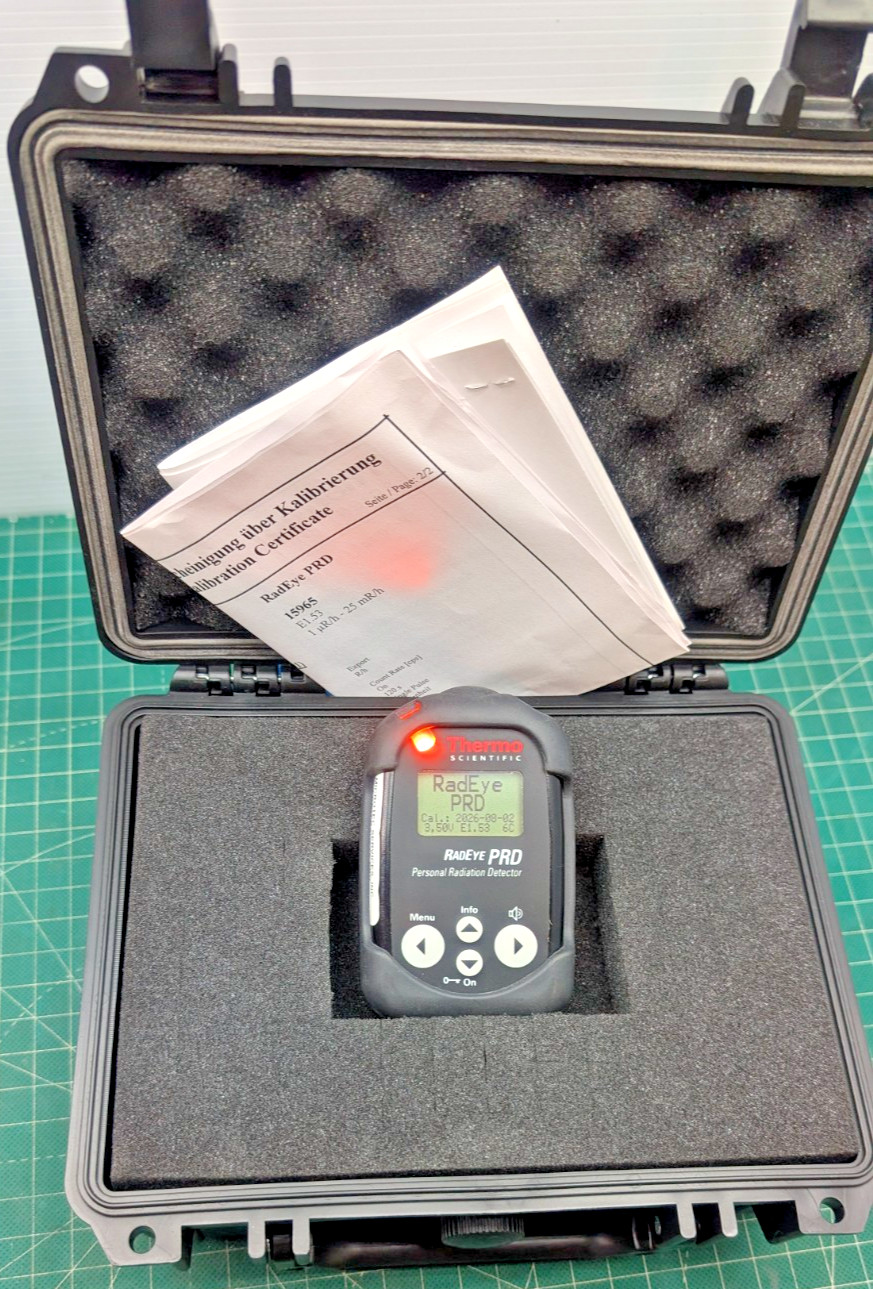
This is the professional's choice. It's a compact personal radiation detector built for high-sensitivity source detection, count-rate monitoring, dose-rate measurement, and accumulated dose tracking. The unit is seller-refurbished, made in Germany, and uses a scintillation detector. The standout feature is the current independent third-party calibration, which makes it ready for confident readings. All menus are unlocked, so you have full access to features, and there's a one-year guarantee. The downside is the USD 995 price, which is the higher of the two. It's a single detector, not a multi-channel analyzer, so set your expectations for portable personal monitoring.
Vintage Bismatron ARC (USD 528.00)
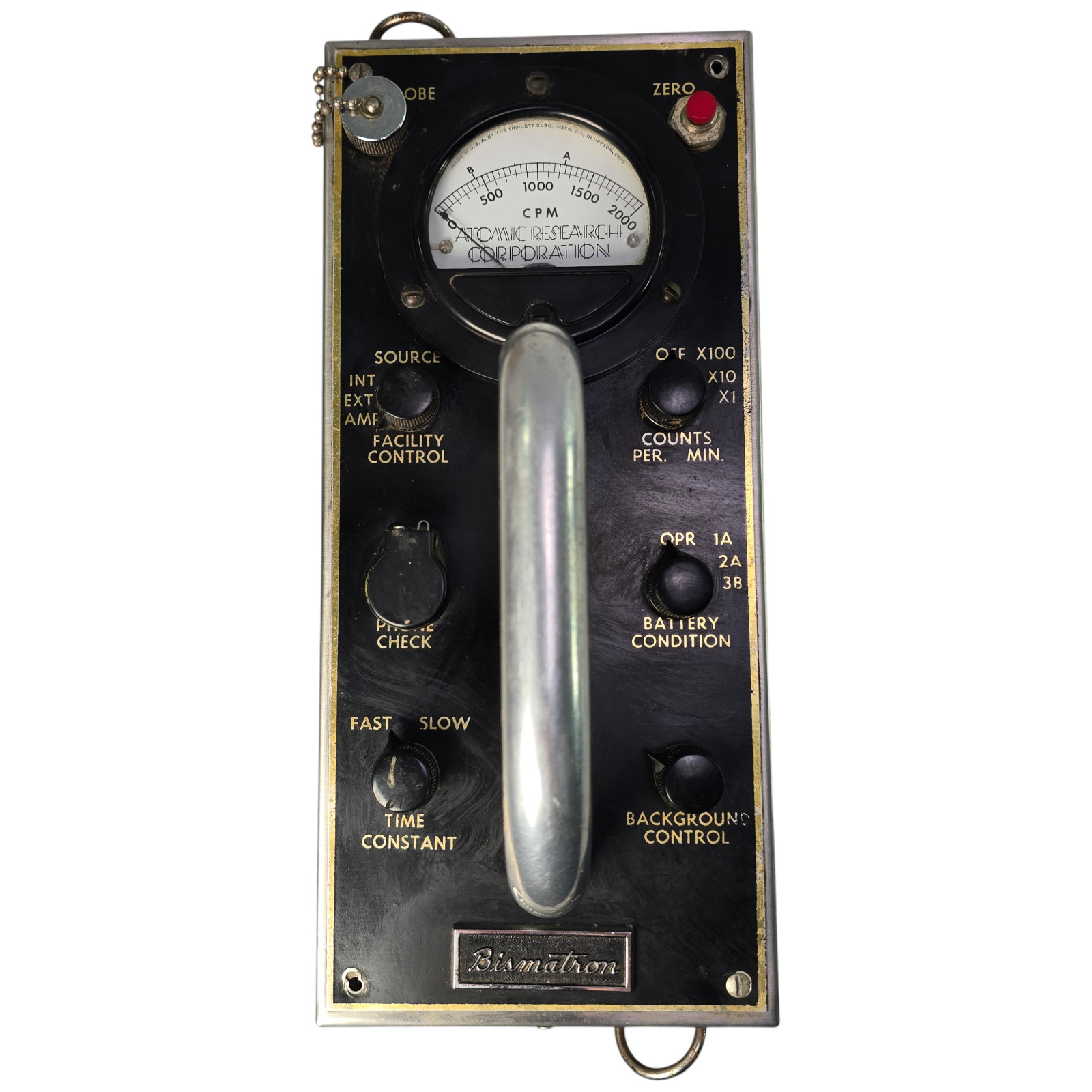
Here's the piece for someone who loves history as much as hardware. The Bismatron was made by the Atomic Research Corporation in Colorado Springs during the 1950s Atomic Age, a period when civilian radiation surveying and mineral exploration were booming. This example still has all ten factory-marked Victoreen 6306 shielded vacuum tubes, a rarity that serious collectors will appreciate. It's a used instrument, so don't expect lab-grade readings or any modern calibration. Its value is as a study piece, a restoration project, or a display in an Atomic Age or Cold War collection. At USD 528, it costs noticeably less than the RadEye, but you're paying for scarcity and character, not measurement confidence. If you need to detect radiation for safety, this isn't the tool.
Final Choice by Use Case
Choose the Thermo RadEye PRD if you need a calibrated, dependable detector for radiation safety, dose tracking, or professional monitoring. Choose the Vintage Bismatron ARC if you want a rare, conversation-starting instrument from the 1950s with all its original tubes intact.