In thermal borescope visual inspection, the real question isn't which camera is better-it's which capability matches your job. Some inspections need a close look inside a tight space; others need to detect heat differences from a distance. The three tools here take very different approaches, and their prices reflect that. The right pick depends on reach, image type, and how often you'll use it.
Quick Take
Here's the short version: the RIDGID CA-25 is a compact visual inspection camera for close-up checks. The RIX STORM S3 is a handheld scope at a mid-range price. The Wohler VIS 350 is a professional-grade system for deep inspections.
Price Comparison
| Model | Listed Price | Price Bar | Primary Role |
|---|---|---|---|
| RIDGID CA-25 | USD 49.99 | Compact visual inspection camera | |
| RIX STORM S3 | USD 1,250.00 | Handheld scope | |
| Wohler VIS 350 | USD 3,799.99 | 100-ft push-rod camera with pan/tilt head |
How to Choose
- Go with the RIDGID CA-25 when your inspections are short, close, and budget-sensitive. The 2.7-inch display gives you a clear view inside a drain trap or a small opening without tearing things apart.
- Choose the RIX STORM S3 if you need a handheld scope that doesn't require you to feed a cable into a tight space. It's a quick way to scan a surface from a short distance.
- Opt for the Wohler VIS 350 if you need to reach deep into long runs and inspect joints. It's built for drain and duct work, and the built-in locator transmitter helps you trace where the camera is.
Product Notes
RIDGID CA-25
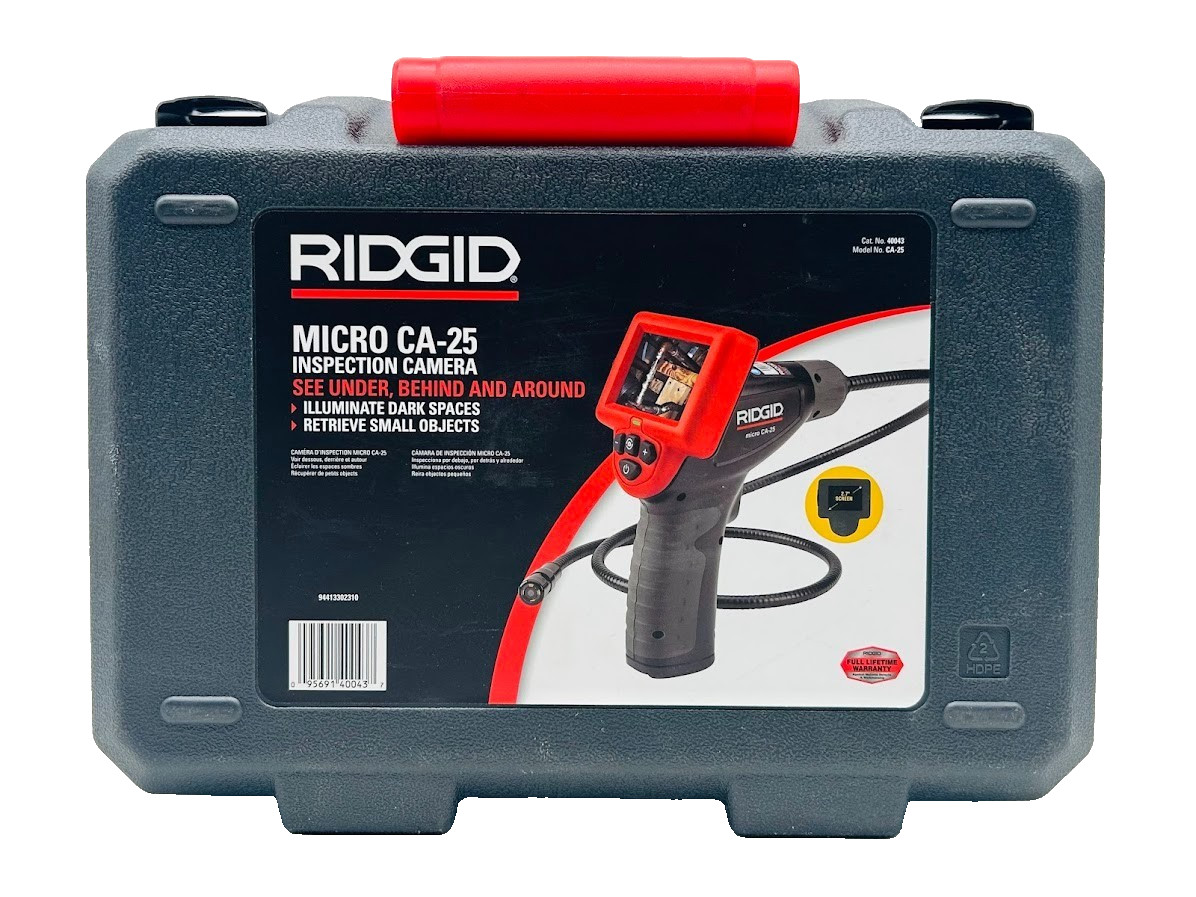
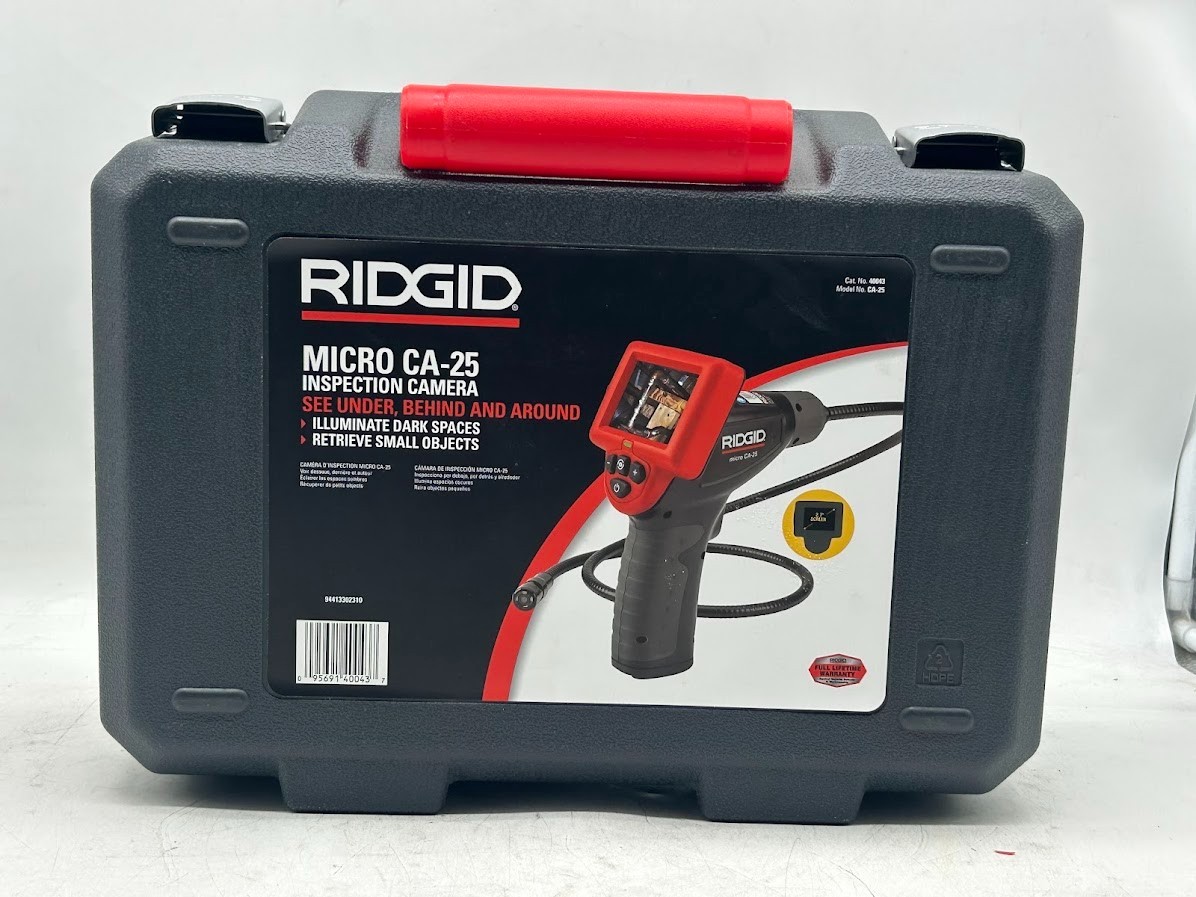
Two identical entries for the RIDGID CA-25 appear at the same $49.99 price. This is the least expensive way to get into visual inspection. The 17mm aluminum camera head fits into tight openings, and the four adjustable LED lights brighten dark spots. The 2.7-inch display gives you a live look, and the 4-foot waterproof cable makes it safe around moisture. The trade-off is reach: four feet is enough for a trap or a wall opening but not for a long pipe run. Image resolution is 480 x 234, which is fine for seeing whether something is stuck or corroded, but not for fine detail. If you keep expectations aligned with the price, this is a solid entry point.
RIX STORM S3
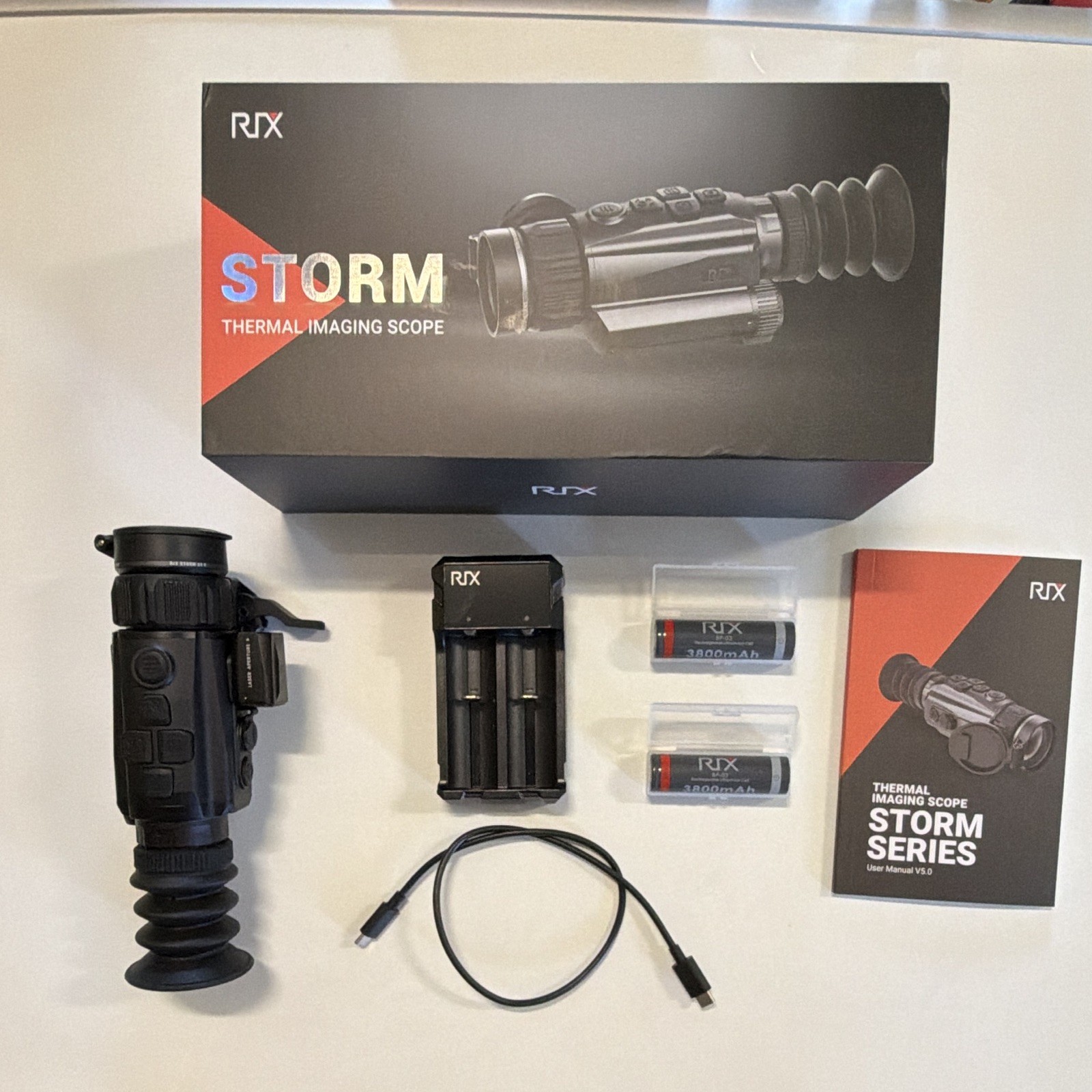
The RIX STORM S3 is a different kind of tool for this type of work. Instead of a cable, you get a handheld scope that shows heat patterns on a screen. That makes it useful for finding hot spots in electrical panels, locating heat loss around windows, or scanning mechanical equipment. The seller states the unit was used once and includes two batteries and a charger. At $1,250, it's a mid-priced way to bring heat imaging into your toolkit. The limitation is that it won't help you see inside a pipe or wall cavity. It's a surface scanner, not a snake camera. The seller doesn't specify thermal resolution or temperature range, so if those specs are critical, you'll need to ask for them.
Wohler VIS 350
The Wohler VIS 350 is the most expensive option here at $3,799.99, and it is engineered for professionals who need serious reach. The 100-foot push rod lets you cover long drain runs, and the 1.5-inch camera head can pan 360° and tilt 180°, so you can inspect side walls and joints instead of just looking straight ahead. The 7-inch monitor can be tilted for viewing or removed entirely, which helps in tight spaces. It also has a built-in locator transmitter that can be used with the Wohler L 200 locator. The drawback is the price: this is a major investment, and the seller doesn't provide the camera resolution, so you'll want to get more detail before committing.
Final Recommendation
Match the tool to the task. If you need a low-cost visual inspection camera for quick, short-range checks, the RIDGID CA-25 is the clear choice. If your priority is non-contact temperature scanning, the RIX STORM S3 is the one to pick. If you do long, professional inspections where deep reach and side-view detail are essential, the Wohler VIS 350 is the system to consider.