When you're choosing between two detection instruments, the first step isn't to compare price-it's to identify the measurement your job actually requires. The Thermo RadEye PRD is a compact personal radiation detector for gamma/photon work, dose rate measurement, and accumulated dose tracking. The BYK 6320 Acquire Rx is a multi-angle spectrometer aimed at matching paint colors on vehicles. They share the broader category of spectroscopy and analysis, but they solve different problems. The price gap is just as clear: the RadEye PRD is listed at USD 995.00, while the BYK 6320 comes in at USD 220.00, which works out to a $775 difference.
Quick verdict
If your work involves radiation safety or monitoring, the Thermo RadEye PRD is the instrument to choose. If your focus is automotive paint color matching, the BYK 6320 Acquire Rx is the more practical option for that job. The right choice depends on which type of detection you perform regularly.
Comparison table
| Reference | Thermo RadEye PRD | BYK 6320 Acquire Rx |
|---|---|---|
| Listed price | USD 995.00 | USD 220.00 |
| Condition | Seller refurbished | Used |
| Primary function | Gamma/photon personal radiation detection | Multi-angle auto paint color matching |
| Notable listed features | Calibrated, all menus unlocked, 1-year guarantee | Acquire Rx multi-angle spectrometer |
Where the Thermo RadEye PRD wins
The RadEye PRD is the only product here designed for radiation detection. It's a compact personal radiation detector with a scintillation detector, and it handles count rate monitoring, dose rate measurement, and accumulated dose tracking. If you need a ready-to-use radiation safety instrument, the BYK 6320 can't cover that role.
Where the BYK 6320 Acquire Rx wins
The BYK 6320 wins on price and on fit for automotive paint work. Its spectrometer design is built for color matching. If your daily job is matching auto paint colors, the BYK 6320's approach is directly relevant, while the RadEye PRD would be an expensive and inappropriate tool for that task.
Product notes
1x 2026 Calibrated Thermo RadEye PRD with All Menus UNLOCKED! 1 yr guarantee
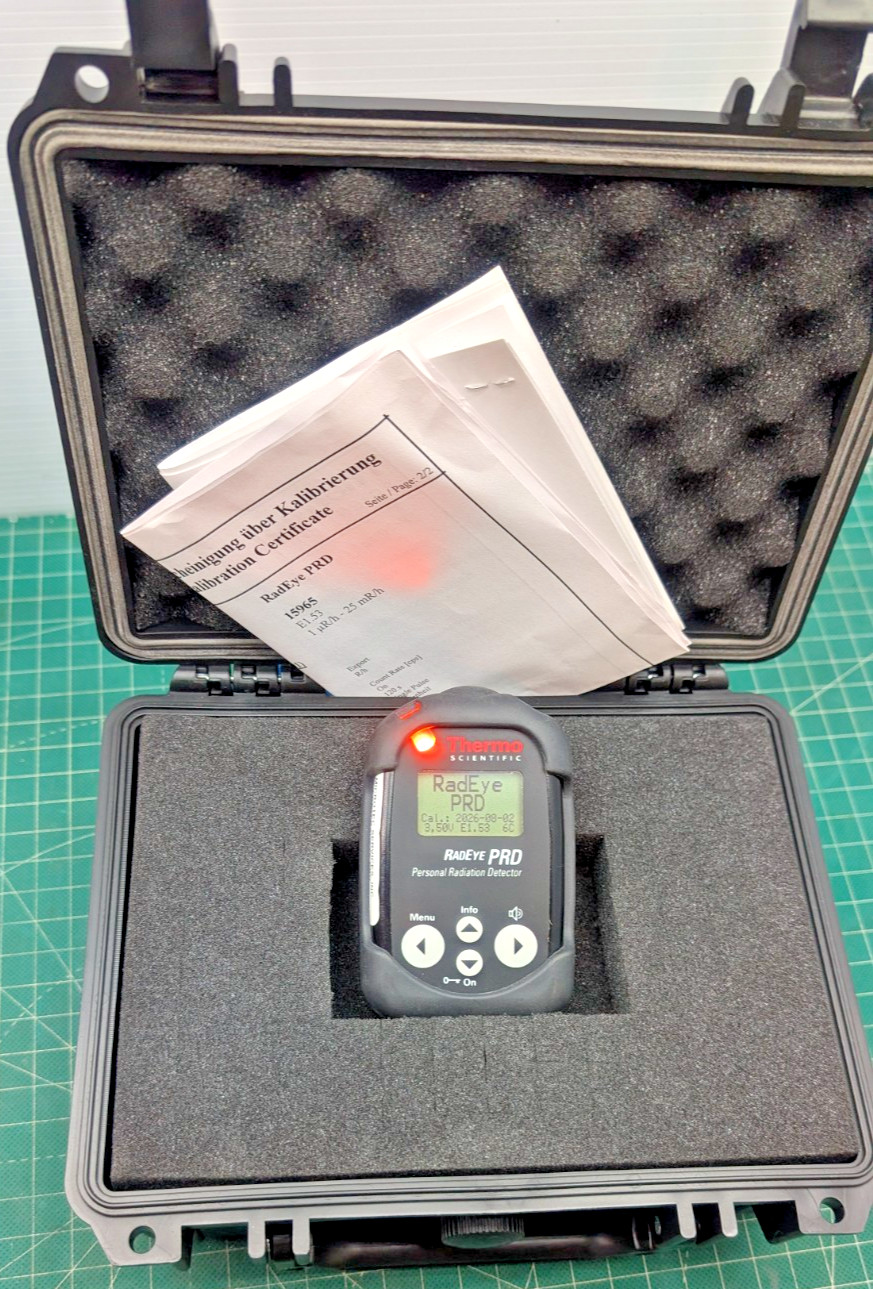
This RadEye PRD is a serious instrument for anyone who needs personal radiation detection. It's built for gamma and photon detection, with a scintillation detector and the ability to track dose rate and accumulated dose. The "2026 Calibrated" designation points to current calibration, and the seller refurbished condition is backed by a one-year guarantee. The "All Menus UNLOCKED" feature may be important if you want full access to the device's functions. The main limitation is its specificity: it's not a general-purpose spectrometer, and it's designed for safety monitoring, not color matching. If your work doesn't involve radiation detection, this is an expensive solution to the wrong problem.
BYK 6320 Acquire Rx Multiangle Spectrometer Auto Paint Color matching
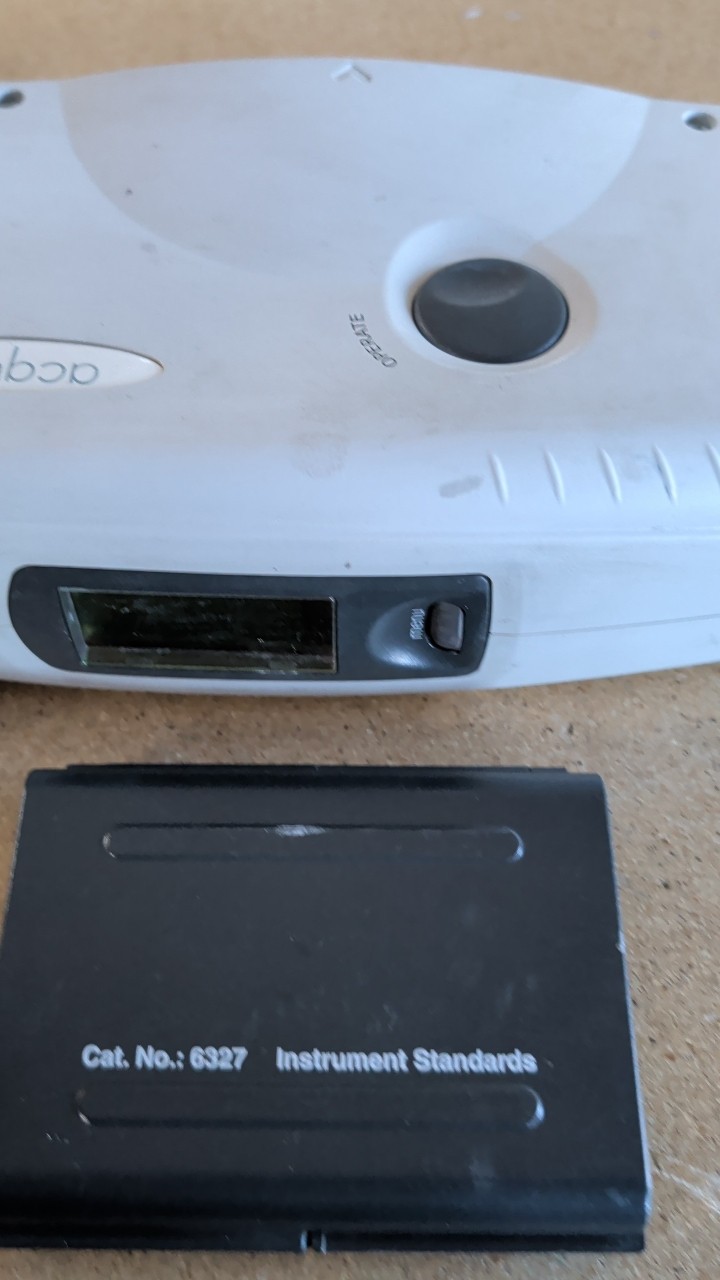
The BYK 6320 Acquire Rx is a multi-angle spectrometer clearly intended for vehicle paint color matching. The "Acquire Rx" model designation points to a specific category of BYK instruments used in coating inspection. The multi-angle capability is valuable because paint colors change depending on the viewing angle, which is exactly why this type of spectrometer is used in auto paint work. It's a used unit, so the physical condition is something to weigh, but the model name itself indicates the specific BYK line for this purpose. The limitation is that its purpose is narrow: if you need radiation detection or general spectroscopic analysis, this isn't the tool. It's a purpose-built device for color matching, not a multi-purpose detection instrument.
Final choice by use case
Choose the Thermo RadEye PRD if you need to detect gamma or photon radiation, monitor count rates, or track dose exposure. It's the specialized safety tool for that role.
Choose the BYK 6320 Acquire Rx if you work with automotive paint and want a color-matching tool for the shop. It's a used unit, but the model is designed for that exact task.
For any other kind of spectroscopy or analysis that doesn't involve radiation or paint color, you'd need to look at other instruments-these two are specialized for their respective tasks.