When you're deciding between microscopes for lab imaging, the real fork in the road is how you'll use it. Are you hands-on with a soldering iron or inspecting a coin under a magnifier for long stretches? Or do you need a simple digital magnifier that works with a computer and a tight budget? Those two paths lead to the TOMLOV 4K Autofocus Digital Microscope 10.1" Spin Flex Arm Soldering Microscope and the 1600x Zoom 8 LED HD USB Microscope Digital Magnifier Endoscope Video Camera US. The TOMLOV is a benchtop station with a built-in display and autofocus, while the USB microscope is a compact, portable device that relies on a computer for viewing.
Quick verdict
If your work requires a stable, hands-free setup and you want to see details on a dedicated screen without hunting for focus, the TOMLOV is worth the higher cost. If you're starting out, teaching, or just want an inexpensive way to check coins, PCBs, hair, or plant samples on your laptop, the 1600x USB microscope is a low-commitment entry point. The right choice isn't about which is 'better' in general; it's about which matches the way you work.
Comparison at a glance
| Feature | TOMLOV 4K Autofocus | 1600x USB Microscope |
|---|---|---|
| Price | $259.00 | $15.49 |
| Magnification | 2000X | 1600x |
| Display | 10.1" built-in screen | USB/Camera output |
| Lighting | Ring light | 8 white LEDs |
| Best for | Precision, hands-free inspection | Portable, casual, educational use |
Where each microscope wins
The TOMLOV wins for electronics repair, coin and antique inspection, and any task that benefits from a large, clear image without tethering you to a computer. The autofocus reduces the constant focusing that slows down detailed work, and the spin flex arm holds the camera steady while you use both hands. Its 2000X magnification gives you more reach into fine detail, and the integrated screen keeps the image in front of you.
The 1600x USB microscope wins for portable, casual use. It's small, works with a laptop or another USB-capable display, and covers a broad range of uses from biological labs and chemistry to skin, hair, jewelry, and textile checks. With adjustable lighting via 8 white LEDs, you can adapt to different surfaces, and the flexible stand helps with one-handed positioning. It's a tool you can pick up quickly and set down without reconfiguring a workspace.
Product notes
TOMLOV 4K Autofocus Digital Microscope 10.1" Spin Flex Arm Soldering Microscope
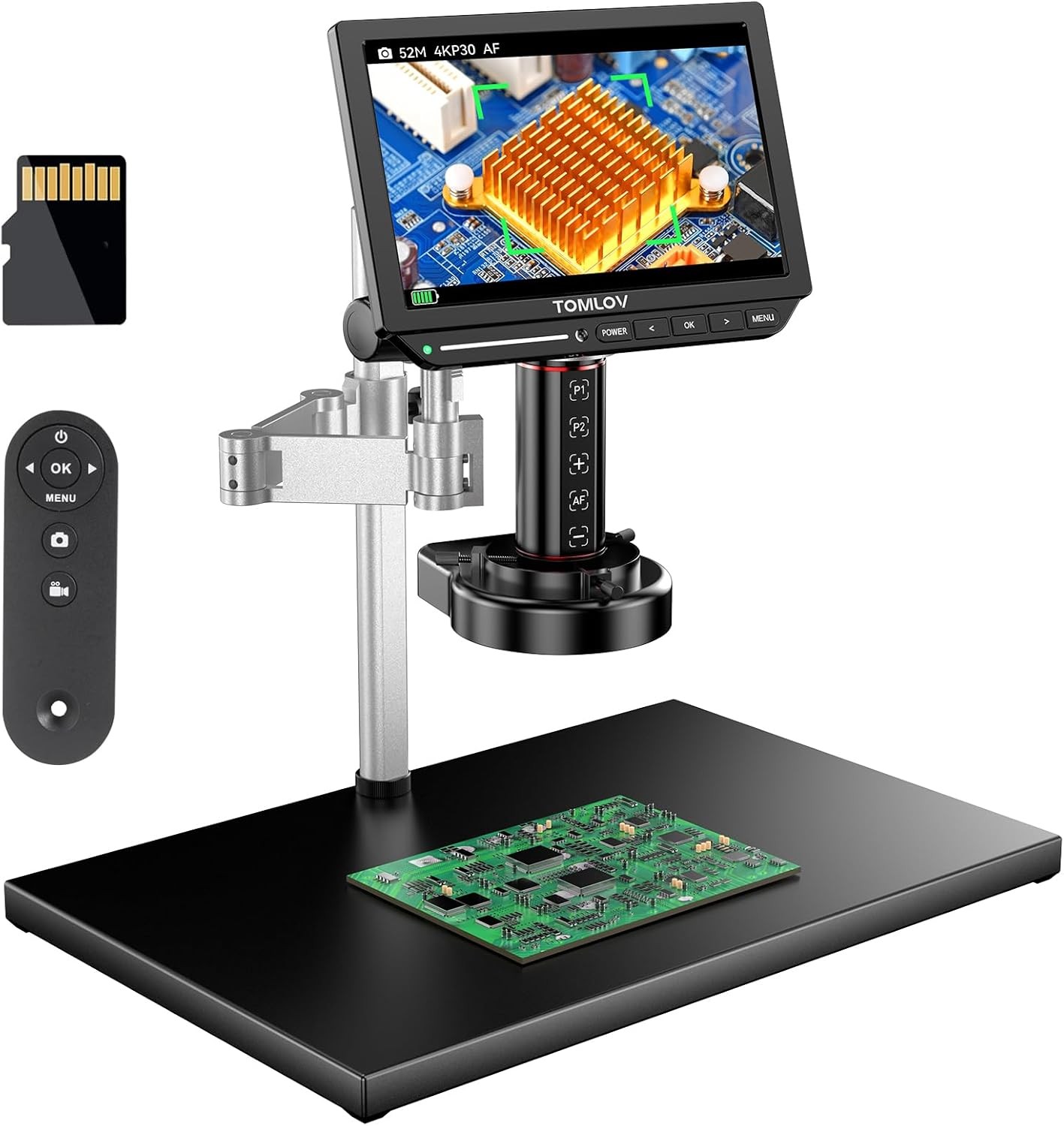
This is a dedicated workstation tool. The autofocus combines TOF distance sensing and AI technology to keep your subject sharp, which makes a tangible difference when you're adjusting a circuit board or flipping a coin to inspect both sides. The spin flex arm allows you to reposition the camera without moving your whole setup. The main hesitation is the $259.00 price: for a casual observer, it's a large investment. Choose it if you spend many hours a week looking through a lens and want the workflow to feel effortless. The autofocus is especially helpful for repetitive inspections, because you don't need to stop and refocus each time.
1600x Zoom 8 LED HD USB Microscope Digital Magnifier Endoscope Video Camera US
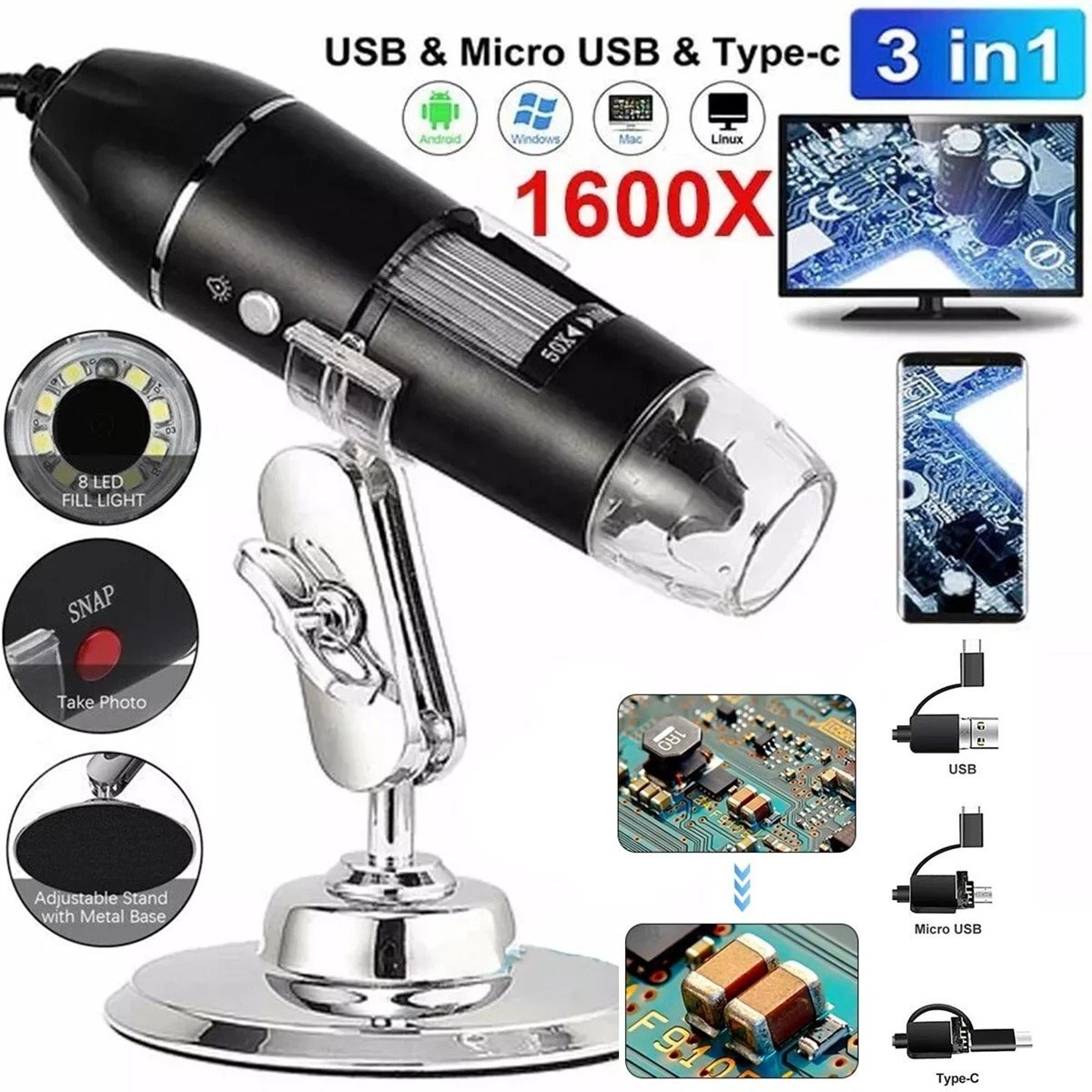
If you've never used a digital microscope, this is the least intimidating way to start. You get a device that connects via USB and gives you a zoom range from 0x to 1600x. The premium anti-skid handle and flexible stand make it comfortable to hold or set down. It's marketed for a wide range of tasks-from biological and chemistry lab work to skin, hair, jewelry, coin, and PCB inspection. The tradeoff is that viewing happens through a computer or other USB-capable display, so you'll need that in your setup. For a student or hobbyist, this is a practical, low-risk way to explore the micro world, and the wide intended-use list means it can serve multiple projects without a dedicated bench setup.
Final choice by use case
If you need autofocus, a built-in screen, and a stable arm for serious inspection work, the TOMLOV is the one to choose. If you want an easy USB-connected magnifier for a wide range of everyday checks, the 1600x USB microscope is the practical pick.