Whether you're inspecting a fresh solder joint, grading a coin, or documenting a biological sample, you have two basic ways to go: a complete microscope with its own display, or a compact camera that feeds an external monitor. The TOMLOV 7" Digital Microscope 1200X and the HDMI Video Microscope VGA Camera illustrate that fork, with listed prices of $69.99 and $59.64 respectively.
Quick verdict
If you want a ready-to-use setup for soldering, coins, stamps, and laboratory observation, the TOMLOV's integrated 7-inch screen and 10 LED lights are the easiest path. If you already have an HDMI or VGA monitor on your bench and need a lower-priced camera head for industrial inspection or lab imaging, the HDMI Video Microscope VGA Camera is the more budget-conscious choice.
At a glance
| TOMLOV 7" Digital Microscope 1200X | HDMI Video Microscope VGA Camera | |
|---|---|---|
| Listed price | $69.99 | $59.64 |
| Display | Integrated 7-inch 1080P rotatable screen | External HDMI/VGA monitor required |
| Magnification | 50X to 1200X | 8X-130X on a 70cm monitor (optical 0.12X-2X) |
| Lighting | 10 LED lights | Auto/manual brightness control |
| Best for | Standalone soldering, coin, stamp, and biological viewing | Monitor-based industrial inspection and lab imaging |
Where each one wins
The TOMLOV wins when you value a self-contained unit. The 7-inch screen swivels 90 degrees, the metal stand holds the camera steady, and the 1080P/12MP focusing system is geared toward close-up detail work like soldering and coin grading. It also spans 50X to 1200X, so it adapts well to biological lab and chemistry use.
The HDMI/VGA camera wins on price and flexibility. At $59.64, it's roughly $10 cheaper than the TOMLOV, and its HDMI plus VGA outputs let you use whatever display you already have. With 60fps, auto/manual brightness, and a working distance of 55-180mm, it's a practical tool for inspecting circuit boards or small parts on a workbench.
Product notes
TOMLOV 7" Digital Microscope 1200X
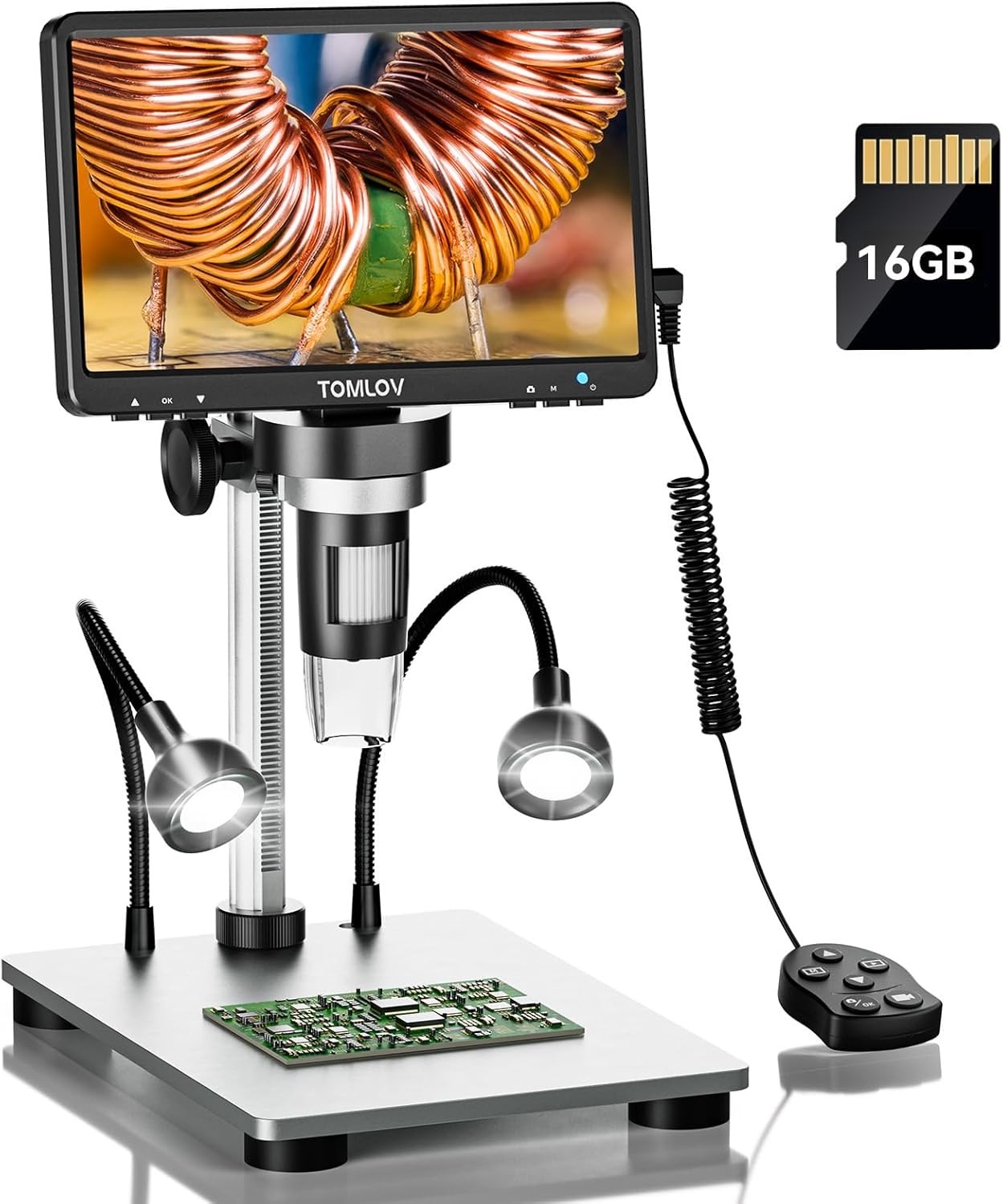
At $69.99, the TOMLOV DM9 is the more complete package. The 7-inch FHD screen rotates 90 degrees, so you can look straight down at a coin or share the view with someone beside you. The 1080P camera works with 12MP focusing, and the included metal stand adds stability for soldering tasks. With magnification from 50X to 1200X and 10 LED lights, it covers biological laboratory, chemistry, and classroom-style observation without needing extra equipment. The limitation is the higher listed price: it costs about $10 more than the HDMI camera. If you want a microscope that's ready to go out of the box and doesn't rely on a separate monitor, this is the one to choose.
HDMI Video Microscope VGA Camera
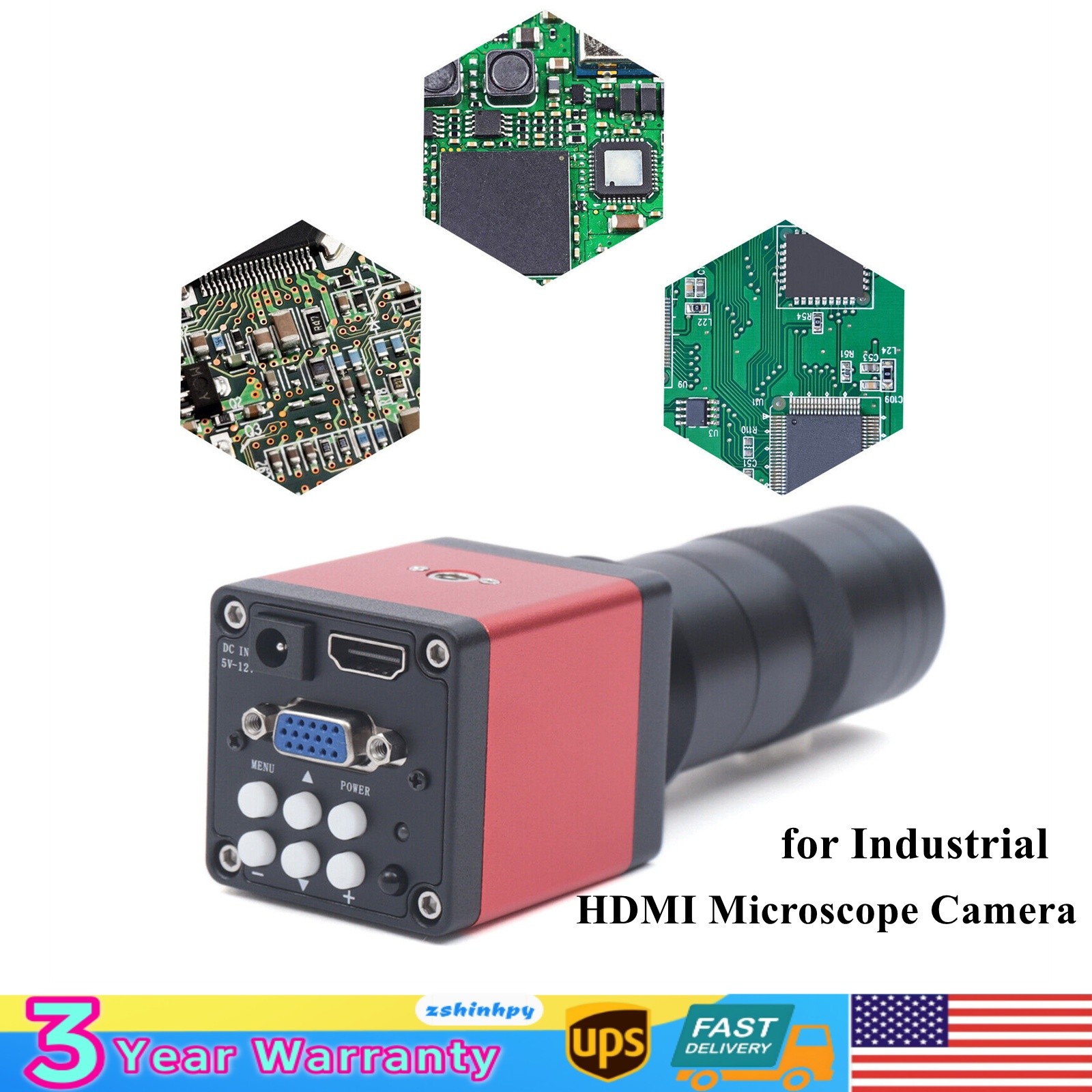
Priced at $59.64, the HDMI Video Microscope VGA Camera is the lower-priced option in this pair. The metal-shell camera uses a CMOS image sensor, supports HDMI and VGA output, and delivers 1080p at 60fps. Brightness control can be automatic or manual, and the optical lens ranges from 0.12X to 2X, while digital magnification lands at about 8X-130X on a 70cm monitor. Those specs make it a sensible fit for industrial inspection and lab imaging when you already have a display. The main limitation is that there's no built-in screen: you'll need to connect it to an HDMI or VGA monitor to see the image. For a compact camera head rather than a full microscope, this is the flexible, budget-conscious pick.
Final choice by use case
For soldering, coin and stamp viewing, biological lab work, and any situation where you want a single self-contained microscope, choose the TOMLOV 7" Digital Microscope 1200X at $69.99. For monitor-based industrial inspection, a lower $59.64 price, and the flexibility of HDMI/VGA output, choose the HDMI Video Microscope VGA Camera.