When you're choosing between a large digital microscope for lab imaging and a handheld LCD loupe, the real question is where your work happens. The TOMLOV TriL110 is a bench-style microscope with a multi-lens design, while the TOMLOV Handheld LCD model is built for quick, portable close-up checks. One is priced at $136.99, the other at $42.03, so the decision usually comes down to bench time versus go-anywhere convenience.
Quick verdict
If you mostly inspect coins, jewelry, plants, or small parts while moving around, the Handheld LCD gets you a screen and built-in light for much less money. If you need a large display and high magnification for soldering or serious bench work, the TriL110 is the more capable system.
At a glance
| Decision point | TriL110 10-Inch 3-Lens | Handheld 2.4-Inch LCD |
|---|---|---|
| Price | $136.99 | $42.03 |
| Display | 10-inch screen | 2.4-inch screen |
| Magnification | Coin lens 2X-1000X; biological lens 2000X-2500X | Close-up handheld loupe |
| Output | 2K HDMI to laptop, PC, or TV | 1080P video and 3MP photos |
| Best for | Soldering and fixed bench work | Portable quick inspection |
Where each product wins
Where the TriL110 wins
The TriL110 earns its higher price when you want a fixed bench setup and the ability to move from coin-scale viewing to high-power biological inspection without changing lenses. That makes it a strong match for soldering and inspection work that stays in one place.
Where the Handheld wins
The Handheld wins on portability and price. It gives you a self-contained screen, LED lighting, and photo/video capture in a handheld format, and it leaves a much smaller dent in your budget.
Product notes
TOMLOV TriL110 Digital Microscope
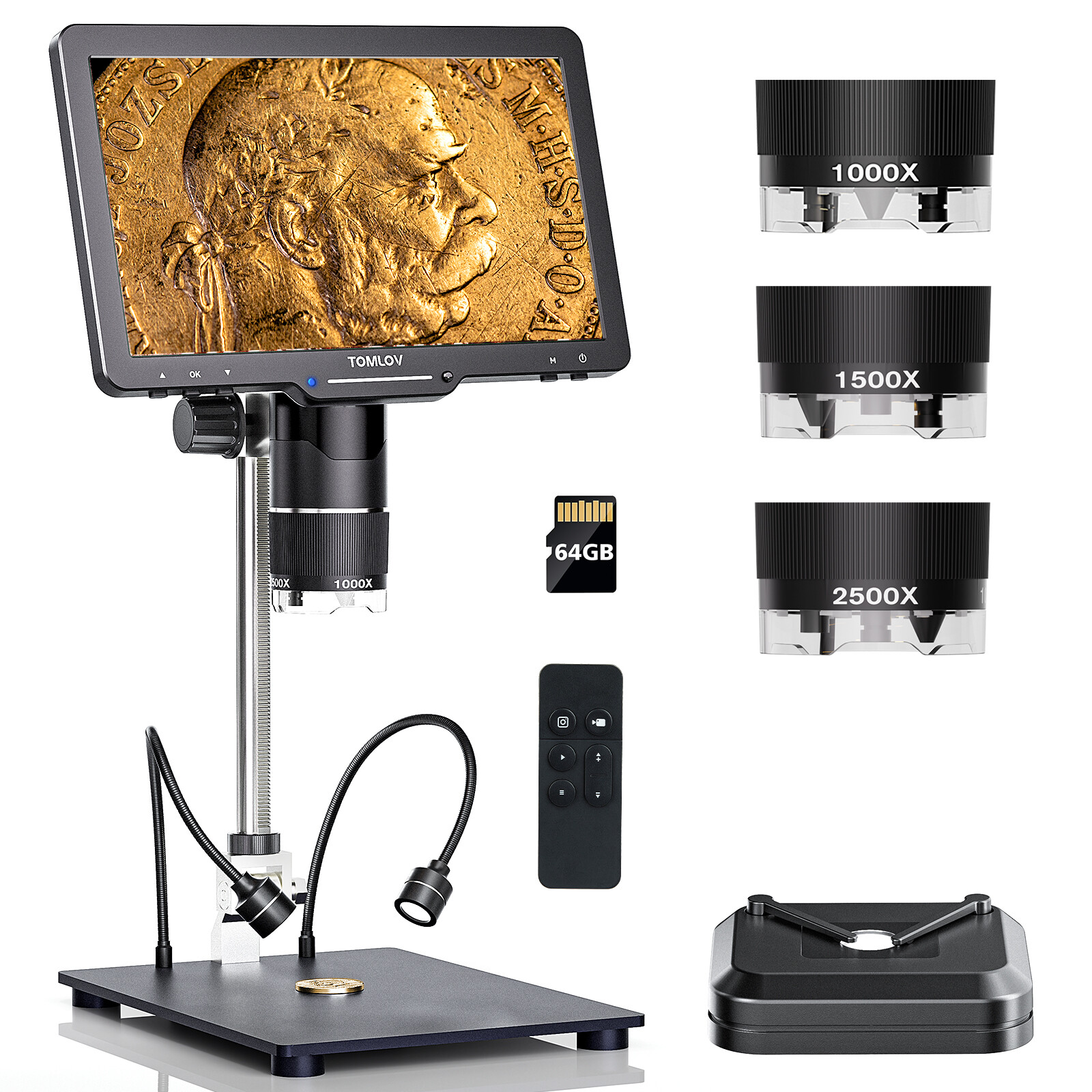
The TriL110 is the better fit if your main jobs are soldering, PCB repair, or repeated inspections at a fixed desk. The 14 LED lights and the 2K HDMI output make it practical to keep the work in view while you handle the soldering iron, and the lens-switching design removes the need to stop and change lenses. The real limitation is the price: this is the costlier unit in this comparison, and it is a bench tool rather than a grab-and-go loupe. If you rarely spend long sessions at a desk, you may pay for capability that stays unused.
TOMLOV Handheld Digital Microscope
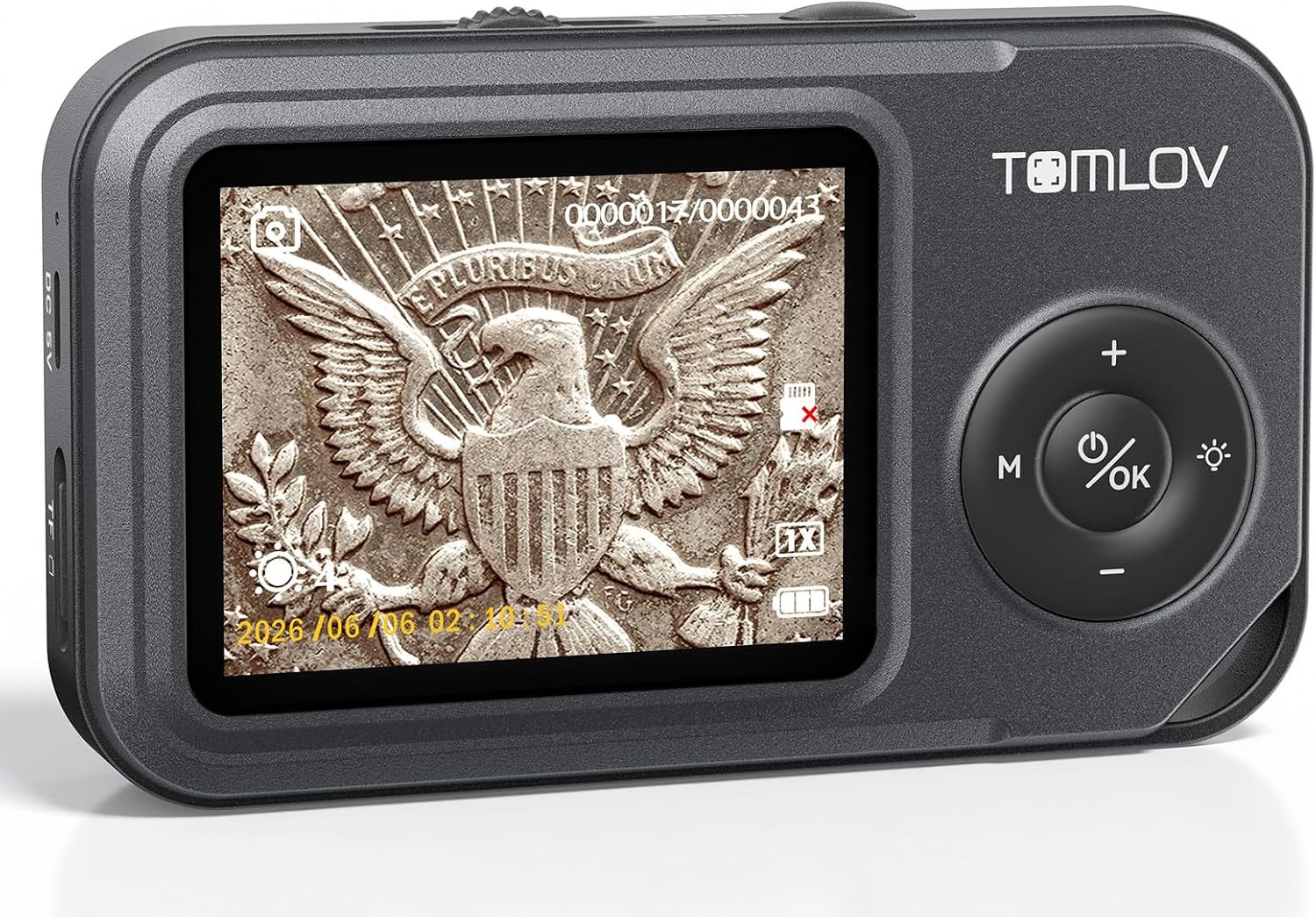
The Handheld shines when the microscope has to travel. Its display stays attached to the device, and the six built-in LEDs have four brightness levels, so you can inspect a coin, stamp, jewelry piece, or plant leaf without carrying extra lights. For documentation, it shoots 3MP stills and 1080P video, and it can connect to Windows or Mac for larger screen viewing. The limitation is that it lacks the HDMI output and high-power biological range of the TriL110, so it is better for quick assessments than for precision soldering or high-magnification lab imaging.
Final choice by use case
- Soldering or PCB work: TOMLOV TriL110 Digital Microscope
- Coin, stamp, or jewelry checks in the field: TOMLOV Handheld Digital Microscope
- First microscope on a budget: the Handheld
- Dedicated lab imaging bench with multiple lens ranges: the TriL110