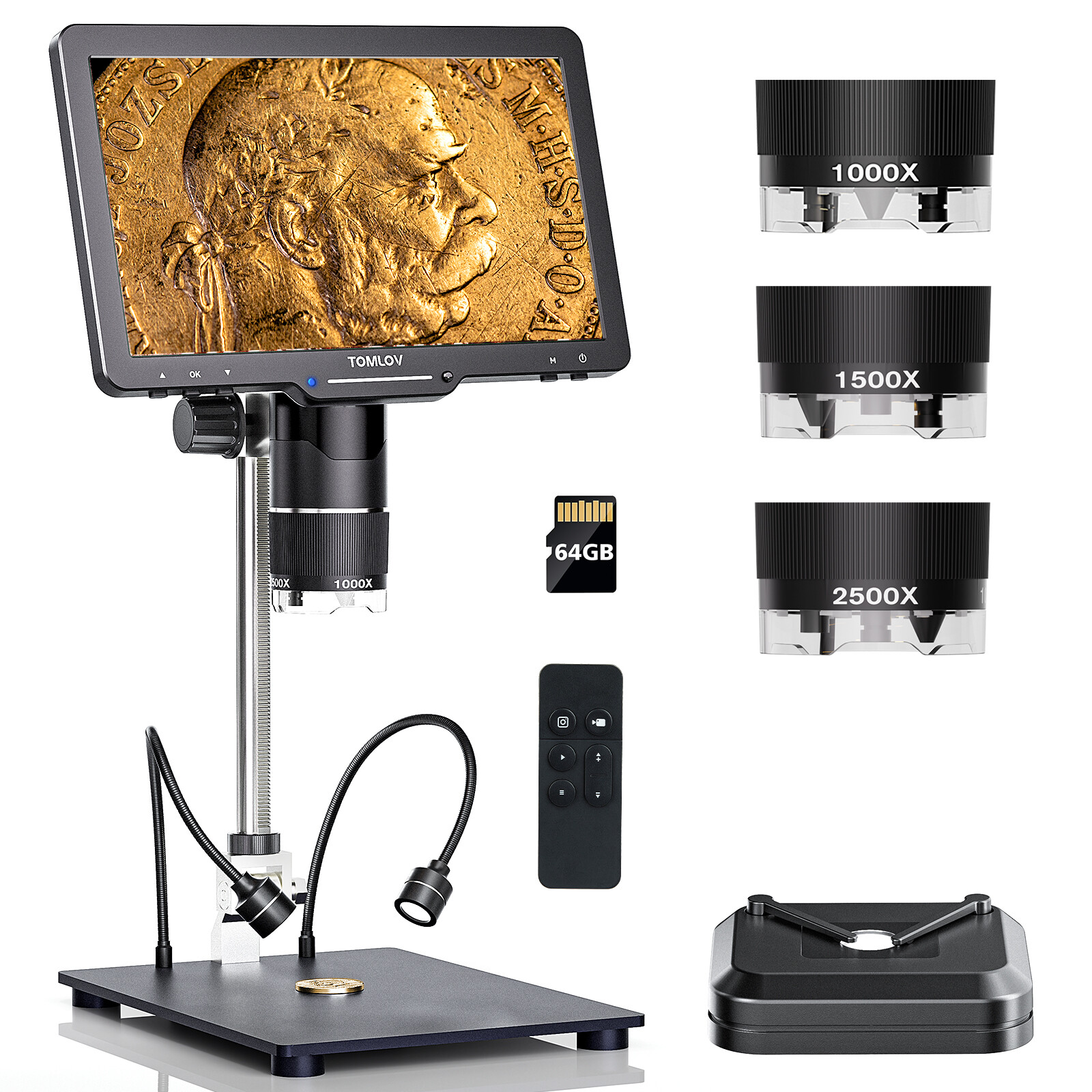
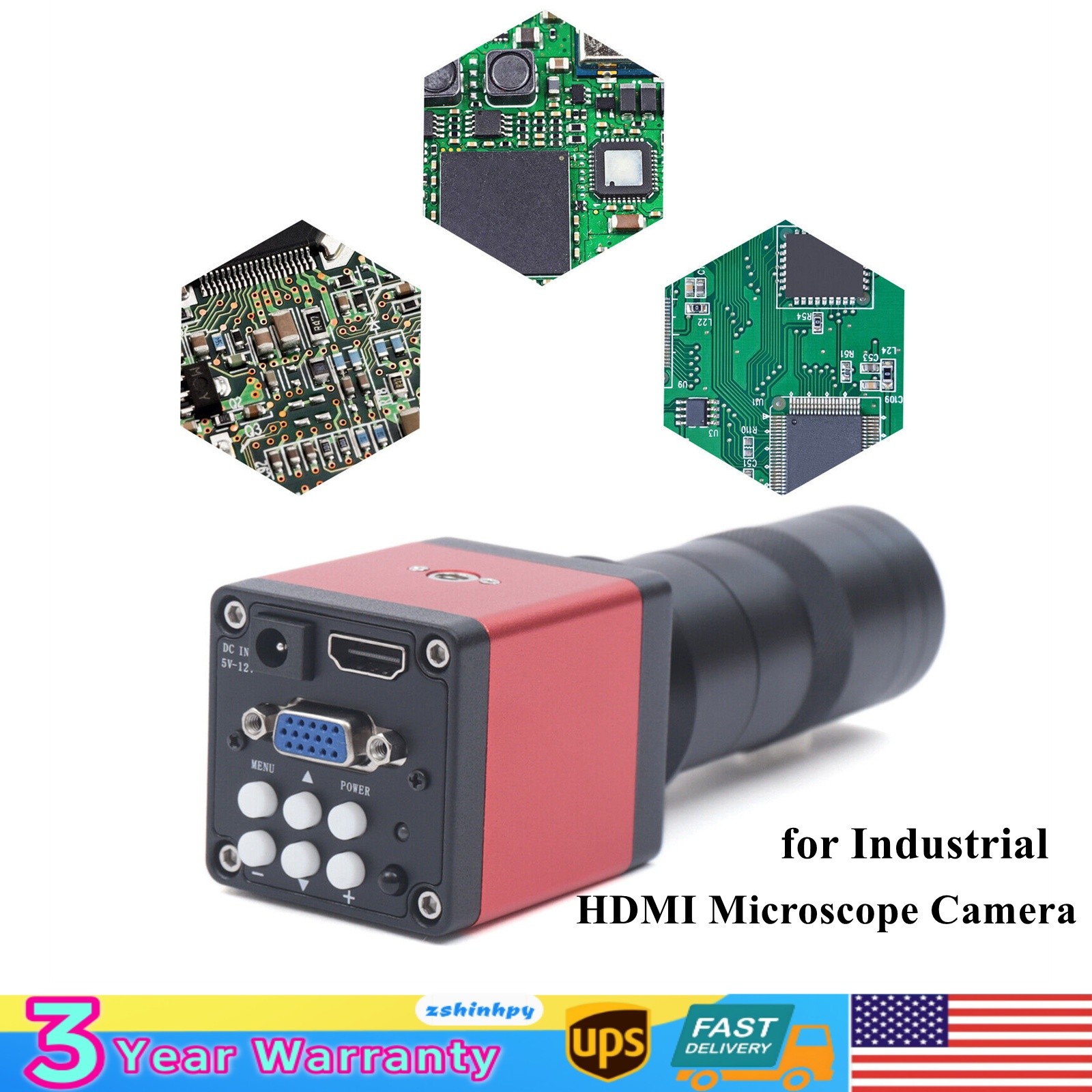
For microscopes lab imaging, the decision usually comes down to whether you want a complete all-in-one scope or a camera you plug into equipment you already own. The TOMLOV TriL110 and the HDMI Video Microscope VGA Camera sit on opposite sides of that choice. Their listed prices are $149.00 and $59.64, a gap of about 60%.
Quick verdict
If you want a single instrument for entire-coin inspection, soldering work, and biological samples, the TOMLOV TriL110 is the more capable all-in-one. If your budget is tight and you already have a monitor, the HDMI camera is the flexible low-cost route.
At a glance
| Consideration | TOMLOV TriL110 | HDMI VGA Camera |
|---|---|---|
| Price | $149.00 | $59.64 |
| Built-in display | 10.1-inch IPS | None (requires external monitor) |
| Magnification | Coin 2X-1000X, biological 2000X-2500X | Optical 0.12X-2X, digital about 8X-130X |
| Video output | 2K video | 1080p at 60fps |
| Lighting | 14 LEDs | Auto/manual brightness control |
The biggest practical difference shows up in your workflow. The TOMLOV is a bench station that includes its own screen and takes up more space. The HDMI camera is a small add-on that lets you reuse a monitor you already own. That distinction affects both cost and setup.
Where each wins
The TOMLOV TriL110 wins when your work pulls you back and forth between low and very high magnification, and when you want a ready-to-use screen on the bench. The HDMI Video Microscope VGA Camera wins for budget buyers who already own a monitor and want a compact camera for straightforward inspections.
TOMLOV TriL110 Digital Microscope 2500X
The rotating barrel on this model carries three lenses, so you can move between viewing an entire coin and zooming into biological details without swapping components by hand. For coin collectors, that means you can show a full coin at low magnification and then rotate to the biological lens for a close look at surface details. The built-in 10.1-inch IPS screen means you don't need to tie up a separate monitor, and 14 LEDs provide even illumination for coins, boards, and small parts. It's a strong fit for coin collectors, soldering stations, and lab observations where one setup needs to handle multiple jobs. The trade-off is the higher price and a larger, screen-included footprint than the compact HDMI camera. If you only need basic inspection, the extra lens range and built-in display may be more than you require, and you may rarely use all three lenses.
HDMI Video Microscope VGA Camera HD Industrial Digital USB Lens 1080p 60FPS
This camera-style microscope outputs 1080p video at 60fps, so live inspection feels fluid, and it connects through HDMI and VGA to a TV or PC monitor you already have. Because it uses an existing display, you avoid duplication on your desk and keep your setup lean. Auto/manual brightness control helps when moving between shiny and matte surfaces, and the metal housing suits industrial settings. At a significantly lower price than the TOMLOV, it leaves budget room for other lab gear. The main limitation: it relies on an external display, and its optical magnification stops at 2X, so it won't reach the high-power biological range of the TOMLOV. For straightforward industrial inspection or quality control, that's a fair trade.
Final choice by use case
Choose the TOMLOV TriL110 when you need the extra magnification and a self-contained setup, and when the higher price is justified by the range of tasks. Choose the HDMI Video Microscope VGA Camera when you want the lower-priced option and are happy to use a monitor you already own.