When you're outfitting a microscope for lab imaging, the first decision is often how you want to view your specimens. Do you want an all-in-one microscope or a compact camera head that sends video to a monitor you already own? The TOMLOV TriL110 and the HDMI Video Microscope VGA Camera take opposite approaches, and this head-to-head compares their strengths to help you decide which fits your bench.
Quick verdict
Choose the TOMLOV TriL110 if you want a self-contained setup that doesn't require a separate monitor. It's built to handle a wide range of samples without adding extra equipment. Choose the HDMI/VGA microscope camera if you already have a monitor or PC and want a compact camera head that connects directly to it. The HDMI/VGA model is the simpler route to a digital microscope for bench work.
At a glance
| Feature | TOMLOV TriL110 | HDMI/VGA Microscope Camera |
|---|---|---|
| Price | USD 136.99 | USD 59.64 |
| Display & output | 10.1" IPS screen; 2K HDMI; PC/TV compatible | 1080p at 60fps; HDMI/VGA interfaces |
| Lenses | 3 lenses; biological 2000X-2500X; coin 2X-1000X | Optical 0.12X-2X; digital approx. 8X-130X |
| Lighting | 14 LED lights | Auto/manual brightness control |
| Remote | Wireless remote | Remote manipulation range within 1m |
Where each product wins
The TOMLOV TriL110 wins when you want a complete package. It gives you a live view without connecting anything else, and it adapts to different sample sizes with ease. That makes it a strong fit for soldering, PCB repair, and coin inspection, where switching between sample types without changing hardware saves time. It also brings extras that make long bench sessions easier.
The HDMI/VGA microscope camera wins when you want a straightforward camera head that connects to a monitor you already own. It provides smooth video, flexible brightness control, and a compact metal body that fits into an existing setup. It's a practical choice for checking solder joints, small parts, or surface details.
Product notes
TOMLOV TriL110
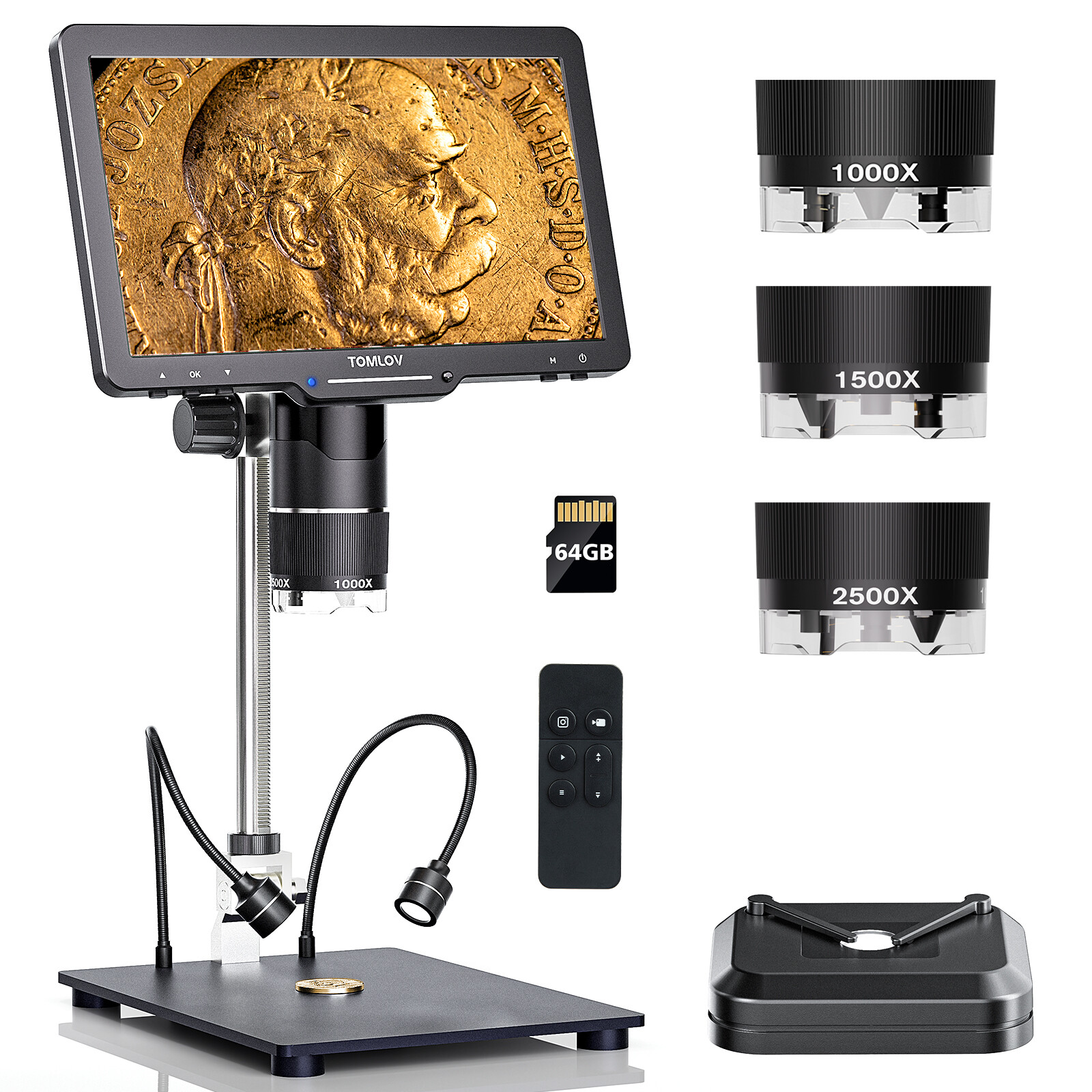
This is the model to pick if you want everything in one unit. The 10.1-inch IPS screen gives you an immediate view of the sample, and the 2K HDMI output lets you share that view on a TV or PC when you need a larger image. The three-lens system is its biggest strength: the biological lens covers 2000X to 2500X, while the coin lens handles 2X to 1000X, so you can go from a whole coin to a tiny detail without swapping lenses. The 14 LED lights keep the field bright, and the wireless remote lets you adjust settings from a distance. The main trade-off is that the three-lens design adds a step: you rotate the lens barrel to switch between the biological and coin lenses, so it takes a moment to change magnification ranges.
HDMI Video Microscope VGA Camera
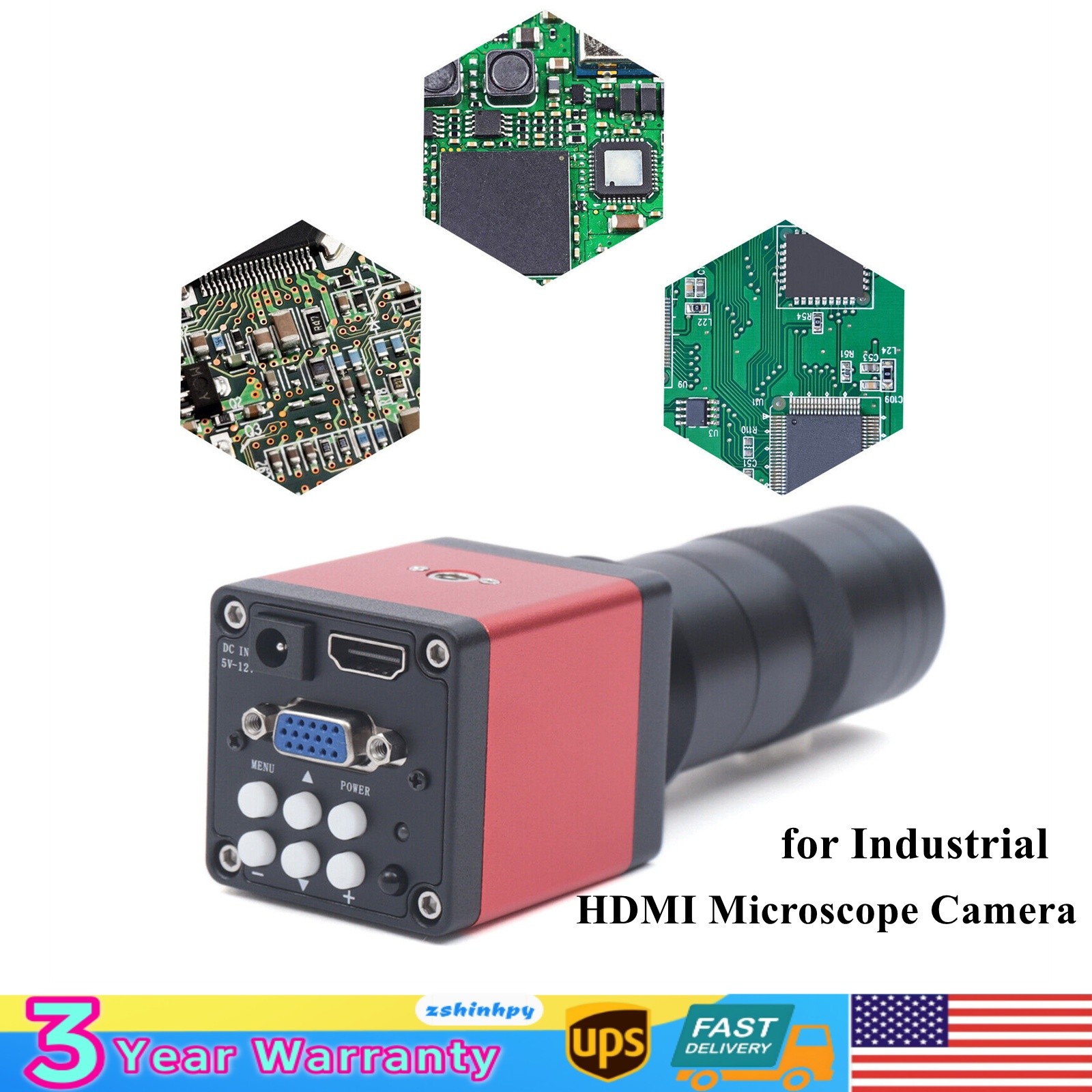
This camera head is the right pick for labs that already have a monitor. It sends 1080p video at 60fps over HDMI or VGA, which is smooth for watching solder joints or moving parts. The optical magnification of 0.12X to 2X, plus digital magnification up to about 130X on a 27.6-inch monitor, covers a practical range for many inspection tasks. Brightness can be set to auto or manual, and the metal shell feels suited to a workbench. The limitation is that it's designed to output to an external display, so you'll need a monitor or PC with HDMI or VGA input to see the image. Its maximum magnification also is lower than the TOMLOV's biological lens, so it's not meant for extreme close-ups.
Final choice by use case
For a self-contained soldering or coin inspection station, the TOMLOV TriL110 is the better fit. For bench work with an existing monitor and a compact camera head, the HDMI/VGA microscope camera is the right choice for your lab imaging setup.