Choosing between a clamp-on ultrasonic flow meter and an inline turbine flow meter for pressure flow process measurement comes down to two questions: can you cut into the line, and what liquid are you measuring? The right answer saves installation headaches and gives you readings you can use. The two meters take very different approaches-one measures through the pipe wall, the other sits directly in the flow path-so the decision really depends on your piping setup and what you need from the reading.
Quick Verdict
If you need to measure flow without interrupting the pipe, the ultrasonic clamp-on meter is your pick. It handles a wide range of pipe sizes and can send readings to a monitoring system. If you want a straightforward meter for fuel and water lines, the turbine meter is a practical, easy-to-install alternative.
At a Glance
| Feature | Ultrasonic Clamp-On Meter | Turbine Meter |
| List price | $210.70 | $25.99 |
| Meter type | Clamp-on ultrasonic | Inline turbine |
| Installation | Clamps onto outside of pipe | Screws into 1\" NPT line |
| Pipe size range | DN20 to DN700 | 1-inch line |
| Accuracy | ±1% | ±1% |
| Output/interface | RS485 with Modbus support | Instantaneous and cumulative display |
| Best for | Wide pipe sizes, no pipe cutting | Diesel, kerosene, gasoline, water lines |
Where the Ultrasonic Clamp-On Meter Wins
The ultrasonic meter doesn't require you to cut into the pipe. It clamps onto the outside and measures through pipe materials that transmit ultrasound. Because nothing blocks the flow, there's no added pressure drop from an obstruction. The RS485 interface makes it simple to connect to a Modbus-based control system, so you can keep an eye on readings remotely or use them in a larger process. It also measures bidirectional flow, which is handy if your line can run in reverse.
Where the Turbine Meter Wins
The turbine meter is compact, and its modular design means you can replace worn internal parts instead of swapping out the whole meter. For transfer and dispensing applications, this kind of direct measurement is often all you need.
Product Notes
Ultrasonic Flow Meter TUF-2000B +TM-1 + TS-2 (Fixed Clamp-On)
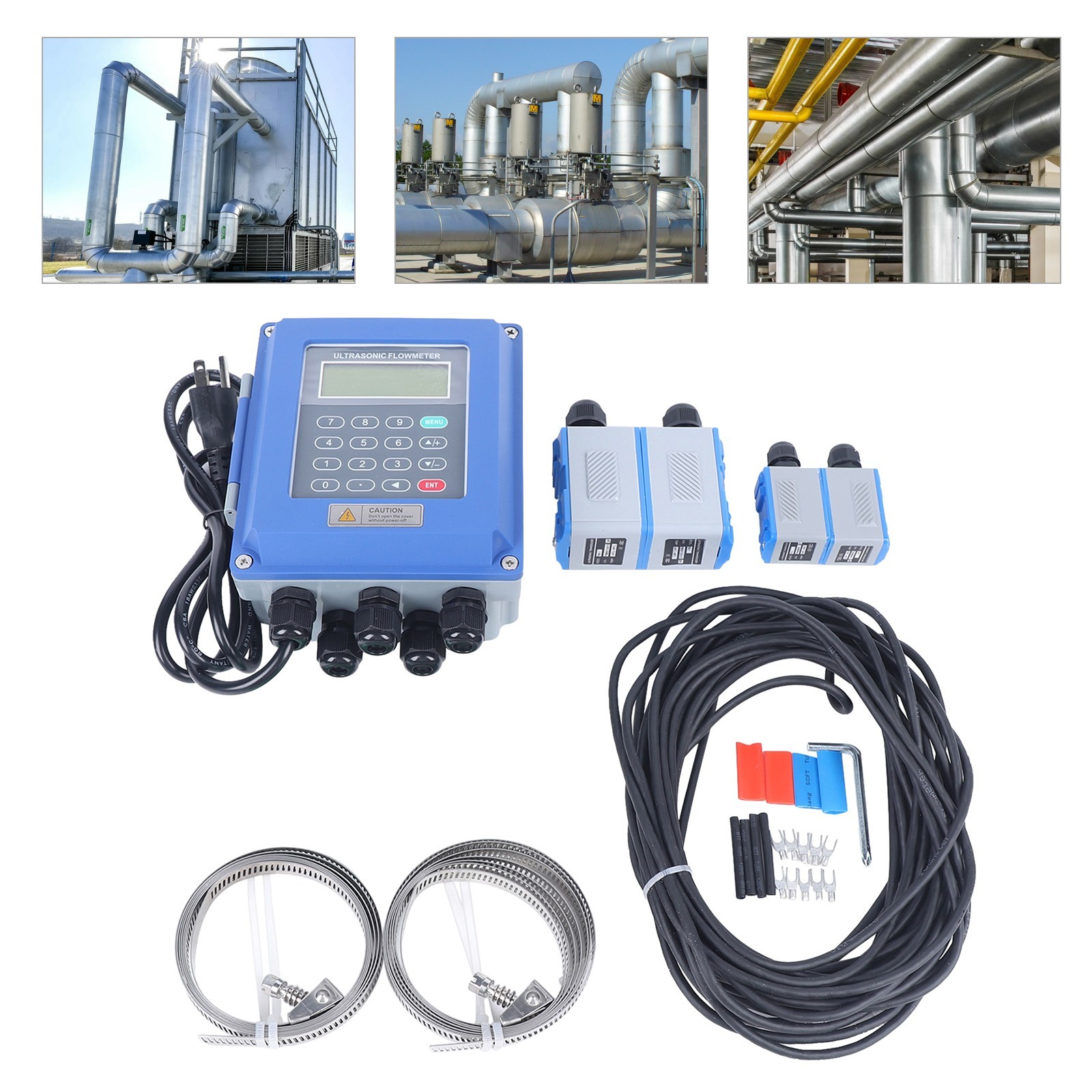
The ultrasonic clamp-on meter is the less invasive option; it mounts outside the pipe and leaves the inside empty. It measures bidirectional flow, which is useful when flow direction can change. The housing uses ABS and steel, and the design is aimed at stable, reliable operation. Its ±1% accuracy is a solid match for routine process measurement. One limitation is that it depends on the pipe material transmitting ultrasound; if your pipe doesn't, the clamp-on approach won't work. You'll also need to supply your own SD card for the logging feature, and the unit doesn't include one.
1-Inch Digital Turbine Flow Meter
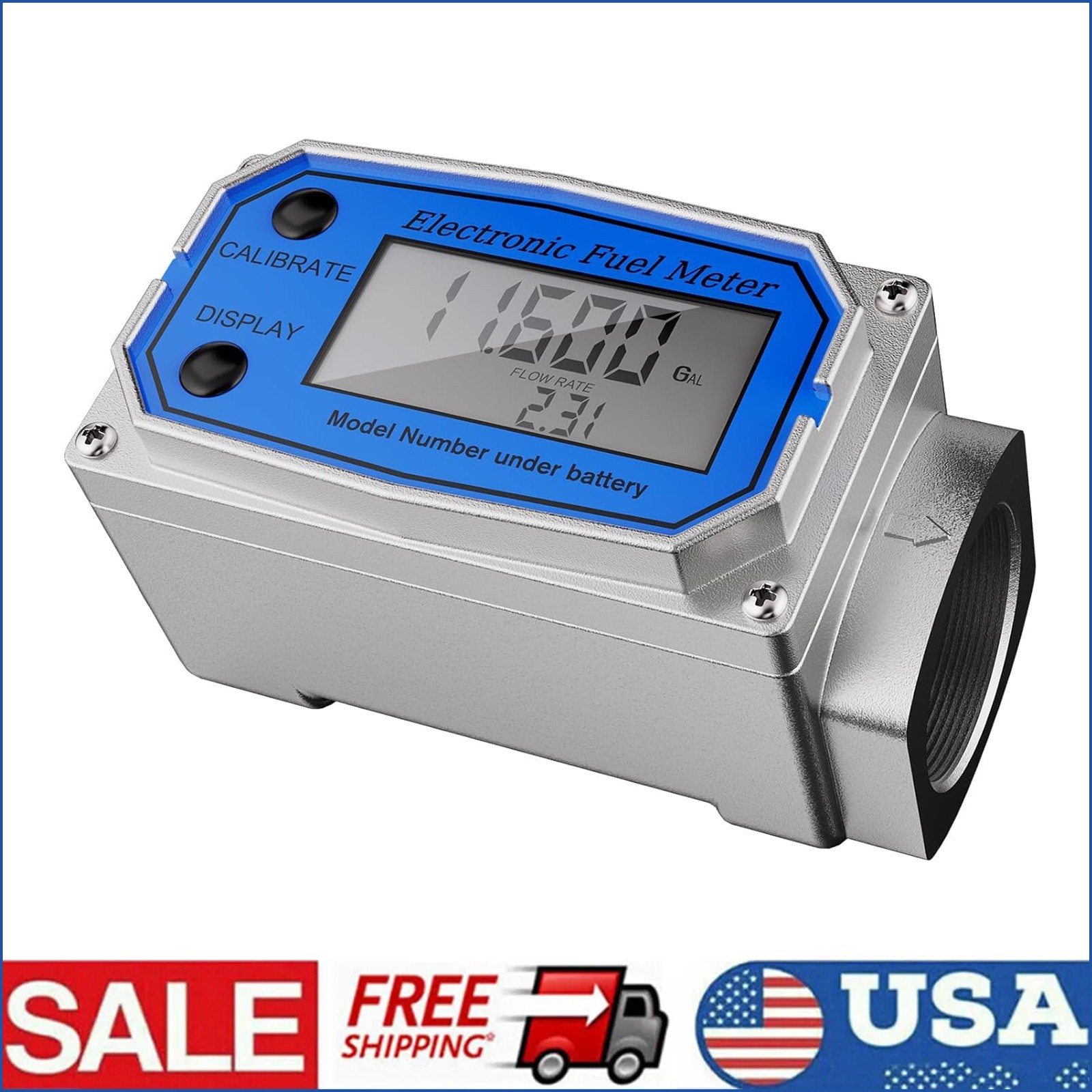
The turbine meter screws directly into the line, so installation is straightforward if you can work with an inline connection. It displays both instantaneous and cumulative flow and lets you switch between gallons, quarts, pints, liters, and cubic meters. The modular design means you can replace internal parts without replacing the whole unit. It's built for the kind of fuel-transfer and water-measurement jobs that use a 1-inch NPT connection. The trade-off is that inline installation requires cutting into the pipe, and the 1-inch NPT size restricts you to that line diameter. This direct-read meter gives you a clear picture at a glance, which is handy when you're transferring fuel.
Final Choice by Use Case
If you need a non-invasive clamp-on approach, go with the ultrasonic meter. If you have a straightforward direct-connect setup and want a self-contained readout, the turbine meter is the right fit.