Choosing between these two microscopes for lab imaging is really a choice about how you like to look at specimens. The VEVOR XSP-36 is a traditional binocular compound microscope aimed at bench work, while the 1600x Zoom 8 LED HD USB Microscope is a compact digital magnifier that sends its image to a screen. The right pick comes down to your workflow, your samples, and whether you prefer eyepieces or a digital feed.
Quick Verdict
Choose the VEVOR XSP-36 if you want a full compound microscope for lab-style work. Choose the 1600x USB digital microscope if you want a low-cost, portable tool that puts the image on a screen.
At a Glance
| Product | Price | Magnification | Viewer | Best For |
|---|---|---|---|---|
| 1600x Zoom 8 LED HD USB Microscope | $15.49 | 0X-1600X | USB/camera output | Portable screen-based inspection |
| VEVOR XSP-36 Binocular Compound Laboratory Microscope | $120.99 | 40X-2500X | Binocular | Lab and educational microscopy |
Where Each Microscope Wins
Where the VEVOR XSP-36 wins. The biggest advantage is the two-eye viewing experience at the bench. The included 48 prepared slides give you specimens to start with immediately, and the mechanical stage is a step up from trying to hold a digital scope steady. The listing also includes an additional WF25X eyepiece, which gives you another magnification option.
Where the 1600x USB wins. Instead of sitting down to a scope, you can put the adjustable stand on your work area, use the flexible arm and anti-skid handle to position the lens, and see the magnified image on a connected display. The built-in LED lights help brighten small details for skin, hair, coin, textile, and circuit inspection, and at $15.49 it is a much smaller investment.
Product Notes
1600x Zoom 8 LED HD USB Microscope Digital Magnifier Endoscope Video Camera
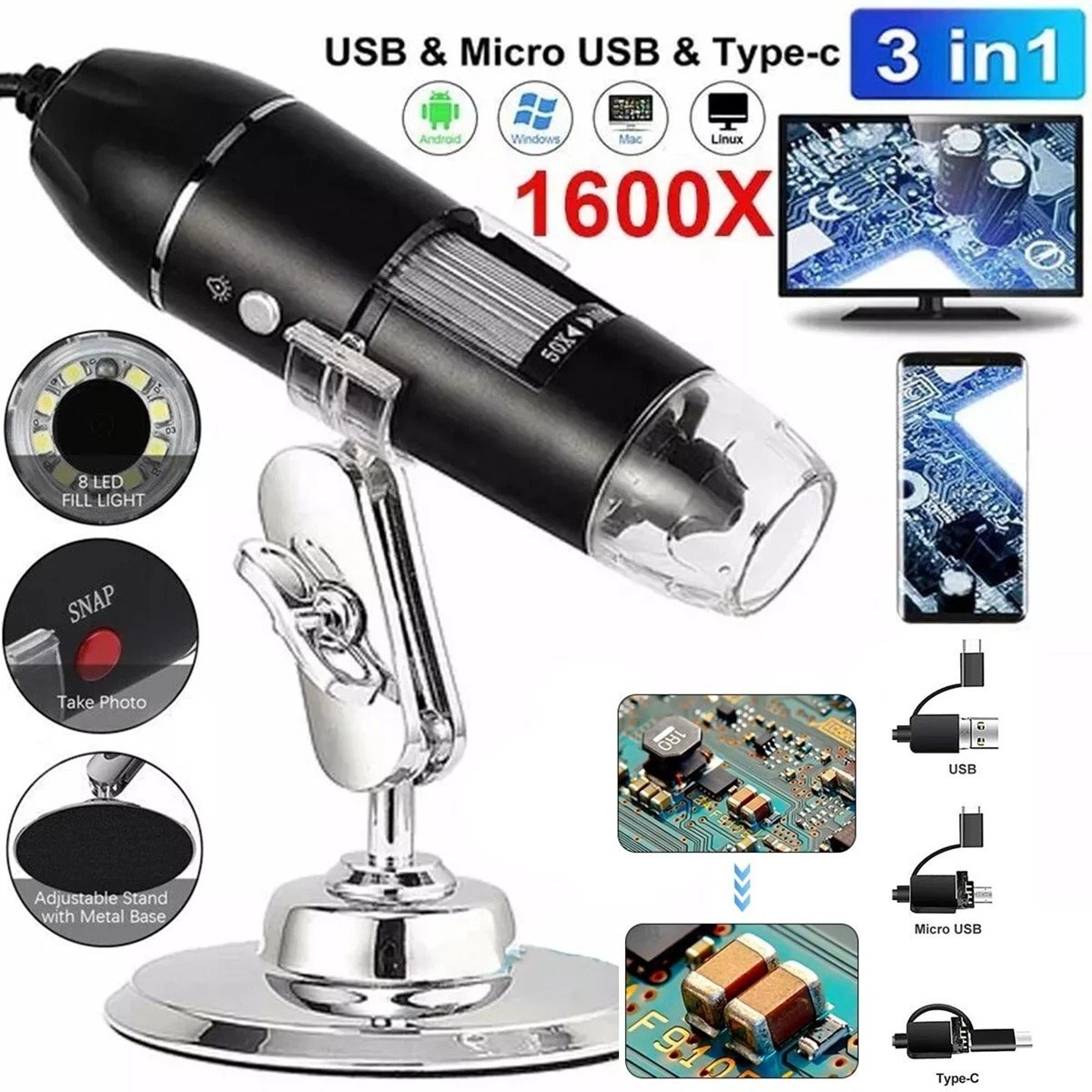
The 1600x USB digital microscope makes the microscopic world accessible without a full lab setup. Connect it over USB, position the flexible arm, and watch the image on your screen. The built-in 8 white LEDs have adjustable brightness, which helps when you move from a bright desk to a darker corner, and the anti-skid handle keeps the compact body comfortable in your hand. Its magnification range reaches 1600X, but because this is a digital magnifier rather than an optical compound instrument, the view is constrained to the connected display. That is a good trade-off for fast checks of skin, hair, plants, coins, textile weaves, or PCB details, but less ideal if you specifically want the feel of traditional eyepieces. Consider it a practical first digital microscope for education and light inspection work.
VEVOR XSP-36 Binocular Compound Laboratory Microscope 40X-2500X LED 48pc Slides
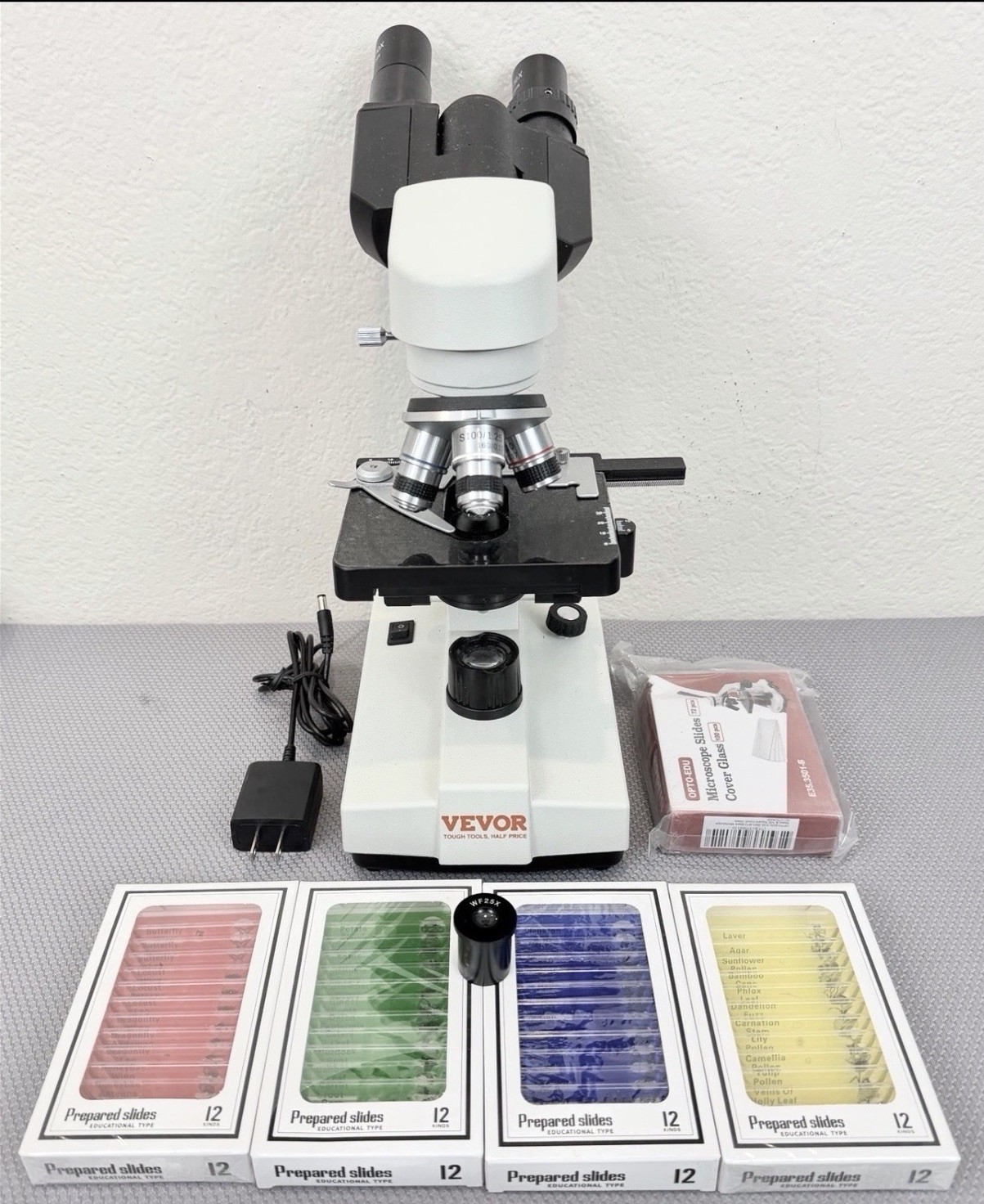
The VEVOR XSP-36 is a used binocular compound microscope that comes across as a complete educational kit. It includes four boxes of prepared slides-48 unique specimens total-and the listing mentions an additional WF25X high-magnification eyepiece. Lenses are described as clear, and the mechanical stage controls operate smoothly, so it arrives close to ready for bench work. The binocular head lets you observe with both eyes, which is the classic lab-imaging experience that a digital magnifier does not provide. Because this is a used unit, you are getting this specific instrument with its included accessories rather than a brand-new sealed scope. That condition is the main limitation to weigh against the higher price tag. For classroom demonstrations, hobbyist collecting, or serious sample work, the VEVOR gives you a traditional path into microscopy.
Final Choice by Use Case
Pick the VEVOR XSP-36 when you want a bench-ready compound microscope for long sessions with prepared slides and binocular viewing. Pick the 1600x USB digital microscope when you need to grab a small camera-style tool for quick looks at surfaces, skin, hair, coins, or circuits. Let your viewing style decide.