When you're putting together a lab bench for microscopy, the buying decision is rarely about finding the single best scope in the abstract. The real tension is between magnification range, viewer type, condition, and budget. Do you need a two-eye viewing head, a port for an imaging setup, or a simple one-eye viewer for student work? The four compound microscopes in this guide span a wide price spread, from $55.85 to $349.95, so the choice comes down to how much capability you want to pay for.
Quick Take
For lab imaging work that might involve sharing the view or adding an auxiliary tube, the OMAX 40X-2500X LED Lab Trinocular is the most interesting middle-ground pick. If your priority is a medical-lab instrument and used equipment fits your workflow, the Olympus BH2 BHTU is the serious professional option. For a tight budget, the Compound Microscope at the low end of the price spread gets you started, and the Omano Student Compound Monocular is the straightforward student-bench choice.
Price Comparison
| Product | Listed Price | Price Bar |
|---|---|---|
| Compound Microscope 100X-2000X (White) | USD 55.85 | |
| Omano Student Compound Monocular 40X-100X-400X | USD 79.99 | |
| OMAX 40X-2500X LED Lab Trinocular Compound Microscope | USD 159.99 | |
| Olympus BH2 BHTU Binocular Upright Compound Microscope | USD 349.95 |
Decision Matrix
- If you want a scope that can take a third viewing tube for lab imaging, the OMAX is the one to match.
- If you need a medical-lab instrument and can accept a pre-owned unit, the Olympus is the option to weigh.
- If you're choosing for a student or a basic biological lab, the Omano's straightforward layout and clear magnification set are a practical match.
- If you want the lowest entry point to a new compound scope, the budget biological microscope is the one to consider.
Product Notes
Compound Microscope 100X-2000X High-Power Biological Microscope (White)
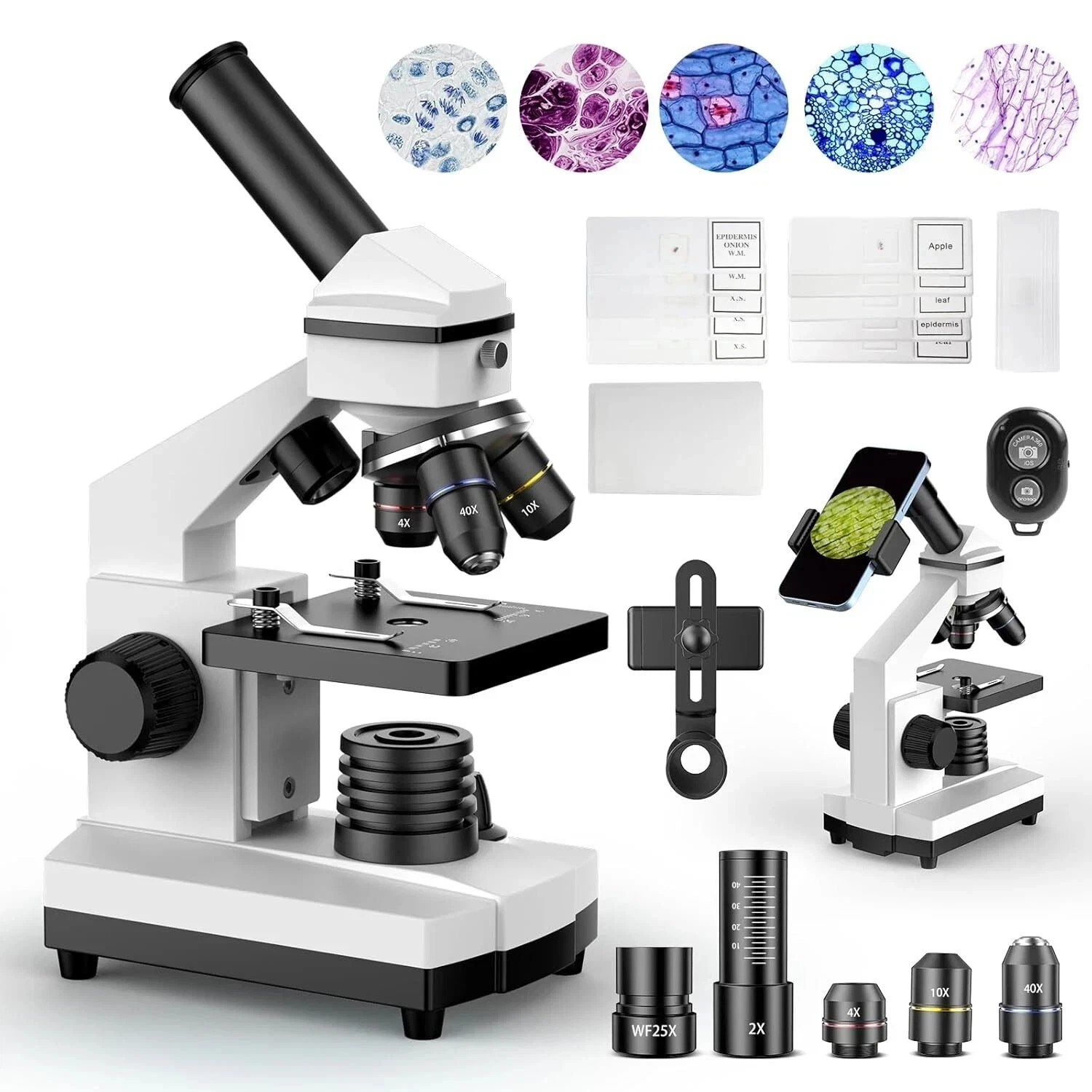
This scope anchors the low end of the lineup. It's described as a high-power biological microscope with a 1.25NA condenser and iris diaphragm, coarse and fine focus adjustments, and an expansion interface that can connect to a computer or LCD screen. If you're starting a home or school lab and want a new microscope with those controls, this is the entry point. The practical limitation is the AC power supply: it needs to be plugged in, so it isn't a portable field instrument. Keep the low price in perspective and treat this as a starter scope for learning and slide observation.
Olympus BH2 BHTU Binocular Upright Compound Microscope
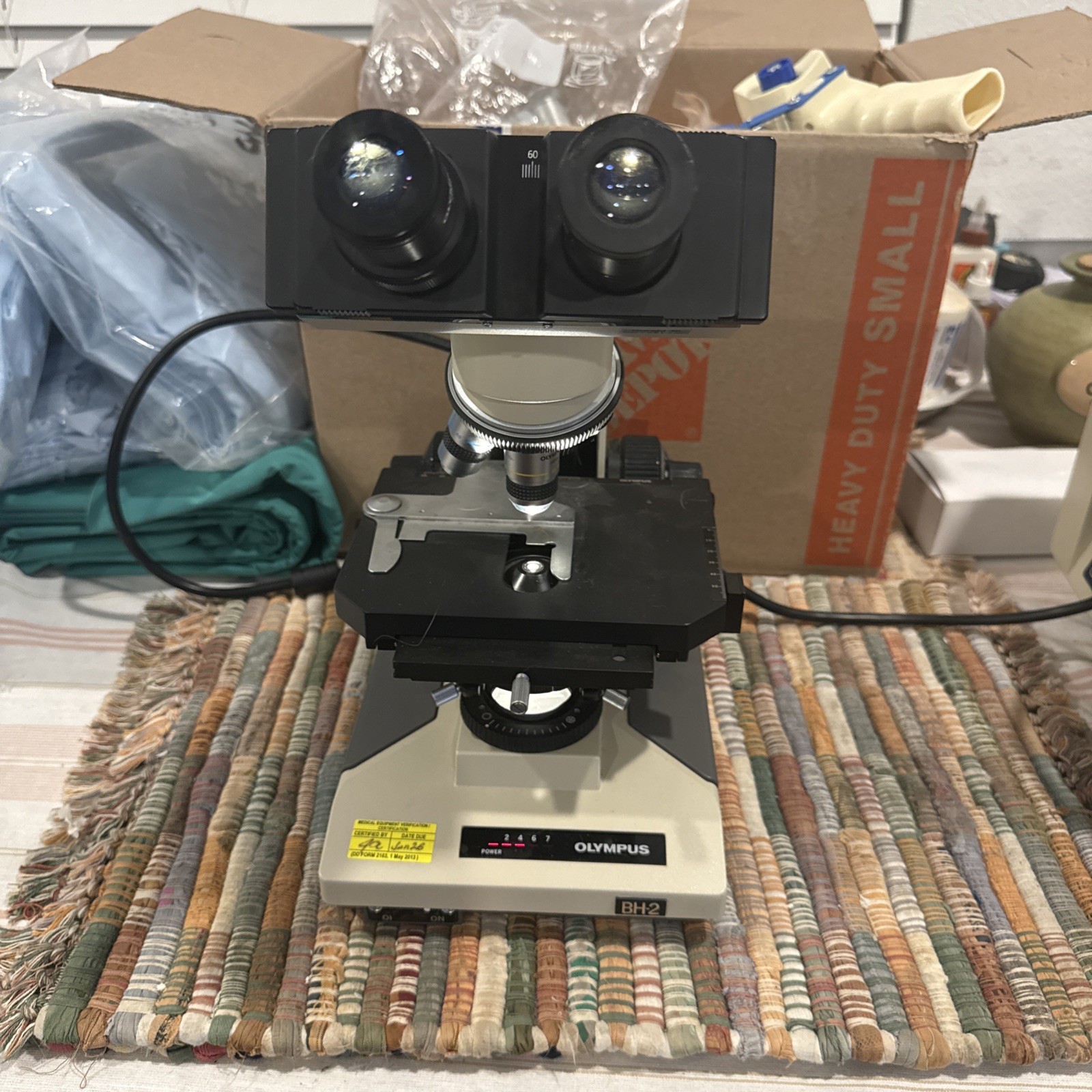
The Olympus sits at the top of the lineup. It's a binocular upright compound microscope intended for medical laboratory use, with a listed magnification range of 40x to 1000x. The binocular viewer is the central advantage: you can observe with both eyes, which matters during longer lab sessions. Choose this one if you want a serious lab instrument and are comfortable buying a used scope. The condition is listed as used, so it may show handling wear from previous bench work. If a new-in-box unit is a hard requirement, this is not the one.
OMAX 40X-2500X LED Lab Trinocular Compound Microscope
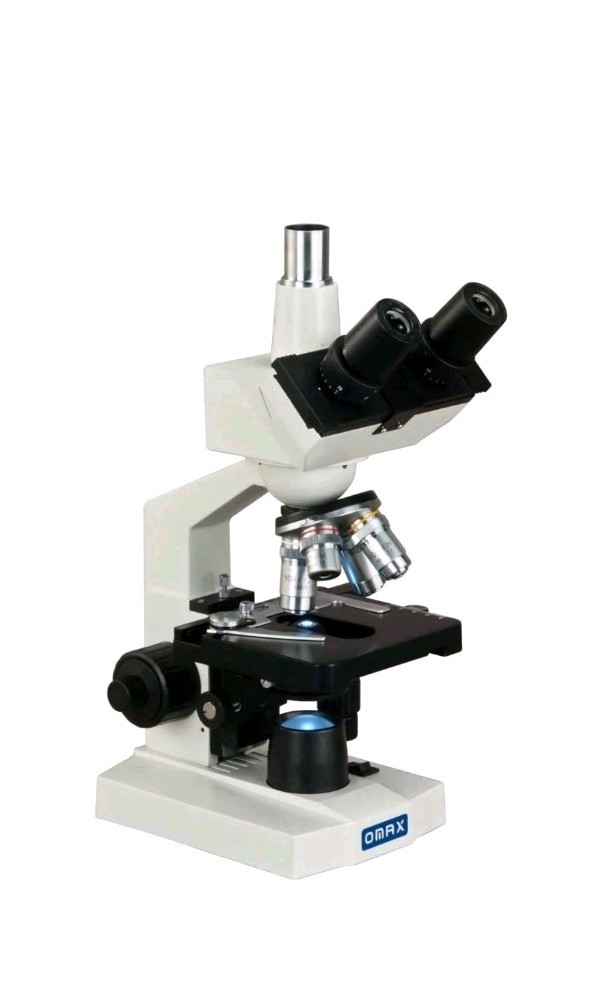
At the middle of the lineup, the OMAX offers a trinocular viewer and LED illumination. The trinocular head is what makes it stand out for lab imaging: you get an extra tube to work with while the eyepieces remain available for direct viewing. Its listed magnification range reaches from 40X to 2500X, covering a broad range of biological and laboratory samples. The trade-off is condition: this unit is listed as New - Open box, so you're getting a returned or opened item. If you want a versatile imaging-oriented scope without jumping to the top price, this is the one to weigh.
Omano Student Compound Monocular Microscope
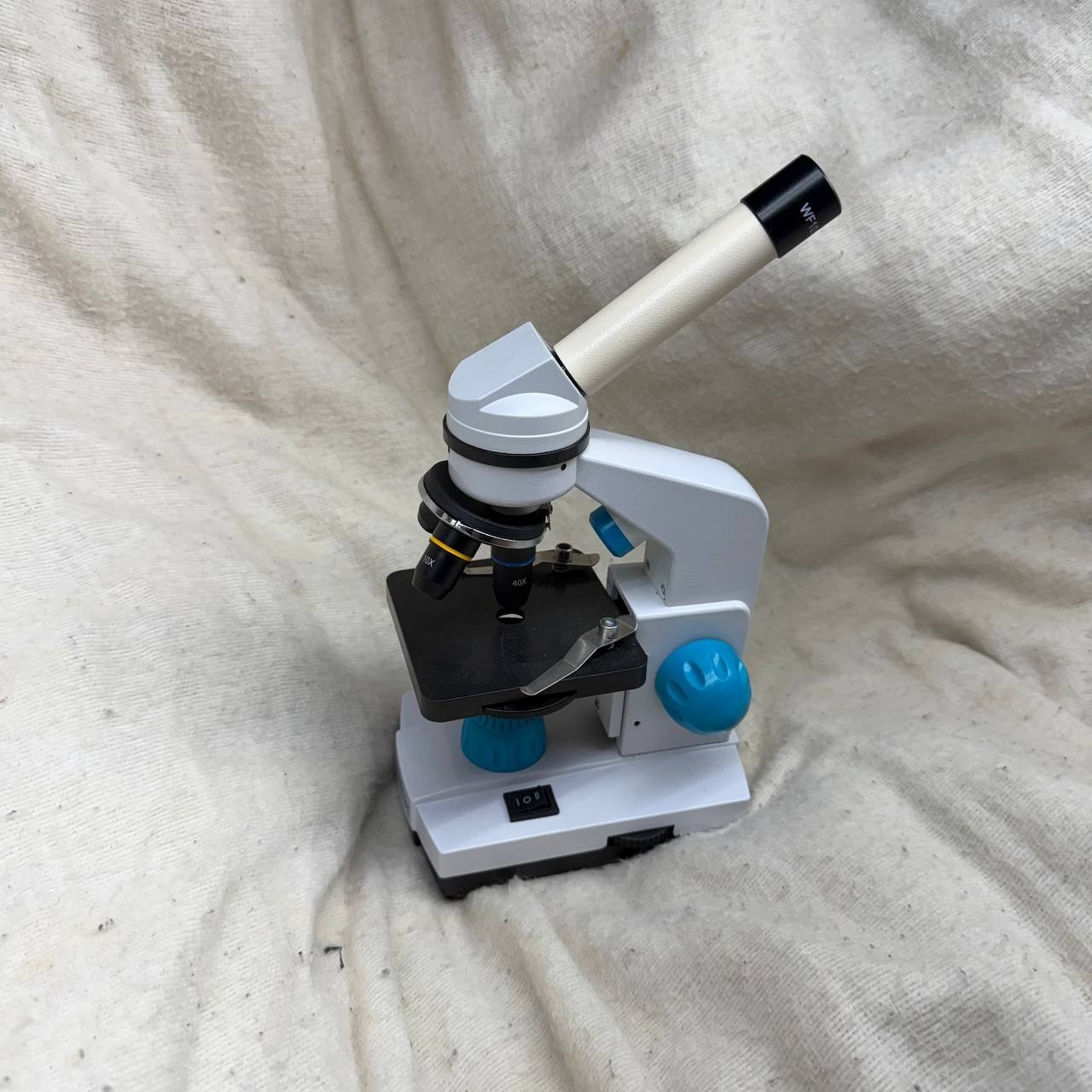
This Omano is a simple upright compound monocular for biological laboratory work. The title spells out a clear 40x, 100x, and 400x magnification set, which is easy to teach and easy for students to understand. If your main use is standard biological slides in a classroom or training lab, this scope keeps the setup straightforward. The limitation is the monocular viewer, which means one-eye observation and less comfort over long sessions. It's also listed as New - Open box, so the unboxed condition is part of the equation. It fills the student-bench niche without extra features you might not need.
Final Recommendation by Use Case
For a lab imaging bench where you want a trinocular head and LED lighting, the OMAX is the most balanced choice below the top of the range. For a binocular medical-lab instrument, the used Olympus gives you a 40x to 1000x range but demands the largest outlay. For student or biological-lab basics, the Omano covers 40x to 400x in a monocular format. And for the lowest new-scope entry point, the budget biological compound microscope gets you to the bench with the essentials. Match the viewer style and magnification to your real workload, and the right scope becomes obvious.