Choosing a microscope for lab imaging usually comes down to how you want to observe: through an eyepiece, through a built-in screen, or through a trinocular head that leaves room for a camera. The four models here cover all three routes, with prices ranging from $69.99 to $269.
Quick Take
If your work involves coins, circuit boards, soldering, or small mechanical details, a digital LCD microscope is the fastest way to see and record what you're doing. The TOMLOV and 4.3-inch models both put a screen on the stand and are aimed at bench work. If you need conventional eyepiece observation for biology, chemistry, or clinical use, the LW Scientific S Series gives you an upright stereo microscope with a monocular viewer. And if you need to push magnification much higher, the Trinocular 40X-5000X is the compound option with a trinocular head.
Price Comparison
| Product | Listed Price | Price Bar |
|---|---|---|
| LW Scientific S Series Microscope | USD 160.00 | |
| Trinocular Microscope 40X-5000X | USD 269.00 | |
| TOMLOV 7-Inch Digital Microscope | USD 69.99 | |
| 4.3-Inch IPS LCD Digital Coin Microscope | USD 69.99 |
Decision Matrix
| Workflow | Microscope Fit |
|---|---|
| Coin grading, soldering, circuit board inspection | TOMLOV 7-Inch or 4.3-Inch LCD; both have a built-in screen and LED illumination. |
| Traditional biology, chemistry, or clinical lab viewing | LW Scientific S Series; upright stereo scope with wide-field eyepieces. |
| High-power lab observation with attached imaging | Trinocular Microscope 40X-5000X; trinocular head with high-pixel electronic eyepieces. |
Product Notes
LW Scientific S Series Microscope
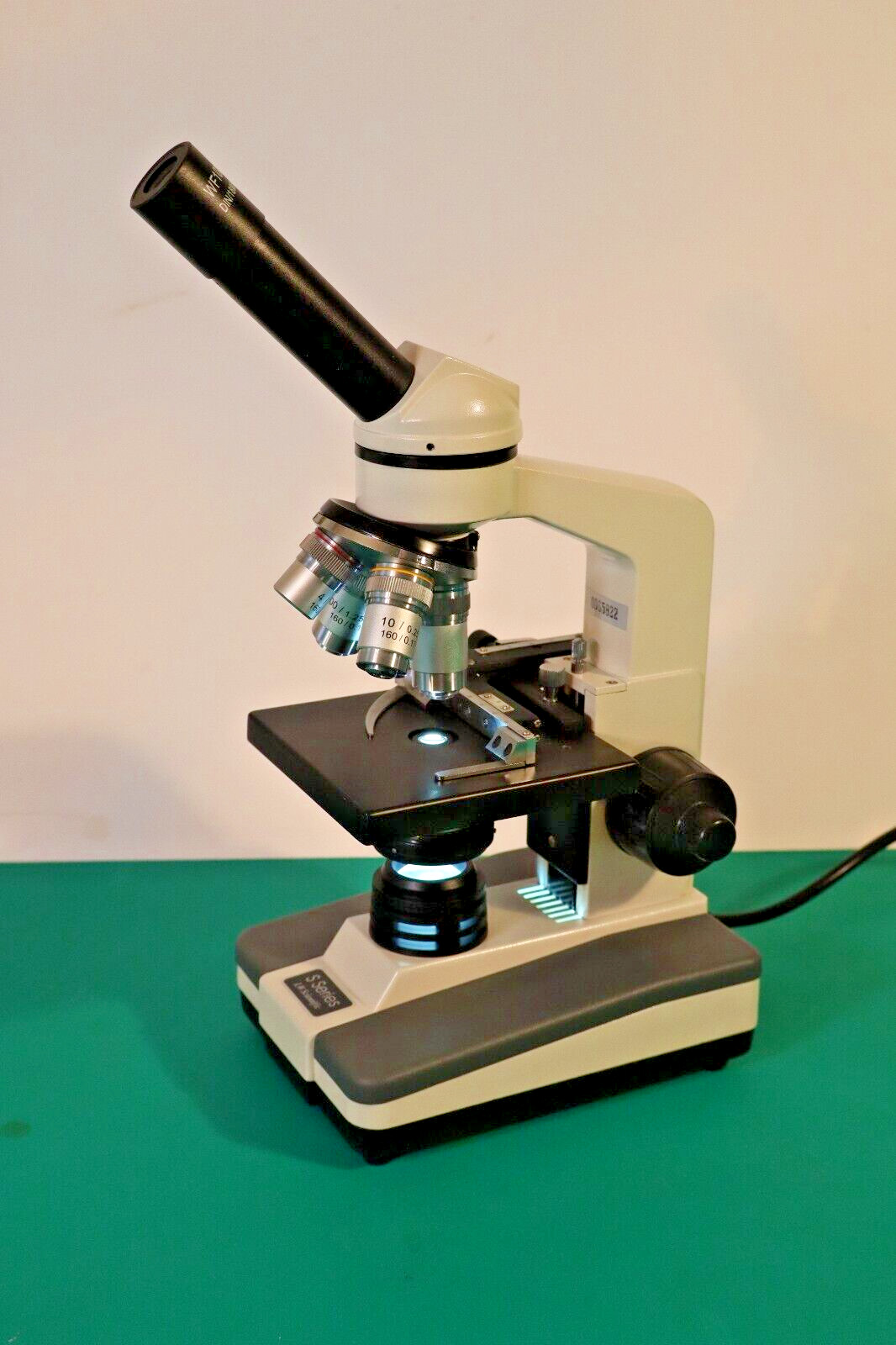
The LW Scientific S Series is a seller-refurbished upright stereo microscope with a monocular viewer and 4X, 10X, 40X, and 100X magnification. It is built for traditional bench work: you look through the eyepiece, use the lamp, and move the stage to scan a sample. The original packaging and carry case are included, and the scope was stored as a lab backup rather than a heavily used daily unit. Choose it if you want a familiar eyepiece-based layout for biology, chemistry, or clinical labs. The limitation is the modest magnification range, which stops well short of the trinocular model's upper end, and the fact that it is refurbished rather than new.
Trinocular Microscope 40X-5000X Magnification Laboratory
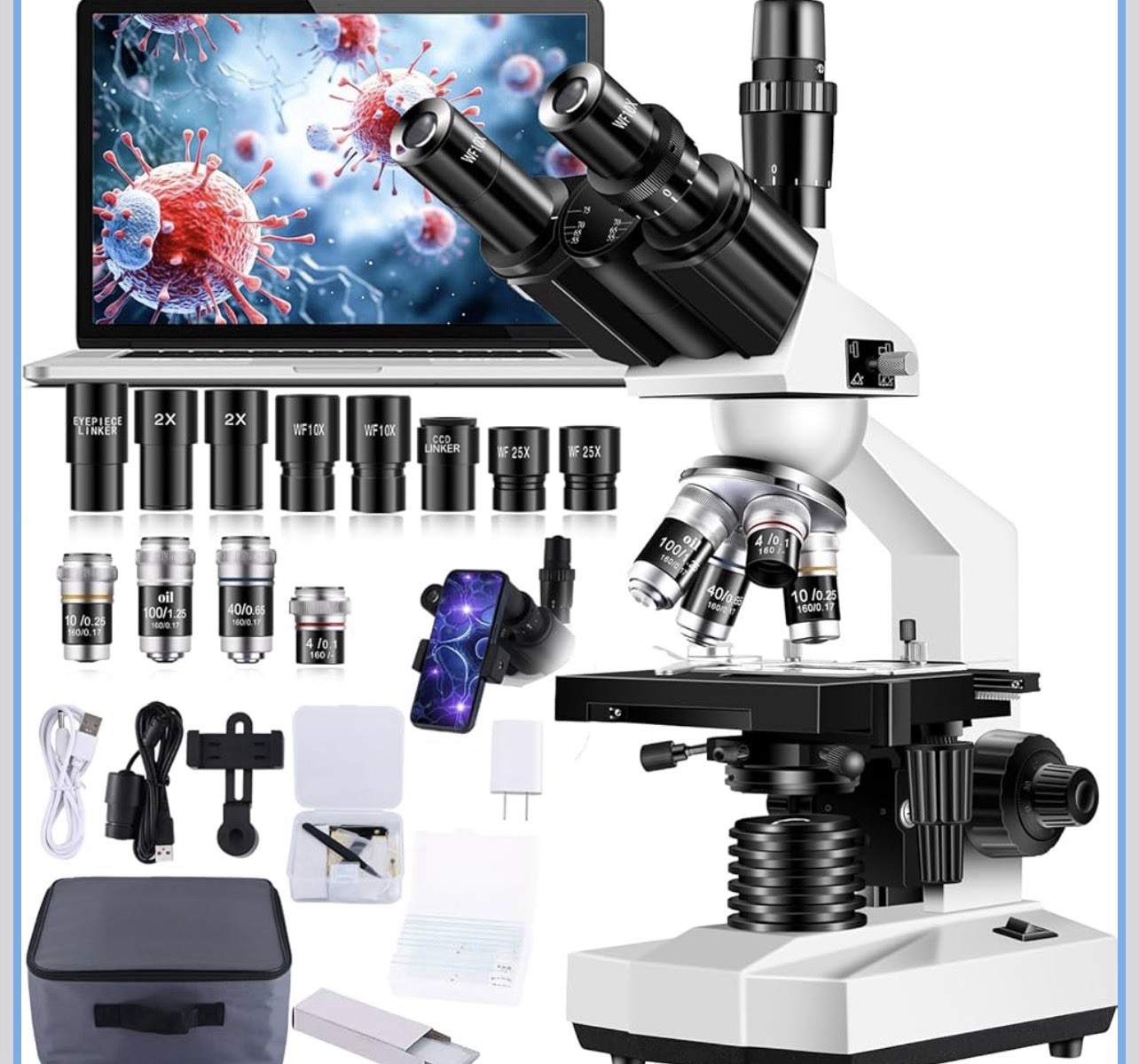
The strongest reason to pick this model is magnification. The 40X-5000X range comes from two 10X eyepieces, two 25X eyepieces, 2x magnifying lenses, and a 195 achromatic objective with an infinity optical system. The trinocular head and high-pixel electronic eyepieces make it a good fit for lab imaging when you want to record or project what you see. The trade-off is that this is a traditional compound microscope, so you work through eyepieces rather than a built-in display. Reaching the highest magnifications also means swapping eyepieces and auxiliary lenses, which adds a step compared with turning a digital zoom dial.
TOMLOV 7-Inch Digital Microscope 1200X
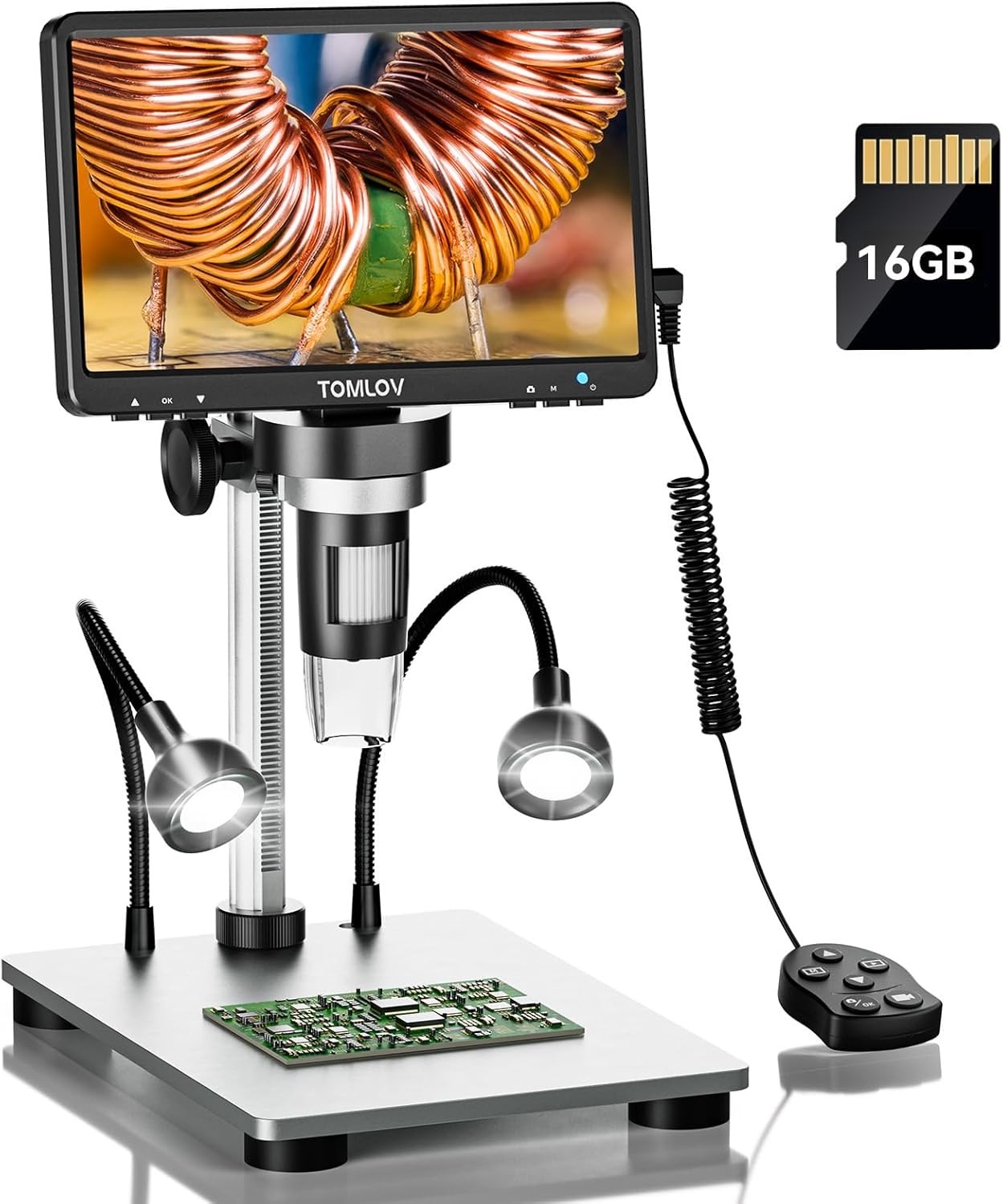
The TOMLOV DM9 is the screen-first choice. It pairs a 7-inch rotatable LCD with a 12MP camera, 1080P video, 50X-1200X magnification, and a metal stand. The 10 LED lights give you even illumination for coins, stamps, rocks, soldering joints, and other small parts. It also works as a USB microscope on Windows and Mac OS, so you can move from the built-in screen to a computer monitor when needed. The limitation is that it is an inspection tool, not a biological lab scope; if your routine depends on eyepiece-based slide observation, this digital model will feel different from the LW Scientific.
4.3-Inch IPS 1000X LCD Digital Coin Microscope
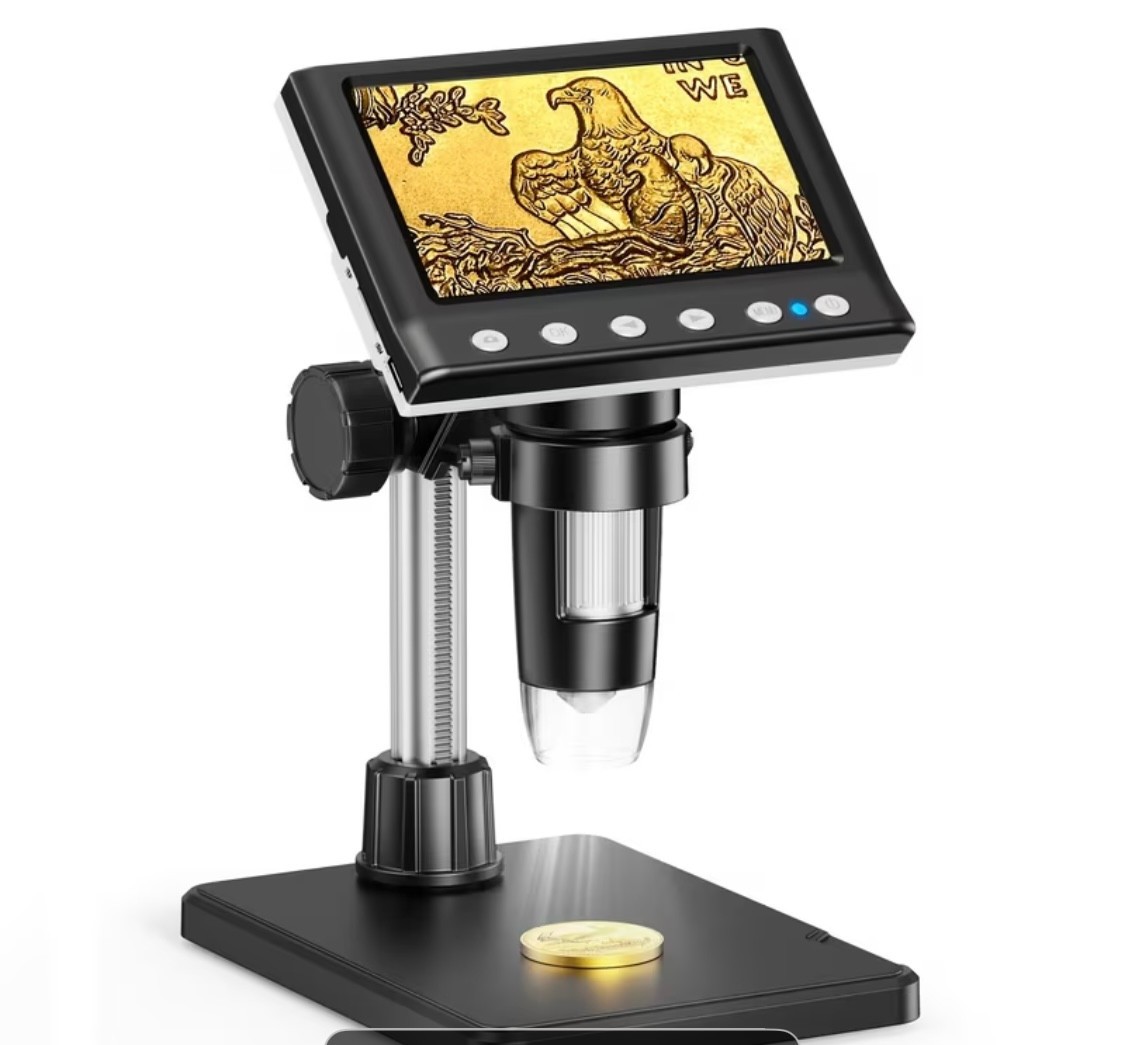
The 4.3-inch IPS model is the compact digital option. It has a 1000X magnification range, 8 adjustable LED lights, and records 1080P photos or clips to an SD card (card not included). It can also connect to a laptop or PC through USB, which makes it useful for circuit boards, motherboards, jewelry repair, coin inspection, and paper currency work. The trade-off is the smaller display: at 4.3 inches it shows less of the work area than the 7-inch TOMLOV. It weighs 1.65 lbs, so it fits more easily into a kit or travel bag.
Final Recommendation by Use Case
- For screen-first inspection of coins, soldering, and small parts, the TOMLOV 7-Inch Digital Microscope gives you the largest display; the 4.3-Inch IPS LCD Digital Coin Microscope is the more portable alternative with USB and SD recording.
- For traditional lab observation through an eyepiece, the LW Scientific S Series Microscope is the upright stereo model to start with.
- For high-power lab imaging with a trinocular head, the Trinocular Microscope 40X-5000X offers the widest magnification range and the most flexible viewing setup.