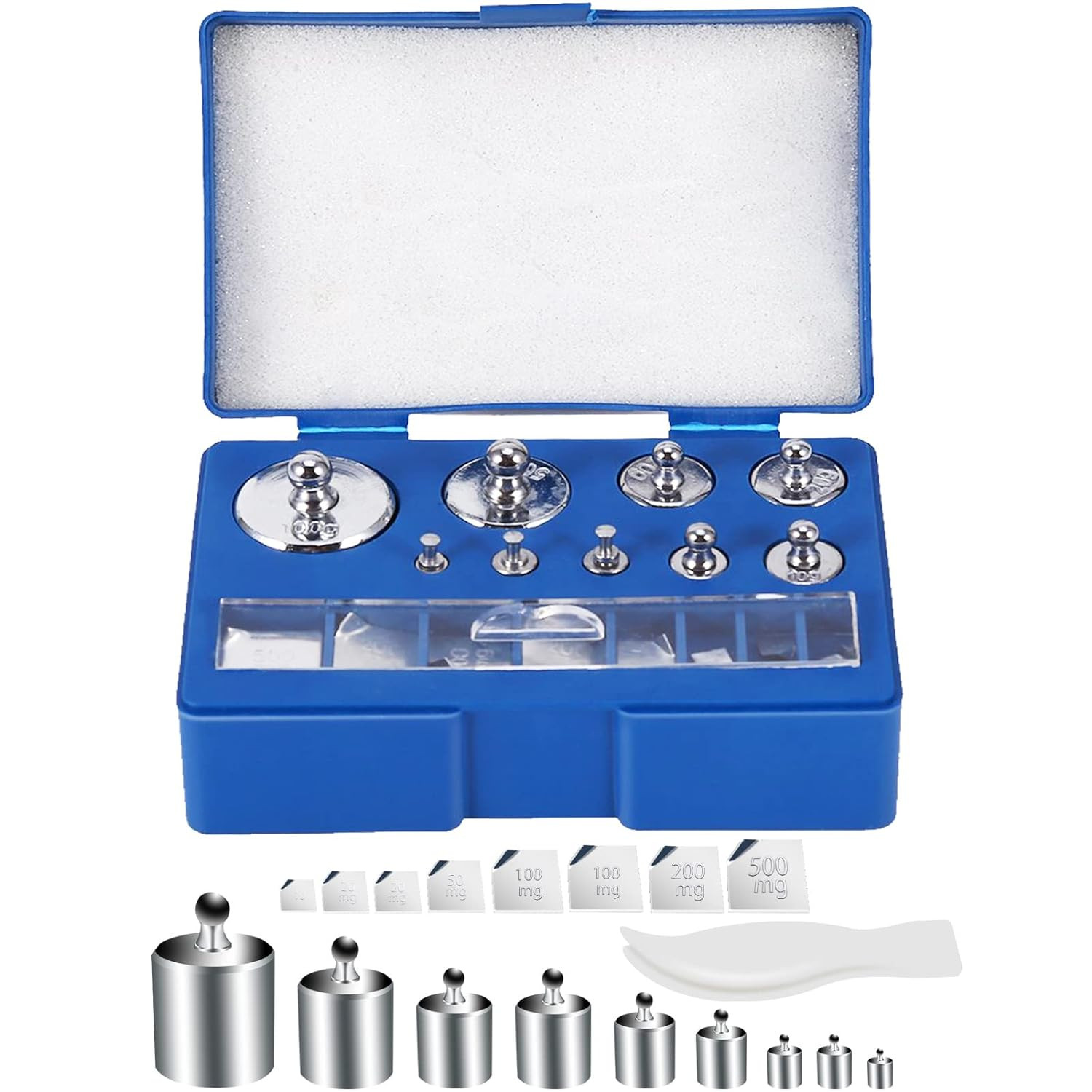

Photos from current listings. Actual item, color, and included accessories may vary.
Calibration Weight Buying Guide
Calibration weights are precision masses used to verify and adjust the accuracy of balances and scales, and the decisive trade-off is material/finish and tolerance class versus cost. OIML and ASTM classes define maximum permissible error, so choosing the right class for your balance's readability is the single rule that separates reliable calibration from guesswork. Skip any weight without a stated tolerance class or non-magnetic, corrosion-resistant construction.
Median $90.00
Key takeaways
- OIML class E2/F1 weights suit analytical balances (0.1 mg readability); M1/M2 suit general lab and industrial scales.
- ASTM class 0-2 weights cover high-precision work; class 3-7 weights are for routine bench and industrial verification.
- Single-piece weights are turned from solid stainless (often 304 or 316) or brass; adjustment cavities are sealed with a plug.
At a glance
- Category
- Calibration Equipment & Standards
- Last updated
- Nov 28, 2026
Current offers
Highlights
- OIML class E2/F1 weights suit analytical balances (0.1 mg readability); M1/M2 suit general lab and industrial scales.
- ASTM class 0-2 weights cover high-precision work; class 3-7 weights are for routine bench and industrial verification.
- Single-piece weights are turned from solid stainless (often 304 or 316) or brass; adjustment cavities are sealed with a plug.
- Weight sets in fractional milligram-to-gram ranges use tweezers and a velvet-lined case to prevent contamination and wear.
Best use cases
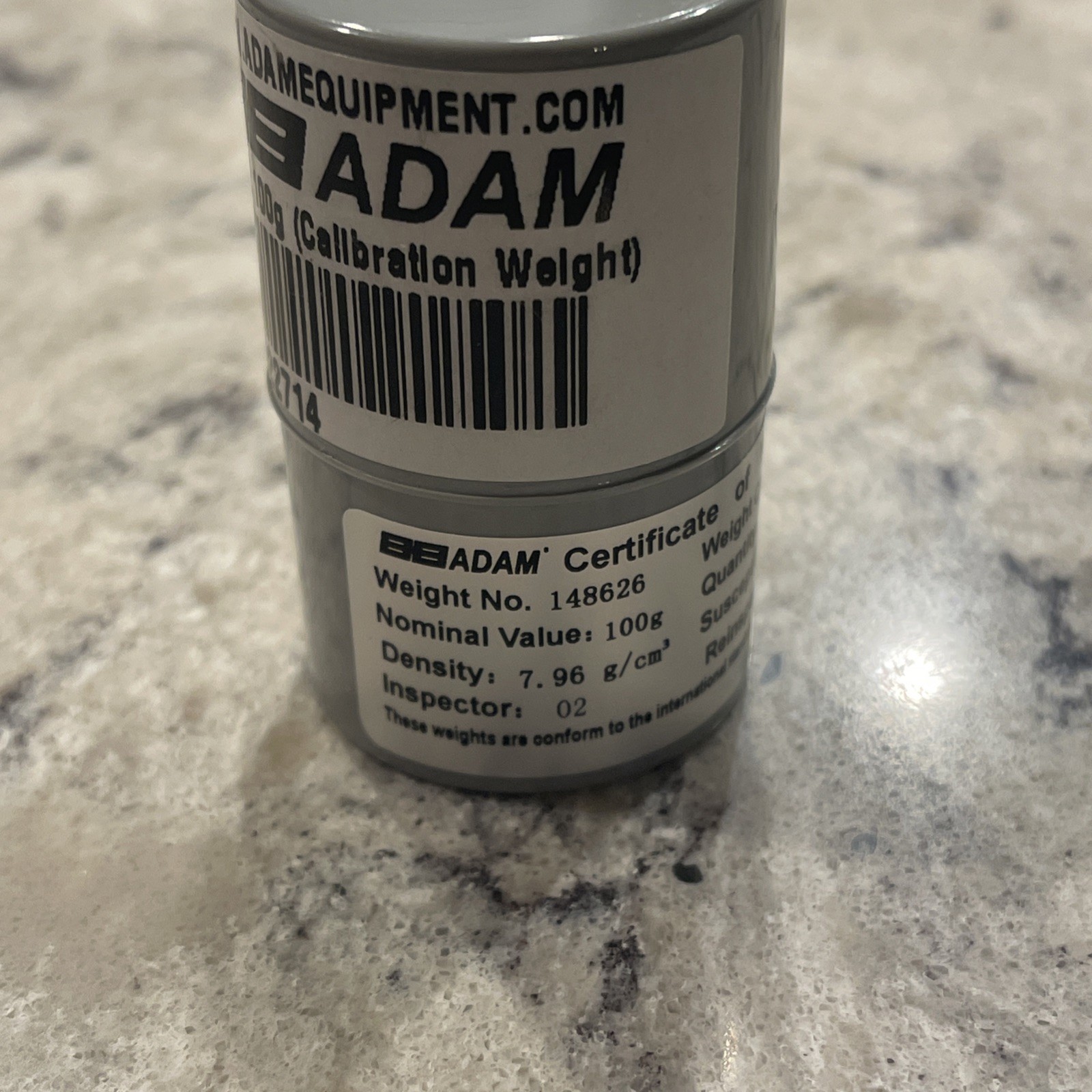
- Best fit: a single 100 g ASTM 2 stainless weight for spot-checking a 0.01 g bench scale; skip full sets when only one test point is needed.
- Best fit: a 10 mg-100 g stainless set for calibrating multiple balances across a lab; skip it for a single 0.1 g jewelry scale.
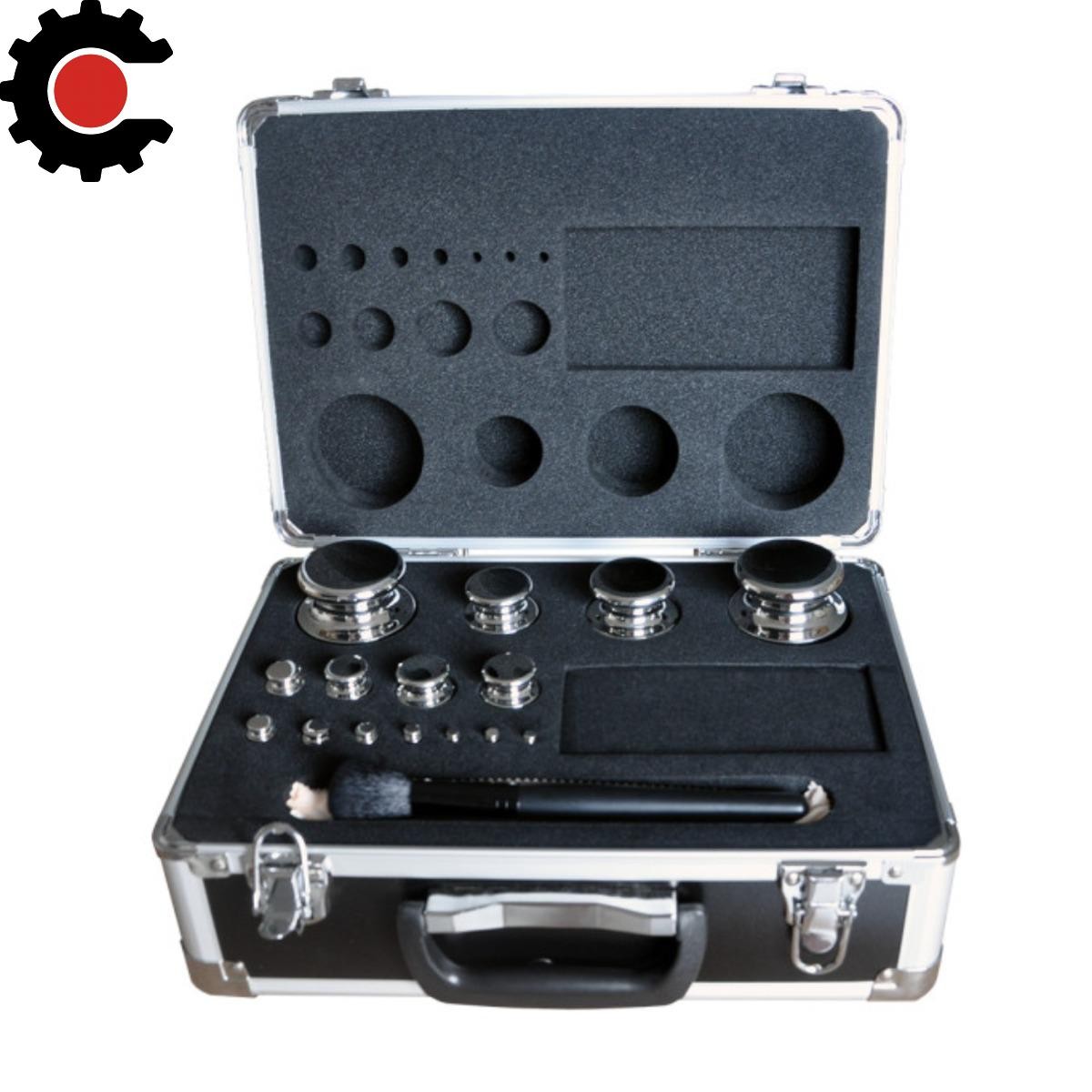
- Best fit: a 1 mg-200 g test kit for analytical and semi-micro balances requiring low-mass verification; skip it for industrial floor scales needing kilogram weights.
- Wrong fit: using a class M2 or ASTM 7 weight to calibrate a 0.1 mg analytical balance — the weight's tolerance exceeds the balance's readability.
Buying tips
- Match weight tolerance to balance readability: OIML E2/F1 for 0.1 mg-1 mg, M1 for 0.01 g, M2 for 0.1 g, and ASTM 1-2 for 0.1 mg-0.01 g balances.
- Choose stainless steel over brass or painted steel for corrosion resistance; 316 stainless is preferred in cleanrooms and wet environments.
- Verify the adjustment cavity is sealed and the weight has a handle or knob; bare-finger contact adds oil mass and shifts readings.
- Fractional sets should include tweezers and a case; milligram weights below 100 mg are handled only with tools to preserve tolerance.
Specs
| Tolerance Class | OIML E2/F1/M1/M2 vs ASTM 1-7 |
|---|---|
| Material & Finish | Stainless 304/316, brass, painted steel |
| Mass Range | 1 mg to 20 kg; sets 10 mg-200 g |
| Adjustment Cavity | Sealed plug vs open screw |
Related searches
What to check before buying
- Confirm your balance's readability and capacity: a 0.1 mg balance needs E2/F1 weights, while a 0.1 g scale needs M2 or ASTM 6-7.
- Check the calibration certificate: OIML and ASTM weights should ship with a traceable certificate stating class and nominal mass.
- Measure your balance pan diameter: weights larger than the pan or with handles can tip or fail to seat properly.
- Verify environmental conditions: stainless weights stabilize faster, but drafts and vibration near the balance still degrade low-mass calibration.
FAQ
Data sources: eBay / Amazon listings and product attribute feeds. Updated Nov 28, 2026.
Some links on this page are affiliate links. If you buy after clicking one, we may earn a commission at no extra cost to you. This does not change which products appear here or their order. Affiliate disclosure.